Chef Juliette
Bouillabaisse à la Marseillaise
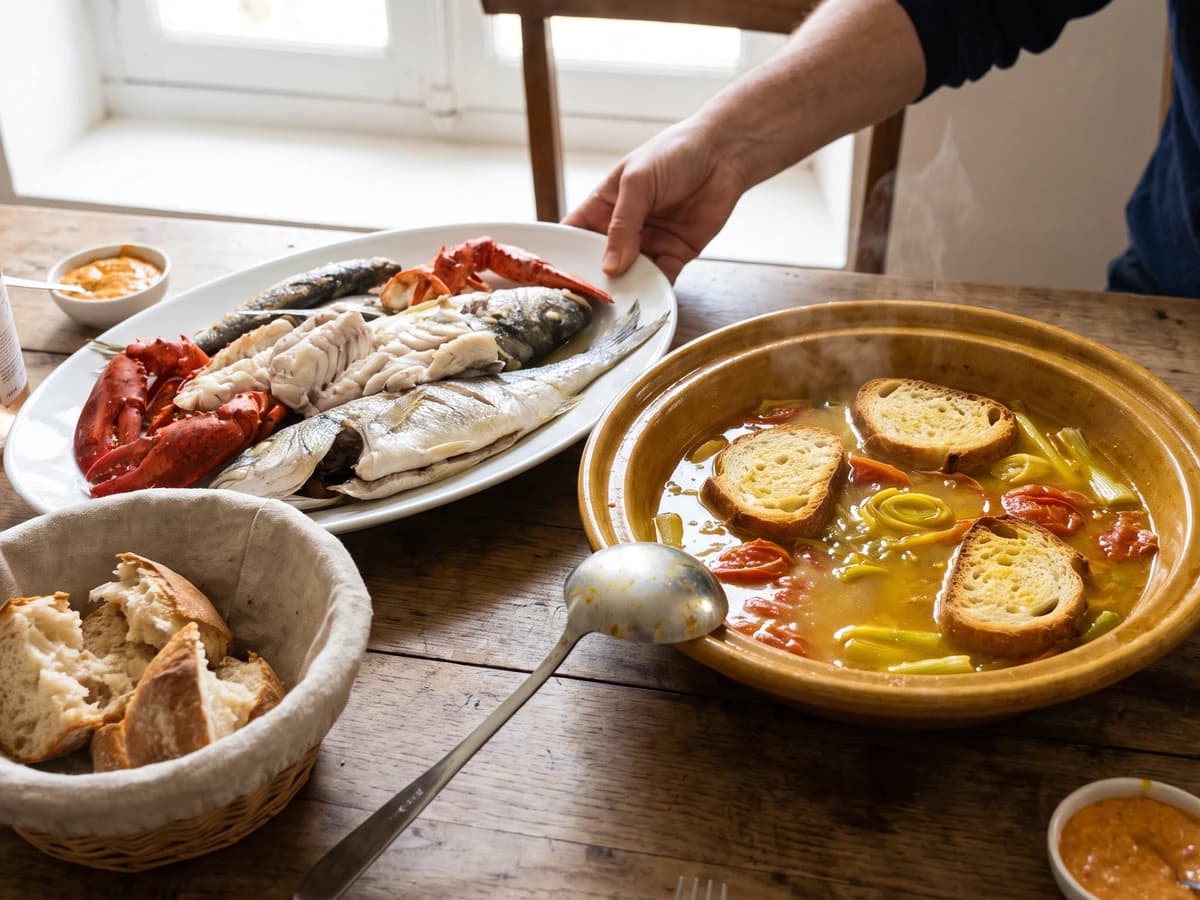
Marseille's great fish stew, saffron-gold and garlic-scented, proves that a hard boil can be the careful choice: it binds olive oil into broth before the whole pot meets bread.
A cooking platform built around craft, culture, and the stories behind what we eat.
Created by Chef Juliette
Based on No. 713, Crème de Volaille Princesse, from Le Guide Culinaire (1907) by Auguste Escoffier
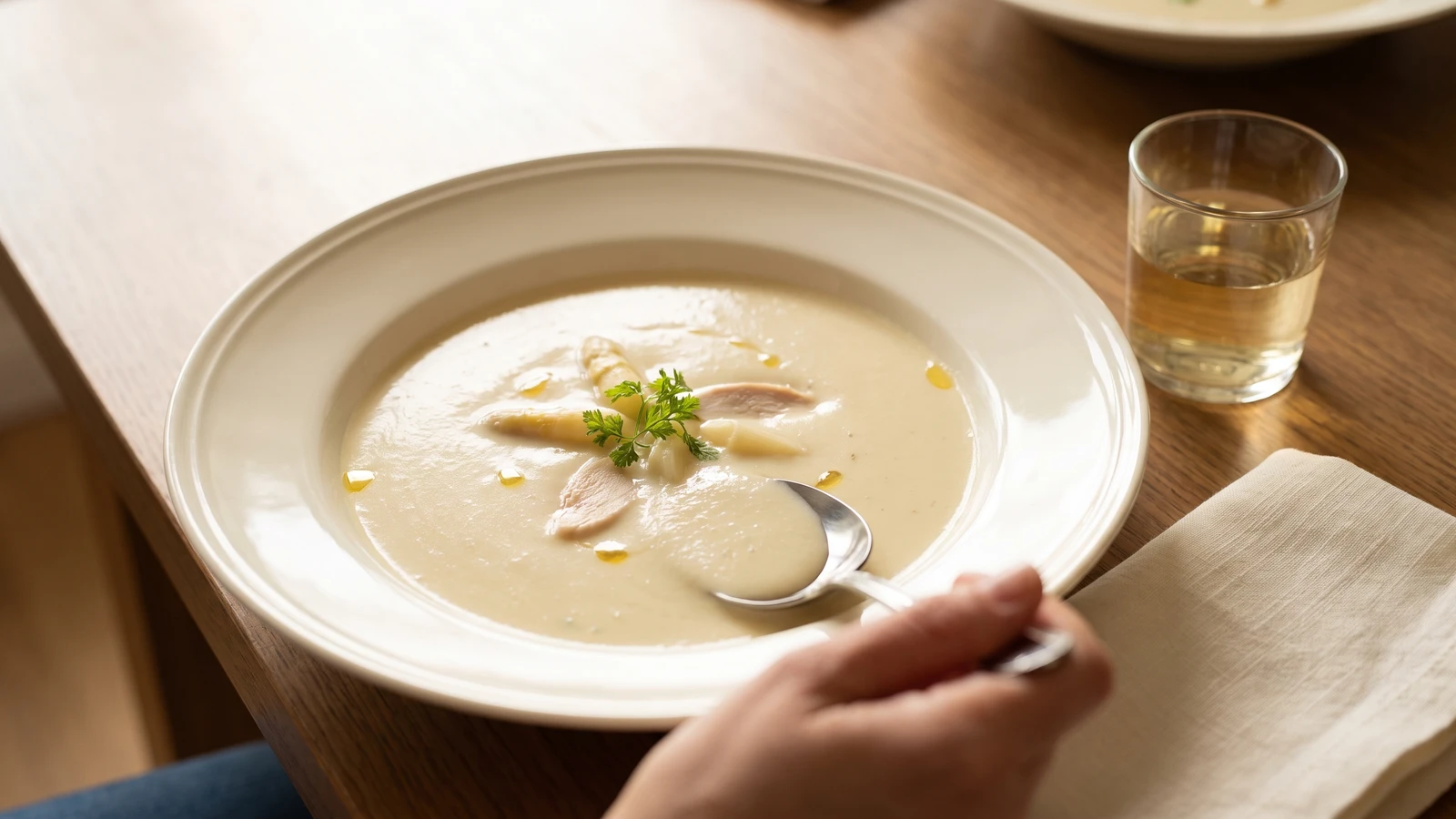
A pale, silken lesson in classical soup making: thin Béchamel and chicken purée passed fine, loosened with white consommé, finished with cream, then garnished with fillet, asparagus tips, and chervil pluches.
Crème de Volaille Princesse (Princess-style cream of chicken) teaches one of the quiet truths of the classical potage: silk comes from passing the base fine, not from drowning it in cream. Thin Béchamel gives structure, chicken purée gives substance, and white consommé restores lightness. The cream arrives only as the bowls go out.
The original expected a saucier with several preparations waiting, a pot of white consommé never off the fire, and a tammy cloth ready for passing the soup. At home, one saucepan builds the Béchamel, a food processor replaces the old pounding, and a sturdy fine-mesh sieve replaces the tammy. The brigade's separate holding pans are scaffolding and can go. The exact three-to-one-to-one proportion, the passage through the sieve, the gentle heating, and the final cream are the dish and must stay. The amounts here fill a home tureen with about two quarts. One cook, one stove, one evening.
When it is right, the soup flows ivory and glossy, carrying pale slices of chicken and white asparagus beneath green chervil pluches. It should feel light on the spoon despite its richness. The passage through the fine sieve is the step that decides the dish.
Crème de Volaille Princesse belongs to the named potages of the Parisian classical kitchen, where a garnish could define a soup as clearly as its base. It carried the household grammar of Béchamel and poached chicken into formal service by sieving them to silk, enriching the soup at the last moment, and adding pale chicken fillet with white asparagus. Princesse here is a kitchen title, not proof of royal origin; in this preparation, the asparagus tips and chervil pluches are part of the identity, not decoration.
Quantity
4 tablespoons (60 ml / 57 g)
Quantity
7 tablespoons (105 ml / 56 g)
Quantity
5 cups (1.18 L / 1.22 kg), plus up to ½ cup (120 ml / 124 g)
for the Béchamel and final adjustment
Quantity
3½ cups (830 ml / 500 g)
divided between the purée and 16 very small slices
Quantity
1½ cups (355 ml / 355 g) consommé, or 1½ cups (355 ml / 366 g) milk
Quantity
½ cup (120 ml / 120 g)
Quantity
20 to 24 tips, about 1 cup (240 ml / 150 g)
peeled if thick
Quantity
2 tablespoons (30 ml / 3 g)
torn into small shreds
Quantity
2 teaspoons (10 ml / 12 g)
divided
Quantity
⅛ teaspoon (0.6 ml / 0.25 g)
| Ingredient | Quantity |
|---|---|
| unsalted butter | 4 tablespoons (60 ml / 57 g) |
| all-purpose flour | 7 tablespoons (105 ml / 56 g) |
| whole milkfor the Béchamel and final adjustment | 5 cups (1.18 L / 1.22 kg), plus up to ½ cup (120 ml / 124 g) |
| cooked, unbrowned chicken breast filletdivided between the purée and 16 very small slices | 3½ cups (830 ml / 500 g) |
| white chicken consommé or boiled whole milk | 1½ cups (355 ml / 355 g) consommé, or 1½ cups (355 ml / 366 g) milk |
| heavy cream | ½ cup (120 ml / 120 g) |
| white asparagus tipspeeled if thick | 20 to 24 tips, about 1 cup (240 ml / 150 g) |
| chervil pluchestorn into small shreds | 2 tablespoons (30 ml / 3 g) |
| fine saltdivided | 2 teaspoons (10 ml / 12 g) |
| ground white pepper | ⅛ teaspoon (0.6 ml / 0.25 g) |
Bring a small pan of water to a gentle boil and season it with half the salt. Add the white asparagus tips and cook until a knife enters without resistance but the tips still hold their shape, about 3 to 6 minutes depending on thickness. Drain them carefully. Cut enough cooked chicken fillet into 16 very small, thin slices and keep both garnishes covered while you make the soup.
Warm the 5 cups of milk until hot. Melt the butter in a heavy saucepan over low heat, add the flour, and stir for 2 minutes to make a roux blanc (white roux), cooking away the raw flour taste without allowing it to colour. Whisk in the hot milk gradually, beginning with small additions, then hold the sauce at a bare simmer for 10 to 12 minutes while stirring along the bottom. If lumps form, take the pan off the heat and whisk vigorously before continuing. Ça se rattrape, and the final sieve will catch any stubborn ones. The finished Béchamel should veil a spoon thinly and run from it without clinging. Measure exactly 4½ cups (1.06 L); reduce gently if there is too much, or restore the measure with hot milk if there is too little.
Put about 2¾ cups (650 ml / 380 g) of the remaining cooked chicken into a food processor with 2 tablespoons taken from the measured Béchamel. Process, scrape down the bowl, and process again until the chicken becomes a fine, even paste. Measure exactly 1½ cups (355 ml) of chicken purée, processing a little more chicken if needed. Do not loosen it with extra liquid; the white consommé comes later, and that sequence protects the book's proportion.
Stir the 1½ cups of chicken purée into the 4½ cups of thin Béchamel until no pale streaks remain. Set a sturdy fine-mesh sieve over a clean saucepan and press the mixture through in manageable batches with a flexible scraper, collecting every bit clinging beneath the sieve. A food processor replaces the old pounding, but it does not replace this passing. The sieve removes the last chicken fibres and gives the Crème de Volaille Princesse its characteristic silk.
Whisk in the white chicken consommé, or the boiled milk, a little at a time. Set the pan over low heat and stir steadily until the soup is thoroughly hot and flows from the spoon in a smooth ribbon. Do not let it boil. If a bubble breaks the surface and the soup begins to look grainy, lift it from the heat immediately, whisk in 1 tablespoon of cold cream from the measured amount, and pass it once more through the clean sieve. Ça se rattrape. If the soup is too thick, loosen it with hot milk one spoonful at a time rather than cooking it harder.
Take the saucepan off the heat and stir in the remaining cream. Season with the remaining salt and the white pepper, tasting before adding all the salt because the consommé may already be seasoned. Warm the chicken slices and asparagus tips for 30 seconds in a ladleful of soup, then divide them among warmed bowls or place them in a warmed soup tureen. Ladle in the Crème de Volaille Princesse and scatter the chervil pluches over the surface at the final moment. Serve at once. À table!
1 serving (about 300g)
Culinary guides, cultural storytelling, and the editorial depth that makes cooking meaningful.
Discover Culinary ExplorerChef Juliette
Marseille's great fish stew, saffron-gold and garlic-scented, proves that a hard boil can be the careful choice: it binds olive oil into broth before the whole pot meets bread.
Chef Juliette
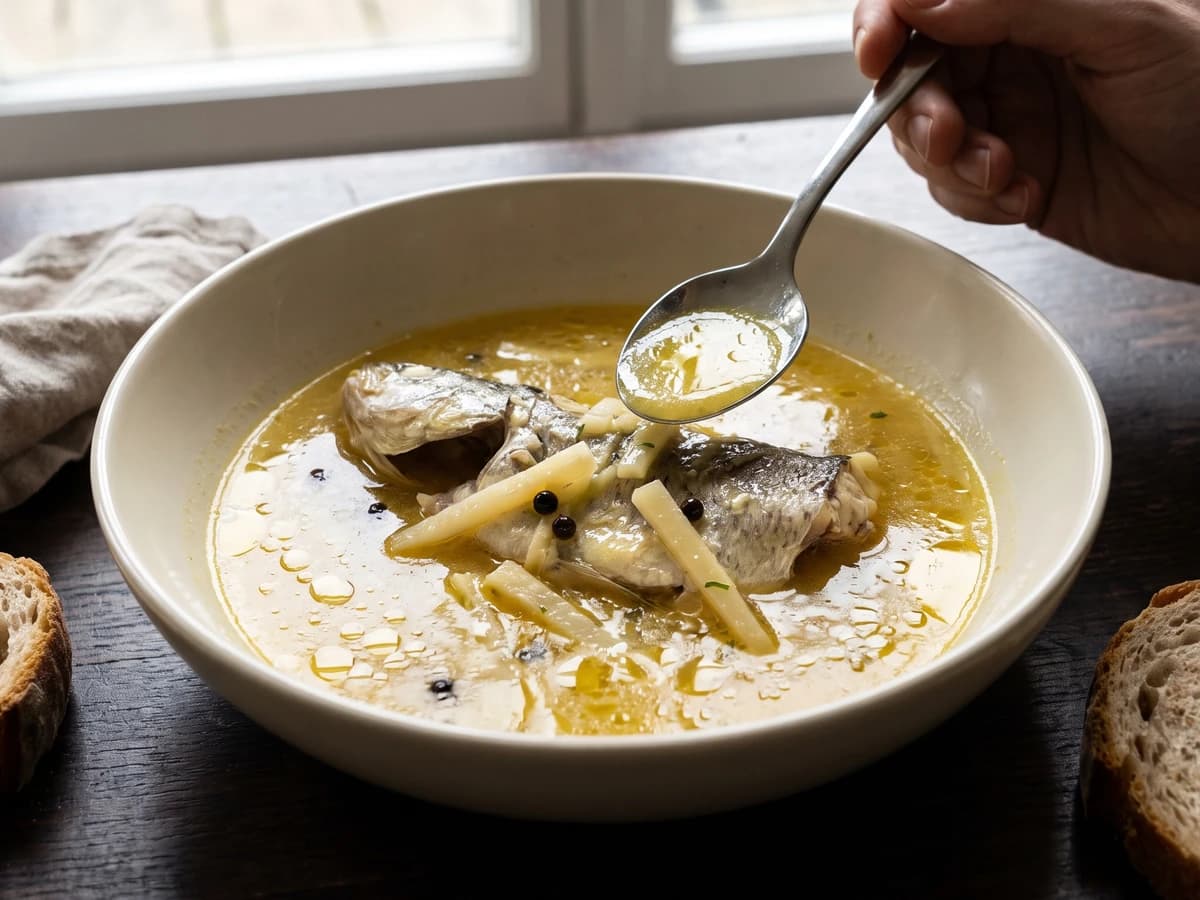
Waterzoi asks fresh, bone-in river fish to thicken its own buttery broth, with parsley root and pepper for company. No flour, no stockpot, just a brisk simmer watched closely.
Chef Juliette
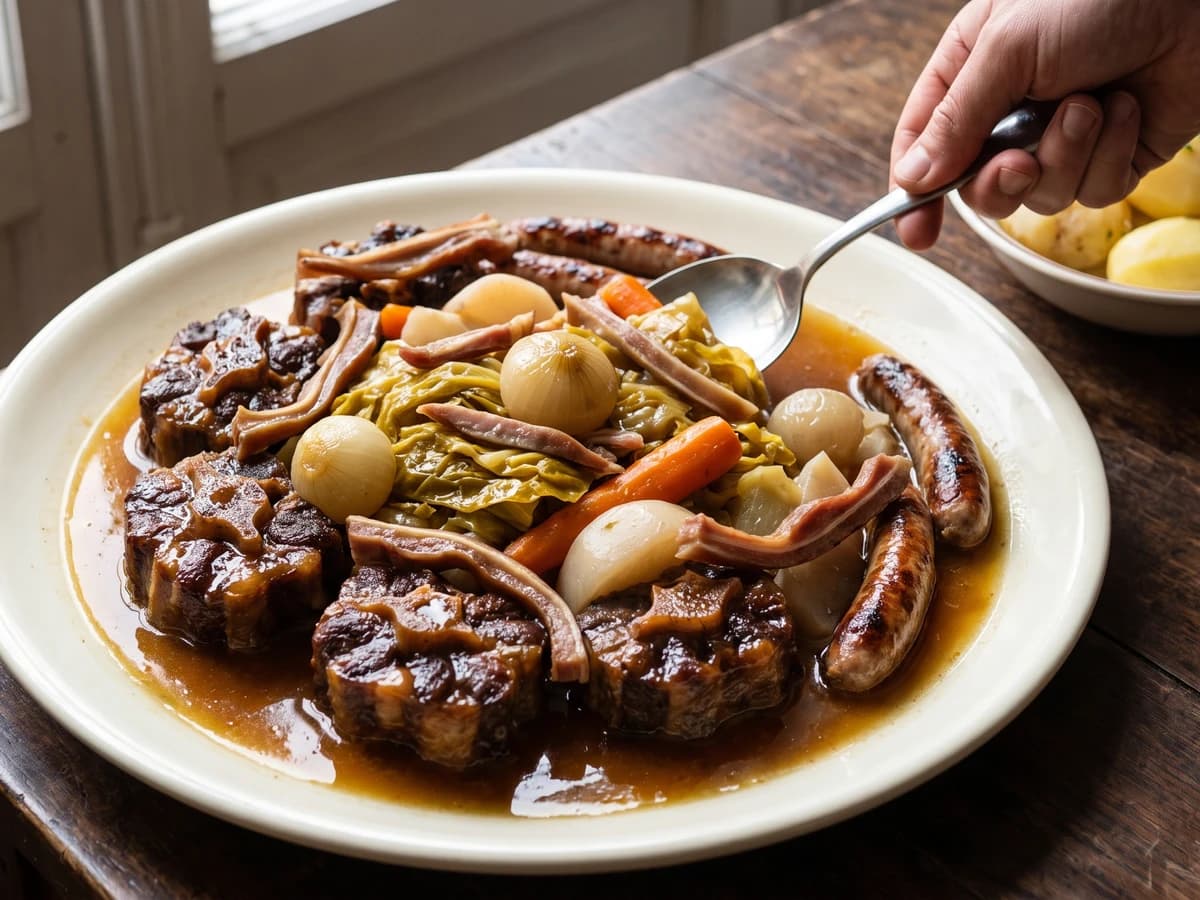
Queue de Bœuf en Hochepot gathers oxtail, pig's trotter and ear, cabbage, roots, and grilled chipolatas around a clear, gelatin-rich broth whose quiet simmer keeps every piece tender and distinct.
Chef Juliette
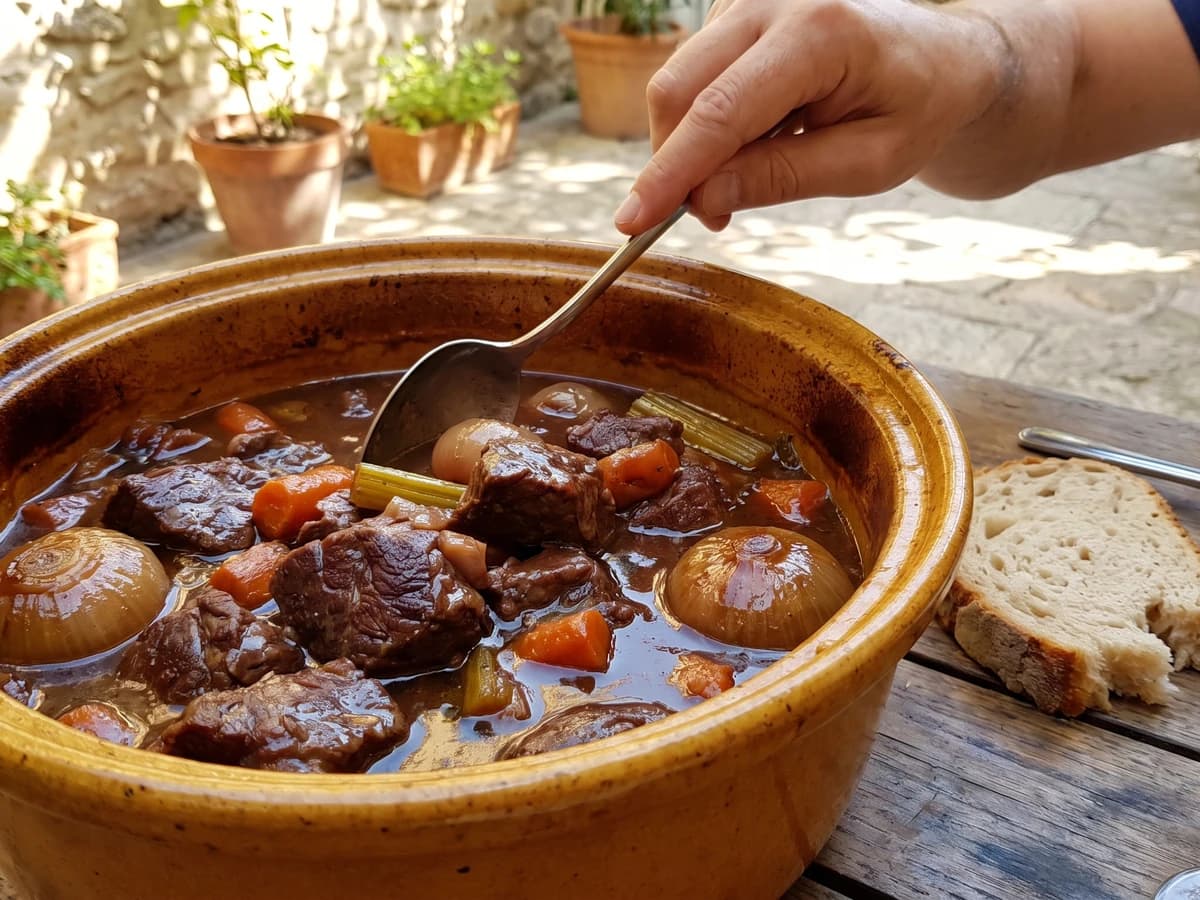
Beef shoulder larded with bacon, sharpened by red wine and vinegar, then sealed with garlic, vegetables, and dry lemon peel until the low oven turns it yielding and the gravy darkly glossy.