Chef Juliette
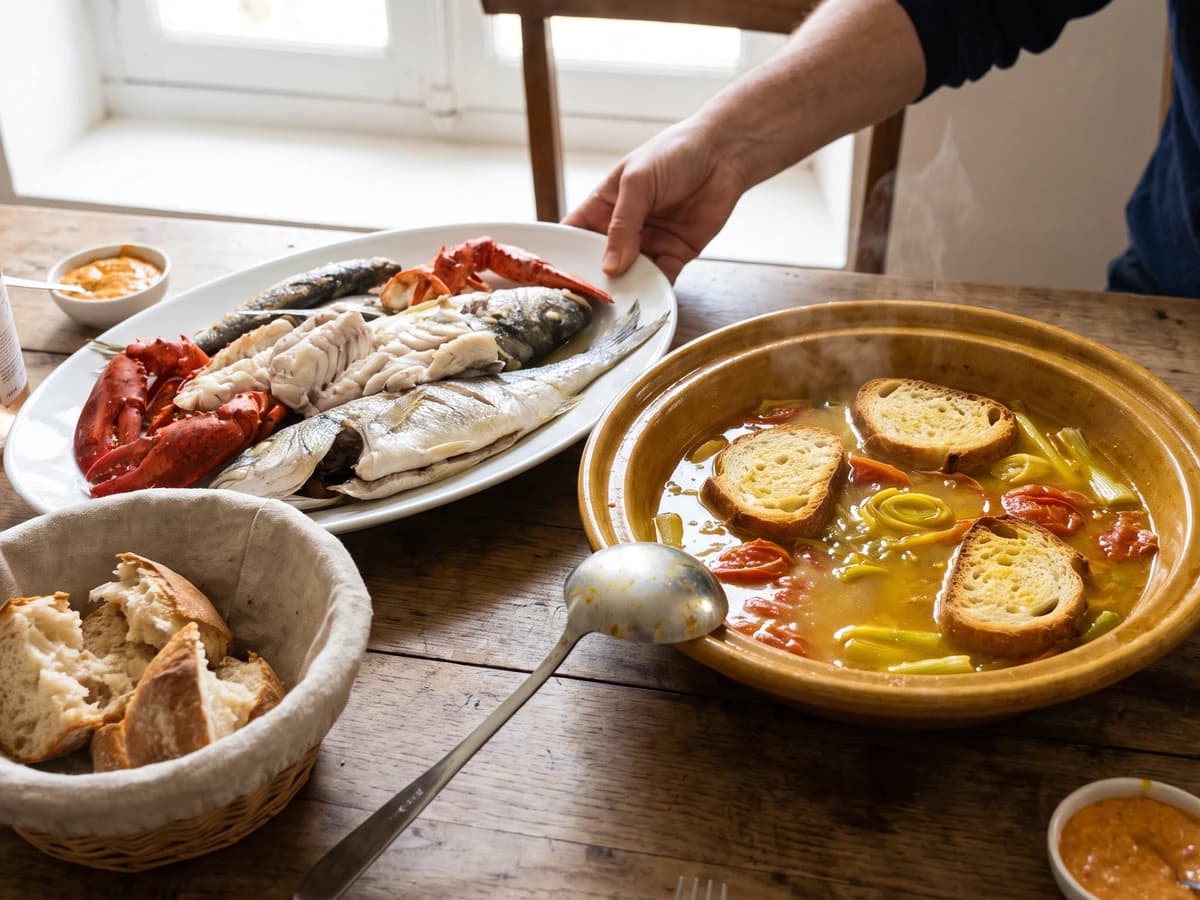
Bouillabaisse à la Marseillaise
Marseille's great fish stew, saffron-gold and garlic-scented, proves that a hard boil can be the careful choice: it binds olive oil into broth before the whole pot meets bread.
A cooking platform built around craft, culture, and the stories behind what we eat.

Created by Chef Juliette
Based on No. 720, Potage Derby, from Le Guide Culinaire (1907) by Auguste Escoffier
Potage Derby gathers silken rice cream, onion Soubise, and a breath of curry beneath foie-gras chicken quenelles, truffle pearls, and distinct rice grains, a grand potage made practical for one attentive home stove.
Potage Derby (Derby rice cream soup) teaches that refinement comes from continuity of texture, not complication. The one true thing to know before touching a pan is this: the soup must be perfectly smooth, while every element of its garnish remains distinct. Silken body, separate grains, tender quenelles, little black pearls of truffle. Blur those contrasts and the dish loses its reason for being.
The original kitchen assumed a saucier on staff, finished Soubise Sauce (No. 104) and Crème de Riz (No. 711) waiting in separate pans, consommé never off the fire, a tammy for sieving, and another pair of hands shaping the quenelles. No salamander enters this potage; its hidden luxury was labor. At home, prepare the two referenced components ahead, replace the tammy with a fine-mesh chinois or sturdy sieve, and arrange the garnish before enriching the soup. I have set the batch at about two quarts for six to eight first-course bowls, keeping the book's 1:2:1 proportion of Soubise, rice cream, and consommé. One cook, one stove, one evening.
Keeping several cooks and pans moving is brigade scaffolding, so that can go. The second sieving, the whisper of curry, the liaison (egg-and-cream enrichment), and the final butter cannot. Once the liaison enters, the soup must never boil; guard that heat, because it is the step that decides the bowl.
Potage Derby belongs to the repertoire of named Parisian grand-kitchen soups rather than to a regional French table. From formal hotel dining rooms it passed into bourgeois dinner-party menus, its Crème de Riz (No. 711), Soubise Sauce (No. 104), foie-gras quenelles, truffle pearls, and separate rice grains identifying it as precisely as a written title. The dedication behind the Derby name is less securely documented than the formula itself; in practice, the defining fact is its exact garnish, not an origin in Derbyshire.
Quantity
⅛ teaspoon (0.6 ml / 0.3 g)
Quantity
1½ cups (360 ml / 360 g)
preferably unsalted or lightly salted
Quantity
4
Quantity
¾ cup (180 ml / 180 g)
divided
Quantity
½ cup plus 1 tablespoon (135 ml / 128 g)
cut into small cubes
Quantity
½ cup (120 ml / 135 g)
kept very cold
Quantity
⅙ cup (40 ml / 45 g)
kept very cold
Quantity
1½ tablespoons (22 ml / 15 g)
cut into tiny pearls
Quantity
1½ tablespoons (22 ml / 22 g)
well drained with every grain separate
Quantity
as needed
| Ingredient | Quantity |
|---|---|
| Soubise Saucefinished and chilled | 1½ cups (360 ml / 360 g) Soubise Sauce (No. 104) |
| Crème de Rizfinished and chilled | 3 cups (720 ml / 730 g) Crème de Riz (No. 711) |
| mild curry powder | ⅛ teaspoon (0.6 ml / 0.3 g) |
| white consommépreferably unsalted or lightly salted | 1½ cups (360 ml / 360 g) |
| large egg yolks | 4 |
| heavy creamdivided | ¾ cup (180 ml / 180 g) |
| cold unsalted buttercut into small cubes | ½ cup plus 1 tablespoon (135 ml / 128 g) |
| plain uncooked chicken forcemeatkept very cold | ½ cup (120 ml / 135 g) |
| foie gras puréekept very cold | ⅙ cup (40 ml / 45 g) |
| fresh or preserved black trufflecut into tiny pearls | 1½ tablespoons (22 ml / 15 g) |
| poached long-grain white ricewell drained with every grain separate | 1½ tablespoons (22 ml / 22 g) |
| fine salt and freshly ground white pepper | as needed |
Fold the very cold foie gras purée into the very cold chicken forcemeat, preserving the book's proportion of one part foie gras to three parts forcemeat by volume. Keep the mixture over ice while bringing a wide pan of lightly salted water to a bare tremble, about 80 to 85°C (176 to 185°F). With two wet teaspoons, shape 18 small oval quenelles and test one first. Poach the rest gently for 5 to 7 minutes, turning once, until tender but firm and 74°C (165°F) at the center. Lift them into a shallow dish and cover. If the test quenelle feathers at the edges, the water is too active or the mixture is too warm. Lower the heat and chill the remaining forcemeat for 10 minutes. Ça se rattrape.
Spread the poached rice on a plate so the grains remain separate. Keep the truffle pearls covered at room temperature, where their aroma can wake without drying. If the rice has clumped, rinse it briefly in hot water, drain it thoroughly, and separate the grains with a fork. Do not mash at it. The garnish should look deliberate, not handled to exhaustion.
Put the Crème de Riz (No. 711) in a heavy 4-quart saucepan and whisk in the curry powder until no speck remains. Taste before adding anything else. The curry should register as warmth behind the rice, never announce itself by name. Whisk in the Soubise Sauce (No. 104) and warm the mixture over low heat just until fluid enough to pass through the sieve.
Press the warm mixture through a fine-mesh chinois or sturdy sieve into a clean saucepan, using a flexible scraper to work it through without forcing dry fibers after the smooth purée. This second sieving is not ceremony. It is the dish. Whisk in the white consommé and heat gently, stirring along the bottom, until the surface quivers but never boils. If the soup seems rough, pass it through once more; if it is too thick to flow from the ladle in a broad ribbon, loosen it with hot water one teaspoon at a time.
Reserve 2 tablespoons of the cream, then whisk the remaining cream with the egg yolks in a heatproof bowl. Take the soup off the heat and whisk three ladlefuls into the liaison, one at a time. Pour the tempered liaison back into the saucepan and cook over the lowest heat, stirring constantly, until the soup lightly coats the back of a spoon and reaches at least 74°C (165°F). Do not let it simmer. If tiny curds appear, stop immediately. Ça se rattrape: pour the soup through the clean sieve into a cool saucepan and whisk in the reserved cold cream. Return it only to the gentlest heat.
Take the saucepan completely off the heat. Monter au beurre, whisk in the cold butter, a few cubes at a time, letting each addition disappear before adding the next. Taste for salt and white pepper only after all the butter is incorporated, since the finished components may already be seasoned. The soup should be ivory, glossy, and thick enough to veil the spoon without sitting like porridge. If butter gathers in oily beads, whisk a teaspoon of hot water in a clean bowl, then add the soup to it gradually while whisking. The emulsion will come back.
Warm the quenelles and rice briefly in barely hot water, then drain them well. Place two or three quenelles in each warmed soup plate and divide the rice and truffle pearls among them. Ladle the Potage Derby around the garnish so the pieces remain visible and distinct. Serve at once, before the liaison cools and the butter loses its sheen. À table!
1 serving (about 255g)
Culinary guides, cultural storytelling, and the editorial depth that makes cooking meaningful.
Discover Culinary ExplorerChef Juliette
Marseille's great fish stew, saffron-gold and garlic-scented, proves that a hard boil can be the careful choice: it binds olive oil into broth before the whole pot meets bread.
Chef Juliette
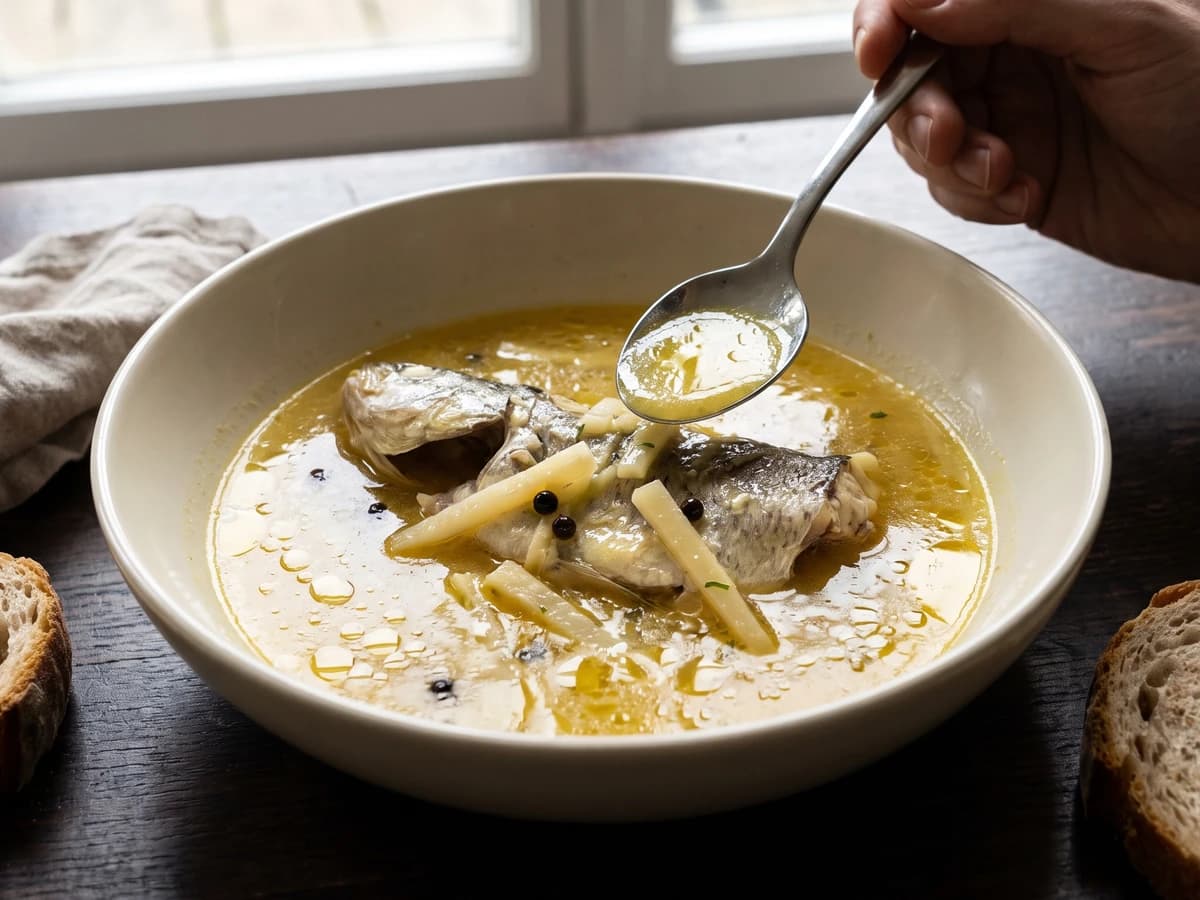
Waterzoi asks fresh, bone-in river fish to thicken its own buttery broth, with parsley root and pepper for company. No flour, no stockpot, just a brisk simmer watched closely.
Chef Juliette
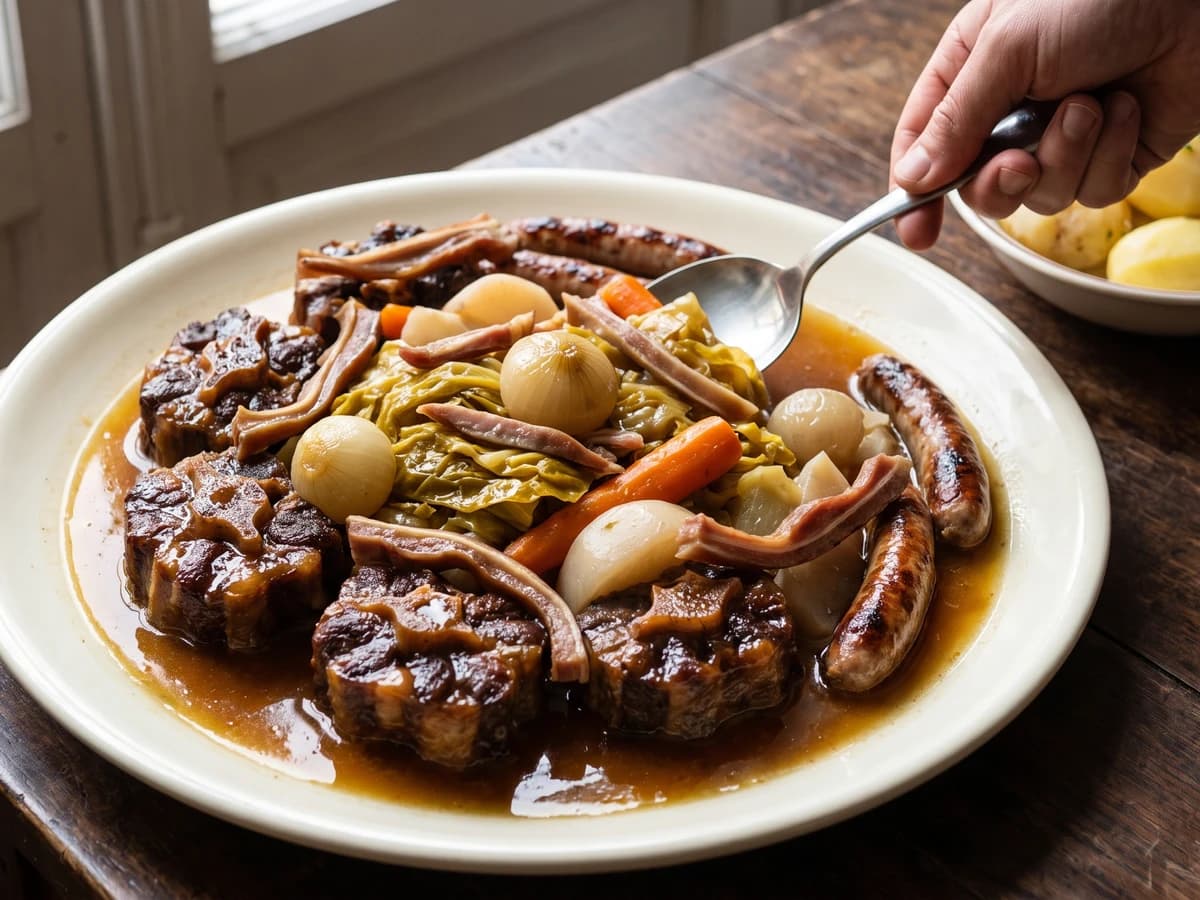
Queue de Bœuf en Hochepot gathers oxtail, pig's trotter and ear, cabbage, roots, and grilled chipolatas around a clear, gelatin-rich broth whose quiet simmer keeps every piece tender and distinct.
Chef Juliette
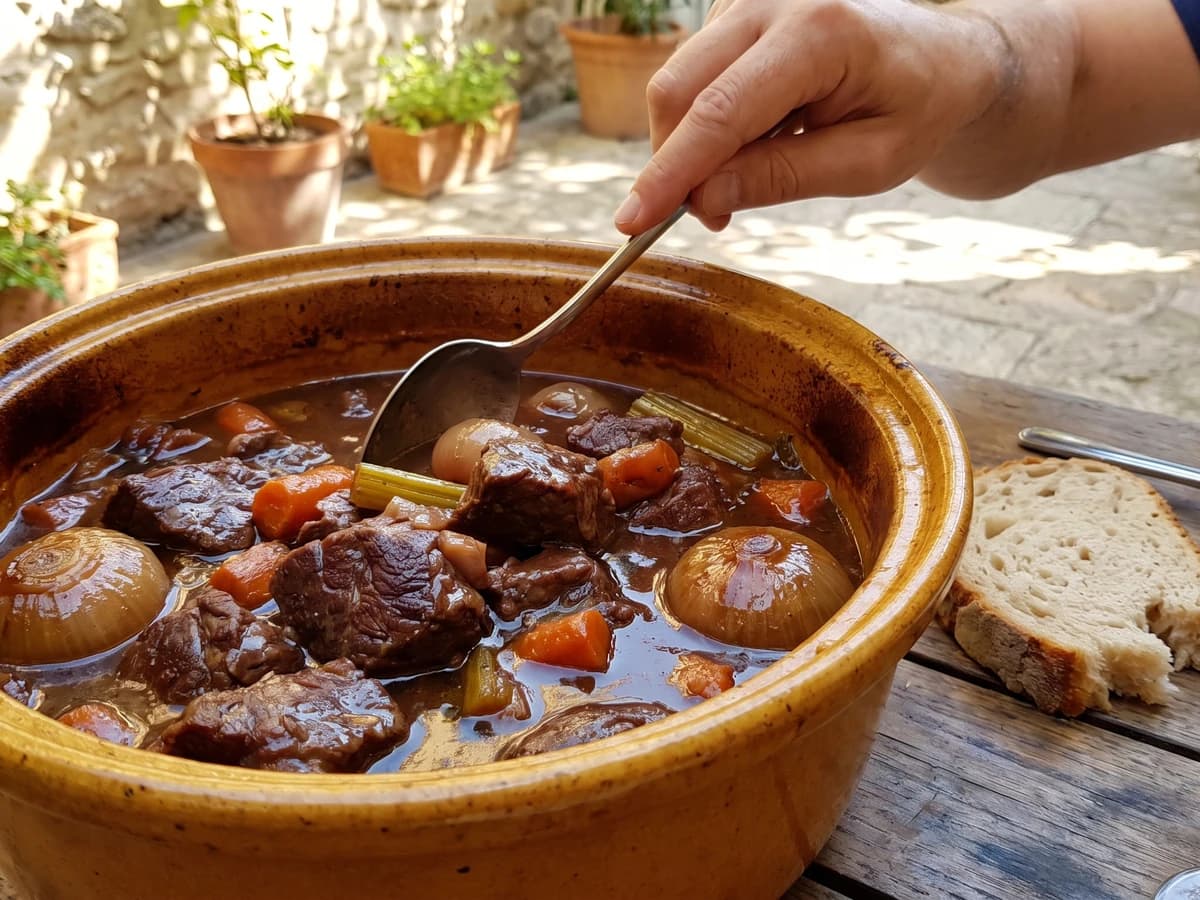
Beef shoulder larded with bacon, sharpened by red wine and vinegar, then sealed with garlic, vegetables, and dry lemon peel until the low oven turns it yielding and the gravy darkly glossy.