Chef Juliette
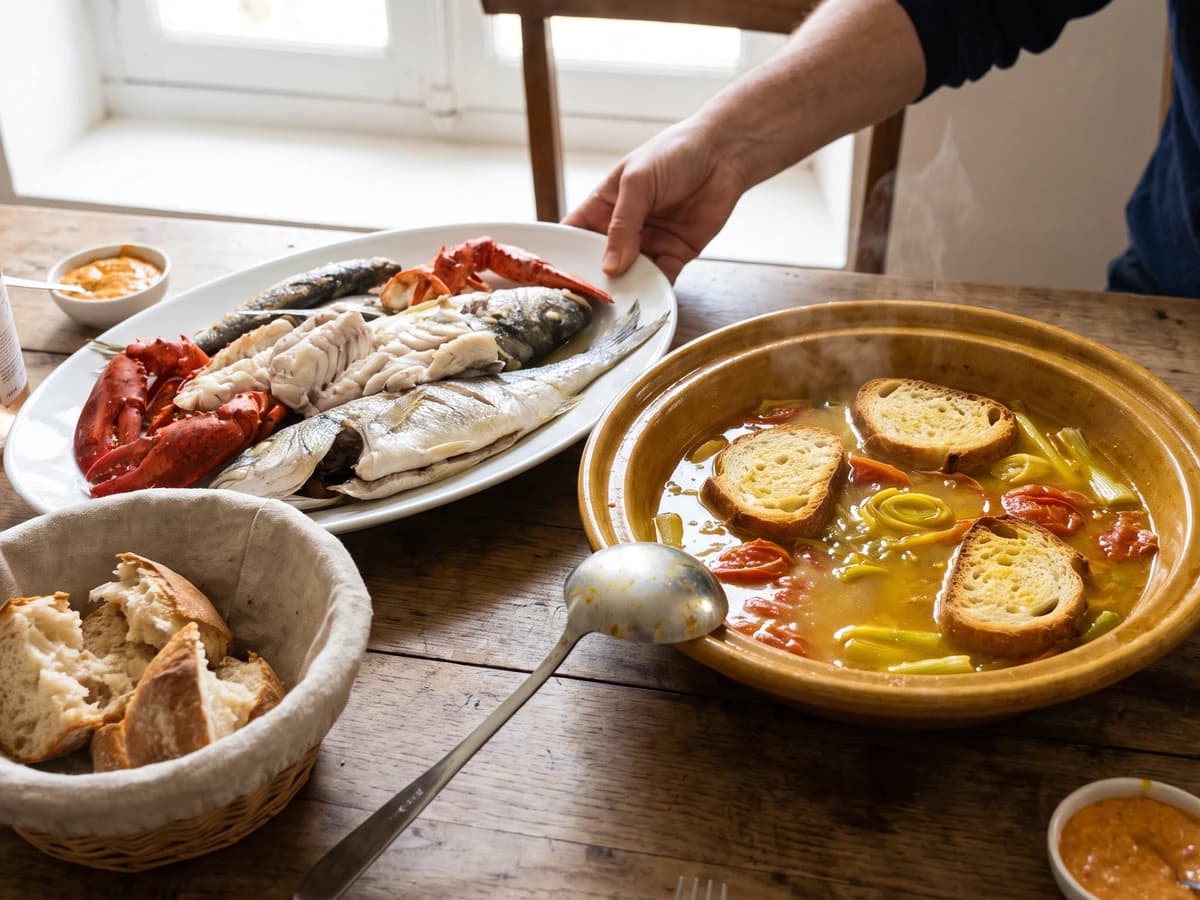
Bouillabaisse à la Marseillaise
Marseille's great fish stew, saffron-gold and garlic-scented, proves that a hard boil can be the careful choice: it binds olive oil into broth before the whole pot meets bread.
A cooking platform built around craft, culture, and the stories behind what we eat.

Created by Chef Juliette
Based on No. 711, Crème de Riz, from Le Guide Culinaire (1907) by Auguste Escoffier
Crème de Riz turns rice, white consommé, patience, and cream into an ivory soup of remarkable delicacy, teaching the foundation of the classical cream-soup family in one quiet saucepan.
Crème de Riz (rice cream soup) teaches the purest rule of the potage family: starch must be cooked until every grain yields, then refined without becoming heavy. Before you touch a pan, know this one thing: the rice must be completely tender before it meets the sieve. No blender can correct a chalky center.
The formula assumed a saucier on hand, white consommé never off the fire, then a mortar and tammy for refinement. A countertop blender and fine-mesh sieve are the honest home equivalents. The book's half-pound of rice and quart-plus-pint of consommé remain intact because, once creamed, they make the requested home pot of about two quarts; only the vague cream finish receives a usable range. The mortar and tammy are brigade scaffolding. Blanchings (No. 273), gentle cooking, sieving, dilution, and cream at service are the dish. One cook, one stove, one evening.
Finished Crème de Riz falls from the ladle in a continuous ivory ribbon, smooth enough to leave no grain on the tongue and fluid enough never to resemble porridge. Cook the rice until one grain crushes into paste without resistance. That is the step that decides everything.
Crème de Riz belongs not to one province but to the Paris-centered classical potage repertoire, where rice provided both body and flavor in pale, refined soups. It carried an older household practice, rice cooked to softness for gentle nourishment, into the grand kitchen through white consommé, mortar, tammy, and a final measure of cream. The name does not mean cream merely added to rice: crème names the finished family, completely puréed, sieved smooth, and adjusted to a flowing consistency at service.
Quantity
1¼ cups (300 ml / 225 g), prepared according to Blanchings (No. 273)
cooled and well drained
Quantity
6 cups (1.42 L / 1.42 kg)
divided
Quantity
1½ to 2 cups (355 to 475 ml / 355 to 475 g)
| Ingredient | Quantity |
|---|---|
| dry white ricecooled and well drained | 1¼ cups (300 ml / 225 g), prepared according to Blanchings (No. 273) |
| white consommédivided | 6 cups (1.42 L / 1.42 kg) |
| heavy cream | 1½ to 2 cups (355 to 475 ml / 355 to 475 g) |
Begin with the rice fully prepared according to Blanchings (No. 273), then cooled and drained. Put it in a heavy saucepan with 4 cups (950 ml) of the white consommé. Keep the remaining 2 cups (475 ml) hot in a small pan. The preliminary blanching is part of the method, not brigade fuss: it removes loose surface starch that would make the finished cream pasty before the grain itself has softened.
Bring the rice and consommé slowly to the first lazy bubbles, stir once, then cover with the lid slightly ajar. Cook over the gentlest heat for 50 to 60 minutes, scraping the pan floor every ten minutes, until the grains collapse beneath a spoon and one tasted grain has no firm or chalky center. If the liquid dwindles while the rice still resists, add the hot reserved consommé ¼ cup (60 ml) at a time and keep cooking. Ça se rattrape. Count whatever you add against the consommé reserved for dilution.
Let the rice mixture settle for five minutes. Blend it in half-batches, venting the blender lid and covering the opening loosely with a folded towel, until no grain remains visible. Rinse the saucepan, then press the warm purée through a fine-mesh sieve into it. This sieving stays. It is what separates Crème de Riz from an ordinary blended rice soup. If the purée stalls in the sieve, blend the captured pulp again with a ladleful of the reserved consommé, then pass it through once more.
Whisk in all the remaining reserved white consommé a little at a time, keeping the purée smooth after each addition. Return the pan to gentle heat for 8 to 10 minutes, stirring along the floor, until the soup coats the back of a spoon in a thin veil but still pours freely. If it stands in a mound, it is too thick; the cream will loosen it further. If it runs like unthickened stock, let it simmer gently before the cream goes in. Do not reach for flour. The rice is the body.
Warm the cream gently in the emptied consommé pan. Take the soup off the heat and whisk in 1½ cups (355 ml), then add as much of the final ½ cup (120 ml) as needed for a smooth, flowing ribbon. Return it to the lowest heat only long enough for the surface to regain its gloss; do not let it boil hard. If the cream separates into fine specks, remove the pan from the heat, blend briefly, and pass the soup through the sieve once more. Ladle into warmed bowls or bring the soupière directly to the table. No parsley, no croutons, no little green apology. The clean ivory surface is the finish. À table!
1 serving (about 240g)
Culinary guides, cultural storytelling, and the editorial depth that makes cooking meaningful.
Discover Culinary ExplorerChef Juliette
Marseille's great fish stew, saffron-gold and garlic-scented, proves that a hard boil can be the careful choice: it binds olive oil into broth before the whole pot meets bread.
Chef Juliette
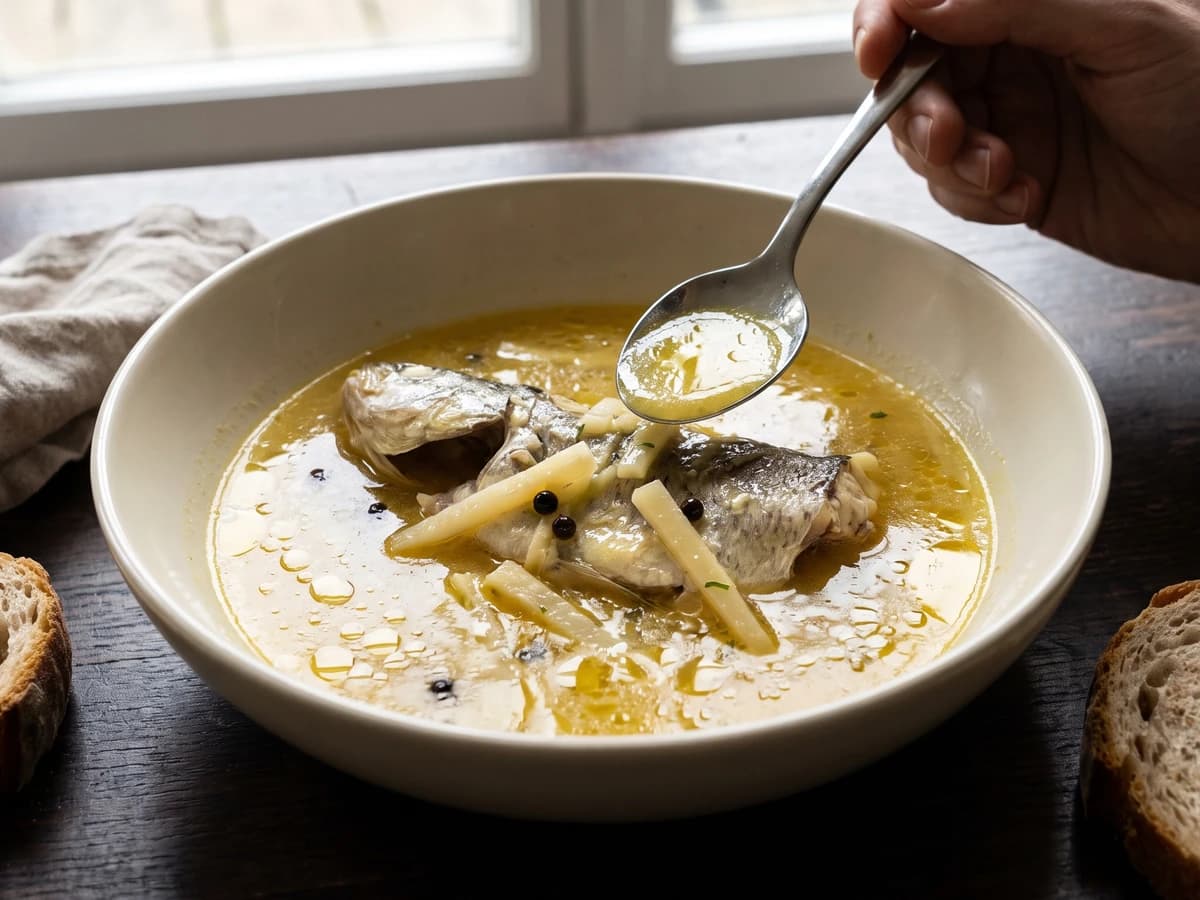
Waterzoi asks fresh, bone-in river fish to thicken its own buttery broth, with parsley root and pepper for company. No flour, no stockpot, just a brisk simmer watched closely.
Chef Juliette
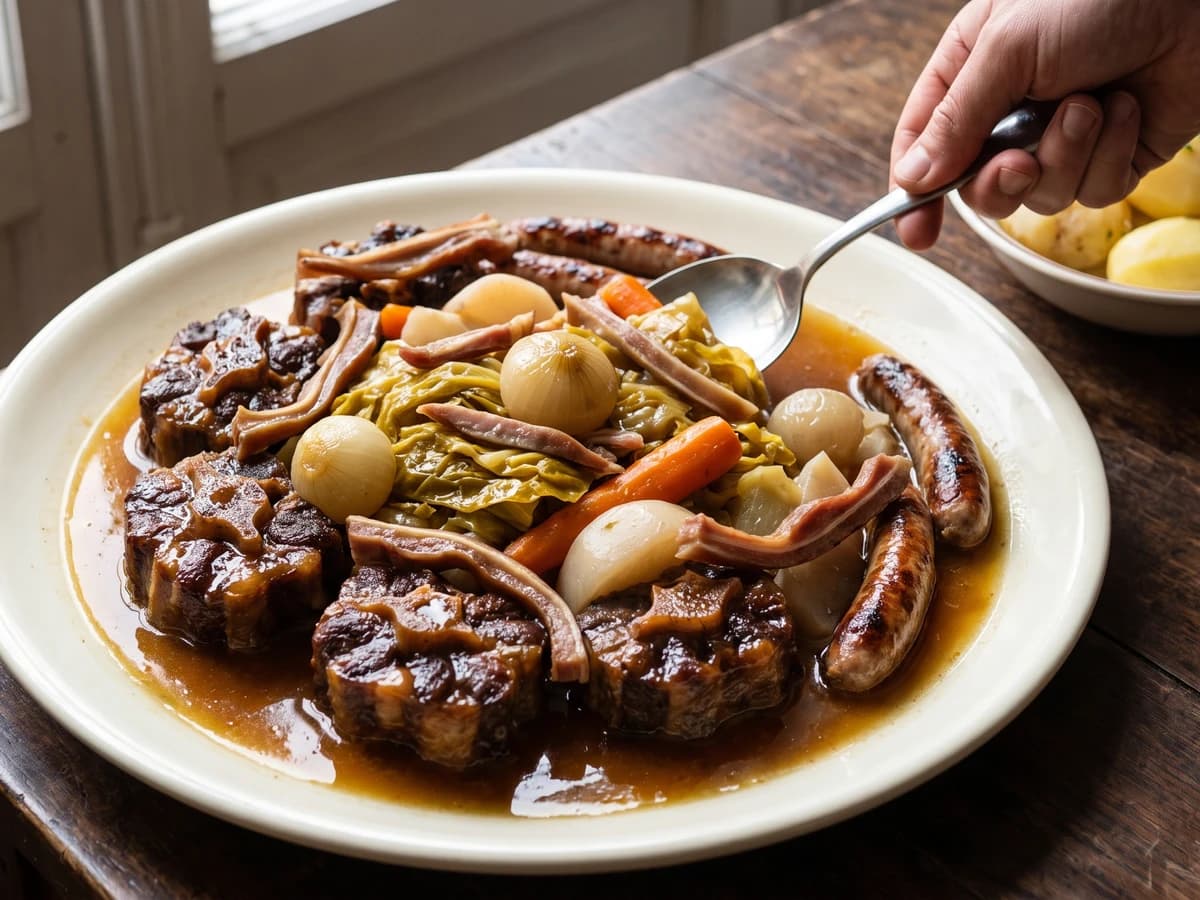
Queue de Bœuf en Hochepot gathers oxtail, pig's trotter and ear, cabbage, roots, and grilled chipolatas around a clear, gelatin-rich broth whose quiet simmer keeps every piece tender and distinct.
Chef Juliette
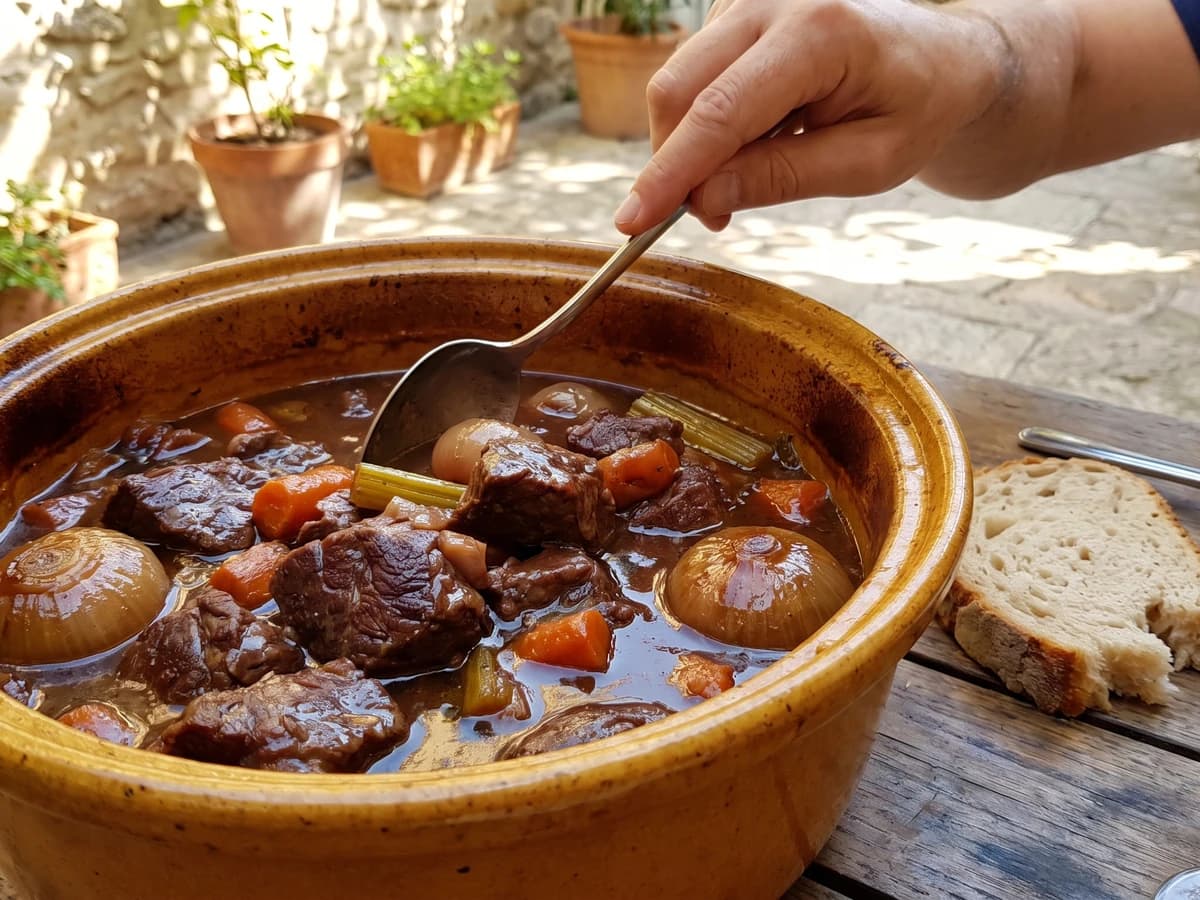
Beef shoulder larded with bacon, sharpened by red wine and vinegar, then sealed with garlic, vegetables, and dry lemon peel until the low oven turns it yielding and the gravy darkly glossy.