Chef Juliette
Bouillabaisse à la Marseillaise
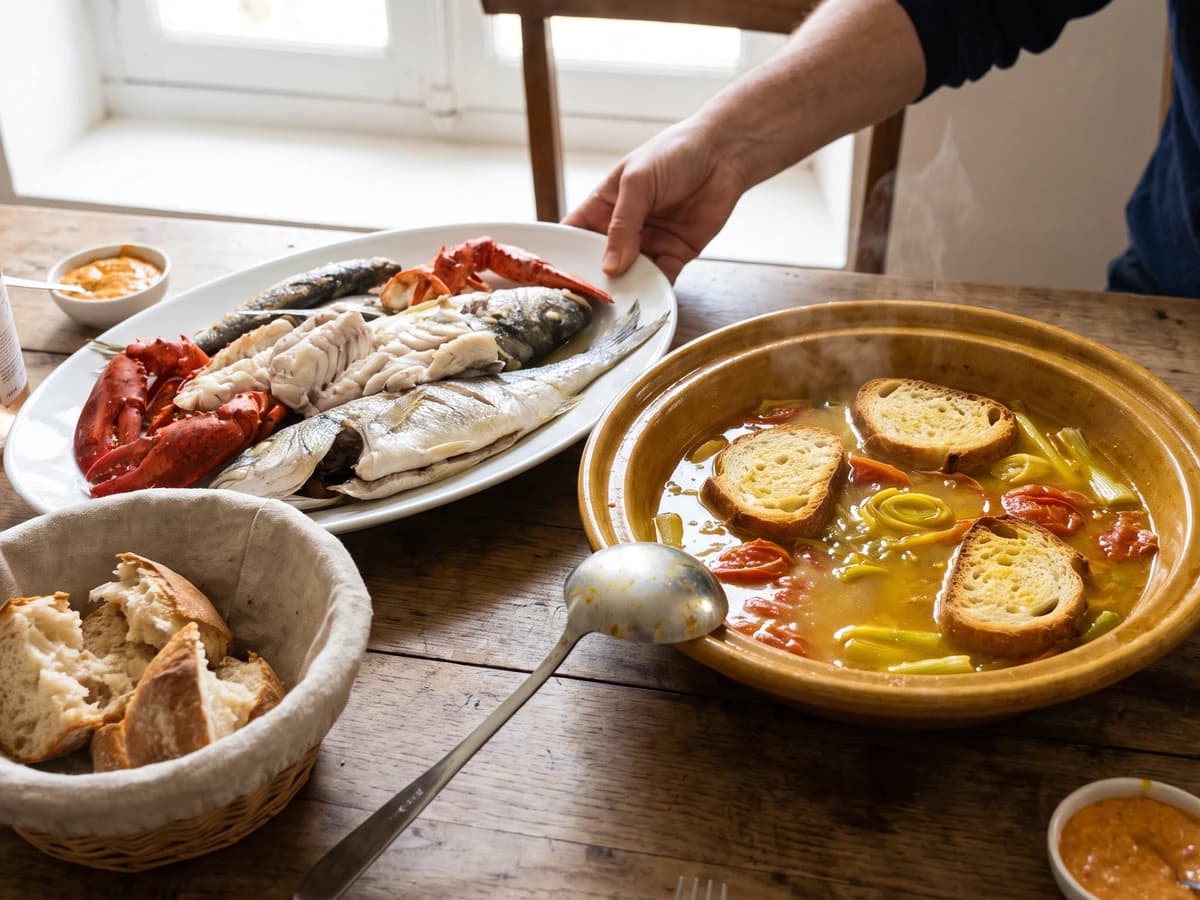
Marseille's great fish stew, saffron-gold and garlic-scented, proves that a hard boil can be the careful choice: it binds olive oil into broth before the whole pot meets bread.
A cooking platform built around craft, culture, and the stories behind what we eat.

Created by Chef Juliette
Based on No. 709, Crème d’Oseille à l’Orge, from Le Guide Culinaire (1907) by Auguste Escoffier
Barley meal gives this sorrel cream its quiet body, while butter-softened leaves keep the milk bright and tart: a long, gentle simmer finished smooth enough to gleam from the spoon.
Crème d’Oseille à l’Orge (sorrel cream with barley) teaches the proper handling of a cereal-thickened cream soup. Barley meal must be dispersed completely in cold milk before it meets the boiling milk. That is the one true thing to know before touching the pan, because a smooth beginning gives you silk and a hurried one gives you stubborn little knots.
The original formula assumed a saucier on staff, a pot moved to the quiet side of the range, and a tammy waiting for the final passing. For one cook, one stove, one evening, use a heavy saucepan over your smallest burner, scale the referenced formula uniformly to about two quarts, and replace the tammy with an immersion blender followed by a fine-mesh sieve. The tammy is brigade scaffolding and may go. The slow simmer and the fondue d’oseille, sorrel melted patiently in butter, are the dish itself and must stay.
The finished crème should be pale ivory-green, softly tart beneath the milk, and thick enough to cling lightly to the spoon without eating like porridge. Barley gives it a rounder, earthier body than oatmeal, while the late addition of sorrel keeps its character alive. Whisk that first cold slurry until no dry meal remains; everything good follows from there.
Crème d’Oseille à l’Orge belongs to the classical Parisian table, where familiar household sorrel soup was passed through a tammy and organized among the refined families of crèmes and veloutés. It traveled from the bourgeois pot into grand-kitchen service and back again, with barley meal providing body while butter and milk softened sorrel’s sharpness. Despite the name, pearl barley is not the thickener in this formula: finely ground barley meal is, while well-cooked pearl barley appears only among the possible garnishes.
Quantity
1⅓ batches, scaled uniformly to about 2 quarts (1.9 L / about 2 kg), with finely ground barley meal replacing oatmeal gram for gram (No. 708)
prepared according to its own formula
Quantity
½ cup (120 ml / 30 g), prepared as its own formula (No. 215)
Quantity
2 medium (about 1½ cups / 300 g before trimming)
peeled, seeded, pressed dry, and cut into 5 mm dice
Quantity
1 tablespoon (15 ml / 14 g)
for the optional tomato garnish
Quantity
¾ cup (180 ml / 140 g)
well drained
| Ingredient | Quantity |
|---|---|
| Crème d’Oseille à l’Avoineprepared according to its own formula | 1⅓ batches, scaled uniformly to about 2 quarts (1.9 L / about 2 kg), with finely ground barley meal replacing oatmeal gram for gram (No. 708) |
| Chiffonade (optional) | ½ cup (120 ml / 30 g), prepared as its own formula (No. 215) |
| ripe tomatoes (optional)peeled, seeded, pressed dry, and cut into 5 mm dice | 2 medium (about 1½ cups / 300 g before trimming) |
| unsalted butter (optional)for the optional tomato garnish | 1 tablespoon (15 ml / 14 g) |
| poached white rice (optional)well drained | ¾ cup (180 ml / 140 g) |
Prepare Crème d’Oseille à l’Avoine (No. 708) according to its own formula, scaling every quantity uniformly by one-third again to produce about two quarts. Make one change only: replace the oatmeal with the same weight and volume of finely ground barley meal. Keep the milk proportions, seasoning, butter, cream, and sequence intact. Orge is the cereal change, not permission to redesign the soup.
When the referenced formula calls for the cereal to be diluted in cold milk, whisk the barley meal into that cold portion until perfectly smooth, with no dry meal hiding at the bottom. Pour this slurry into the lightly salted boiling milk in a thin, steady stream while whisking constantly, then continue stirring until the boil returns. If it gathers into small lumps, take the pan off the heat and use an immersion blender briefly before continuing. Ça se rattrape.
Move the heavy saucepan to the smallest burner, set a heat diffuser beneath it if your stove runs fierce, and hold the soup at the faintest simmer for two hours. Leave the lid slightly ajar and stir along the bottom every ten to fifteen minutes, more often near the end as the barley swells. If the milk catches, do not scrape the browned layer into the soup; immediately pour the clean upper portion into another saucepan and continue gently. A scorched taste cannot be strained away.
Prepare the scaled quantity of fondue d’oseille in a separate pan as directed by the governing formula. Let the tender sorrel collapse slowly in real butter until it becomes a soft, dark green pulp, stirring so nothing browns. This separate melting is not ceremony: butter rounds the leaf’s acidity before it enters the milk, and adding raw sorrel directly would leave the crème thin and harsh.
After the barley has completed its long simmer, stir in the fondue d’oseille and return the soup to a bare simmer for fifteen minutes. Keep the heat quiet. Sorrel naturally dulls from vivid green to a softer olive shade as it cooks, so judge by taste and texture rather than chasing an impossible colour.
Blend the soup directly in the saucepan until uniform, then press it through a fine-mesh sieve into a clean pan, working patiently with a flexible spatula. This replaces the tammy without changing its purpose. Complete the crème with the butter and cream specified by the referenced formula, warm it gently, and adjust its consistency only as that formula directs. Once the cream is in, do not boil. If the finish looks grainy, pull it from the heat, add a spoonful of cold cream, and blend briefly until smooth.
For the leaf garnish, prepare the Chiffonade (No. 215) entirely according to its own formula and spoon it into the hot crème just before serving. For tomato garnish, melt the tablespoon of butter in a small pan, add the pressed dice, and turn them only until glossy and warmed through. For the most comforting bowl, add the poached rice instead. Choose one, not all three, ladle into warm soup plates, and serve at once. À table!
1 serving (about 295g)
Culinary guides, cultural storytelling, and the editorial depth that makes cooking meaningful.
Discover Culinary ExplorerChef Juliette
Marseille's great fish stew, saffron-gold and garlic-scented, proves that a hard boil can be the careful choice: it binds olive oil into broth before the whole pot meets bread.
Chef Juliette
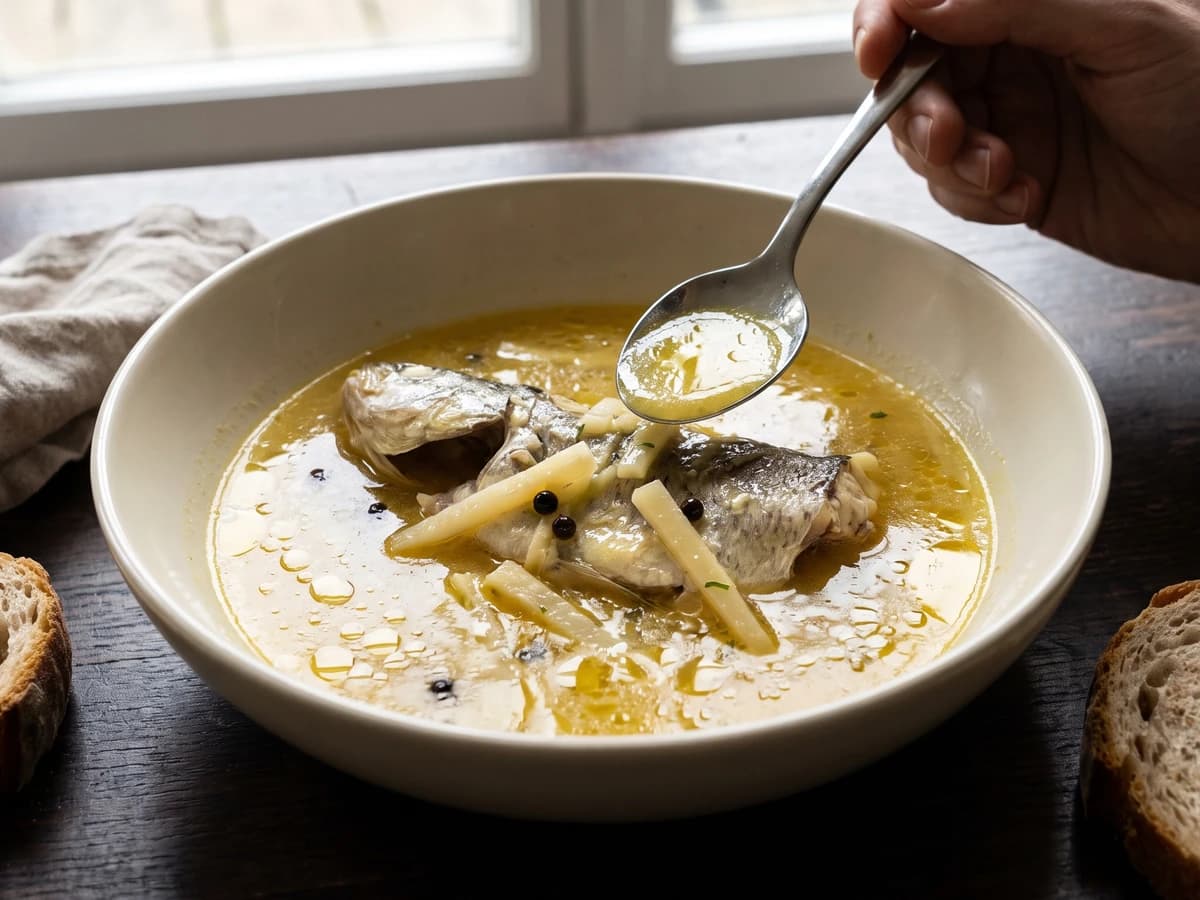
Waterzoi asks fresh, bone-in river fish to thicken its own buttery broth, with parsley root and pepper for company. No flour, no stockpot, just a brisk simmer watched closely.
Chef Juliette
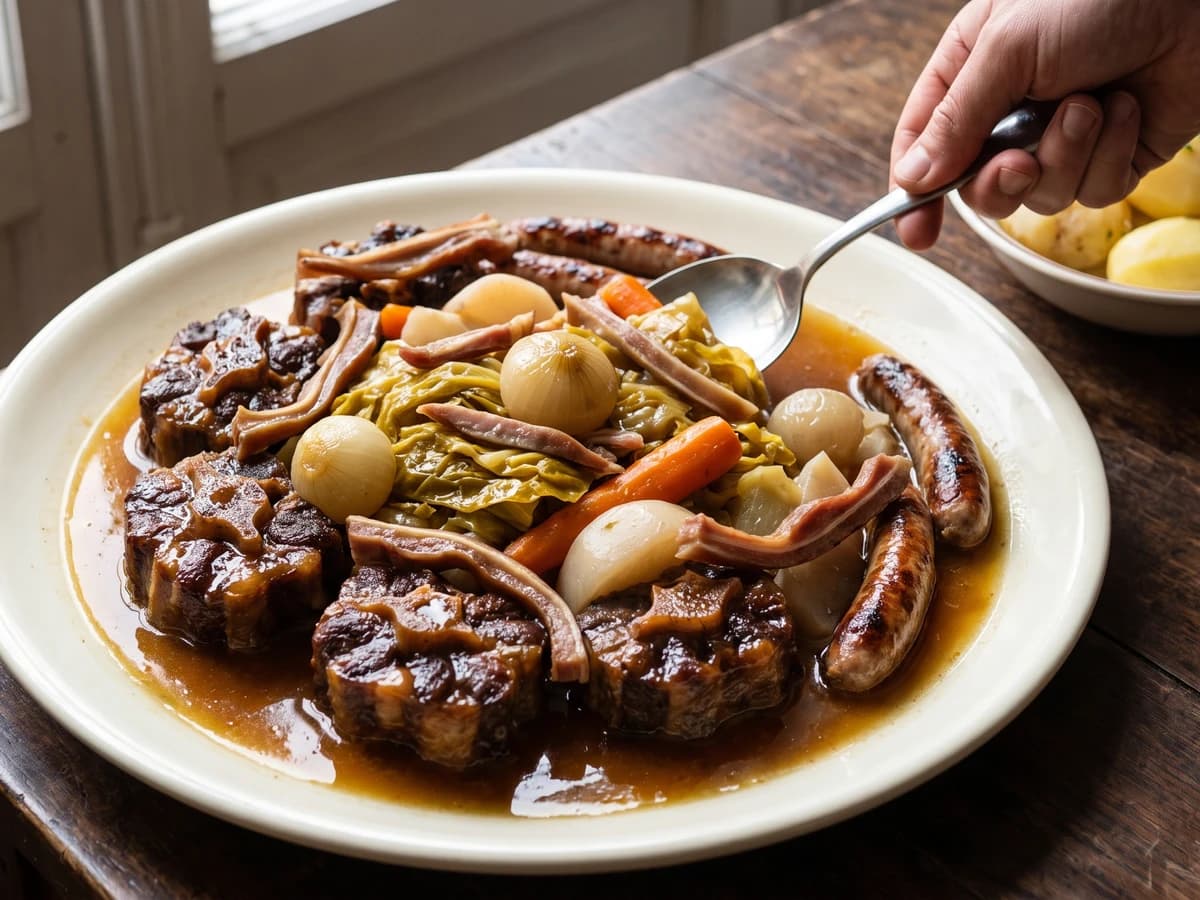
Queue de Bœuf en Hochepot gathers oxtail, pig's trotter and ear, cabbage, roots, and grilled chipolatas around a clear, gelatin-rich broth whose quiet simmer keeps every piece tender and distinct.
Chef Juliette
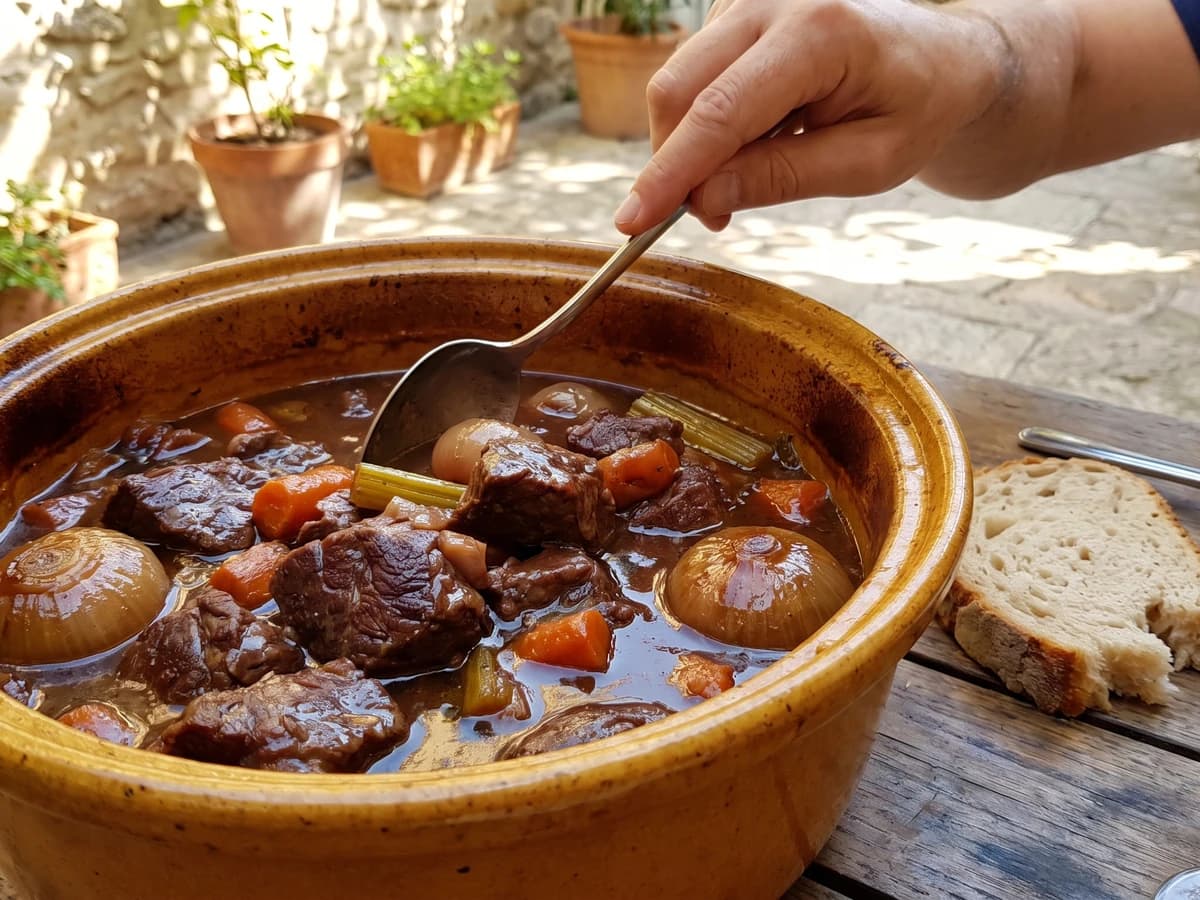
Beef shoulder larded with bacon, sharpened by red wine and vinegar, then sealed with garlic, vegetables, and dry lemon peel until the low oven turns it yielding and the gravy darkly glossy.