Chef Juliette
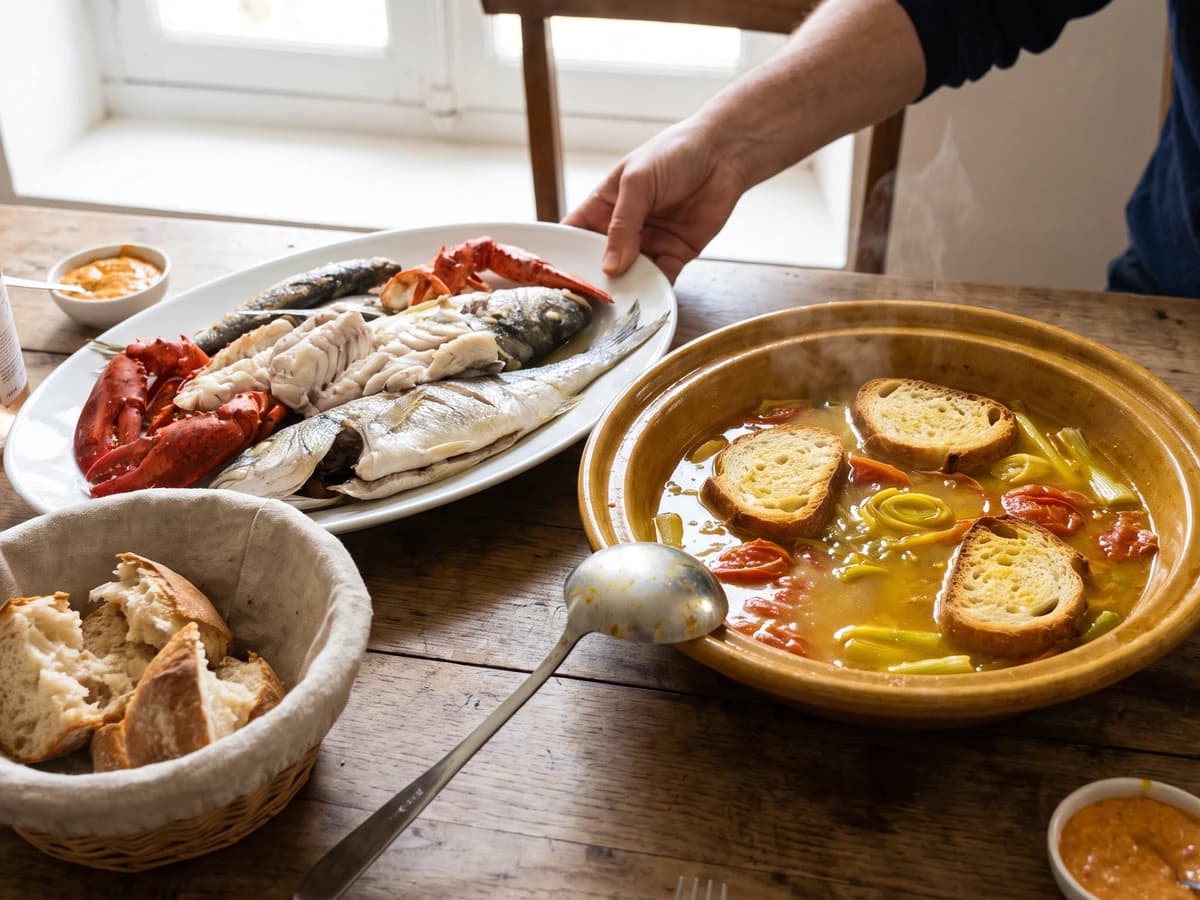
Bouillabaisse à la Marseillaise
Marseille's great fish stew, saffron-gold and garlic-scented, proves that a hard boil can be the careful choice: it binds olive oil into broth before the whole pot meets bread.
A cooking platform built around craft, culture, and the stories behind what we eat.

Created by Chef Juliette
Based on No. 708, Crème d’Oseille à l’Avoine, from Le Guide Culinaire (1907) by Auguste Escoffier
Crème d’Oseille à l’Avoine turns oats into silk: milk simmered patiently, sorrel melted in butter, and the whole passed fine for a tart, ivory-green soup with no roux in sight.
Crème d’Oseille à l’Avoine (sorrel cream thickened with oats) teaches one true thing: oatmeal becomes silk only when you give it gentle heat and the full cooking it asks for. Rush it and the soup tastes of raw cereal. Let it barely simmer, then add the Fondue (sorrel cooked down to a pulp in butter), and the oats soften sorrel’s keen acidity without burying it.
The book’s kitchen assumed a saucier could mind a milk pot at the side of the fire for two hours, then force the soup through a tammy. This particular entry needs neither a stockpot nor a salamander. For one cook, one stove, one evening, a heavy saucepan over a heat diffuser replaces the side fire, and a fine-mesh sieve replaces the tammy. I’ve kept the oatmeal-to-milk proportion, brought the quantity to a practical home batch of about two quarts, and finished it with cream and butter as a classical crème requires.
The constant attendance of a brigade is scaffolding, so that goes. The two-hour simmer, the separate Fondue, the final fifteen minutes, and the sieve are the dish, so they stay. Before you touch the pan, remember the step that decides everything: keep the oat milk at the barest simmer and scrape the bottom regularly.
Crème d’Oseille à l’Avoine belongs to the national classical repertoire shaped in Parisian grand kitchens, where cereals such as rice, barley, and oats gave potages crèmes their body before they were passed through a tammy and enriched. Sorrel came from kitchen gardens across northern and central France, its sharp household soup carried into grand kitchens and made smoother without erasing its bite. Unlike a roux-bound cream soup, this version takes its liaison from patiently cooked oatmeal.
Quantity
1¾ cups (415 ml / 160 g)
Quantity
1⅔ cups (400 ml / 412 g)
Quantity
6⅔ cups (1.6 L / 1.65 kg)
Quantity
1 teaspoon (5 ml / 6 g)
divided
Quantity
4 packed cups (950 ml / 120 g)
tough stems removed, washed and dried well
Quantity
3 tablespoons (45 ml / 42 g)
Quantity
¾ cup (180 ml / 180 g)
warmed
Quantity
2 tablespoons (30 ml / 28 g)
diced
Quantity
Up to ½ cup (120 ml / 124 g)
warmed
| Ingredient | Quantity |
|---|---|
| fine oatmeal, not instant | 1¾ cups (415 ml / 160 g) |
| cold whole milk | 1⅔ cups (400 ml / 412 g) |
| whole milk | 6⅔ cups (1.6 L / 1.65 kg) |
| fine sea saltdivided | 1 teaspoon (5 ml / 6 g) |
| fresh sorrel leavestough stems removed, washed and dried well | 4 packed cups (950 ml / 120 g) |
| unsalted butter for the Fondue | 3 tablespoons (45 ml / 42 g) |
| heavy creamwarmed | ¾ cup (180 ml / 180 g) |
| cold unsalted butter for finishingdiced | 2 tablespoons (30 ml / 28 g) |
| whole milk for adjusting consistency (optional)warmed | Up to ½ cup (120 ml / 124 g) |
Whisk the fine oatmeal into the cold milk until every grain is wet and no dry pockets remain. It will look loose, which is exactly right. This cold dilution lets the oatmeal enter the hot milk evenly instead of setting into stubborn knots.
Bring the larger quantity of whole milk and three-quarters of the salt to a boil in a heavy saucepan, stirring across the bottom as it heats. Lower the heat slightly and pour in the oatmeal mixture in a thin stream while whisking continuously. Stir until the soup returns just to the boil. If small lumps form, take the pan off the heat and whisk hard, or give it ten seconds with an immersion blender before continuing.
Move the saucepan to your smallest burner, preferably over a heat diffuser, and leave the lid slightly ajar. Hold the soup at the barest simmer for two full hours, with one slow bubble breaking the surface every few seconds. Stir across the entire pan floor every ten minutes, then more often as the oatmeal thickens. This long cooking is the dish: the grains swell, lose their raw taste, and form the smooth liaison. If the bottom catches, stop stirring immediately and pour the unburnt soup into a clean saucepan without scraping the scorched layer. Add a spoonful of warm milk and continue gently. Ça se rattrape.
When the oatmeal has cooked for one hour and forty-five minutes, melt the three tablespoons of butter in a wide pan over medium-low heat. Add the dry sorrel and the remaining salt. Turn the leaves constantly until they collapse into a dull green pulp and their free moisture has evaporated, about eight to ten minutes. This is the Fondue. Do not let it brown; if the edges begin to colour, lower the heat, stir in a tablespoon of warm milk, and cook gently until pulpy again. You should have about eight tablespoons (120 ml / roughly 120 g).
After the oatmeal has completed its full two-hour simmer, scrape in all the Fondue and stir until its colour runs evenly through the soup. Keep the mixture at a bare tremble for fifteen minutes, stirring often. The oat starch protects the milk from sorrel’s acidity when the heat stays gentle. If the soup looks grainy, remove it from the heat and blend briefly before passing it through the sieve.
Blend the soup briefly to help it through the home sieve, then ladle it into a fine-mesh sieve set over a clean bowl. Press firmly with the back of the ladle and scrape the underside so none of the smooth cream is lost. Discard the coarse oat husks and sorrel fibres. A blender alone cannot replace this step; the tammy has changed, but the final passing stays.
Return the sieved soup to a clean saucepan over low heat and whisk in the warm cream. If it is thicker than pouring custard, loosen it with warm milk a tablespoon at a time; if it is thin, simmer it gently before adding the finishing butter. Taste for salt, remove the pan from the heat, and whisk in the cold butter a few pieces at a time until the surface takes on a quiet gloss. Do not boil after the butter goes in. Serve at once in warmed bowls. À table!
1 serving (about 250g)
Culinary guides, cultural storytelling, and the editorial depth that makes cooking meaningful.
Discover Culinary ExplorerChef Juliette
Marseille's great fish stew, saffron-gold and garlic-scented, proves that a hard boil can be the careful choice: it binds olive oil into broth before the whole pot meets bread.
Chef Juliette
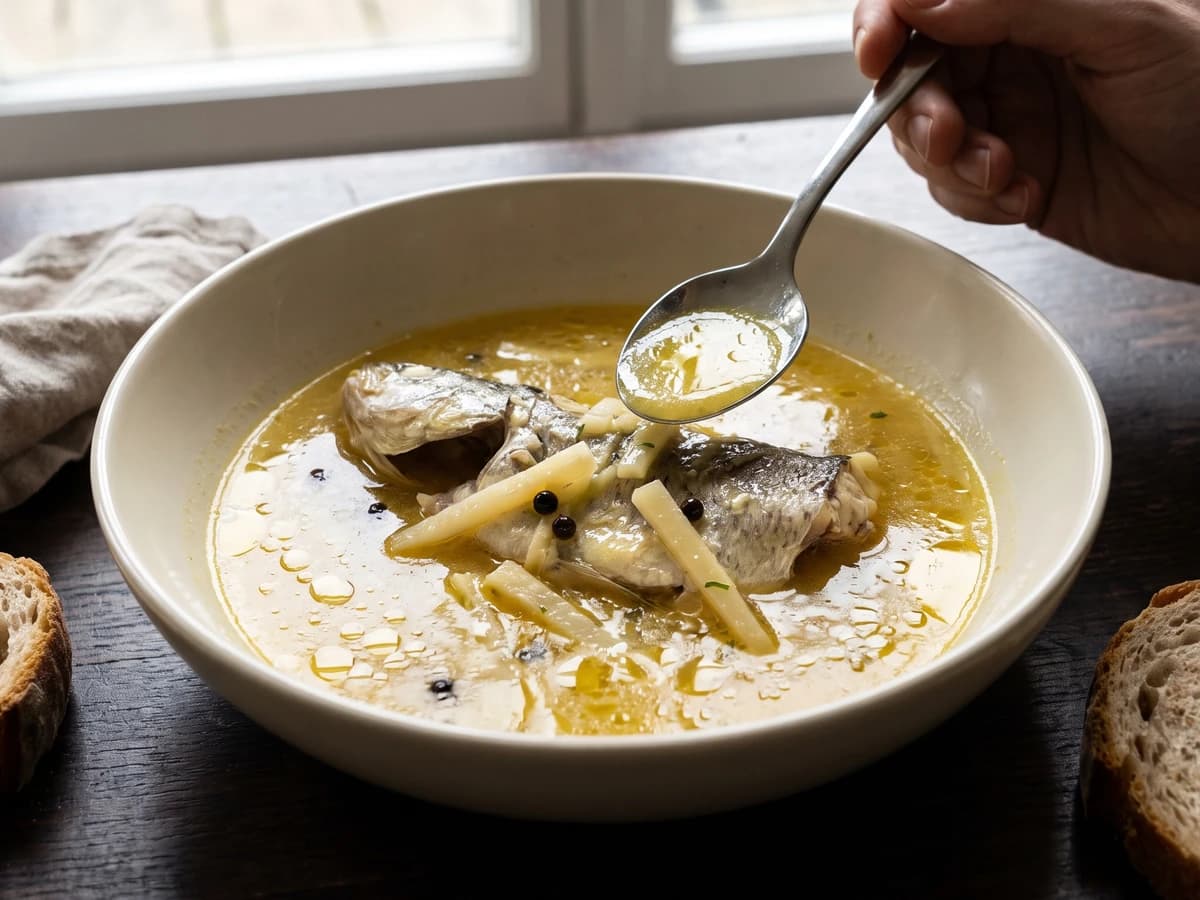
Waterzoi asks fresh, bone-in river fish to thicken its own buttery broth, with parsley root and pepper for company. No flour, no stockpot, just a brisk simmer watched closely.
Chef Juliette
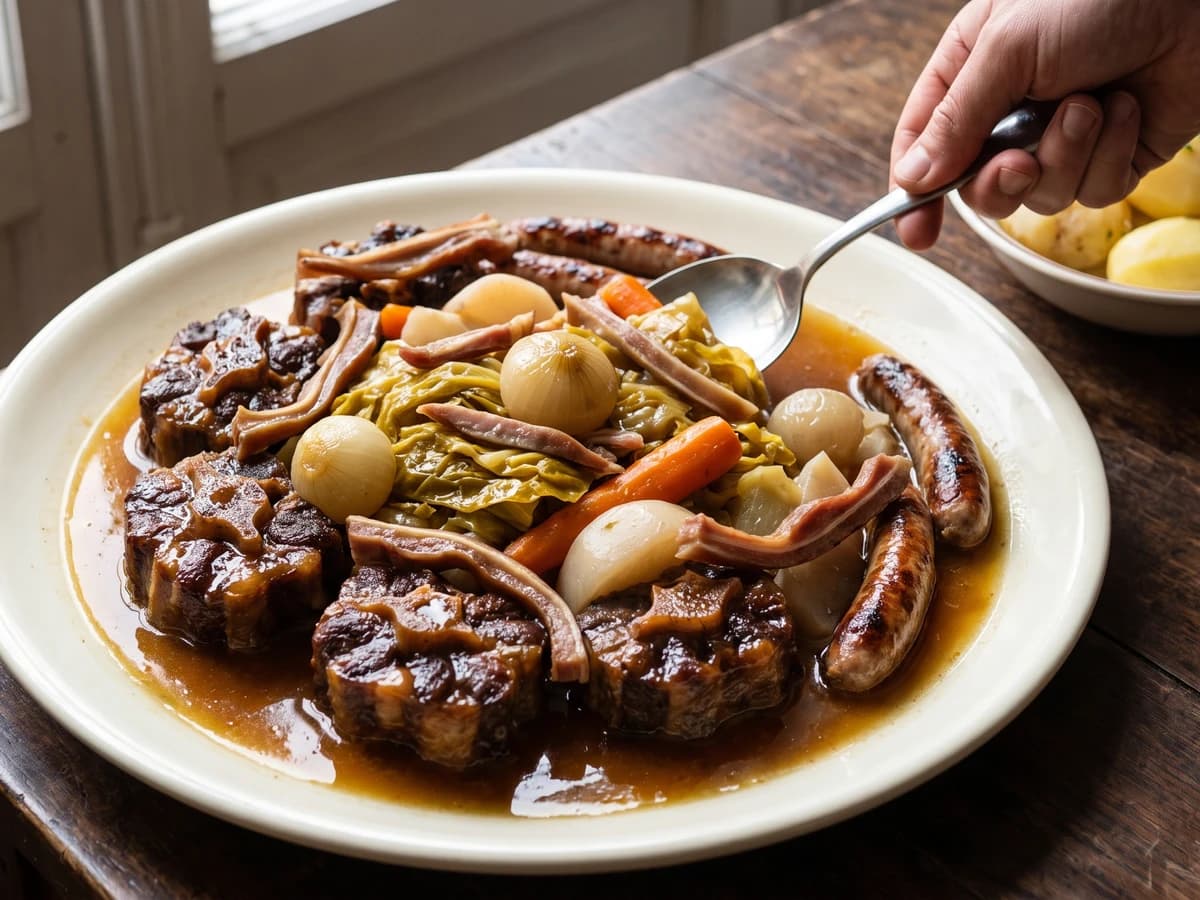
Queue de Bœuf en Hochepot gathers oxtail, pig's trotter and ear, cabbage, roots, and grilled chipolatas around a clear, gelatin-rich broth whose quiet simmer keeps every piece tender and distinct.
Chef Juliette
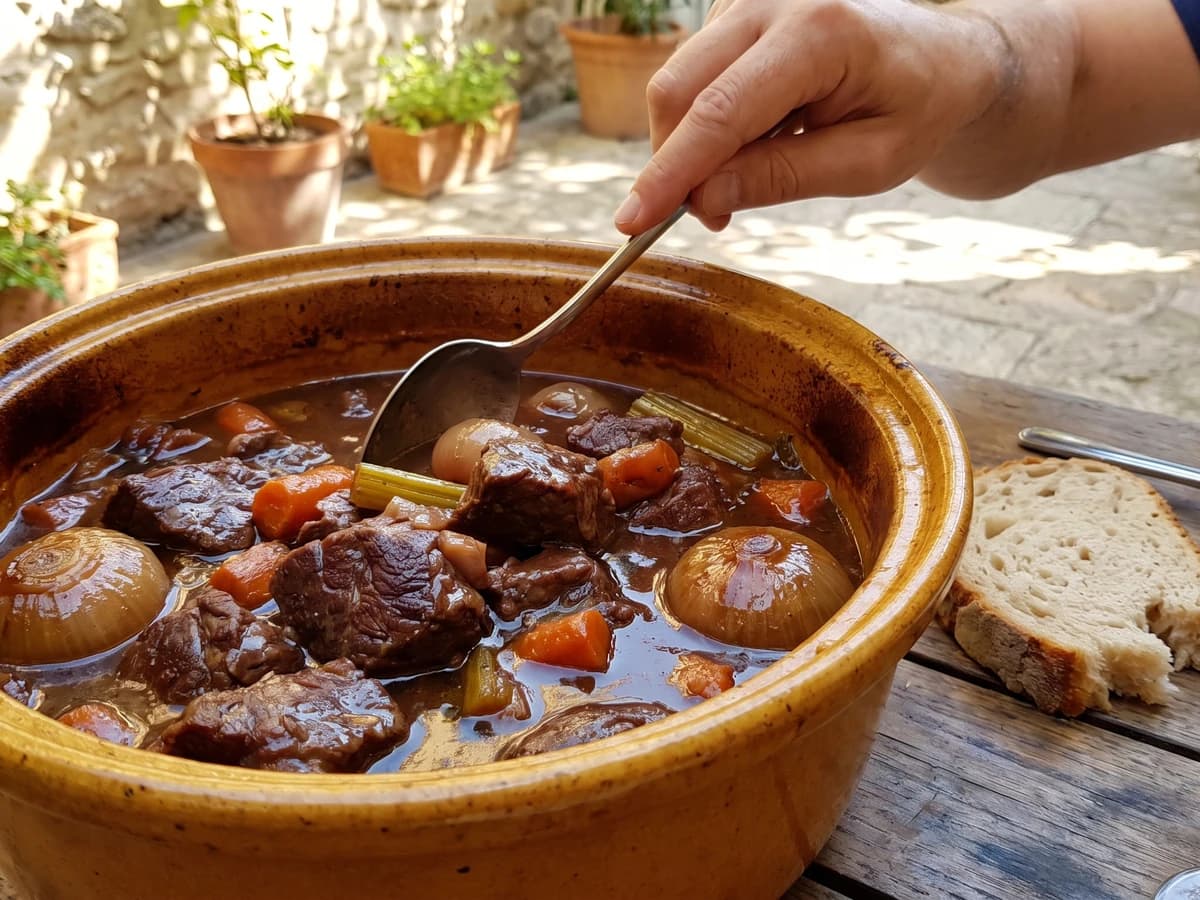
Beef shoulder larded with bacon, sharpened by red wine and vinegar, then sealed with garlic, vegetables, and dry lemon peel until the low oven turns it yielding and the gravy darkly glossy.