Chef Juliette
Ordinary or White Consommé
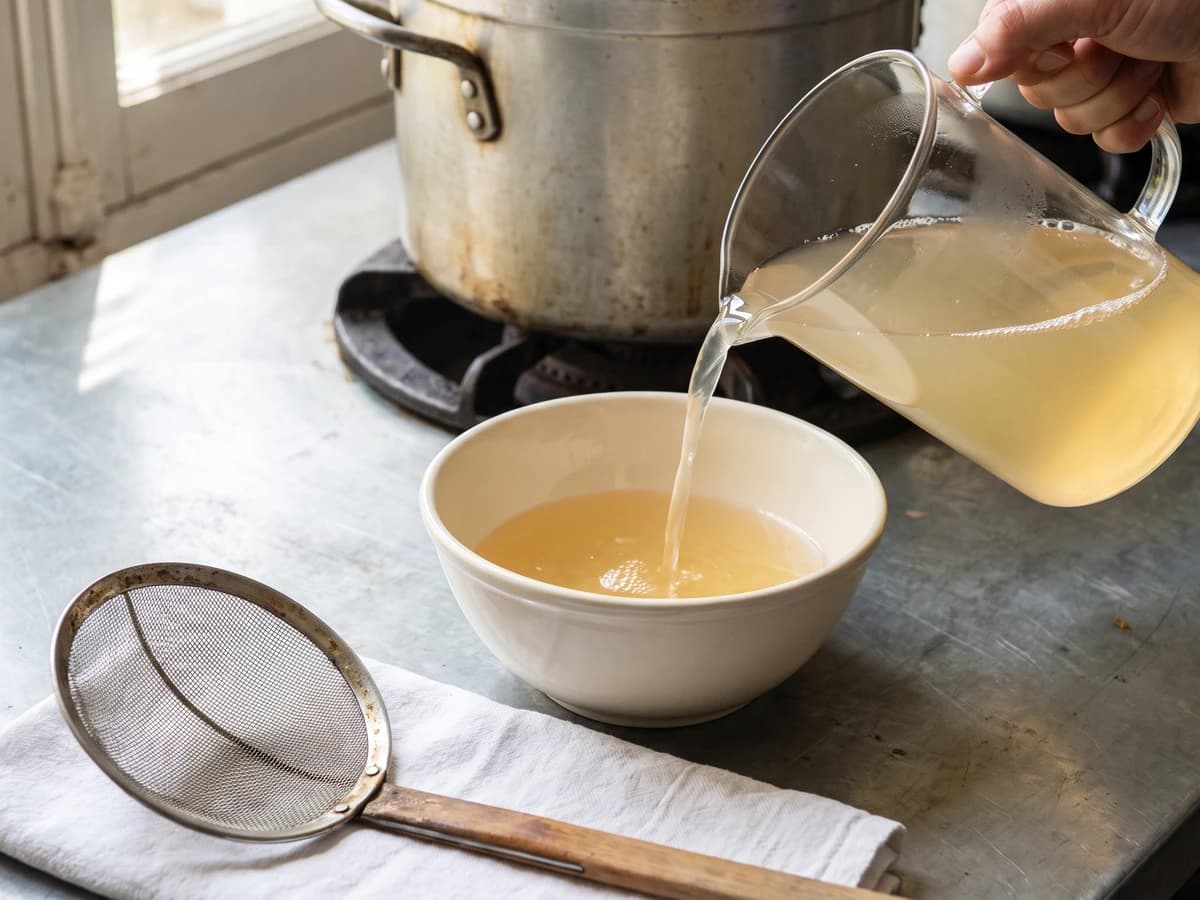
Beef shin, lean beef, and fowl begin in cold water and rise slowly toward a tremble. Skim before the boil, and you learn the quiet discipline that gives every clear French broth its backbone.
A cooking platform built around craft, culture, and the stories behind what we eat.
Created by Chef Juliette
Based on No. 7, Brown Stock or “Estouffade”, from Le Guide Culinaire (1907) by Auguste Escoffier
The brown foundation of the canon: beef and veal shin, bones, ham, pork rind, butter-browned roots, and twelve quiet hours, drawn clear and left unsalted so every future sauce can decide its own seasoning.
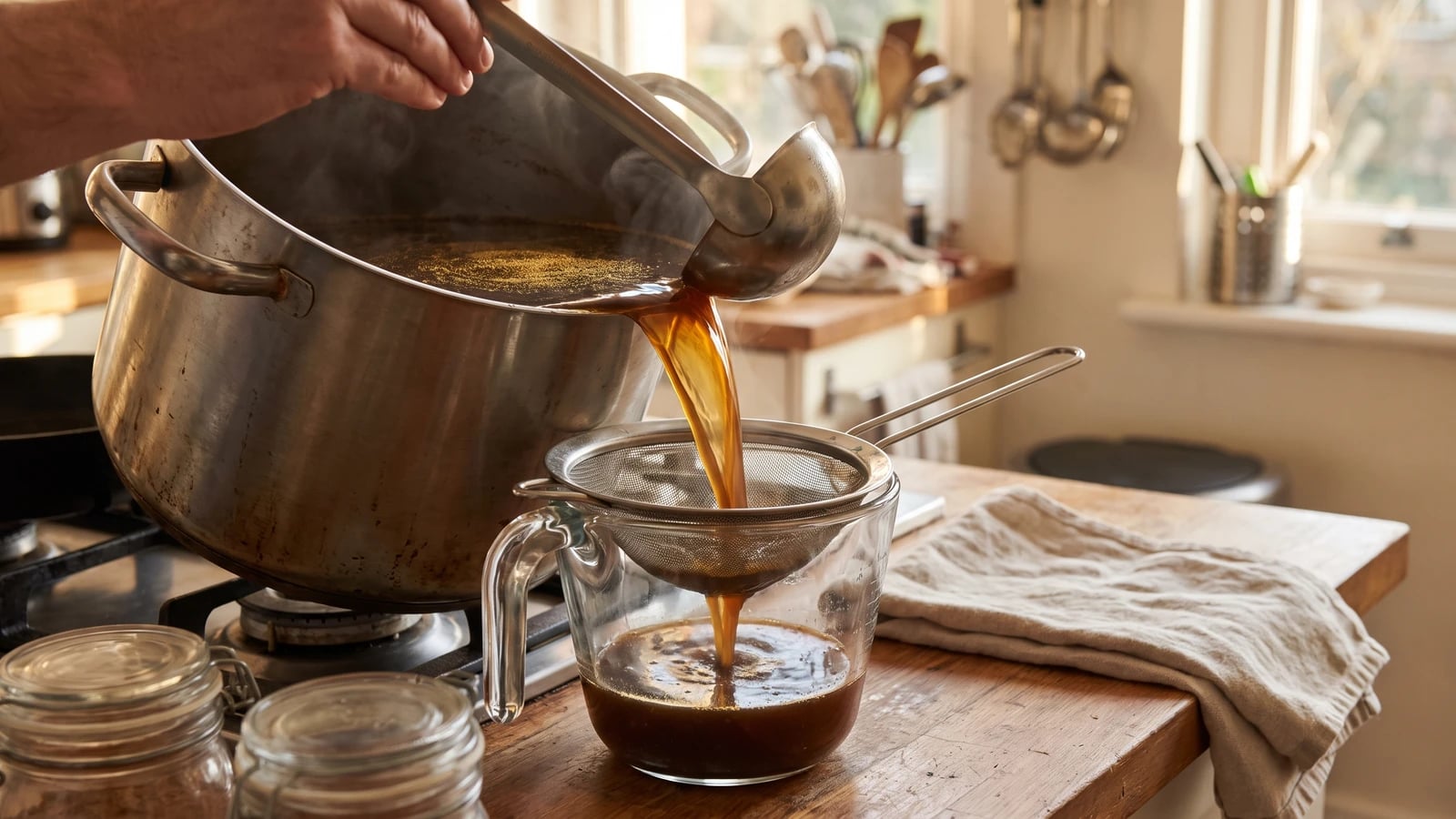
Estouffade (brown stock) teaches the central law of the sauce kitchen: colour must be built before water enters the pot. Brown the bones and roots with patience, then draw them at the barest tremble. A hard boil only clouds what twelve hours are trying to make clear.
The original formula assumed a saucier on staff, a stockpot never off the fire, and four quarts useful to a brigade. Here the proportions are halved for about two quarts, the open fire becomes a low oven, and the boned shin is cut into large cubes instead of laboriously tied, a choice the source itself permits when time presses. Stringing the meat and tending a corner of the fire are brigade scaffolding. The twelve-hour extraction, the separate glazing of the meat, and the absence of salt are the dish, so they stay.
This is one cook, one stove, and one evening's attention spread sensibly across a make-ahead pot, because twelve hours are twelve hours. Start the bone stock in the morning, chill it safely, and finish the meat extraction the following evening. Before you begin, watch the browning most closely: deep chestnut gives the Estouffade its backbone, while blackened bones bring bitterness no sieve can remove.
Estouffade belongs not to one French province but to the organized sauce kitchen of the classical national canon, particularly the great Paris kitchens that kept brown foundations ready for glazes, braises, and sauces. The word also appears for meats cooked à l'étouffée, smothered slowly under a lid, so it can describe both a method and this stock. Its identity here is precise: browned beef and veal drawn clear and never salted, because the preparation receiving it supplies the final seasoning.
Quantity
2 lb (907 g)
have the butcher separate the meat, crack the bones into 2 to 3-inch (5 to 8 cm) pieces, and cut the meat into 2-inch (5 cm) cubes
Quantity
2 lb (907 g)
have the butcher separate the meat, crack the bones into 2 to 3-inch (5 to 8 cm) pieces, and cut the meat into 2-inch (5 cm) cubes
Quantity
4 oz (113 g)
cut into large pieces
Quantity
4 oz (113 g)
rinse in tepid water and drain
Quantity
1⅓ cups (315 ml / 170 g)
finely minced
Quantity
1⅓ cups (315 ml / 170 g)
finely minced
Quantity
2 tablespoons (30 ml / 28 g)
Quantity
2 tablespoons (30 ml / 28 g)
divided
Quantity
1 small bouquet garni
Quantity
10 cups (2.4 L / 2.4 kg)
| Ingredient | Quantity |
|---|---|
| beef shin, flesh and bonehave the butcher separate the meat, crack the bones into 2 to 3-inch (5 to 8 cm) pieces, and cut the meat into 2-inch (5 cm) cubes | 2 lb (907 g) |
| veal shin, flesh and bonehave the butcher separate the meat, crack the bones into 2 to 3-inch (5 to 8 cm) pieces, and cut the meat into 2-inch (5 cm) cubes | 2 lb (907 g) |
| lean fresh ham, uncured and unsmokedcut into large pieces | 4 oz (113 g) |
| fresh pork rindrinse in tepid water and drain | 4 oz (113 g) |
| carrotsfinely minced | 1⅓ cups (315 ml / 170 g) |
| yellow onionsfinely minced | 1⅓ cups (315 ml / 170 g) |
| unsalted butter | 2 tablespoons (30 ml / 28 g) |
| rendered stock fat or beef drippingdivided | 2 tablespoons (30 ml / 28 g) |
| bouquet garni (tied herb bundle of parsley, celery, thyme, and bay) | 1 small bouquet garni |
| cold water | 10 cups (2.4 L / 2.4 kg) |
Have the butcher remove the beef and veal shin meat from the bones and crack the bones into pieces small enough to expose plenty of cut surface. Cut the meat into 2-inch (5 cm) cubes, cover it tightly, and refrigerate it while the bones cook. The original strings the boned meat into neat pieces; cubing removes that brigade scaffolding and, as the source allows, shortens the final extraction to about ninety minutes without changing the stock's proportions. Rinse the pork rind in tepid water, drain it, and tie the bouquet garni.
Heat the oven to 425°F (220°C). Spread the cracked bones in a large roasting pan, coat them with 1 tablespoon (15 ml / 14 g) of the stock fat, and roast for 45 to 55 minutes, turning every fifteen minutes so every cut face takes colour. They should be deep chestnut with dark amber edges, never black. Scrape every brown, nonblackened deposit from the pan into the stockpot; this fond is the beginning of the finished colour.
While the bones finish, melt the butter in a wide skillet over medium heat. Add the minced carrots and onions and cook for 15 to 20 minutes, stirring regularly, until they are soft and evenly golden with patches of deeper brown. Butter, not margarine. The vegetables need true colour, but scorched onions will make the stock bitter. Transfer them to a 6 to 8-quart heavy stockpot with the browned bones, fresh ham, rinsed pork rind, and bouquet garni.
Pour in the cold water and bring the pot slowly to a boil on the stovetop. As soon as foam and grey impurities collect, skim them carefully, then wipe the inside rim of the pot with a damp cloth. Set the lid half on and move the pot to a 210°F (100°C) oven for twelve hours. Check after thirty minutes and raise the oven as high as 225°F (110°C) only if the liquid is completely still. The surface should barely tremble, with an occasional lazy bubble, never roll. If it boils hard and clouds, lower the heat at once, leave it undisturbed for ten minutes, and skim again. Ça se rattrape: the stock may lose a little brilliance, but its flavour will remain sound.
After twelve hours, let the pot stand for ten minutes, then skim off the loose surface fat, reserving a clean tablespoon for the meat stage if you wish. Lift out the large bones and strain the liquid through a fine-mesh sieve into a clean container. Do not press the solids; pressing forces particles through the sieve and trades clarity for very little flavour. Set the container in an ice bath, stirring the stock rather than the ice, until cool, then cover and refrigerate. A deep stockpot cools too slowly on its own.
The following day, lift away the hardened fat from the chilled stock. Dry the beef and veal cubes thoroughly. Heat the remaining tablespoon of stock fat, or the clean fat reserved from the first stage, in a heavy pot just large enough to hold the meat. Brown the cubes lightly in batches, giving them colour without building a black crust, then return them all to the pot. Pour off the loose fat while leaving the brown fond behind.
Add ½ cup (120 ml) of the prepared stock to the browned meat. Cover with the lid slightly ajar and simmer gently for 25 to 35 minutes, turning the cubes several times, until the liquid has almost disappeared and coats the meat in a glossy brown glaze. This réduction, cooking the liquid down to concentrate it, gives the second extraction its depth. If the bottom begins to scorch, move the meat immediately to a clean pot and continue with another spoonful of stock, leaving every burnt deposit behind.
Pour the remaining prepared stock over the glazed meat and bring it just to a boil. Move the pot to a 225°F (110°C) oven, uncovered, and hold it at the quietest regular simmer for about 1½ hours, the time specified for cubed meat, until the cubes are fully tender and have surrendered their juices. Skim fat and foam as they appear, but do not stir unnecessarily. C'est la même grammaire: browning supplies colour, gentle extraction supplies body, and boiling supplies only cloudiness.
Lift out the meat, skim the surface thoroughly, and pass the stock through a clean fine-mesh sieve without pressing. It should be transparent and the colour of fine burnt amber. If you have more than 8 cups (1.9 L), reduce it at the barest simmer to about that amount; if you have slightly less, keep its concentration rather than diluting it merely to reach a round number. Never salt it. Cool it promptly in an ice bath, cover, and refrigerate or freeze in useful portions. The stock may taste deliberately quiet on its own because its seasoning belongs to the sauce, glaze, or braise still to come.
1 serving (about 240g)
Culinary guides, cultural storytelling, and the editorial depth that makes cooking meaningful.
Discover Culinary ExplorerChef Juliette
Beef shin, lean beef, and fowl begin in cold water and rise slowly toward a tremble. Skim before the boil, and you learn the quiet discipline that gives every clear French broth its backbone.
Chef Juliette
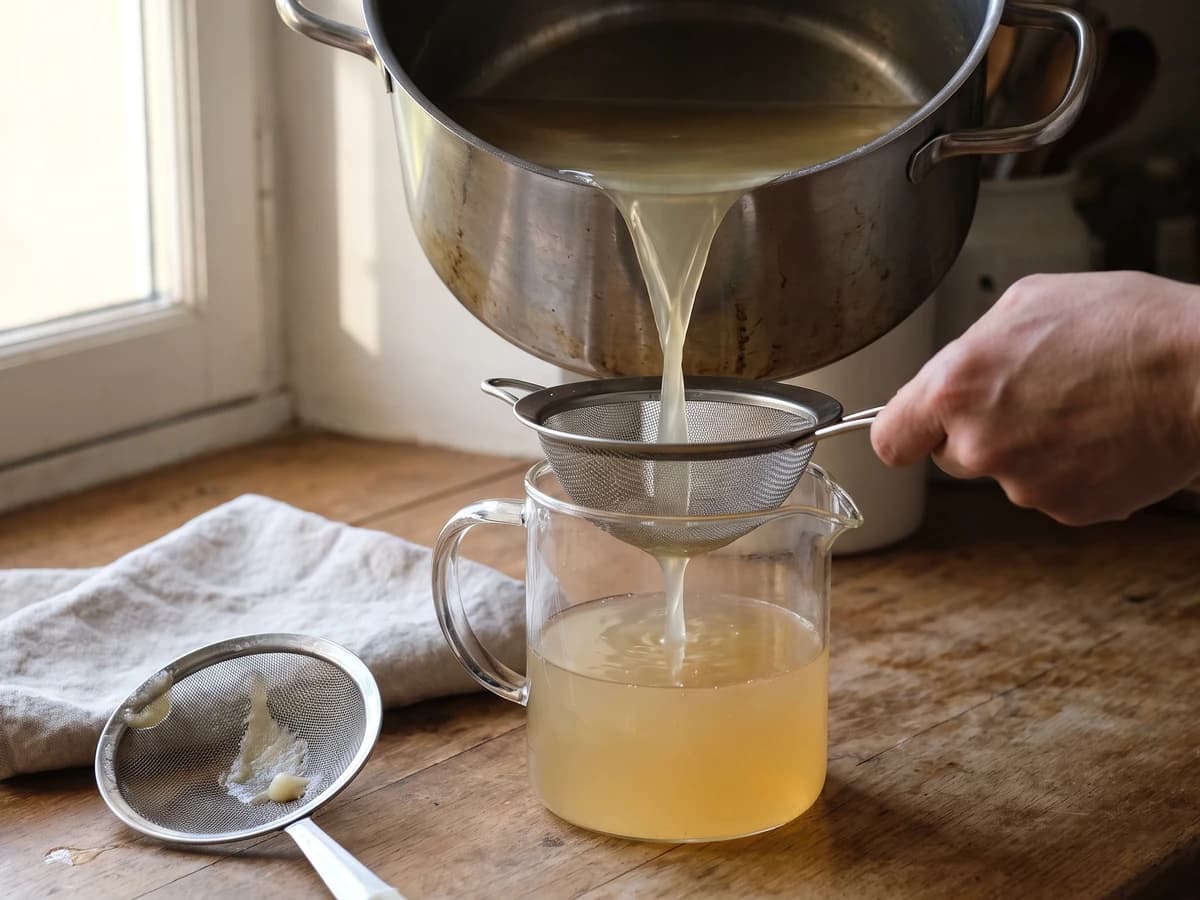
Break the veal bones small, then give them eight hours at a bare tremble. This pale, gelatinous fond becomes the quiet foundation beneath velouté, blanquette, and every sauce that must stay light.
Chef Juliette
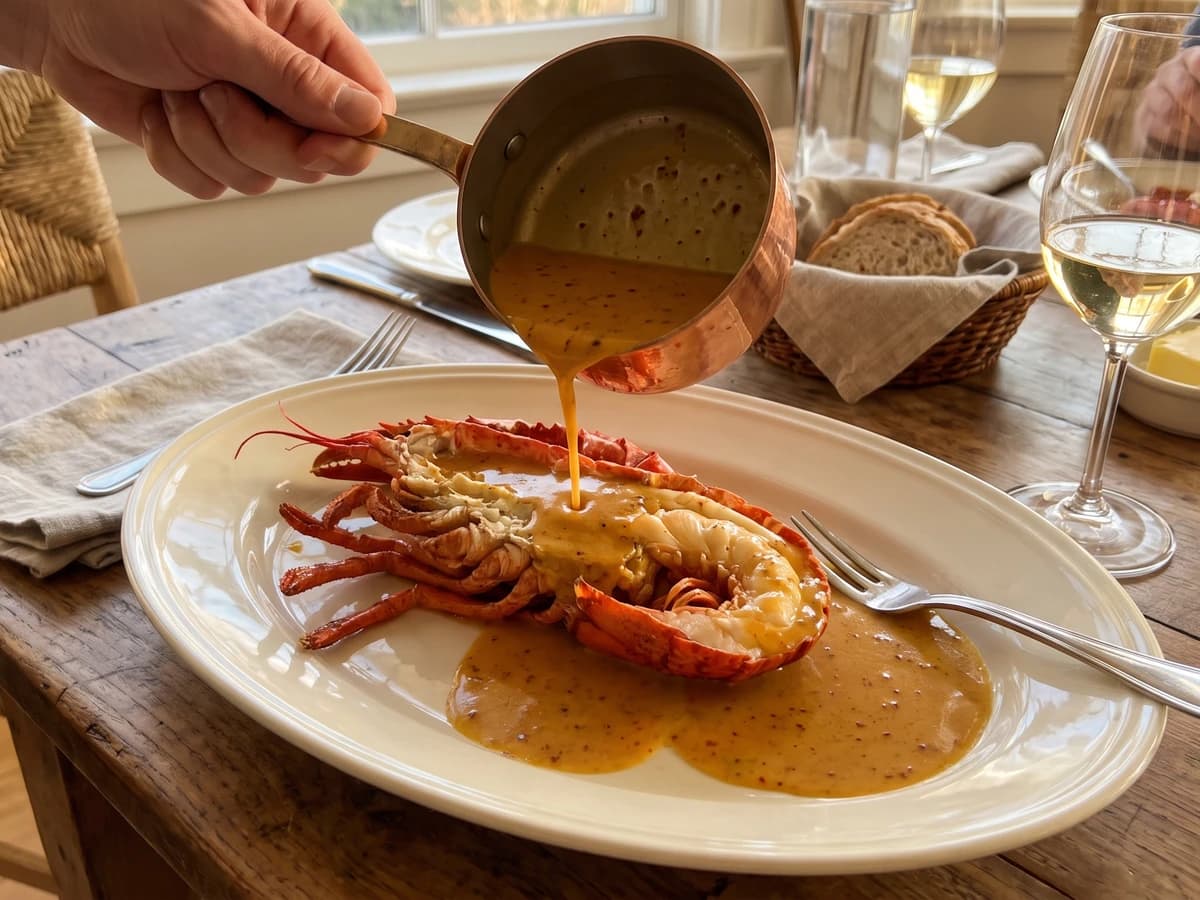
Sauce Orientale concentrates lobster-rich American Sauce with curry, then folds in cream away from the fire: a glossy, gently spiced derivative made for lobster, crayfish, and firm fish.
Chef Juliette
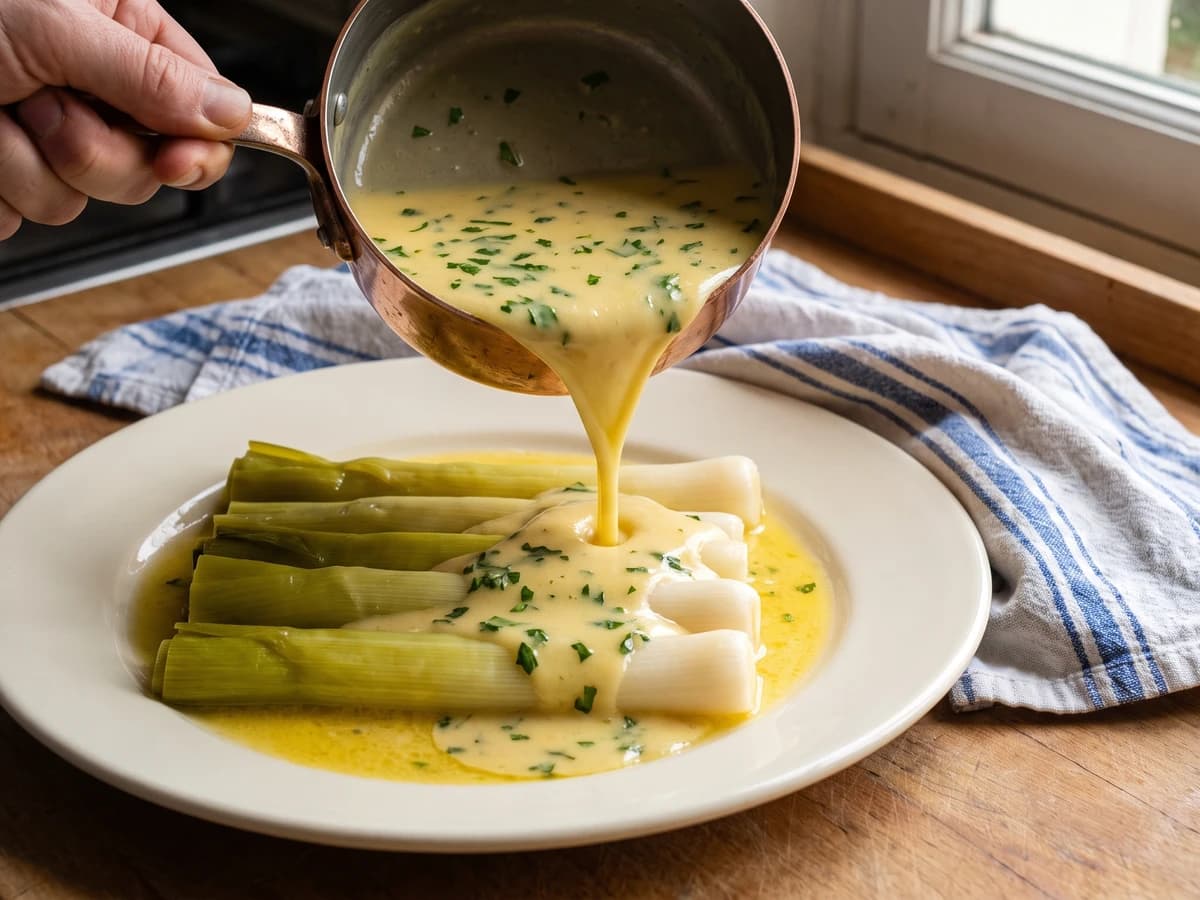
An old lesson in sauce families: Sauce Allemande takes mushroom liquor, then butter, lemon, and parsley, becoming a glossy Poulette for sheep's trotters, leeks, cauliflower, and anything needing gentle richness with a bright edge.