Chef Juliette
Bouillabaisse à la Marseillaise
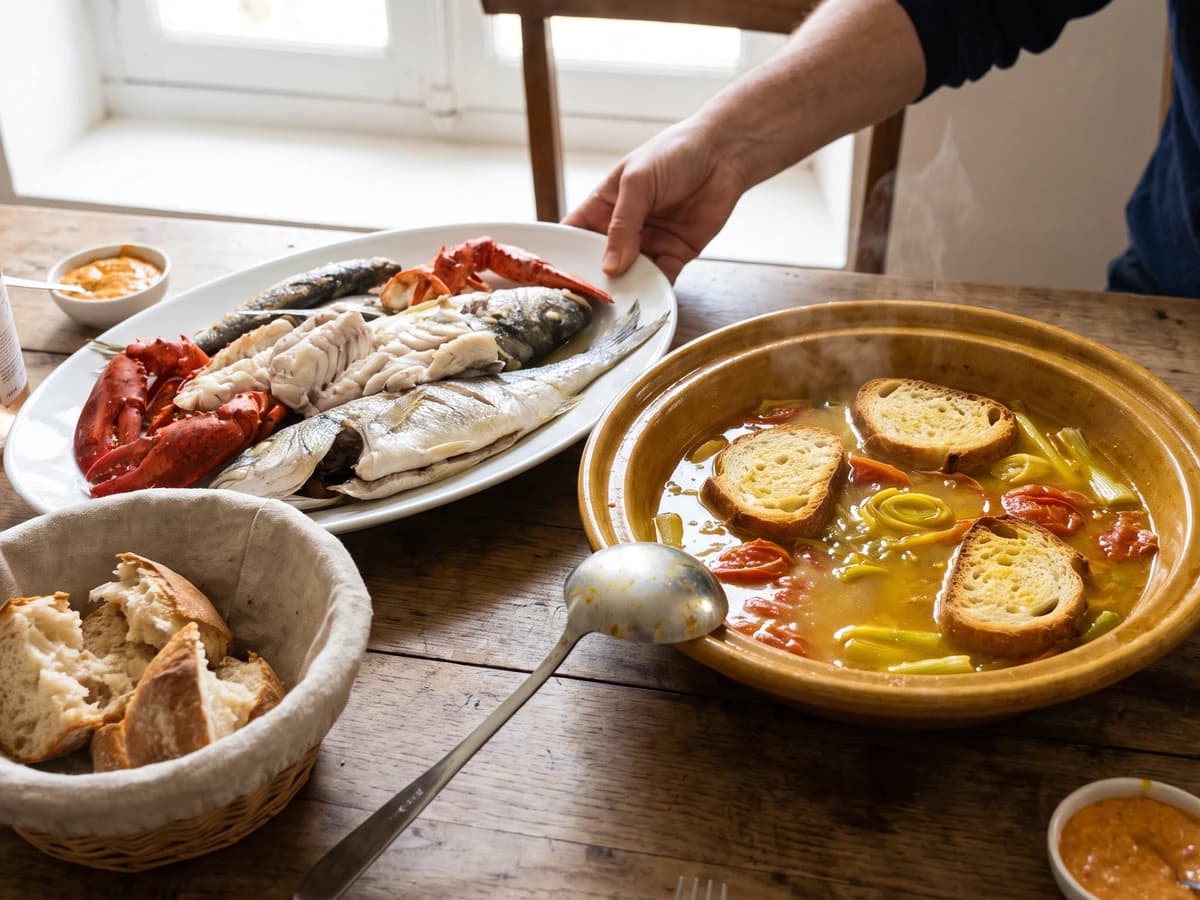
Marseille's great fish stew, saffron-gold and garlic-scented, proves that a hard boil can be the careful choice: it binds olive oil into broth before the whole pot meets bread.
A cooking platform built around craft, culture, and the stories behind what we eat.
Created by Chef Juliette
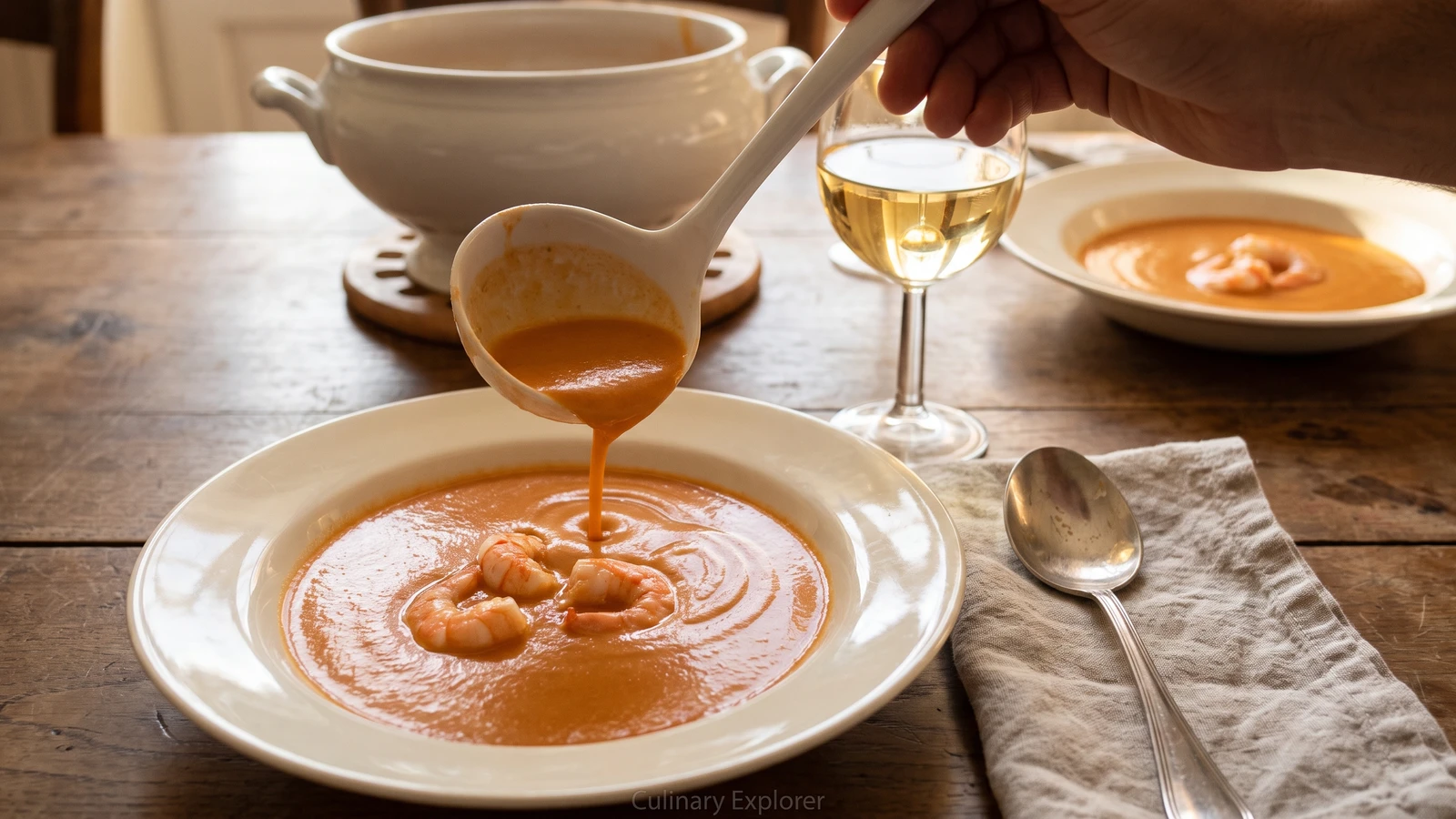
Based on No. 664, Bisque de Crevettes, from Le Guide Culinaire (1907) by Auguste Escoffier
Sear the shrimp shells scarlet before they are pounded and strained, then finish the rice-thickened bisque with cream and shrimp butter. That first fierce browning scents every spoonful.
Bisque de Crevettes (shrimp bisque) teaches the central truth of every crustacean bisque: the shells must be seared until scarlet and deeply fragrant before they are pounded. That scent becomes the whole soup, carried through the rice-thickened stock, cream, and shrimp butter until every spoonful tastes unmistakably of shrimp.
The original assumed a saucier at hand, white consommé always ready, a mortar, a sieve and tammy, and a bain-marie holding the finished soup without anxiety. Here the batch is scaled to about two quarts. A sturdy blender and fine-mesh sieve replace the mortar and tammy, a low burner replaces the water bath, and 25 trimmed shrimp tails replace the crayfish garnish. Those are brigade scaffolds. The shell sear, reduction, rice body, straining, cream, cayenne, and shrimp-butter finish stay because they are the dish. One cook, one stove, one evening.
Don't let the shrimp simmer pale in a crowded pan. If liquid gathers, lift out half, boil away the moisture, and return them in batches until the shells fry red and the kitchen smells of the finished bisque. This is the step that decides everything before the stock ever enters the pan.
Bisque de crevettes belongs to the Parisian classical soup repertoire, where shellfish arriving from France's Atlantic and Channel ports were translated into smooth, formal potages. Its model is crayfish bisque, but the shrimp variation preserves the same aromatic base, brandy, wine, rice thickening, and shell-pounding method while changing the finishing butter and garnish to suit the crustacean. Cream alone does not make a bisque: the browned, pounded, and meticulously strained shells do.
Quantity
1 home-scale batch Bisque d’Écrevisses (No. 662), about 2 quarts (1.9 liters / 1.9 kg)
scale for the stated yield and apply the shrimp substitutions below
made without ham or bacon
Quantity
2 pounds (32 ounces / 910 g)
preferably 31/40 count and with heads when available; reserve 25 cooked tails, then shell and trim them
Quantity
6 tablespoons (90 milliliters / 85 g)
kept cold and divided
| Ingredient | Quantity |
|---|---|
| Bisque d’Écrevisses base formulascale for the stated yield and apply the shrimp substitutions below | 1 home-scale batch Bisque d’Écrevisses (No. 662), about 2 quarts (1.9 liters / 1.9 kg) |
| Mirepoixmade without ham or bacon | 1 prepared batch Mirepoix (No. 228), the amount called for in Bisque d’Écrevisses (No. 662) |
| medium raw shell-on shrimppreferably 31/40 count and with heads when available; reserve 25 cooked tails, then shell and trim them | 2 pounds (32 ounces / 910 g) |
| prepared shrimp butterkept cold and divided | 6 tablespoons (90 milliliters / 85 g) |
Prepare one home-scale batch of Bisque d’Écrevisses (No. 662), using its required Mirepoix (No. 228) without ham or bacon, and scale the preparation to yield about 2 quarts. Follow that formula unchanged except at three points: shrimp replaces crayfish, shrimp butter replaces the ordinary finishing butter, and 25 whole trimmed shrimp tails replace the crayfish garnish. Its brandy, white wine, stock, rice, cream, cayenne, reductions, and sequence remain intact.
When Bisque d’Écrevisses (No. 662) directs you to add crayfish to the browned Mirepoix (No. 228), add the 2 pounds of raw shell-on shrimp instead. Toss them over lively heat until every shell is scarlet, the edges begin to catch, and the pan smells intensely of roasted shrimp. If the pan floods with liquid, lift out half the shrimp, boil the moisture away, and continue in batches; don't add the brandy or wine until the shells are frying rather than simmering.
Continue through the brandy and wine reduction and the stock cooking directed by Bisque d’Écrevisses (No. 662). At its shelling stage, lift out enough cooked shrimp to reserve 25 tails. Shell and trim those tails neatly, return every shell and head to the pan for extraction, and refrigerate the tails once cool. Leave them whole rather than dicing them; this variation names them as its garnish.
At the pounding stage of Bisque d’Écrevisses (No. 662), let the shell mixture cool until it is safe to process. Work in batches with the blender no more than half full, combining the shrimp remains, shells, heads, Mirepoix (No. 228), cooked rice, and cooking liquor in the sequence the base formula specifies. Blend until the shell fragments are as fine as coarse sand, then press the purée firmly through a fine-mesh sieve with a ladle. The classical kitchen used a mortar, then a sieve and tammy; a sturdy blender followed by one diligent fine-mesh pass is the honest home equivalent. If the bisque feels sandy between two fingers, strain it again. Cream cannot conceal shell grit.
Complete the final stock adjustment, brief boil while whisking, and last straining directed by Bisque d’Écrevisses (No. 662). The bisque should coat a spoon lightly while remaining fluid enough to pour in a clean ribbon. Reserve 1/4 cup of this unbuttered base for a possible rescue, then hold the rest over the lowest heat. If it must wait, float 1 teaspoon of the measured shrimp butter on its surface without stirring so a skin cannot form.
Complete the cream and cayenne finish specified by Bisque d’Écrevisses (No. 662), then remove the pot from direct heat. Whisk in the remaining shrimp butter a small piece at a time until the bisque gleams and tastes of shrimp first, cream second. Do not boil it now or the butter may separate. If beads of fat rise, ça se rattrape: place the reserved unbuttered base in a clean pot and whisk the broken bisque into it gradually, off the heat, blending briefly if necessary. Add the 25 trimmed tails and warm them gently for one minute. Divide the tails among warm bowls, ladle over the bisque, and serve at once. À table!
1 serving (about 240g)
Culinary guides, cultural storytelling, and the editorial depth that makes cooking meaningful.
Discover Culinary ExplorerChef Juliette
Marseille's great fish stew, saffron-gold and garlic-scented, proves that a hard boil can be the careful choice: it binds olive oil into broth before the whole pot meets bread.
Chef Juliette
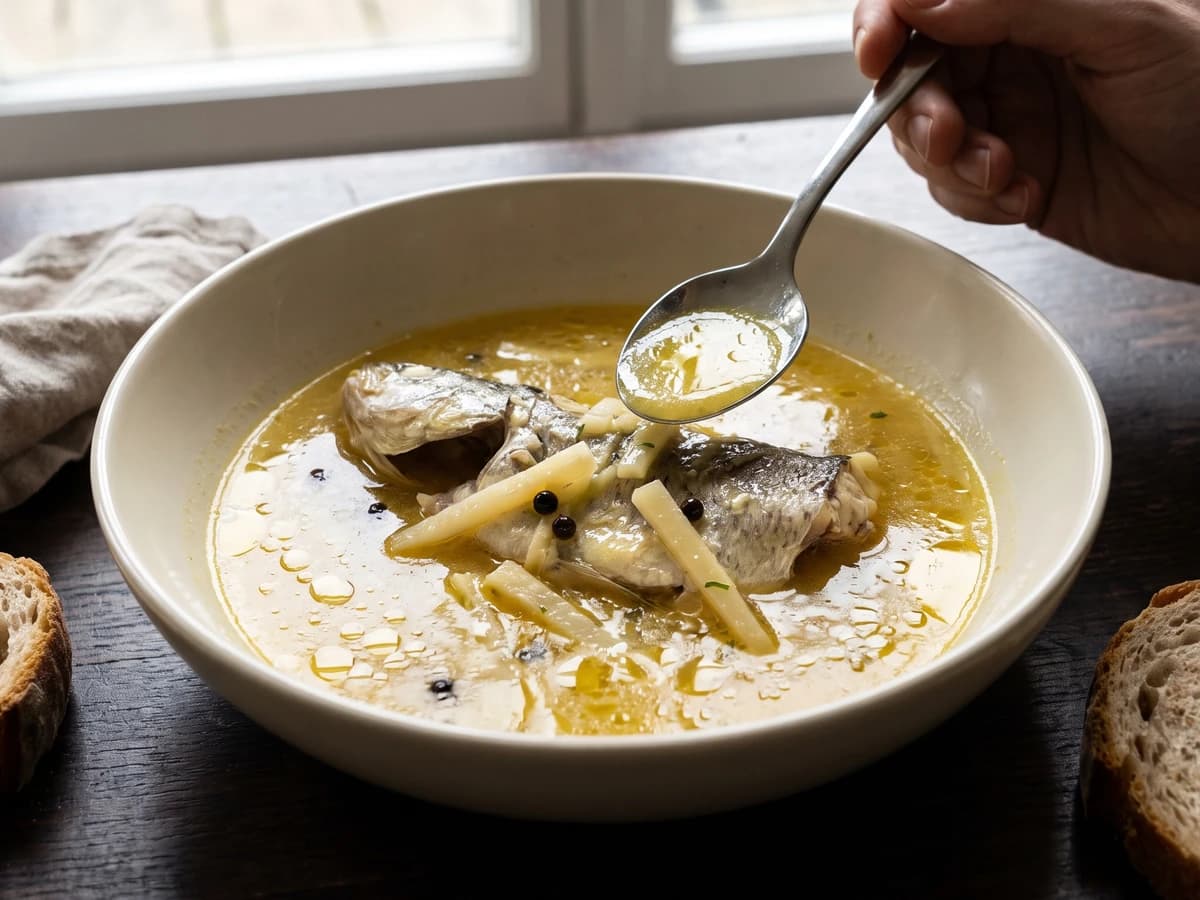
Waterzoi asks fresh, bone-in river fish to thicken its own buttery broth, with parsley root and pepper for company. No flour, no stockpot, just a brisk simmer watched closely.
Chef Juliette
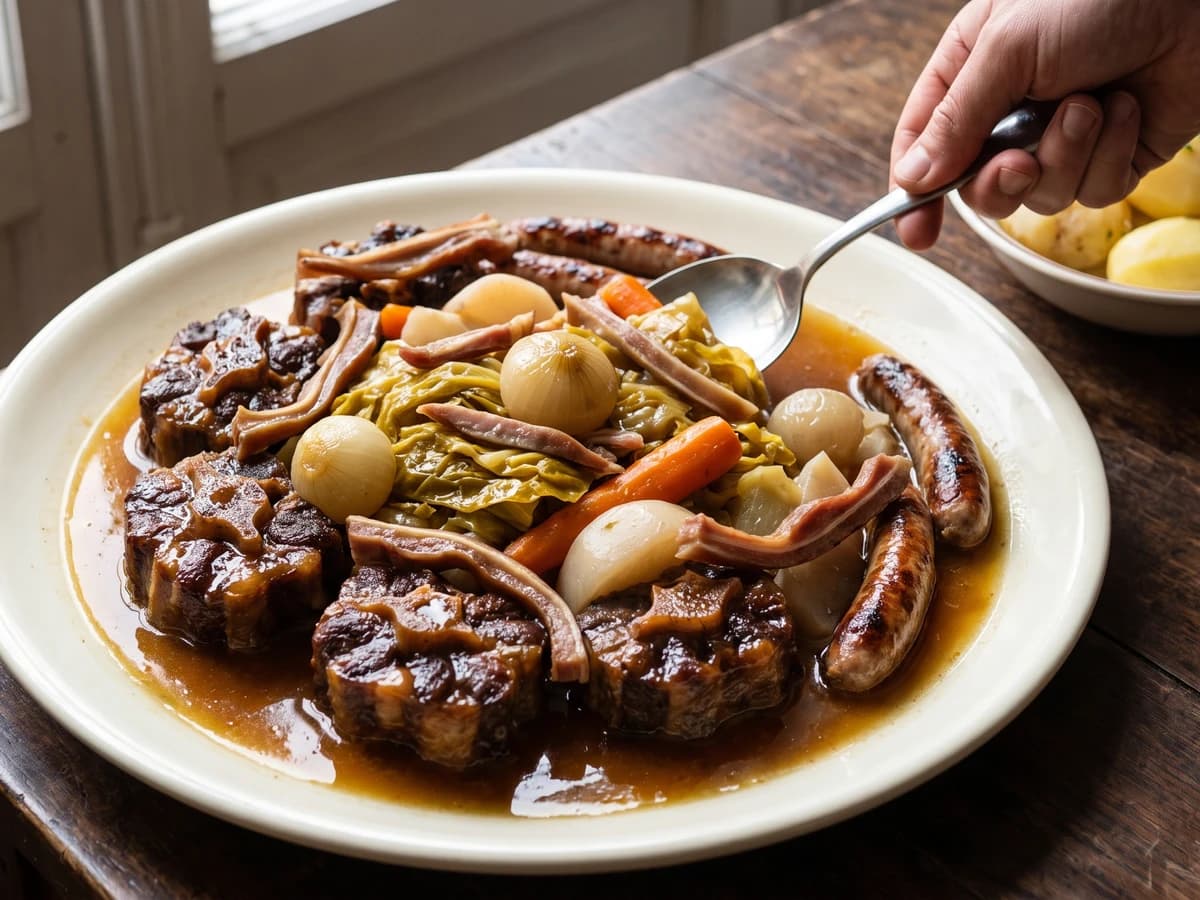
Queue de Bœuf en Hochepot gathers oxtail, pig's trotter and ear, cabbage, roots, and grilled chipolatas around a clear, gelatin-rich broth whose quiet simmer keeps every piece tender and distinct.
Chef Juliette
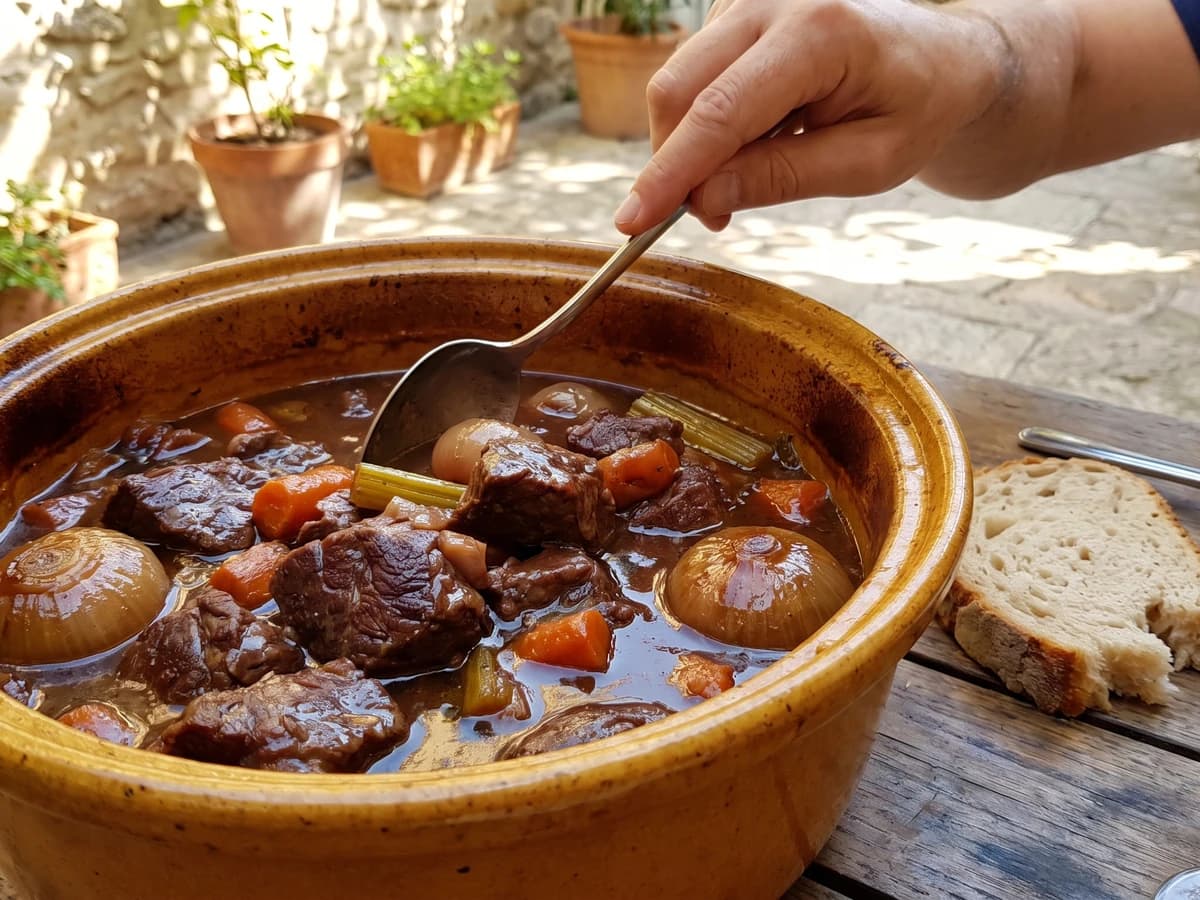
Beef shoulder larded with bacon, sharpened by red wine and vinegar, then sealed with garlic, vegetables, and dry lemon peel until the low oven turns it yielding and the gravy darkly glossy.