Chef Juliette
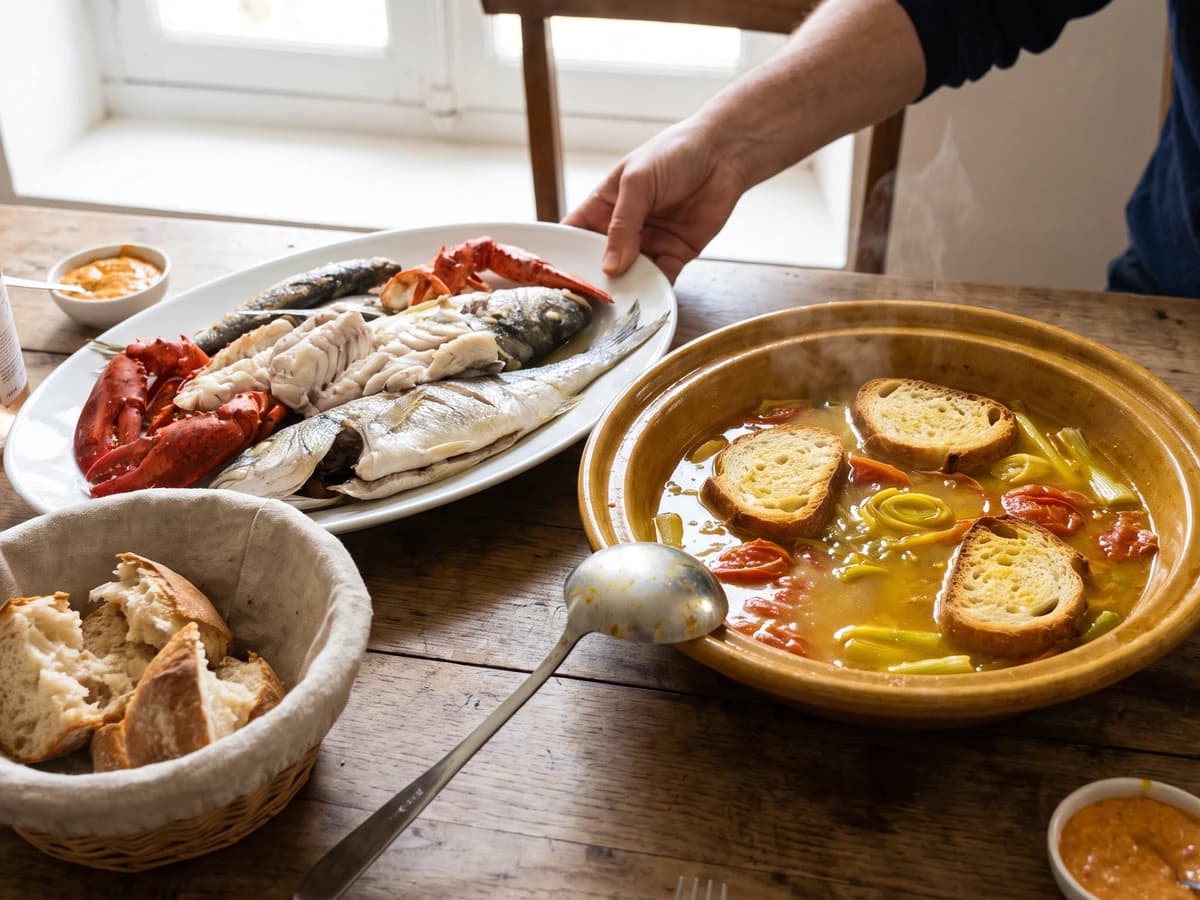
Bouillabaisse à la Marseillaise
Marseille's great fish stew, saffron-gold and garlic-scented, proves that a hard boil can be the careful choice: it binds olive oil into broth before the whole pot meets bread.
A cooking platform built around craft, culture, and the stories behind what we eat.
Created by Chef Juliette
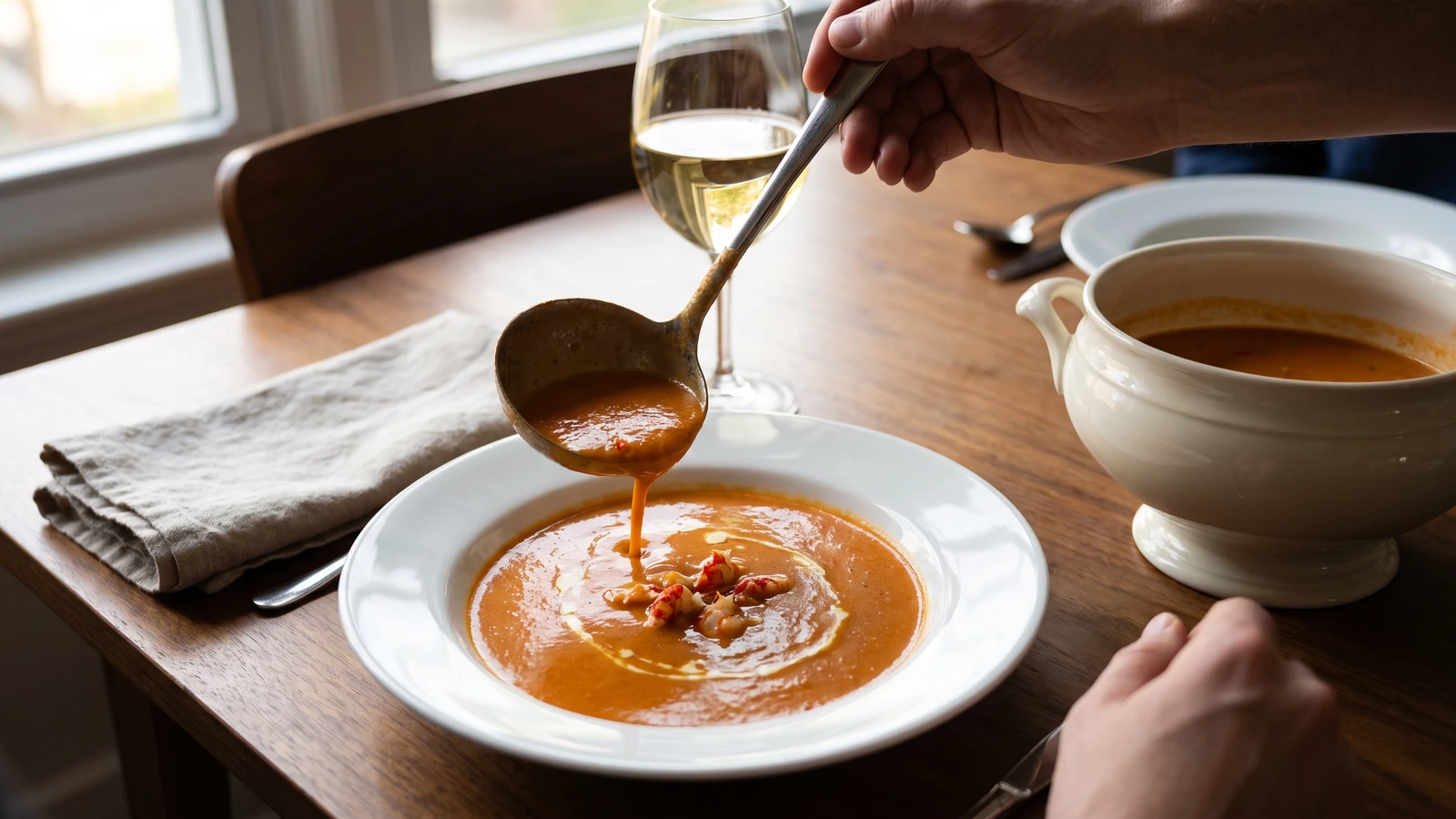
Based on No. 662, Bisque d’Écrevisses, from Le Guide Culinaire (1907) by Auguste Escoffier
The crayfish bisque that teaches every shellfish soup: shells browned scarlet, flamed with brandy, pounded with rice, then strained and mounted with butter until coral, silken, and unmistakably of the shell.
Bisque d’Écrevisses (crayfish bisque) teaches one true thing: the shell is all. The tail meat is the garnish, but the carapaces, claws, heads, and their browned juices give the soup its color, body, and unmistakable taste. If the shells aren't colored well, pounded thoroughly, and strained with patience, cream merely gives you a pale soup wearing expensive perfume.
The original recipe assumed a saucier, white consommé always hot, a mortar, a sieve and tammy, a bain-marie waiting beside the stove, and another pair of hands to stuff eight carapaces with fish forcemeat. Your home equivalent is one pot of pale unsalted stock, a sturdy food processor, and a fine sieve lined with damp cheesecloth. The stuffed shells are service scaffolding and go because they add a separate forcemeat preparation without changing the bisque itself; the diced tail meat is the honest garnish. The shell extraction and repeated straining stay. They are the dish. One cook, one stove, one evening.
The step that matters most comes after shelling. Crush the warm shells with their liquor and the soft rice, then press the purée firmly without forcing grit through the cloth. Leave flavor trapped in the carapaces and no amount of butter can call it back.
Bisque d’Écrevisses belongs to the grand Parisian repertoire, although its chief ingredient came from France’s rivers and ponds rather than the sea, with freshwater crayfish particularly cherished around Lyon and the Bugey. It traveled from robust shellfish potage into formal service as cooks learned to pound the carapaces, thicken them with rice, and refine the purée through cloth until the shells supplied both body and coral color. The familiar claim that bisque simply means a soup from the Bay of Biscay remains unsettled; in the classical kitchen, the word carries the method more reliably than any single birthplace.
Quantity
24 medium (about 2 lb / 910 g total)
Quantity
⅔ cup (160 ml / 85 g) Mirepoix (No. 228)
Quantity
3 tablespoons (45 ml / 42 g)
Quantity
3 tablespoons (45 ml / 43 g)
Quantity
1 cup (240 ml / 240 g)
Quantity
9 cups (2.13 L / 2.13 kg)
divided
Quantity
¾ cup (180 ml / 135 g)
Quantity
1 teaspoon (5 ml / 6 g), plus more as needed
Quantity
¼ teaspoon (1.25 ml / 0.6 g)
Quantity
½ cup (120 ml / 113 g)
cut into small cubes
Quantity
5 tablespoons (75 ml / 75 g)
Quantity
⅛ teaspoon (0.6 ml / 0.2 g)
| Ingredient | Quantity |
|---|---|
| whole raw freshwater crayfish, live preferred | 24 medium (about 2 lb / 910 g total) |
| Mirepoix | ⅔ cup (160 ml / 85 g) Mirepoix (No. 228) |
| unsalted butter | 3 tablespoons (45 ml / 42 g) |
| brandy or Cognac | 3 tablespoons (45 ml / 43 g) |
| dry white wine | 1 cup (240 ml / 240 g) |
| white consommé or unsalted pale chicken stockdivided | 9 cups (2.13 L / 2.13 kg) |
| long-grain white rice | ¾ cup (180 ml / 135 g) |
| fine sea salt | 1 teaspoon (5 ml / 6 g), plus more as needed |
| freshly ground white or black pepper | ¼ teaspoon (1.25 ml / 0.6 g) |
| cold unsalted buttercut into small cubes | ½ cup (120 ml / 113 g) |
| thick heavy cream | 5 tablespoons (75 ml / 75 g) |
| cayenne pepper | ⅛ teaspoon (0.6 ml / 0.2 g) |
If the crayfish are live, keep them cold until cooking and rinse them thoroughly under cold running water, brushing away any mud around the joints. Discard any that are plainly dead before cooking. If using whole raw frozen crayfish, thaw them overnight in the refrigerator and dry them well; excess water cools the pan when the shells need strong heat.
Melt the 3 tablespoons butter in a wide, heavy pot over medium heat. Add the Mirepoix (No. 228) and cook for 5 to 7 minutes, stirring, until the dice soften and take a light golden edge. Raise the heat to medium-high, add the whole crayfish, and toss them constantly for 6 to 8 minutes, until every shell is vivid scarlet and the butter smells richly of shellfish. Do not scorch the mirepoix. If it darkens too quickly, lift the pot from the heat for thirty seconds, lower the flame, and continue.
Measure the brandy into a small heatproof cup. Take the pot off the burner, switch off the extractor fan, and add the brandy, never pouring from the bottle. Return the pot to medium heat and flamber, igniting the brandy at the far edge with a long match while keeping your face and hands back and a fitted lid beside you. Let the flame die naturally. If it refuses to catch, ça se rattrape: boil the brandy briskly for 1 minute instead. Add the wine, salt, and pepper, then reduce until only a syrupy glaze remains on the pot floor. Add 1 cup of the consommé or stock, cover, and simmer gently for 10 minutes.
While the crayfish cook, combine the rice with 6 cups of the consommé or stock in a separate saucepan. Bring it to a simmer and cook uncovered for 25 to 30 minutes, stirring occasionally, until the grains are swollen, very soft, and beginning to break apart. Do not drain it. The rice and its cooking liquor replace flour or roux here, giving the bisque body without covering the taste of the shell.
Strain the crayfish over a bowl, reserving every drop of their cooking liquor and all the mirepoix. When the crayfish are cool enough to handle, twist off the tails, remove the meat, and pull away any dark intestinal vein. Dice the tail meat, cover it, and refrigerate it. Return all tail shells, heads, bodies, and claws to the pot with the mirepoix. Mind your fingers around the broken shell edges.
Crack the claws and larger body shells with kitchen shears or the flat side of a mallet. Transfer the shells and mirepoix to a sturdy food processor in batches and pulse until finely crushed. Add the soft rice with its liquor and the reserved crayfish cooking liquor, then process again until the mixture becomes a thick coral purée flecked with very fine shell. Work it first through a sturdy medium-mesh sieve, pressing firmly with a ladle, then through a fine sieve lined with two layers of damp cheesecloth. Press until the remaining shell mass feels nearly dry, but do not wring the cloth or force sharp grit through it. This double passing is the home equivalent of the sieve and tammy, and it is where the bisque earns its silk.
Transfer the strained purée to a clean saucepan and whisk in the remaining 2 cups consommé or stock. Bring it just to a boil while whisking constantly, then immediately pass it through a clean fine-mesh sieve once more. The consistency should lightly coat a spoon but still pour freely. If it resembles porridge, loosen it with a little hot water; if it is thin, simmer it gently before the final straining. If the bottom catches, do not scrape it. Pour the unburned bisque into a clean pan and leave the scorched film behind. Ça se rattrape.
If the bisque must wait, set its saucepan in a bain-marie, a hot-water bath held below a simmer. Dot the surface with 1 tablespoon of the finishing butter and leave it unstirred so a skin cannot form. Keep it there no longer than 30 minutes. If everyone is ready for the table, skip the holding station entirely and finish the soup at once; the bain-marie served a brigade’s timing, not the flavor of the dish.
Divide the diced tail meat among warmed soup plates. Bring the bisque just below a simmer, then remove it from the heat. Monter au beurre, whisk in the cold butter a few cubes at a time until each addition disappears, then whisk in the cream and cayenne. Taste for salt. Do not boil the bisque after this point or the emulsion may lose its gloss; if butter beads appear, take the pan off the heat and whisk in a tablespoon of cold cream or stock. Ça se rattrape. Ladle the coral bisque over the tail meat and serve immediately. À table!
1 serving (about 240g)
Culinary guides, cultural storytelling, and the editorial depth that makes cooking meaningful.
Discover Culinary ExplorerChef Juliette
Marseille's great fish stew, saffron-gold and garlic-scented, proves that a hard boil can be the careful choice: it binds olive oil into broth before the whole pot meets bread.
Chef Juliette
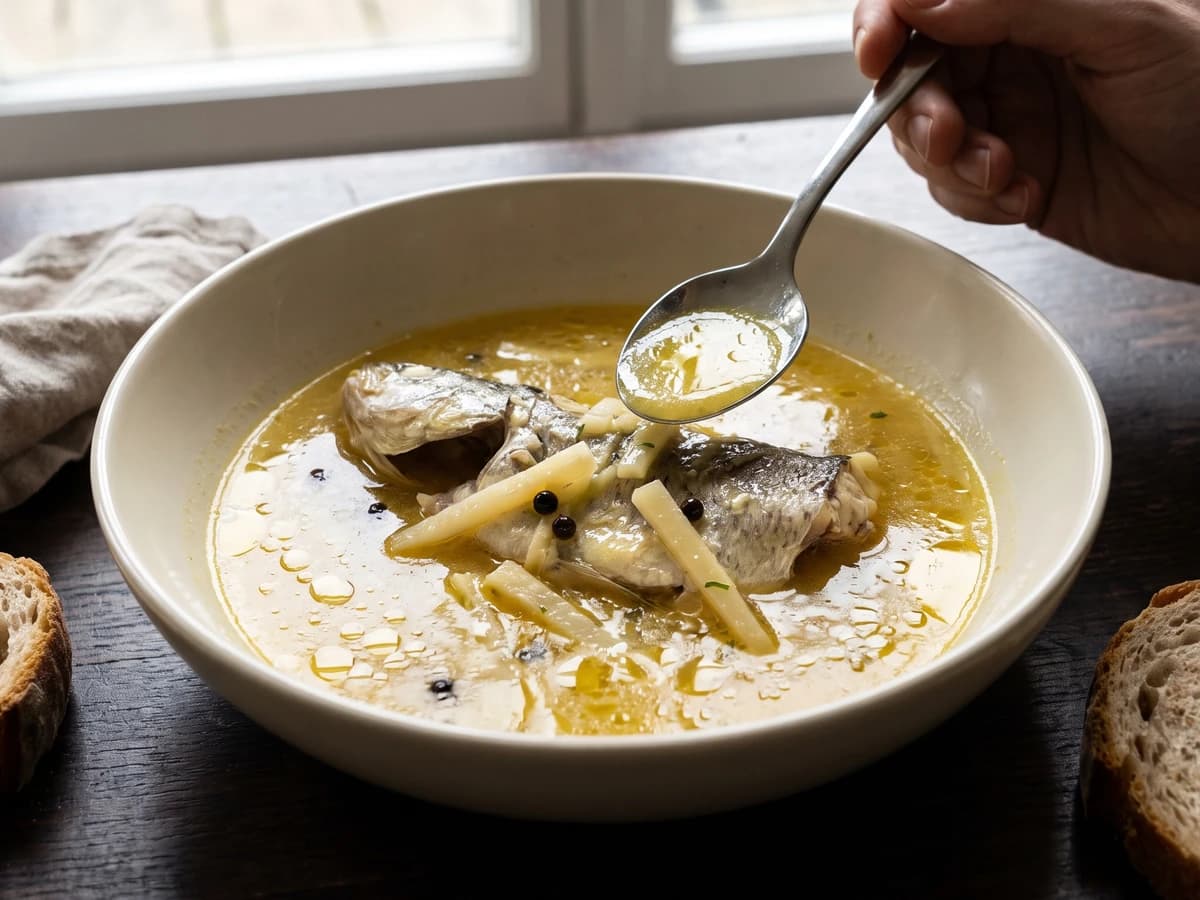
Waterzoi asks fresh, bone-in river fish to thicken its own buttery broth, with parsley root and pepper for company. No flour, no stockpot, just a brisk simmer watched closely.
Chef Juliette
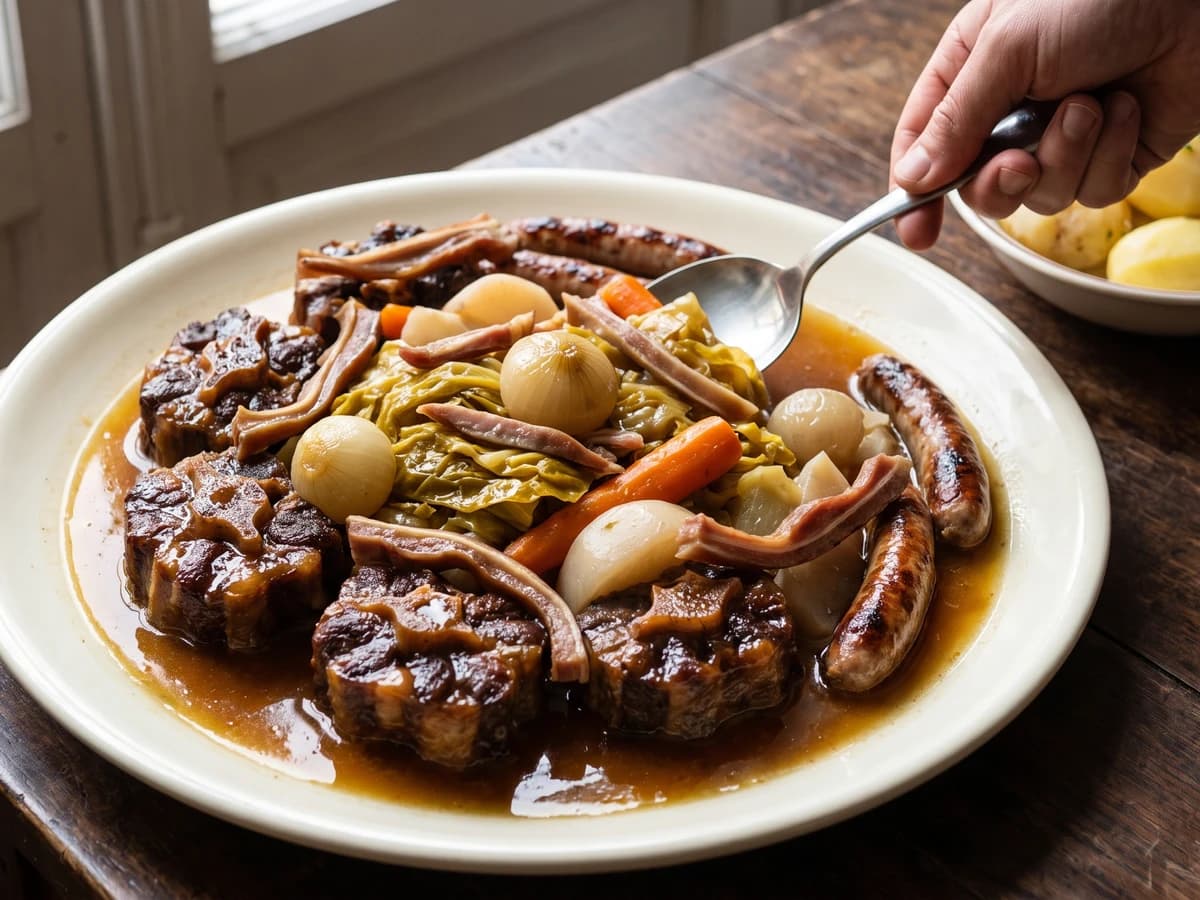
Queue de Bœuf en Hochepot gathers oxtail, pig's trotter and ear, cabbage, roots, and grilled chipolatas around a clear, gelatin-rich broth whose quiet simmer keeps every piece tender and distinct.
Chef Juliette
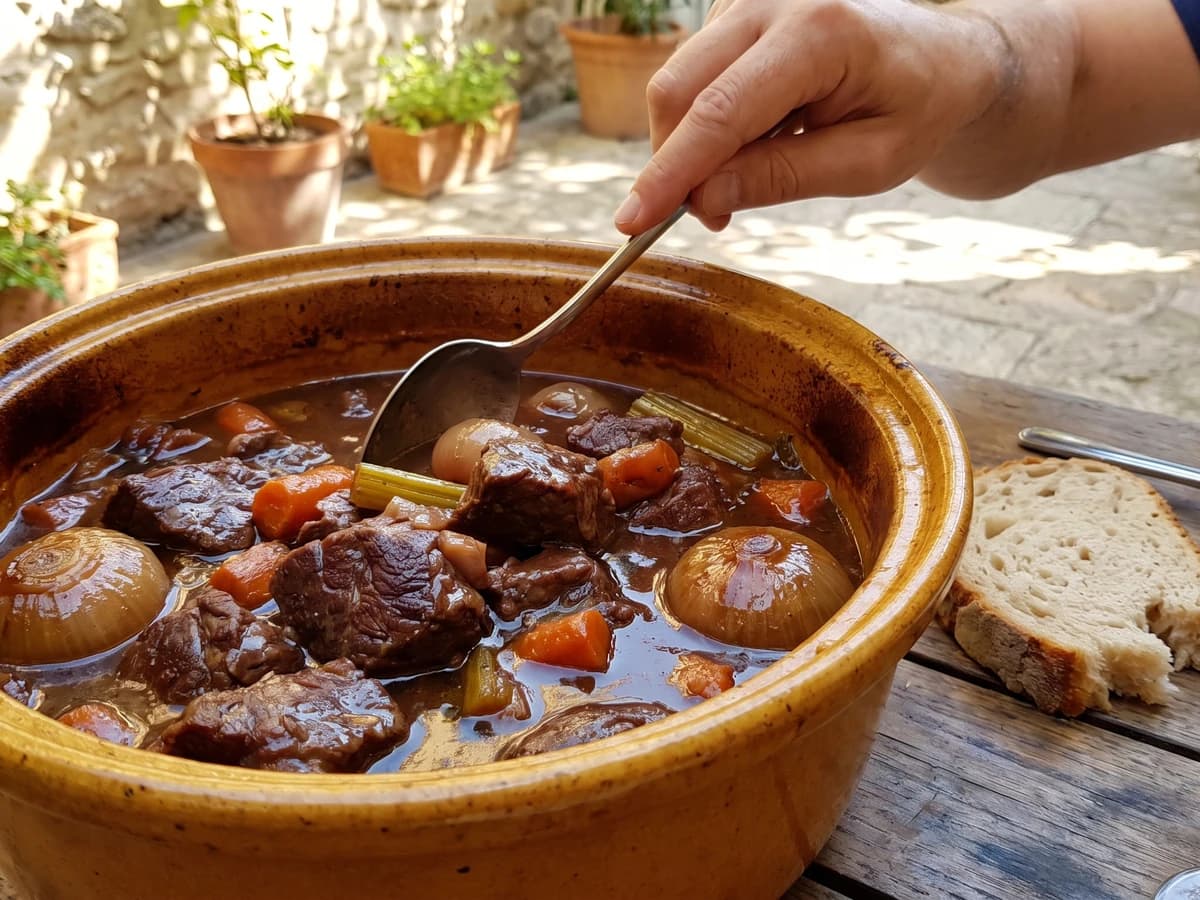
Beef shoulder larded with bacon, sharpened by red wine and vinegar, then sealed with garlic, vegetables, and dry lemon peel until the low oven turns it yielding and the gravy darkly glossy.