Chef Juliette
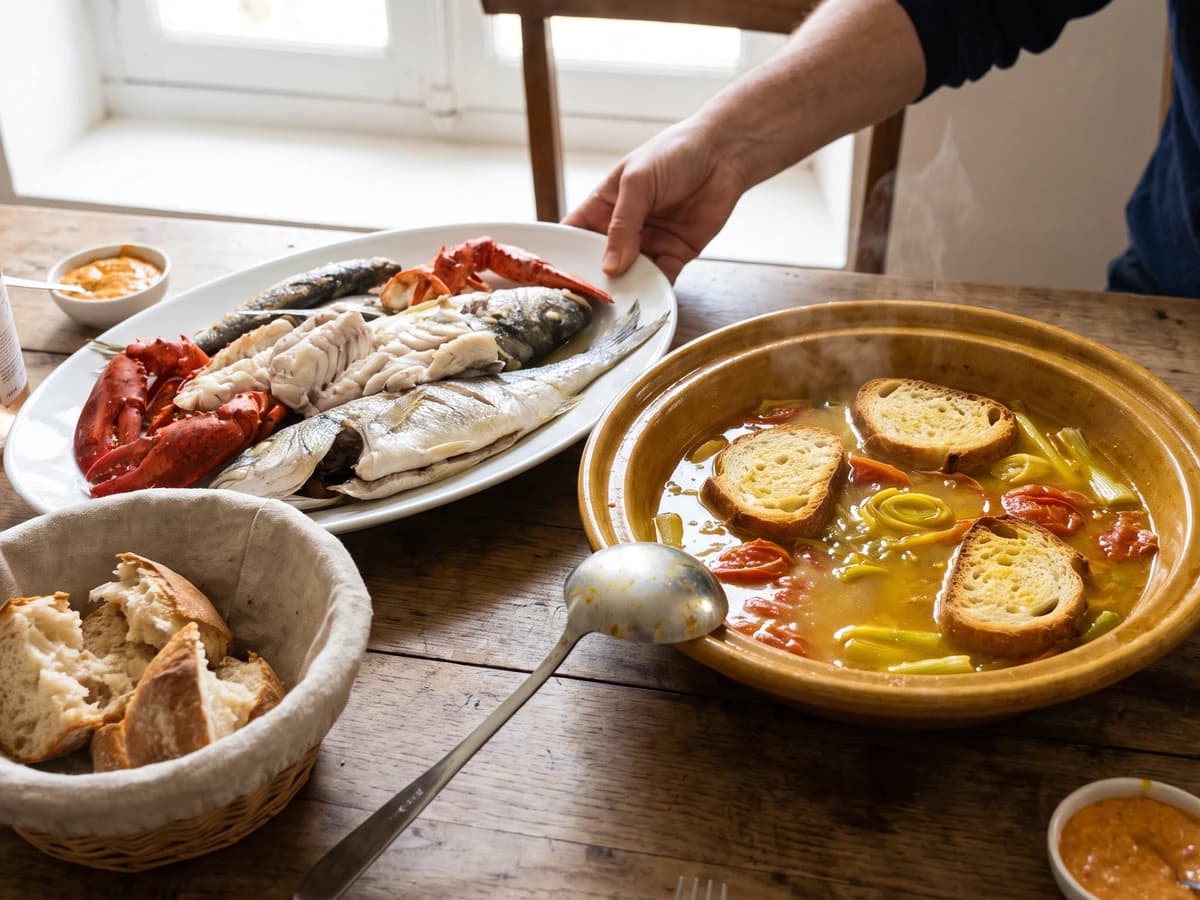
Bouillabaisse à la Marseillaise
Marseille's great fish stew, saffron-gold and garlic-scented, proves that a hard boil can be the careful choice: it binds olive oil into broth before the whole pot meets bread.
A cooking platform built around craft, culture, and the stories behind what we eat.

Created by Chef Juliette
Based on No. 622, Consommé au Fumet de Perdreau, from Le Guide Culinaire (1907) by Auguste Escoffier
Roast partridge gives this crystal-clear consommé its autumn depth, one bird to each quart, while a patient clarification carries the fumet into the broth without clouding its amber brilliance.
Consommé au Fumet de Perdreau (clear consommé scented with roast partridge) teaches concentration without weight. Know one true thing before you touch a pan: the broth must taste more deeply of game while remaining as clear as amber glass. The partridge is not a garnish. Its roasted frame perfumes the clarification itself, one bird to each finished quart.
The original entry assumed a saucier, a stockpot never off the fire, and enough birds to serve a grand dining room. Your honest equivalent is one home-scale batch of the referenced consommé, two small partridges roasted together, and a six-quart pot. The brigade quantity is scaffolding and can shrink. Roasting the birds and carrying their frames into the clarification are the dish itself, and they stay. Only the species and ratio change: the quails in the referenced preparation give way to partridges at one bird per quart, exactly as this entry directs. One cook, one stove, one evening.
Patience decides the clarity. Bring the clarification up slowly, let its raft form undisturbed, and never allow the liquid beneath it to boil. If the raft tears, stop stirring and lower the heat. Ça se rattrape. That quiet clarification is the one step that matters most.
Consommé au Fumet de Perdreau belongs to the Paris-centered classical dining room, where clear game broths traditionally opened autumn and winter meals. The preparation carried flavor from the roasting pan to the soup course economically: the breast fillets could become a cold entrée, while the browned frames gave their fragrance to the clarification. Fumet here means the partridge's concentrated aromatic imprint, not a separate heavy sauce or a cloudy stock.
Quantity
1 home-scale batch Consommé à l’Essence de Cailles (No. 618), scaled to about 2 quarts (1.9 L / about 1.9 kg)
follow its method exactly, omitting its quails so the partridges replace them
Quantity
2 birds, about 14 to 16 ounces (400 to 450 g) each
Quantity
1 tablespoon (15 ml / 14 g)
softened
| Ingredient | Quantity |
|---|---|
| Consommé à l’Essence de Caillesfollow its method exactly, omitting its quails so the partridges replace them | 1 home-scale batch Consommé à l’Essence de Cailles (No. 618), scaled to about 2 quarts (1.9 L / about 1.9 kg) |
| whole oven-ready partridges | 2 birds, about 14 to 16 ounces (400 to 450 g) each |
| unsalted buttersoftened | 1 tablespoon (15 ml / 14 g) |
Heat the oven to 450°F (230°C). Dry the partridges thoroughly and rub their skins with the softened butter. Set them breast-side up on a small rack in a roasting pan and roast until deeply bronzed, about 20 to 25 minutes, and until the thickest part of each breast reaches 165°F (74°C). Deep color matters because the roast character must carry through two quarts of broth; pale birds give a timid fumet.
Rest the birds for 10 minutes, then lift off the breast fillets in whole pieces and reserve them for a cold entrée, as the source preparation allows. Chill them promptly in a covered container. Cut the remaining legs, wings, backs, and breastbones into roughly 2-inch (5 cm) sections with sturdy kitchen shears, and save every browned roasting juice. Break the joints cleanly rather than crushing the bones into splinters.
Prepare the Consommé à l’Essence de Cailles (No. 618) exactly according to its own entry and scale it to finish at about 2 quarts, but omit its quails. When its cold clarification is assembled, fold in the chopped roast partridge frames and all their juices. Two birds for two finished quarts preserves the book's proportion exactly. Add no wine, herbs, or separate mirepoix here; the referenced preparation already governs the consommé, and the partridge must remain its single new perfume.
Begin with the pot cold and warm it gradually as the referenced method directs, stirring only during the early heating so nothing catches. Stop stirring once the proteins begin gathering into a raft. Open a small vent in the raft and hold the consommé at the faintest tremble until the liquid beneath looks bright and deeply amber. Never boil it. If the raft splits and the broth clouds, remove the pot from the heat for 5 minutes, let the fragments settle, then return it to the gentlest heat without stirring. If haze remains after straining, chill the broth and repeat the clarification stage with fresh quantities prescribed by Consommé à l’Essence de Cailles (No. 618). Ça se rattrape.
Ladle the consommé carefully through a dampened fine cloth set inside a chinois, drawing liquid from beside the raft rather than dumping the pot. Do not press. Pressure forces fat and fine particles through the cloth and undoes the clarification. Let the last sediment remain behind, however tempting that final ladleful looks. Skim the surface with clean kitchen paper if any beads of fat remain; the finished broth should gleam without wearing an oily film.
Warm the strained consommé gently without letting it boil, then taste and correct the seasoning already established by the referenced preparation. Pour it into warmed consommé cups with no garnish to interrupt its clarity. It should be amber, intensely scented with roast partridge, and light enough to invite the next course. À table!
1 serving (about 240g)
Culinary guides, cultural storytelling, and the editorial depth that makes cooking meaningful.
Discover Culinary ExplorerChef Juliette
Marseille's great fish stew, saffron-gold and garlic-scented, proves that a hard boil can be the careful choice: it binds olive oil into broth before the whole pot meets bread.
Chef Juliette
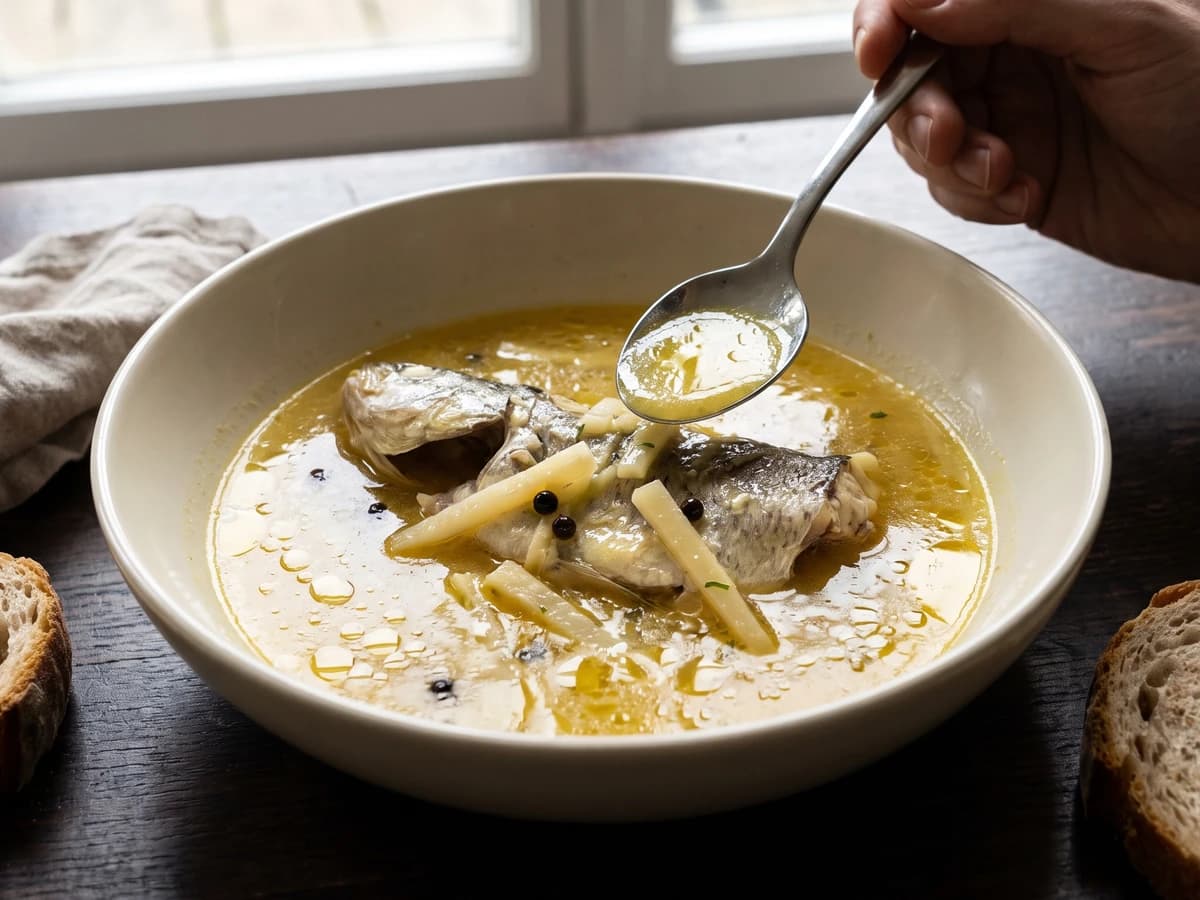
Waterzoi asks fresh, bone-in river fish to thicken its own buttery broth, with parsley root and pepper for company. No flour, no stockpot, just a brisk simmer watched closely.
Chef Juliette
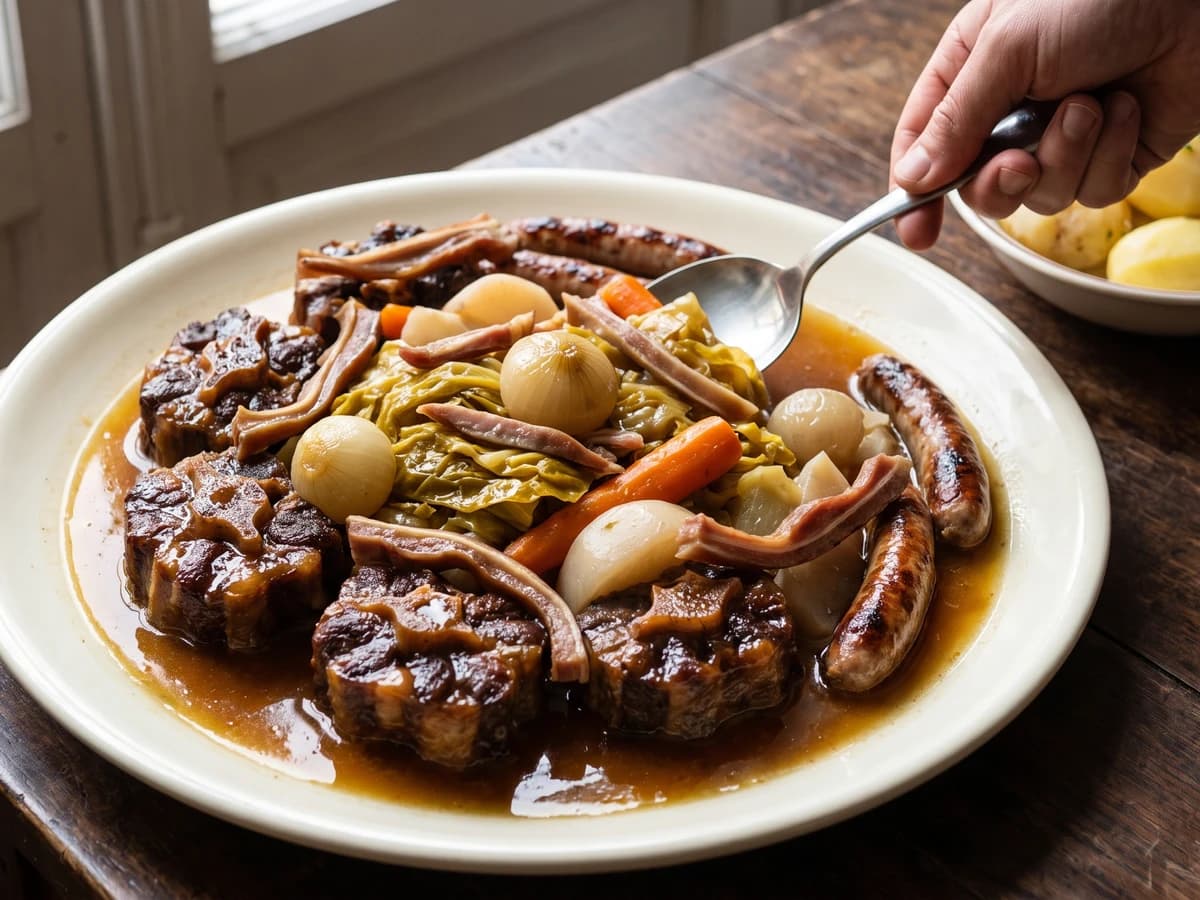
Queue de Bœuf en Hochepot gathers oxtail, pig's trotter and ear, cabbage, roots, and grilled chipolatas around a clear, gelatin-rich broth whose quiet simmer keeps every piece tender and distinct.
Chef Juliette
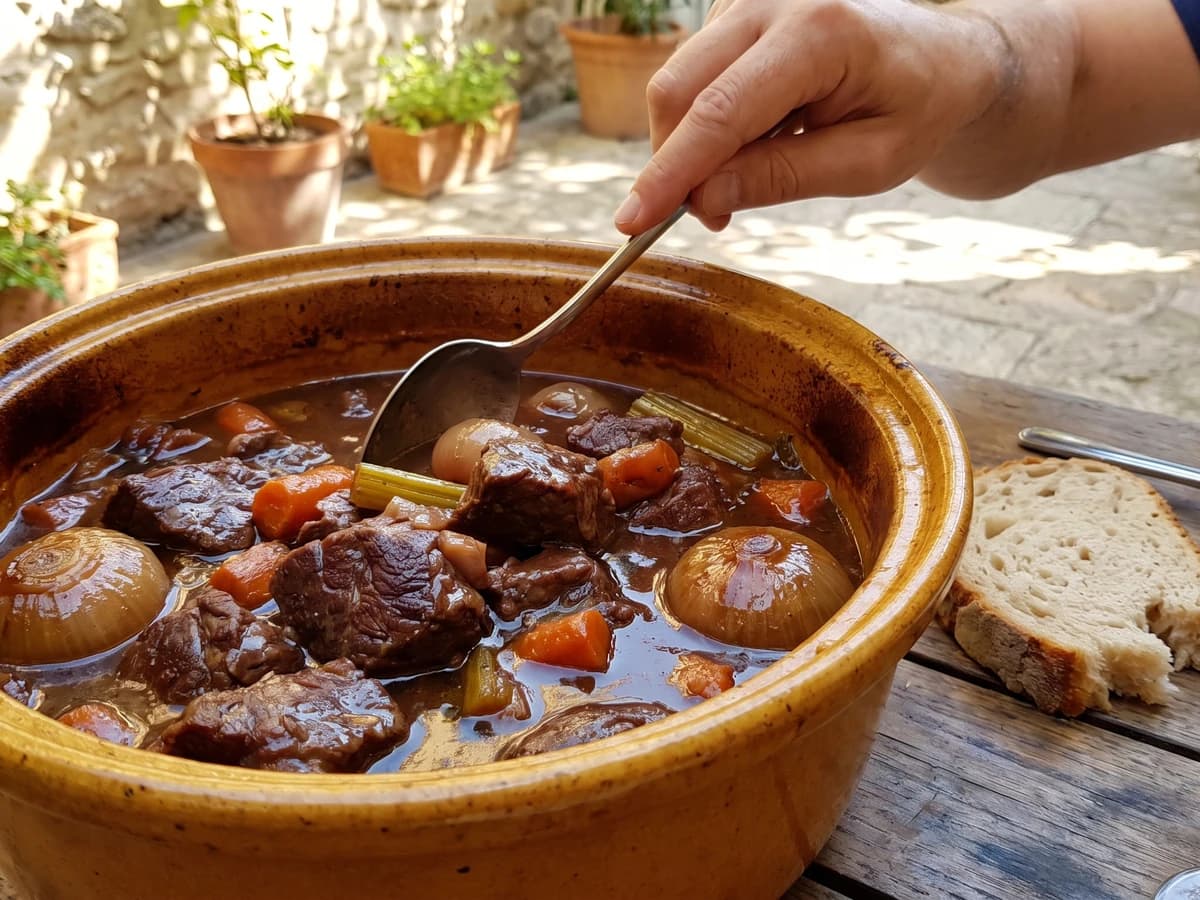
Beef shoulder larded with bacon, sharpened by red wine and vinegar, then sealed with garlic, vegetables, and dry lemon peel until the low oven turns it yielding and the gravy darkly glossy.