Chef Juliette
Bouillabaisse à la Marseillaise
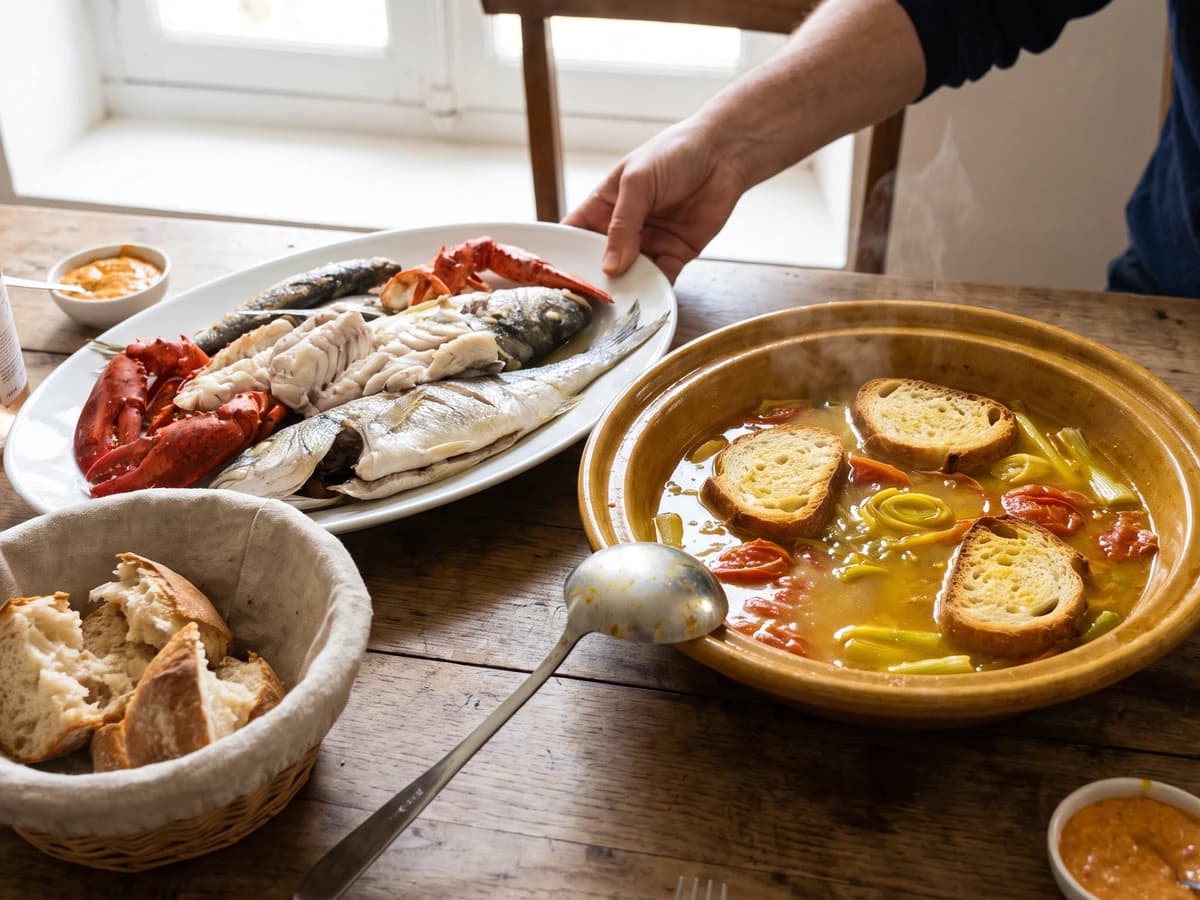
Marseille's great fish stew, saffron-gold and garlic-scented, proves that a hard boil can be the careful choice: it binds olive oil into broth before the whole pot meets bread.
A cooking platform built around craft, culture, and the stories behind what we eat.

Created by Chef Juliette
Based on No. 618, Consommé à l’Essence de Cailles, from Le Guide Culinaire (1907) by Auguste Escoffier
Roast quail gives its deepest flavor to an amber consommé, pounded into a patient clarification raft at the book’s uncompromising ratio, then filtered to a brilliance fit for the home table.
Consommé à l’Essence de Cailles (clear consommé infused with roast quail) teaches that clarity and depth are not rivals. The one true thing to know before touching a pan is that the clarification must begin cold and rise slowly. Rush the heat and the raft breaks before it can gather every clouding particle; the quail perfume remains, but the brilliance is lost.
The original entry assumed a saucier on staff, a finished consommé never far from the fire, and a mortar large enough to pound whole roasted birds. A salamander has no work in this soup. At home, begin with fully prepared plain consommé, crush the roasted carcasses in manageable batches, and clarify everything in one heavy pot. Ten quail season five pints at the prescribed two-birds-per-pint ratio, with the filtering loss leaving about two quarts for the table. One cook, one stove, one evening.
The separate stock station and enormous mortar were brigade scaffolding, so they can go. The roasting, the reserved fillets, the pounding, the cold egg-white raft, and the bare tremble are the dish itself, so they stay. The decisive moment comes when the raft first rises: stop stirring, open its chimney, and never let the consommé boil.
Consommé à l’Essence de Cailles belongs to the formal Parisian table and the classical grand-kitchen repertoire, where clear soup displayed both the depth of the stockpot and the control of the saucier. Essence here means concentrated character transferred from roasted game into consommé through pounding, gentle infusion, and clarification, not an extract poured from a bottle. From professional kitchens it passed to bourgeois dinner-party tables, while the instruction to reserve the fillets reveals the economy beneath the luxury: the carcasses and dark meat perfume the soup, and the breasts become a separate cold entrée.
Quantity
10 (about 3½ lb / 1.6 kg total)
patted very dry
Quantity
2 tablespoons (30 ml / 28 g)
softened
Quantity
1 teaspoon (5 ml / 6 g), plus more only if needed
Quantity
10 cups (2.4 liters / about 2.4 kg)
very cold and fully defatted
Quantity
6 large (about ¾ cup / 180 ml / 180 g)
4 for the primary raft and 2 reserved for rescue
| Ingredient | Quantity |
|---|---|
| oven-ready whole quailpatted very dry | 10 (about 3½ lb / 1.6 kg total) |
| unsalted buttersoftened | 2 tablespoons (30 ml / 28 g) |
| fine sea salt | 1 teaspoon (5 ml / 6 g), plus more only if needed |
| plain consommévery cold and fully defatted | 10 cups (2.4 liters / about 2.4 kg) |
| large egg whites4 for the primary raft and 2 reserved for rescue | 6 large (about ¾ cup / 180 ml / 180 g) |
Heat the oven to 450°F (230°C). Rub the quail all over with the softened butter and season them evenly with the measured salt. Arrange them without touching on a rimmed roasting tray and roast for 15 to 18 minutes, turning the tray once, until the skin is deeply golden and the thickest part of a thigh reaches 165°F (74°C). Rest for 10 minutes. Browning matters because pale birds give a pale, timid essence, but don't burn the butter or the finished consommé will carry its bitterness.
While the birds remain warm, lift the two breast fillets neatly from each quail. Place them in a shallow covered container and refrigerate promptly for a cold entrée; they do not return to this consommé. Cut the legs, wings, skin, and carcasses into 1-inch (2.5 cm) pieces with sturdy kitchen shears. Crack the bones with a cleaver or flat meat mallet, then pound everything in a heavy mortar, working in batches, until the flesh is mashed and every bone is well fractured. Spread the pounded quail on a tray and chill it until completely cold.
Loosen 4 egg whites with a whisk in a 6-quart (5.7-liter) heavy pot, beating only until fluid rather than foamy. Mix in the thoroughly chilled pounded quail, then gradually stir in all 10 cups of very cold consommé. Scrape the bottom and corners so no pocket of egg white remains. The mixture must be cold before heating; warm proteins seize in scattered clumps instead of forming one useful clarification raft.
Set the pot over medium-low heat and stir continuously with a flat wooden spoon, reaching across the entire bottom, while the consommé warms over 20 to 30 minutes. Small curds will form, join, and finally rise as a single raft. The instant it floats and the liquid begins to tremble, stop stirring. Lower the heat and open a 1-inch (2.5 cm) chimney through the center with the spoon. If the pot threatens to boil, pull it completely off the heat until calm, then return it over a gentler flame.
Keep the consommé between 185°F and 194°F (85°C and 90°C) for 40 to 45 minutes. A few quiet bubbles may rise through the chimney, but the surface must never roll. Do not stir, prod, or baste the raft. During this bare tremble the pounded roasted quail gives up its essence while the egg white and meat trap fat and sediment; shortening this stage leaves flavor in the raft instead of the bowl.
Dampen a lint-free cloth or four layers of cheesecloth and use it to line a fine chinois or mesh strainer set over a clean pot. Ladle the clear liquid gently through the chimney and into the lined strainer, leaving the raft undisturbed as long as possible. Let gravity do the work. Never squeeze or press the solids, since pressure drives their sediment straight through the cloth. Blot away any isolated beads of fat with a clean strip of absorbent kitchen paper. If the consommé remains hazy, don't serve it resignedly. Ça se rattrape. Cool it quickly over an ice bath, whisk the 2 reserved whites with 1 cup of the cold consommé, stir that mixture into the batch, and repeat the slow rise. Stop stirring when the new raft forms, hold it at a bare tremble for 15 minutes, then pass it through fresh damp cloth.
Warm the strained consommé gently to 175°F to 180°F (80°C to 82°C), without allowing it to boil. Taste before adding any salt, since a prepared consommé may already be perfectly seasoned and the quail has concentrated it further. Pour 1 cup into each warmed consommé cup, leaving the broth entirely clear and ungarnished. The reserved fillets belong to their own cold entrée, not floating here. À table!
1 serving (about 240g)
Culinary guides, cultural storytelling, and the editorial depth that makes cooking meaningful.
Discover Culinary ExplorerChef Juliette
Marseille's great fish stew, saffron-gold and garlic-scented, proves that a hard boil can be the careful choice: it binds olive oil into broth before the whole pot meets bread.
Chef Juliette
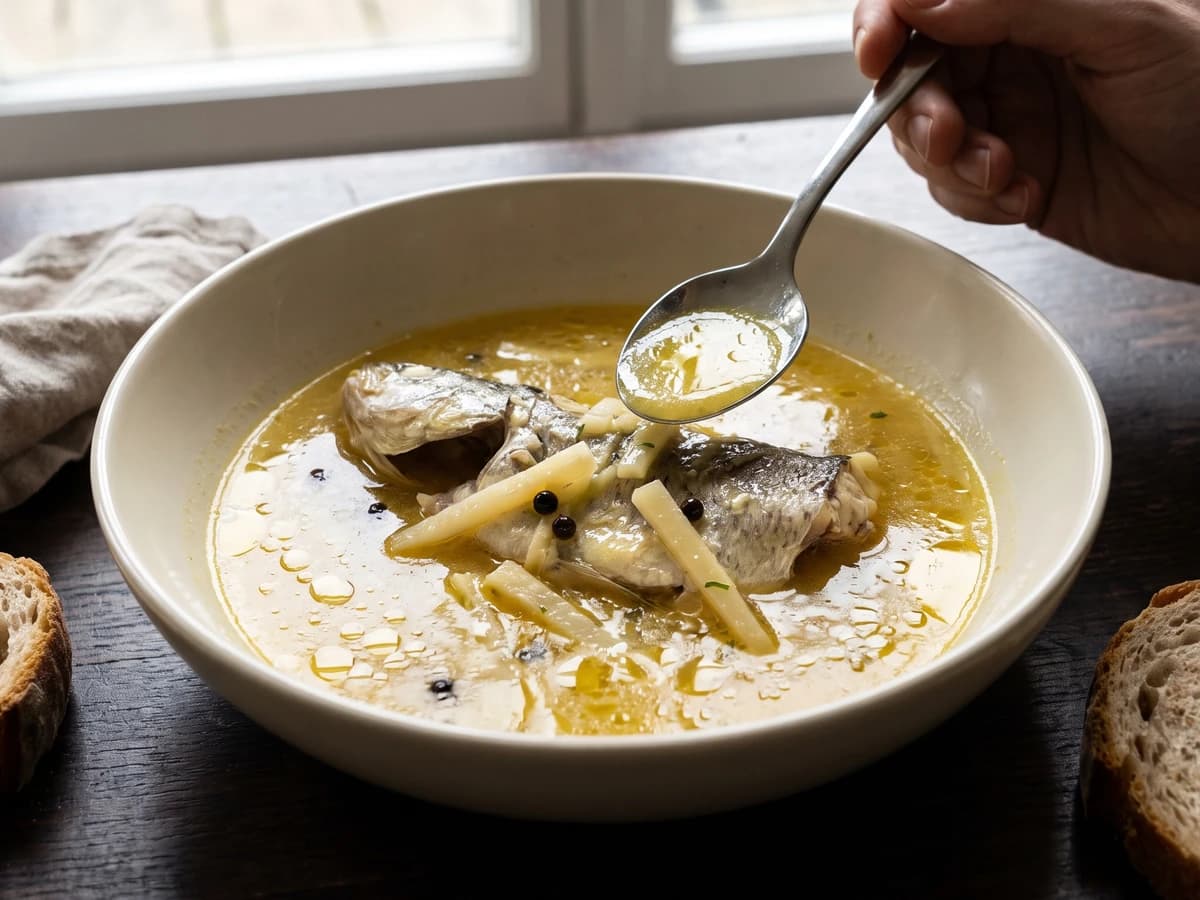
Waterzoi asks fresh, bone-in river fish to thicken its own buttery broth, with parsley root and pepper for company. No flour, no stockpot, just a brisk simmer watched closely.
Chef Juliette
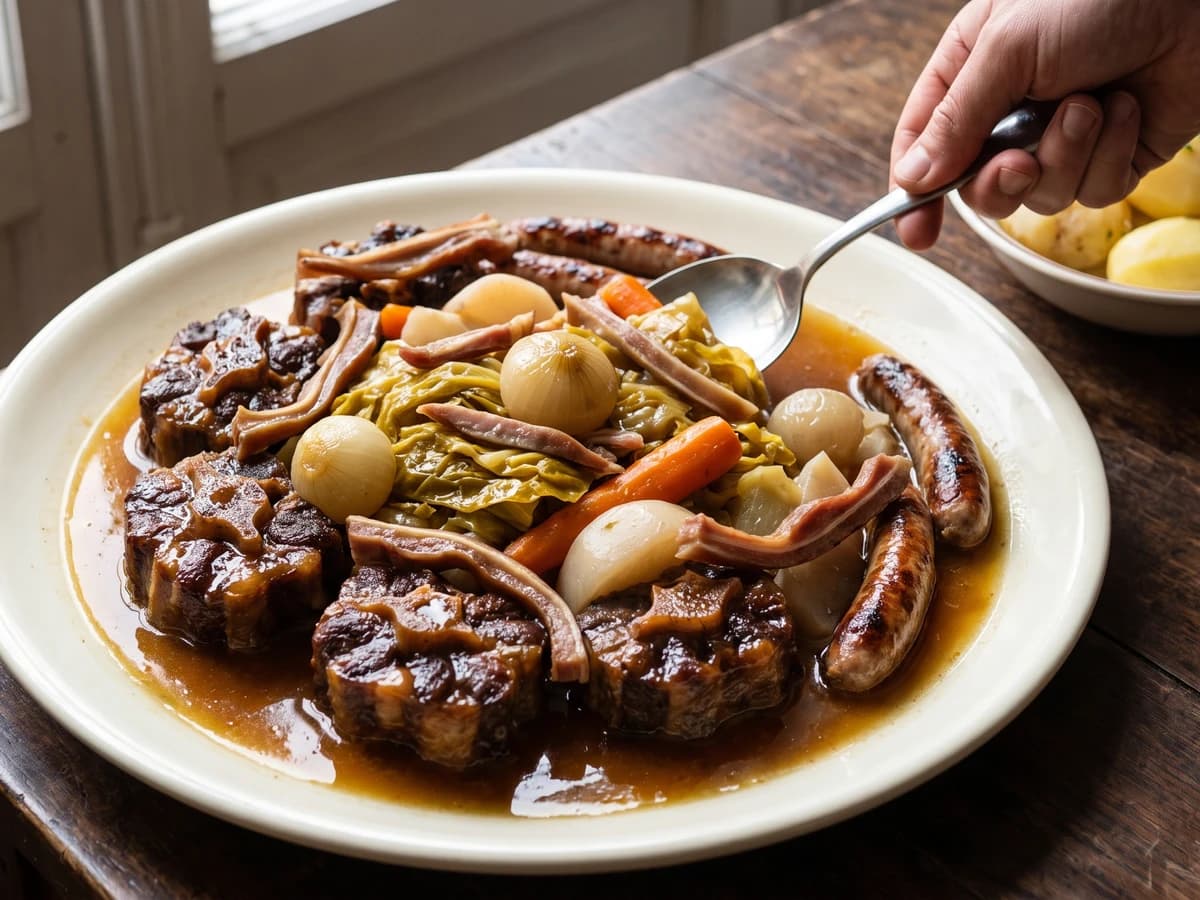
Queue de Bœuf en Hochepot gathers oxtail, pig's trotter and ear, cabbage, roots, and grilled chipolatas around a clear, gelatin-rich broth whose quiet simmer keeps every piece tender and distinct.
Chef Juliette
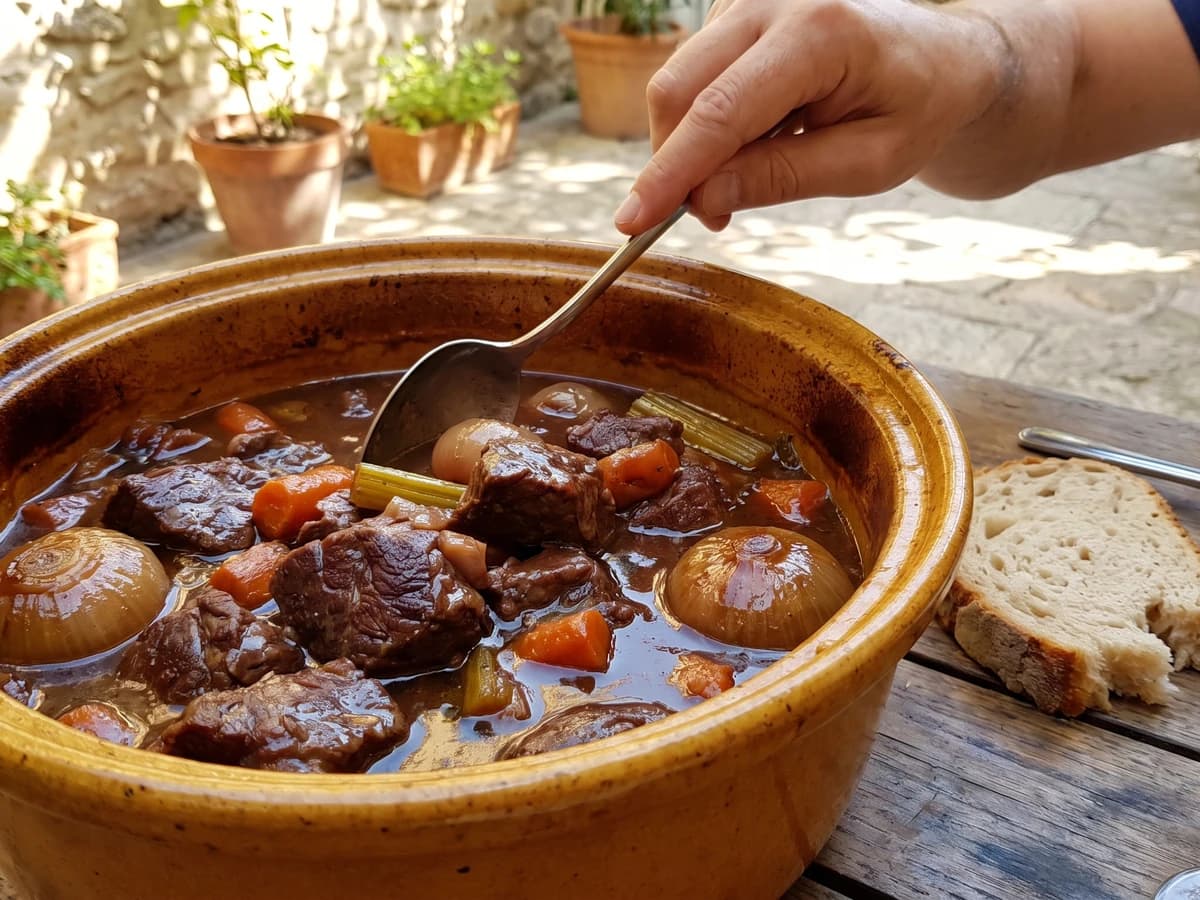
Beef shoulder larded with bacon, sharpened by red wine and vinegar, then sealed with garlic, vegetables, and dry lemon peel until the low oven turns it yielding and the gravy darkly glossy.