Chef Juliette
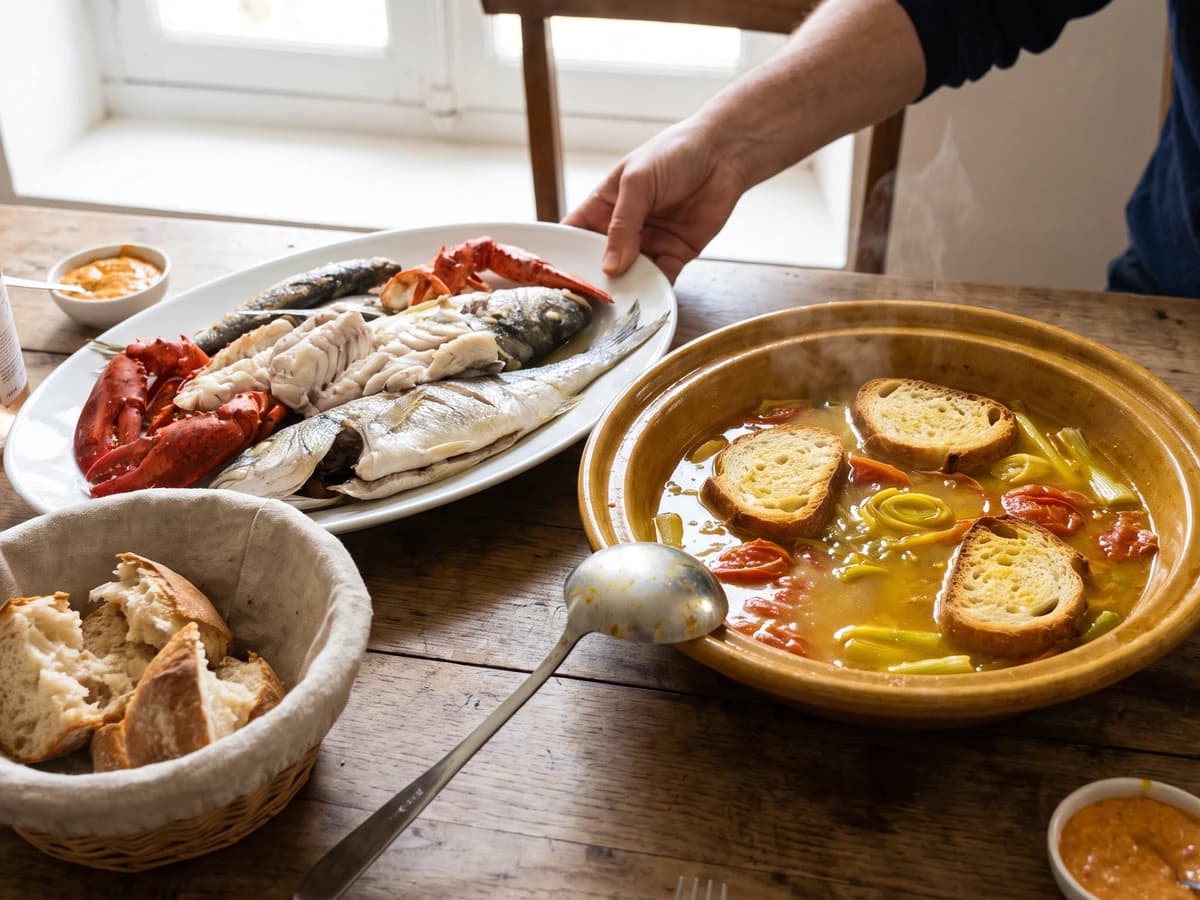
Bouillabaisse à la Marseillaise
Marseille's great fish stew, saffron-gold and garlic-scented, proves that a hard boil can be the careful choice: it binds olive oil into broth before the whole pot meets bread.
A cooking platform built around craft, culture, and the stories behind what we eat.

Created by Chef Juliette
Based on No. 598, La Petite Marmite, from Le Guide Culinaire (1907) by Auguste Escoffier
La Petite Marmite teaches the discipline of clarity: beef, fowl giblets, and marrow drawn at a bare tremble, olive-cut roots kept distinct, with cabbage and hot marrow toast passed separately at the table.
La Petite Marmite (the little stockpot broth) teaches the discipline of clear extraction. The one true thing to know before touching the pan is this: clarity is won before the liquid simmers. Begin with cold water, raise the heat slowly, and skim the proteins while they gather at the surface. Let the pot boil hard or stir it carelessly and those particles scatter through the broth.
The book's marmite fed ten and assumed a special earthenware stockpot fit for the dining room, a fire held low for hours, and enough kitchen hands to skim while dinner continued around it. Here the proportions are reduced to yield about two quarts in an eight-quart heavy pot. Breast of beef becomes brisket point, the same rich, connective cut under a name your butcher will recognize, and fowl pinions become chicken wing tips, which contribute the same gelatin. A fine sieve and warmed soupière replace the napkin-dressed service pot. These changes answer scale, equipment, and modern butchery, not flavor.
The polished pot and geometrically perfect tournage are brigade scaffolding. The slow extraction, last-hour giblets, evenly shaped roots, separately cooked cabbage, and marrow passed with hot toast are the dish, so they stay. When the marmite is right, its broth is amber and limpid, its vegetables retain their clean outlines, and every spoonful tastes generous without heaviness. Set your skimmer and scum bowl beside the stove before you begin. That first slow rise decides everything.
La Petite Marmite belongs to the Parisian bourgeois dining room and the classical grand kitchen, where the household pot-au-feu was refined into a clear broth served from its own small earthenware vessel. The name refers to that marmite, not to a meager portion: beef, fowl giblets, marrow, and carefully shaped vegetables made it a generous table dish. Cabbage and marrow traveled separately because cabbage could dominate and cloud the broth, while the marrow deserved hot toast of its own.
Quantity
1 batch, yielding about 2 quarts (1.9 L / 1.9 kg), Ordinary or White Consommé (No. 1)
made with the dish-specific beef, marrow bone, water, and salt below
Quantity
1 pound 7 ounces (650 g)
tied in one piece
Quantity
1 pound 7 ounces (650 g)
tied in one piece
Quantity
1 bone, 5 to 6 inches (13 to 15 cm) long and about 12 ounces (340 g)
wrapped and tied in dampened cheesecloth
Quantity
2½ quarts (2.4 L / 2.4 kg)
Quantity
2½ teaspoons (12 ml / 15 g)
Quantity
½ cup (120 ml / 120 g)
for checking the first boil and rescuing the broth if needed
Quantity
4 necks, about 10 ounces (285 g)
Quantity
8 tips, about 7 ounces (200 g)
Quantity
4 gizzards, about 7 ounces (200 g)
cleaned
Quantity
1 cup (240 ml / 120 g)
peeled and shaped into large olives
Quantity
1 cup (240 ml / 120 g)
peeled and shaped into large olives
Quantity
1 packed cup (240 ml / 100 g)
cleaned and cut into 2-inch (5 cm) lengths
Quantity
1 small heart, about 5 ounces (140 g)
trimmed and quartered lengthwise
Quantity
¼ small head, about 10 ounces (285 g), for Blanchings (No. 273)
blanched, cooled, and thoroughly drained
Quantity
1 cup (240 ml / 240 g) Ordinary or White Consommé (No. 1)
drawn from the finished batch
Quantity
1 tablespoon (15 ml / 14 g)
Quantity
12 thin slices, about 5 ounces (140 g)
for hot toast
| Ingredient | Quantity |
|---|---|
| consommé componentmade with the dish-specific beef, marrow bone, water, and salt below | 1 batch, yielding about 2 quarts (1.9 L / 1.9 kg), Ordinary or White Consommé (No. 1) |
| lean stewing beeftied in one piece | 1 pound 7 ounces (650 g) |
| beef breast or brisket pointtied in one piece | 1 pound 7 ounces (650 g) |
| unsplit center-cut marrow bonewrapped and tied in dampened cheesecloth | 1 bone, 5 to 6 inches (13 to 15 cm) long and about 12 ounces (340 g) |
| cold water | 2½ quarts (2.4 L / 2.4 kg) |
| fine sea salt | 2½ teaspoons (12 ml / 15 g) |
| additional cold waterfor checking the first boil and rescuing the broth if needed | ½ cup (120 ml / 120 g) |
| chicken necks | 4 necks, about 10 ounces (285 g) |
| chicken wing tips | 8 tips, about 7 ounces (200 g) |
| chicken gizzardscleaned | 4 gizzards, about 7 ounces (200 g) |
| carrotspeeled and shaped into large olives | 1 cup (240 ml / 120 g) |
| turnipspeeled and shaped into large olives | 1 cup (240 ml / 120 g) |
| leek whitescleaned and cut into 2-inch (5 cm) lengths | 1 packed cup (240 ml / 100 g) |
| celery hearttrimmed and quartered lengthwise | 1 small heart, about 5 ounces (140 g) |
| very white cabbageblanched, cooled, and thoroughly drained | ¼ small head, about 10 ounces (285 g), for Blanchings (No. 273) |
| consommé reserved for the cabbagedrawn from the finished batch | 1 cup (240 ml / 240 g) Ordinary or White Consommé (No. 1) |
| skimmed beef stock fat | 1 tablespoon (15 ml / 14 g) |
| baguettefor hot toast | 12 thin slices, about 5 ounces (140 g) |
Make the Ordinary or White Consommé (No. 1) as the finished foundation, using this recipe's lean beef, brisket point, cheesecloth-wrapped marrow bone, cold water, and salt in place of that preparation's standard meat garnish. Follow its cold-start and skimming procedure exactly; the marmite changes the meat proportions and yield, not the component's method. Use an 8-quart heavy pot and allow the liquid 40 to 50 minutes to approach its first simmer. A slow rise gives the soluble proteins time to gather where you can remove them.
As the grey foam rises, remove it without stirring the liquid beneath. If bubbles threaten before the scum has gathered, add a spoonful of the additional cold water to check the heat, then continue skimming. Once the surface remains mostly clean, hold the pot at the barest tremble for about 2 hours 45 minutes, with the lid slightly ajar. Skim away foam and excess fat as they appear, and wipe the tide mark from the pot. If the broth boils hard and the scum breaks apart, pull it from the heat, add 2 tablespoons of cold water, wait 5 minutes, and skim again before continuing gently. Ça se rattrape. Do not stir.
During the long simmer, make the tournage (olive-shaped trimming): cut the carrots and turnips into even, generous ovals about 1¼ inches (3 cm) long. Exact facets belong to brigade presentation; even size is what matters at home. One hour before serving, add the chicken necks, wing tips, gizzards, carrots, turnips, leek whites, and celery heart to the marmite. Let the liquid return slowly to a bare tremble and cook for the full hour. If a turnip yields completely before the others, lift it into a warm bowl and return it at the finish rather than letting it collapse into the broth.
Have the cabbage ready from Blanchings (No. 273), cooled and squeezed gently so it carries no excess water. Place it in a 2-quart saucepan with 1 cup of the Ordinary or White Consommé (No. 1) and the skimmed stock fat. Cover and cook at a very gentle simmer for 25 to 35 minutes, turning the cabbage once, until fully tender but still holding together. If the pan dries before the cabbage is tender, add another spoonful of broth. Keep it apart from the marmite afterward; putting it into the main pot would cloud the broth and let cabbage dominate every spoonful.
Lift the beef, giblets, vegetables, and wrapped marrow bone from the pot without disturbing the sediment. Let the broth stand off the heat for 5 minutes, then skim the surface thoroughly. Pass it through a fine sieve lined with dampened cheesecloth into a clean, warmed soupière or serving marmite, letting gravity do the work. Never squeeze the cloth. If the broth remains hazy, pass it once more through fresh dampened cheesecloth. Untie the beef, cut it into generous serving slices, halve the gizzards, and arrange them in the clear broth with the necks, wing tips, and vegetables. Taste and correct the salt.
Toast the baguette slices in a dry skillet or moderate oven until crisp and evenly golden, then bring them to the table while still hot. Unwrap the marrow bone and place it on a warmed side dish with a small spoon or blunt knife. Send the tender cabbage in its own bowl, moistened with a little of its cooking broth. Bring the marmite to the table and ladle the clear broth, meats, and vegetables into warm bowls, passing the marrow, toast, and cabbage separately. À table!
1 serving (about 480g)
Culinary guides, cultural storytelling, and the editorial depth that makes cooking meaningful.
Discover Culinary ExplorerChef Juliette
Marseille's great fish stew, saffron-gold and garlic-scented, proves that a hard boil can be the careful choice: it binds olive oil into broth before the whole pot meets bread.
Chef Juliette
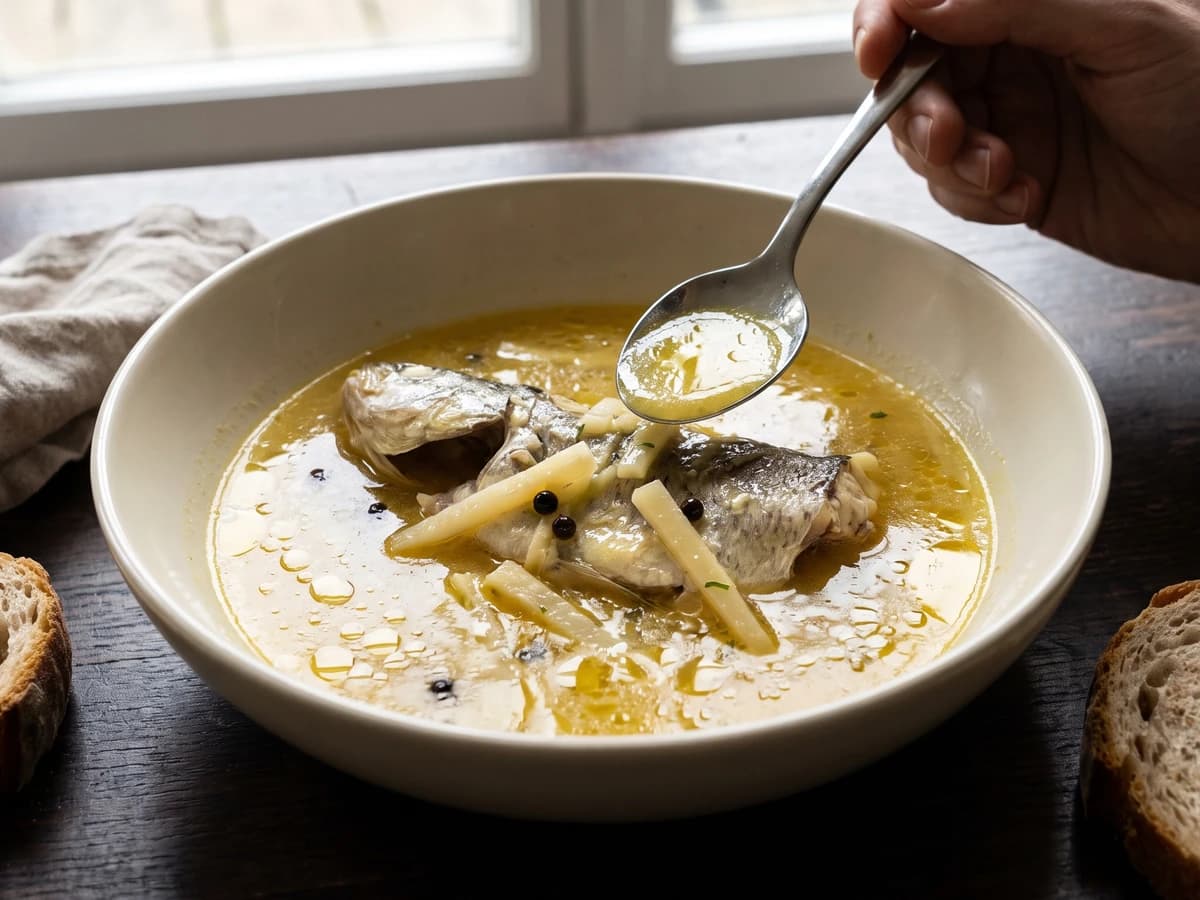
Waterzoi asks fresh, bone-in river fish to thicken its own buttery broth, with parsley root and pepper for company. No flour, no stockpot, just a brisk simmer watched closely.
Chef Juliette
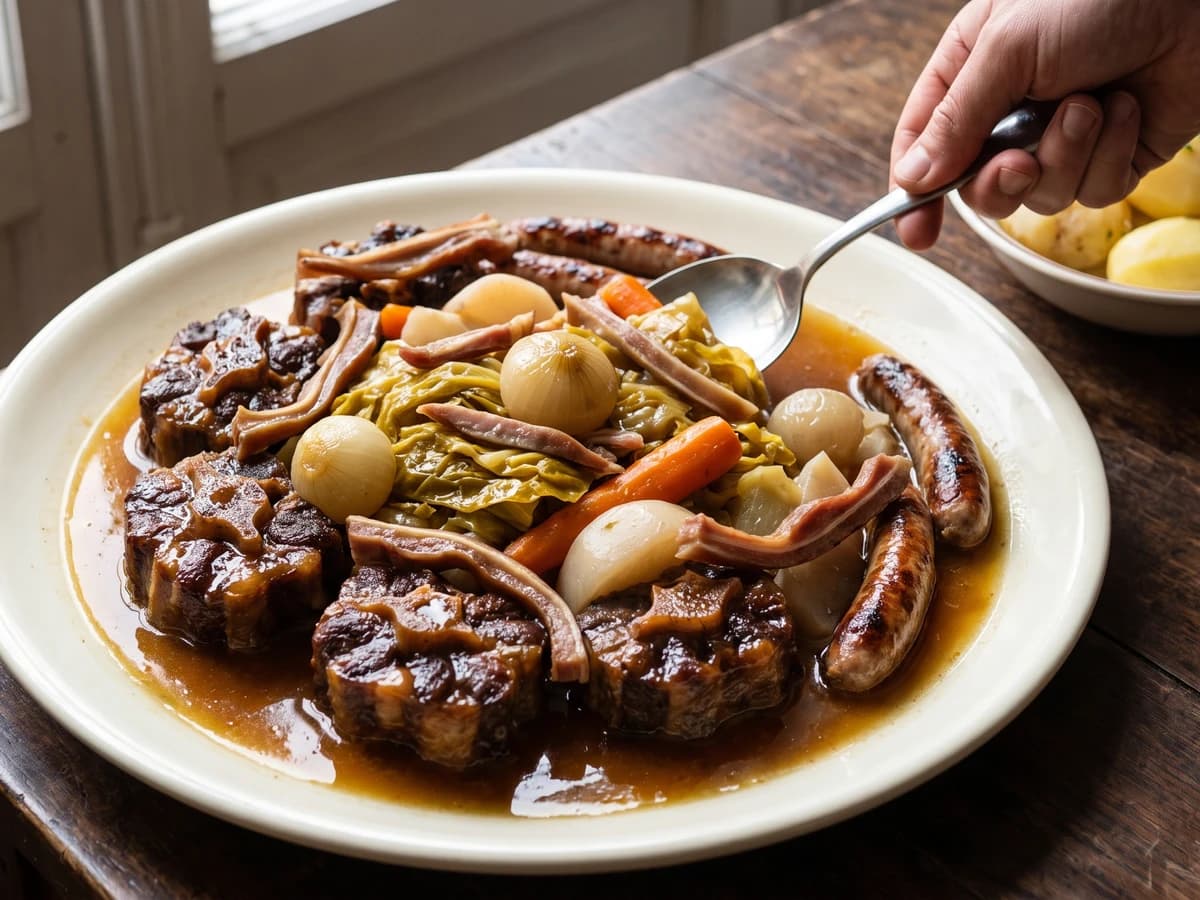
Queue de Bœuf en Hochepot gathers oxtail, pig's trotter and ear, cabbage, roots, and grilled chipolatas around a clear, gelatin-rich broth whose quiet simmer keeps every piece tender and distinct.
Chef Juliette
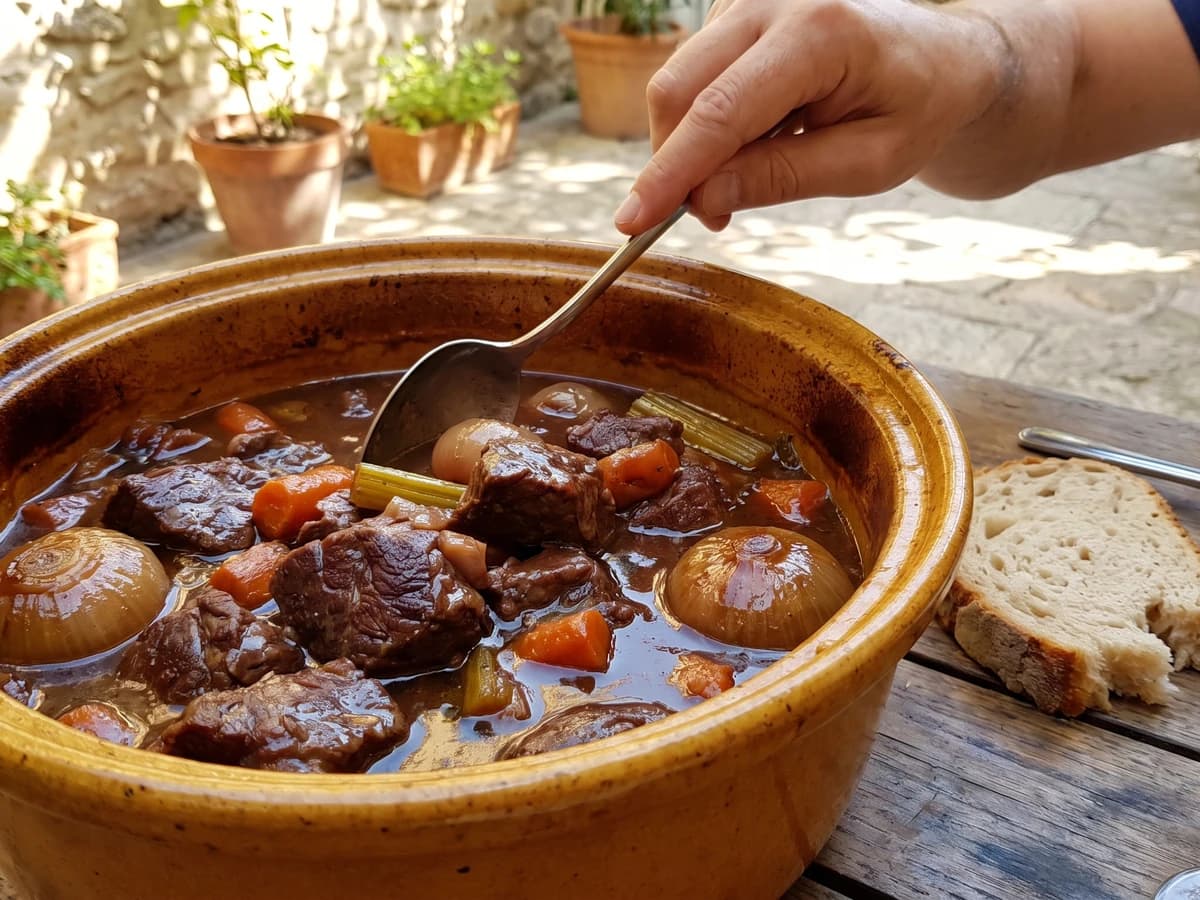
Beef shoulder larded with bacon, sharpened by red wine and vinegar, then sealed with garlic, vegetables, and dry lemon peel until the low oven turns it yielding and the gravy darkly glossy.