Chef Juliette
Bouillabaisse à la Marseillaise
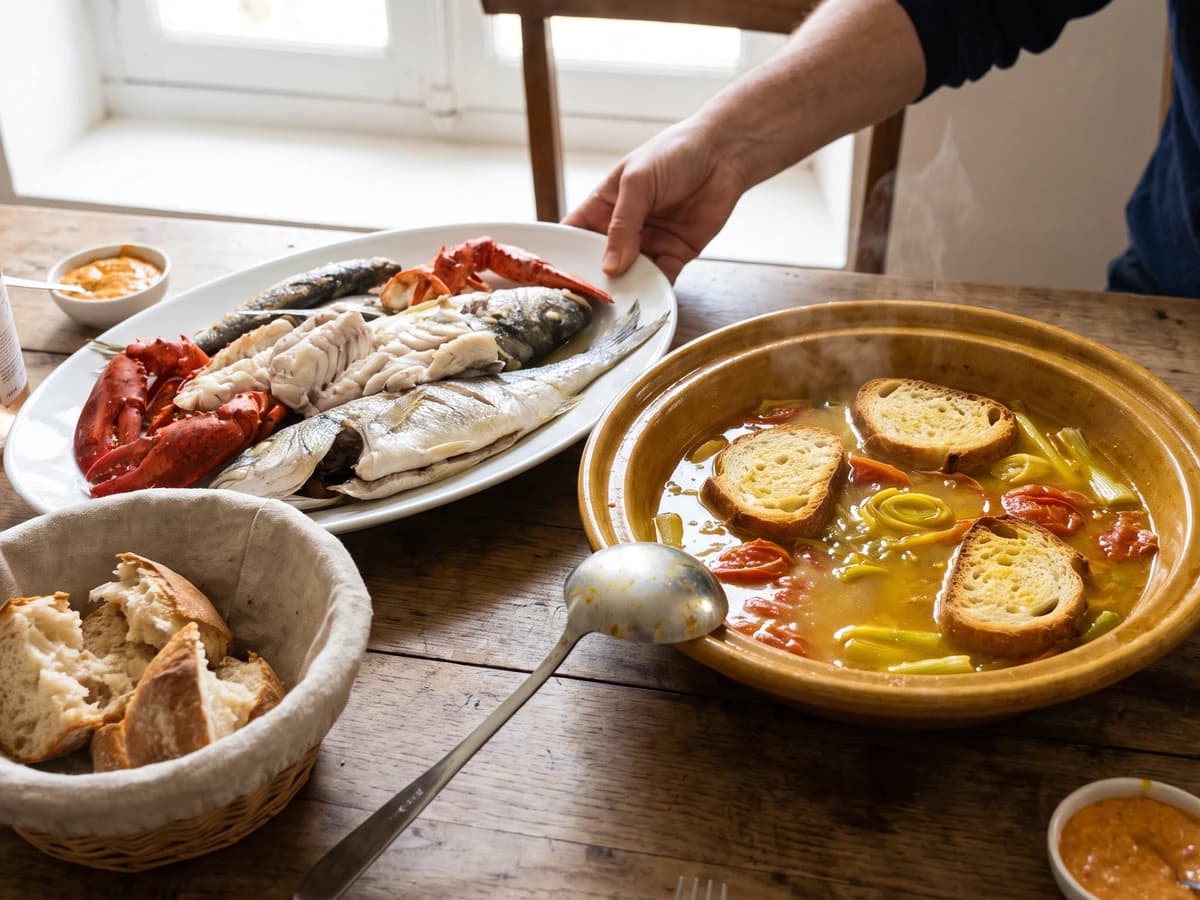
Marseille's great fish stew, saffron-gold and garlic-scented, proves that a hard boil can be the careful choice: it binds olive oil into broth before the whole pot meets bread.
A cooking platform built around craft, culture, and the stories behind what we eat.

Created by Chef Juliette
Based on No. 586, Consommé Mirette, from Le Guide Culinaire (1907) by Auguste Escoffier
Clear chicken consommé poured at the last moment over pearl quenelles and buttery lettuce, with hot Parmesan paillettes passed apart: a lesson in clarity, temperature, and keeping crisp things crisp.
Consommé Mirette (clear chicken consommé with pearl quenelles) teaches one true thing: service is part of the cooking. The broth must remain brilliantly clear, the chicken pearls tender, the lettuce buttery, and the Paillettes au Parmesan (No. 2322), crisp Parmesan puff-pastry straws, must stay hot and apart. Put them in the tureen and their fine layers collapse. That separation is not ceremony. It is the dish.
The professional entry assumed a saucier on staff, a stock never off the fire, a pastry cook tending the paillettes, and a salamander or fierce oven ready at service. At home, a mini processor, a covered saucepan, a fully heated domestic oven, and a warmed tureen replace that brigade. For a dinner-party tureen, I keep the original one-to-one ratio of quenelles and Paillettes au Parmesan (No. 2322), while cutting the auxiliary preparations to exactly what you need. The oversized working batches are scaffolding and can go. The clear consommé, cold forcemeat, gentle poach, and separate pastry service must stay. One cook, one stove, one evening.
The step that matters most comes before any pan: chill the chicken, cream, egg white, processor blade, and bowl. Warm forcemeat loses its emulsion and poaches grainy; cold forcemeat swells into smooth ivory pearls. Begin there, and the rest is calm assembly.
Consommé Mirette belongs to the Parisian grand-kitchen repertoire, where named consommés were distinguished by their precise garnishes rather than by entirely different broths. Its Consommé of the Petite Marmite carries the logic of pot-au-feu into formal service, while pearl chicken quenelles, buttery lettuce, and chervil turn that foundation into a composed first course. The Parmesan pastry served apart is not decoration; preserving its crisp layers supplies the contrast on which the service depends.
Quantity
8 ounces (225 g)
trimmed, diced, and very cold
Quantity
1 large (about 2 tablespoons / 30 ml / 30 g)
very cold
Quantity
3/4 cup (180 ml / 180 g)
very cold
Quantity
1 teaspoon (5 ml / 6 g)
Quantity
1/4 teaspoon (1.25 ml / 0.6 g)
Quantity
8 cups (1.9 L / 1.9 kg)
for poaching
Quantity
1 tablespoon (15 ml / 18 g)
for poaching
Quantity
8 cups (1.9 L / 1.9 kg)
Quantity
1/4 cup (60 ml / 30 g) Chiffonade (No. 215)
made from tender lettuce cut julienne-fashion and stewed in butter
Quantity
2 generous pinches (about 2 tablespoons / 30 ml / 4 g)
| Ingredient | Quantity |
|---|---|
| boneless, skinless chicken breasttrimmed, diced, and very cold | 8 ounces (225 g) |
| large egg whitevery cold | 1 large (about 2 tablespoons / 30 ml / 30 g) |
| heavy creamvery cold | 3/4 cup (180 ml / 180 g) |
| fine sea salt | 1 teaspoon (5 ml / 6 g) |
| ground white pepper | 1/4 teaspoon (1.25 ml / 0.6 g) |
| waterfor poaching | 8 cups (1.9 L / 1.9 kg) |
| fine sea saltfor poaching | 1 tablespoon (15 ml / 18 g) |
| Consommé of the Petite Marmite | 8 cups (1.9 L / 1.9 kg) |
| Chiffonademade from tender lettuce cut julienne-fashion and stewed in butter | 1/4 cup (60 ml / 30 g) Chiffonade (No. 215) |
| Paillettes au Parmesanprepared and ready to bake | 36 Paillettes au Parmesan (No. 2322) |
| fresh chervil pluches | 2 generous pinches (about 2 tablespoons / 30 ml / 4 g) |
Make the farce mousseline, a cream-lightened chicken forcemeat. Chill the processor bowl and blade for twenty minutes, then pulse the cold chicken with the first measure of salt and the white pepper until the meat becomes smooth and tacky. Add the egg white and process until completely absorbed. With the motor running, pour in the cold cream in a thin stream, stopping as soon as the paste looks smooth, pale, and satiny. If it turns shiny and slack or leaves streaks of cream on the bowl, it is warming. Stop immediately, nest the bowl in ice for ten minutes, then pulse only twice or three times. Ça se rattrape when you stop before forcing a warm emulsion. Cover and chill the finished forcemeat for twenty minutes.
Bring the water and poaching salt to 175 to 180°F (80 to 82°C), a bare tremble with no rolling bubbles. Using two teaspoons dipped in the hot water, pass rounded two-teaspoon portions of forcemeat between them until they resemble large pearls. Poach one tester first. If it frays or collapses, pull the pan from the heat and chill the remaining paste for fifteen minutes; the water was too hot or the forcemeat too warm. Ça se rattrape. Poach the remaining quenelles in three uncrowded batches until firm, buoyant, and 165°F (74°C) at the center, about five to six minutes. Lift them out with a skimmer and hold them covered in a shallow dish set over gently hot water. You need thirty-six.
Set a rack in the upper third of the oven and heat it fully to 450°F (230°C). Eight to ten minutes before serving, bake the prepared Paillettes au Parmesan (No. 2322) until their layers are crisp and the Parmesan is a deep butter-gold. Warm the Chiffonade (No. 215) gently in a small covered pan just until its butter glosses the lettuce; do not brown it. If the paillettes soften while they wait, return them to the hot oven for two minutes. Ça se rattrape, but only if they never meet the broth.
Heat the Consommé of the Petite Marmite in a covered saucepan so it reaches temperature without reducing. Skim away any trace of fat or foam, and strain it through a damp fine cloth if storage has left particles behind. Taste it hot; a consommé served this clear has nowhere to hide weak seasoning. Bring it to a full boil only when the tureen and garnishes are ready.
Fill the soup tureen with boiling water, leave it for a minute, then empty and dry it. Arrange the thirty-six warm chicken quenelles and the warm Chiffonade (No. 215) in the tureen. Pour the boiling Consommé of the Petite Marmite over them and scatter the chervil pluches across the clear surface. Carry the tureen straight to the table and pass the very hot Paillettes au Parmesan (No. 2322) separately on their napkin-lined plate. Each bowl receives four or five quenelles, a little lettuce, and several crisp paillettes eaten alongside. À table!
1 serving (about 315g)
Culinary guides, cultural storytelling, and the editorial depth that makes cooking meaningful.
Discover Culinary ExplorerChef Juliette
Marseille's great fish stew, saffron-gold and garlic-scented, proves that a hard boil can be the careful choice: it binds olive oil into broth before the whole pot meets bread.
Chef Juliette
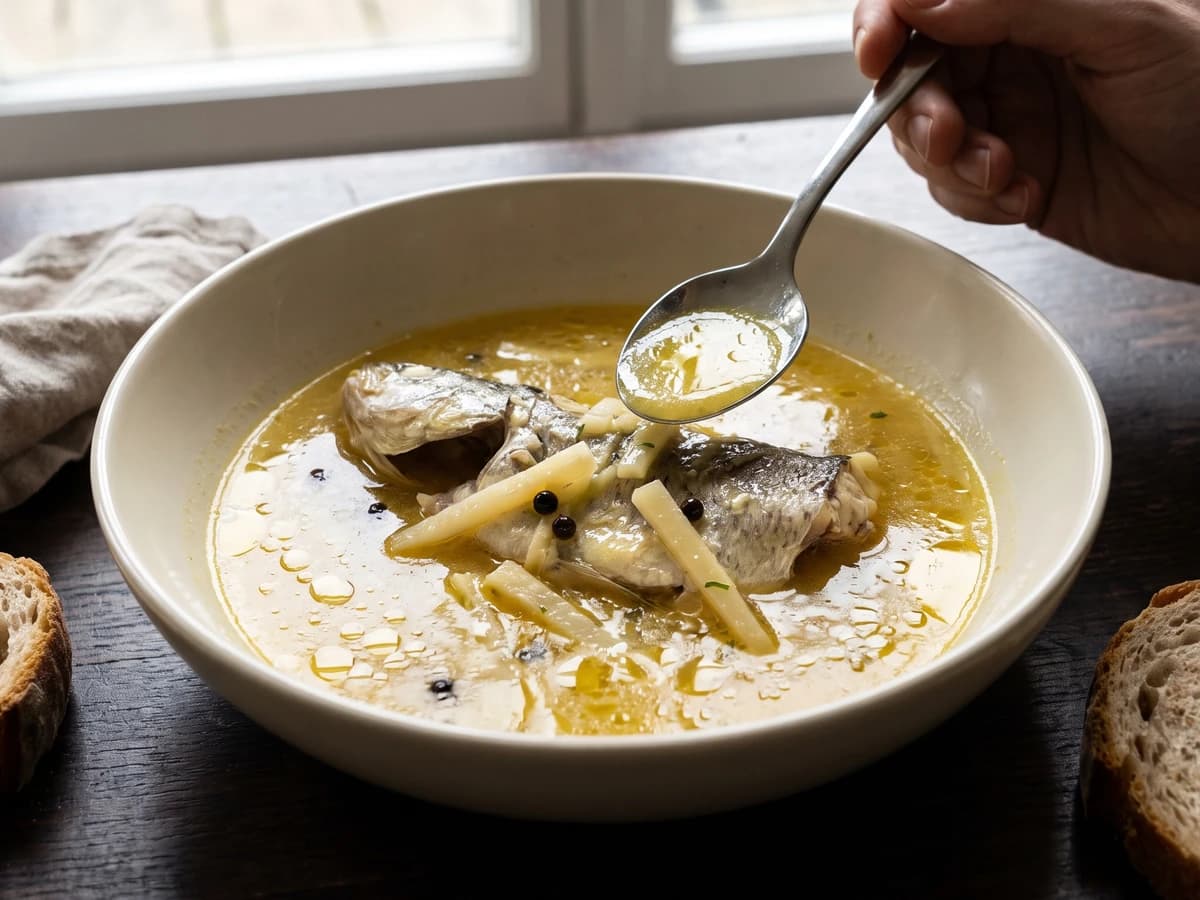
Waterzoi asks fresh, bone-in river fish to thicken its own buttery broth, with parsley root and pepper for company. No flour, no stockpot, just a brisk simmer watched closely.
Chef Juliette
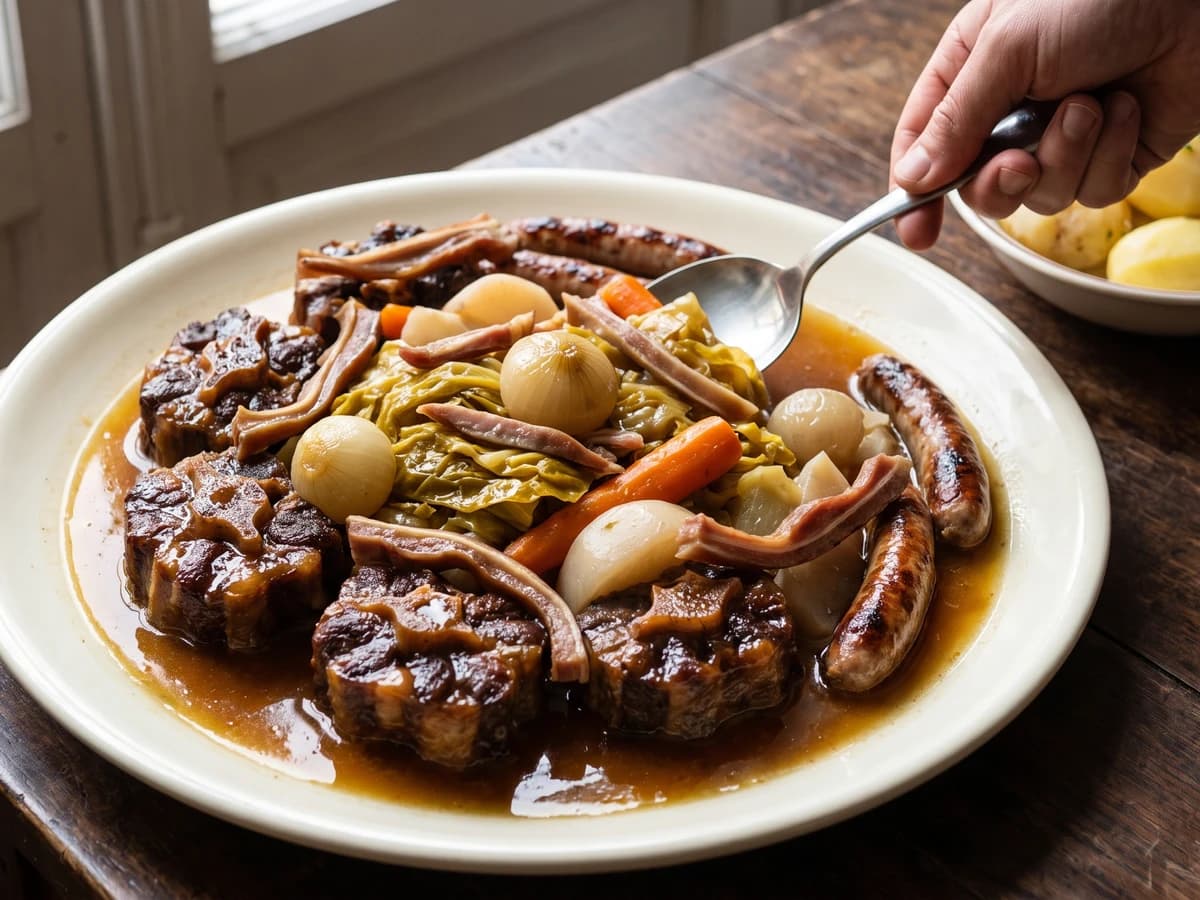
Queue de Bœuf en Hochepot gathers oxtail, pig's trotter and ear, cabbage, roots, and grilled chipolatas around a clear, gelatin-rich broth whose quiet simmer keeps every piece tender and distinct.
Chef Juliette
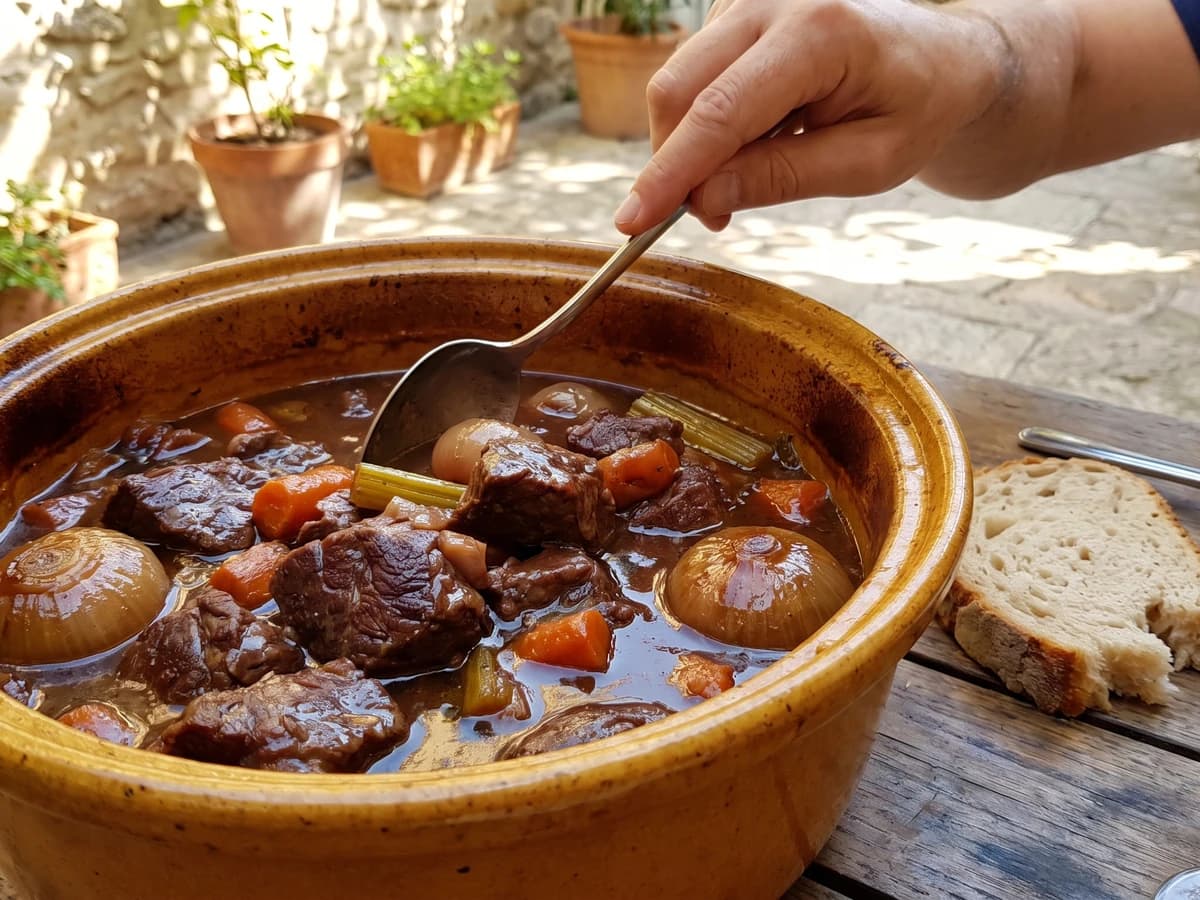
Beef shoulder larded with bacon, sharpened by red wine and vinegar, then sealed with garlic, vegetables, and dry lemon peel until the low oven turns it yielding and the gravy darkly glossy.