Chef Juliette
Bouillabaisse à la Marseillaise
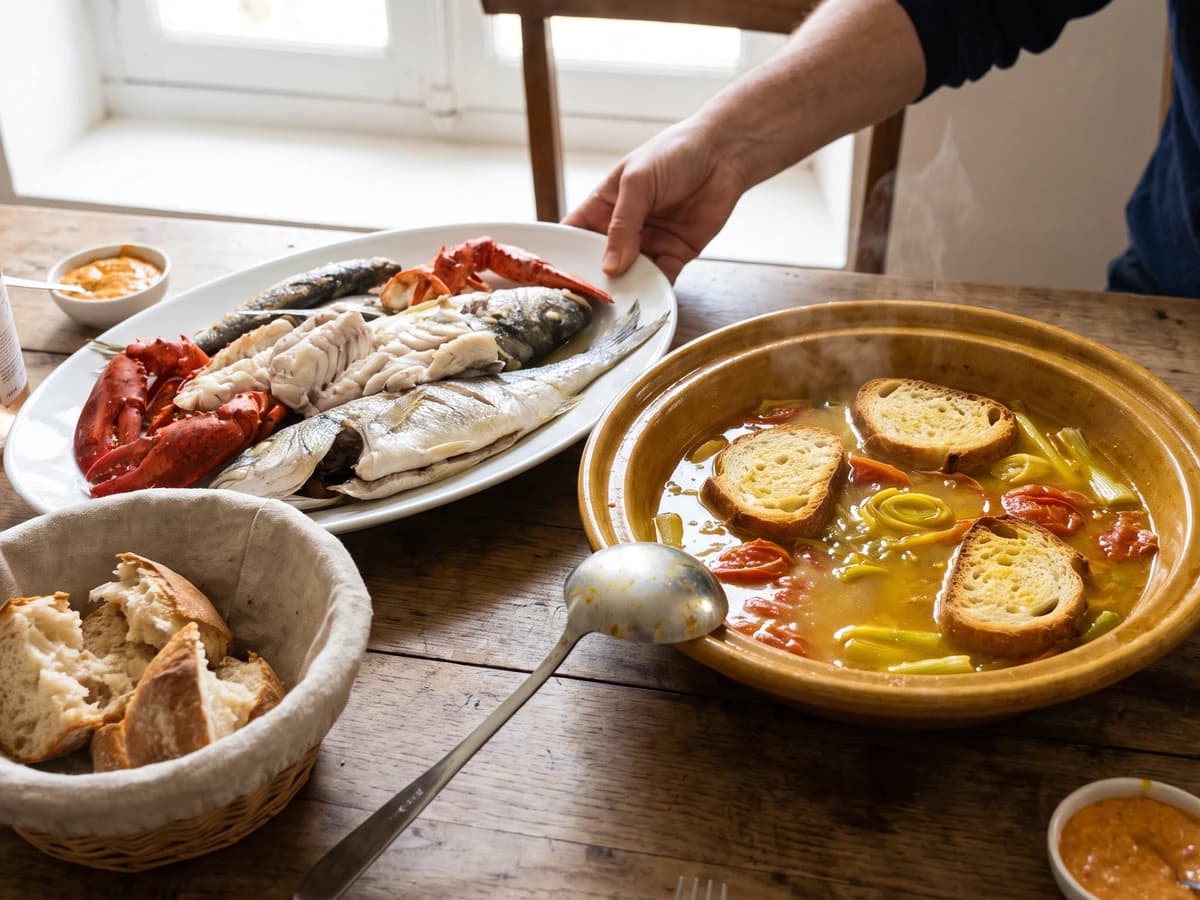
Marseille's great fish stew, saffron-gold and garlic-scented, proves that a hard boil can be the careful choice: it binds olive oil into broth before the whole pot meets bread.
A cooking platform built around craft, culture, and the stories behind what we eat.
Created by Chef Juliette
Based on No. 554, Consommé Colbert, from Le Guide Culinaire (1907) by Auguste Escoffier
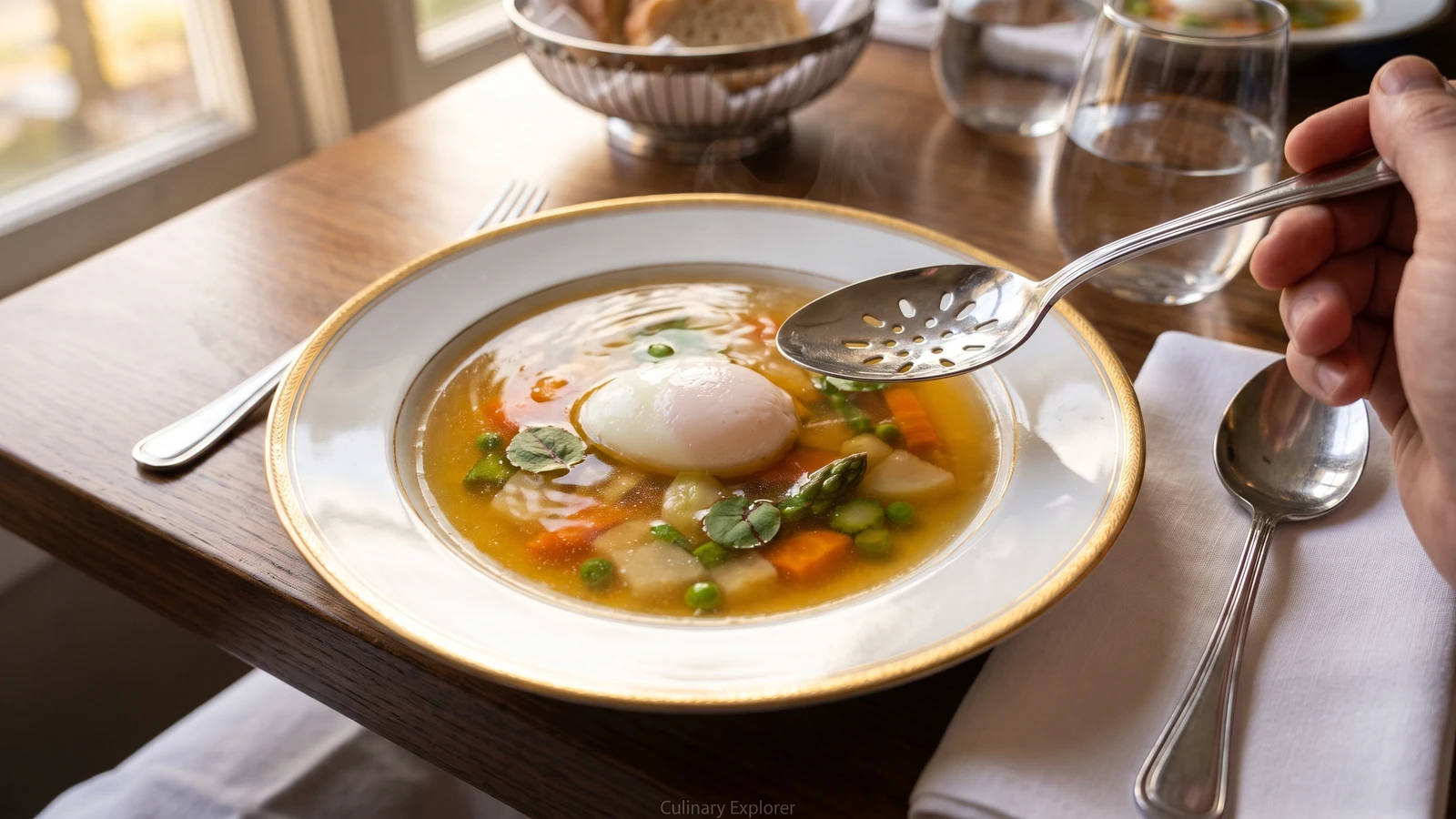
Consommé Colbert (clear spring-vegetable consommé with a poached egg) teaches restraint: brilliant broth, precise Printanier vegetables, and a soft yolk added last so every spoon stays clear.
Consommé Colbert (clear Printanier chicken consommé with a soft poached egg) teaches that a clear soup is finished by restraint. The one true thing is this: don't let the egg and the vegetable garnish cook together. The consommé reaches the plate boiling and brilliant, then the warm poached egg goes in last, its yolk ready to enrich the broth without clouding it.
The original assumed a saucier on staff, chicken consommé never far from the fire, a separate timbale for the eggs, and six dining-room portions. Your honest equivalent is two small saucepans, four warmed soup plates, and the two finished preparations kept separate until service. I have scaled one quart and six eggs to 2⅔ cups and four eggs, preserving the book's proportion exactly. One cook, one stove, one evening.
The separate journey to the dining room was brigade scaffolding, so it can go. What must stay is the sequence: warm the eggs gently, bring the consommé to one clean boil, ladle it, and only then lower an egg into each plate. The gentle warming of the eggs is the step that matters most; simmer them again and the yolks set before supper begins.
Consommé Colbert belongs to the formal Parisian table and the classical family of named consommés, in which a perfectly clear broth was distinguished by its garnish and manner of service. Colbert is not a regional soup or a separate stock: it is Consommé Printanier, its vernal garnish of precisely cut early vegetables completed with one poached egg per plate. Sending the eggs separately in a timbale protected their tidy shape through dining-room service, a practical gesture that became part of the dish's identity.
Have the Consommé Printanier (No. 601) completely finished, clear, and carrying its carrot, turnip, peas, French beans, asparagus, sorrel, lettuce, and chervil. Have four small eggs completed according to Procedure for Poached Eggs (No. 411), with tidy whites and soft yolks. This recipe begins where those linked entries end; keep the two preparations separate, because combining them early overcooks the eggs and muddles the clean vegetable garnish.
Reserve ⅔ cup (160 ml / 160 g) of the Consommé Printanier (No. 601) in the smallest saucepan that will hold the four eggs snugly. Lower in the eggs from Procedure for Poached Eggs (No. 411), cover, and warm them over the gentlest heat for 2 to 3 minutes. The liquid should barely tremble. If it reaches a simmer, lift the eggs immediately into clean warm water, lower the heat, and return them only when the consommé is calm again. Ça se rattrape. Once the yolks harden, it does not, so keep your eye here.
Put the remaining 2 cups (470 ml / 470 g) of Consommé Printanier (No. 601) in a second saucepan. Bring it to one clean, decisive boil just before serving, then pull it immediately from the heat. Don't leave it churning or reducing; the broth should remain brilliant, the vegetable cuts should hold their shapes, and the quantity should stay true to the dish.
Warm four shallow soup plates with hot water, then empty and dry them. Divide the boiling Consommé Printanier (No. 601) among the plates, sharing the Printanier vegetables evenly so every guest receives the full garnish rather than one plate of peas and another of leaves.
Lift each egg prepared by Procedure for Poached Eggs (No. 411) with a slotted spoon, drain it for a moment, and lower it into the center of a filled plate. Spoon the warm holding Consommé Printanier (No. 601) around the eggs, dividing it among the four plates. The white should sit as a neat oval above the amber broth, while the yolk remains soft enough to enrich the first spoonful. Serve at once. À table!
1 serving (about 196g)
Culinary guides, cultural storytelling, and the editorial depth that makes cooking meaningful.
Discover Culinary ExplorerChef Juliette
Marseille's great fish stew, saffron-gold and garlic-scented, proves that a hard boil can be the careful choice: it binds olive oil into broth before the whole pot meets bread.
Chef Juliette
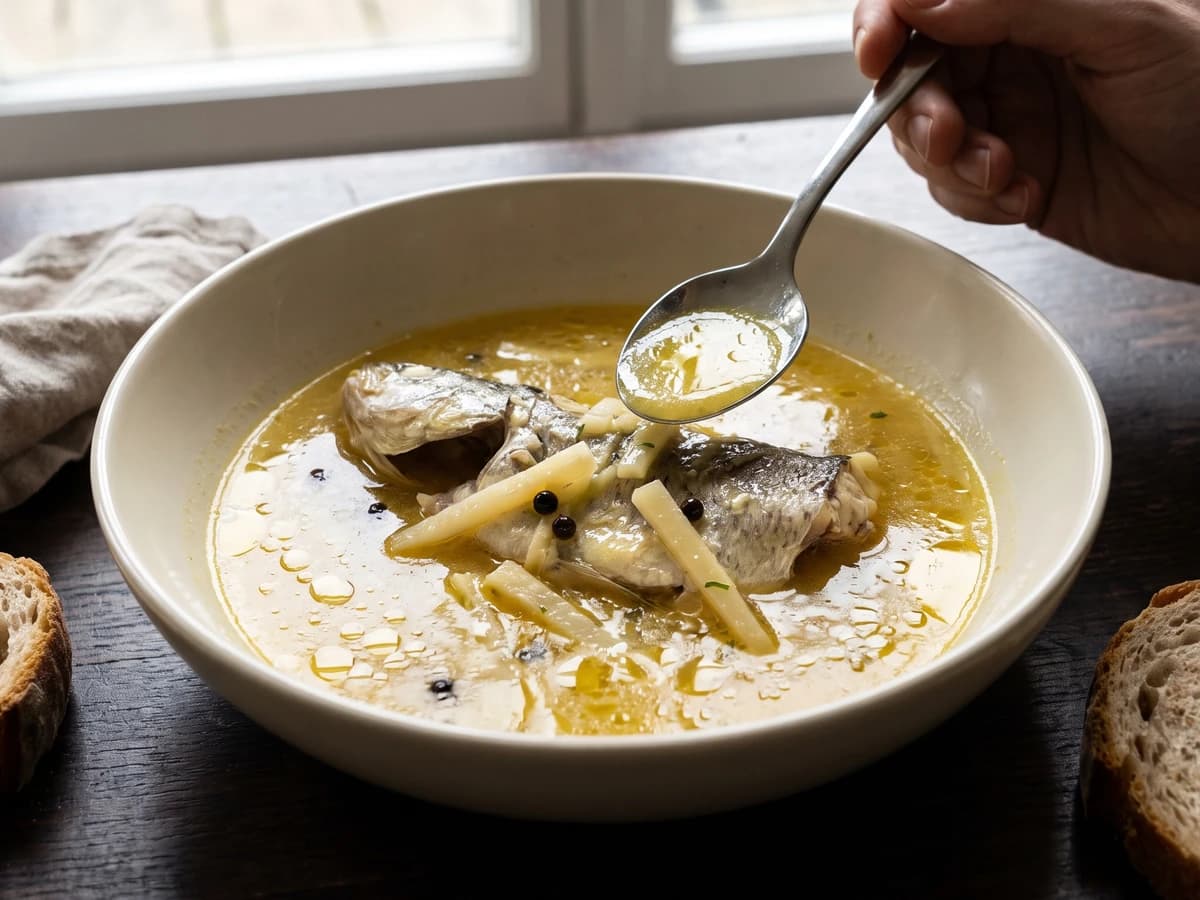
Waterzoi asks fresh, bone-in river fish to thicken its own buttery broth, with parsley root and pepper for company. No flour, no stockpot, just a brisk simmer watched closely.
Chef Juliette
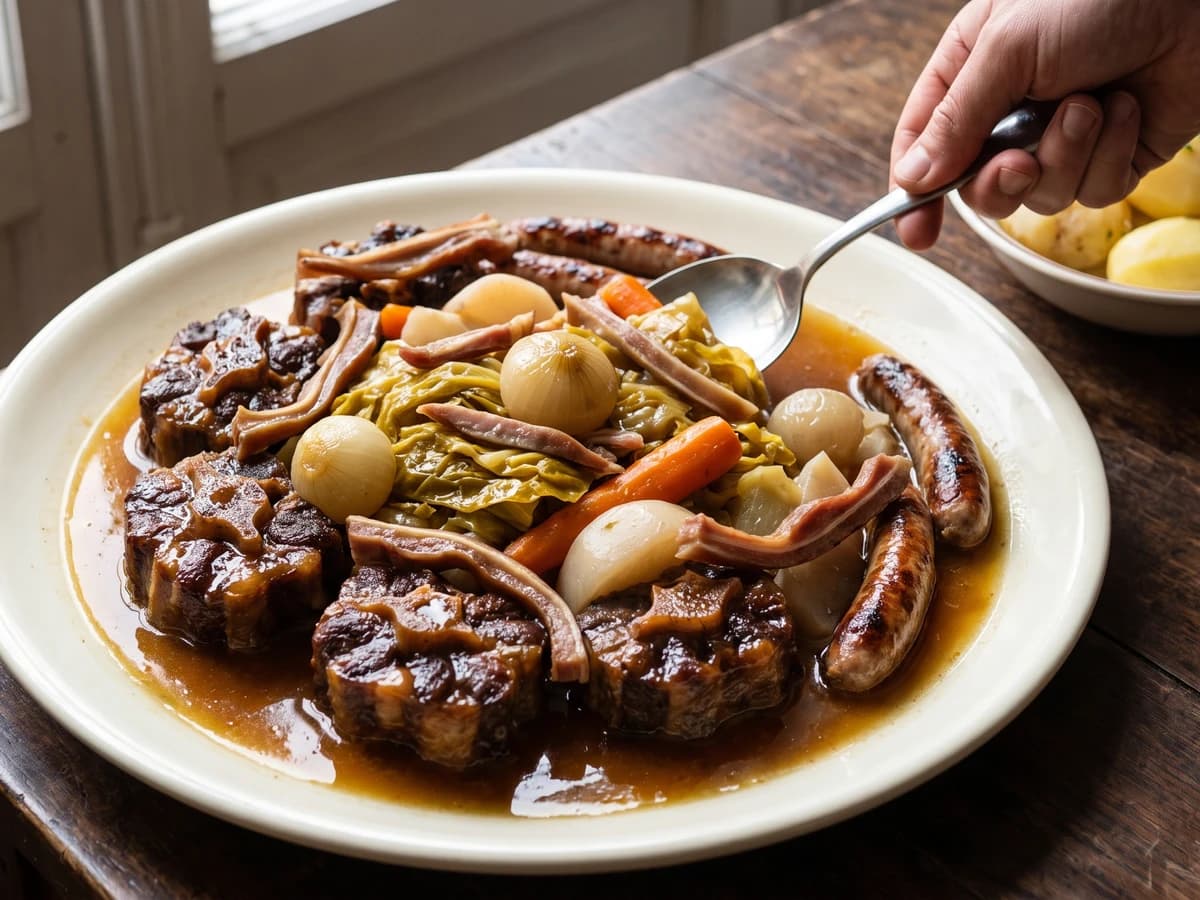
Queue de Bœuf en Hochepot gathers oxtail, pig's trotter and ear, cabbage, roots, and grilled chipolatas around a clear, gelatin-rich broth whose quiet simmer keeps every piece tender and distinct.
Chef Juliette
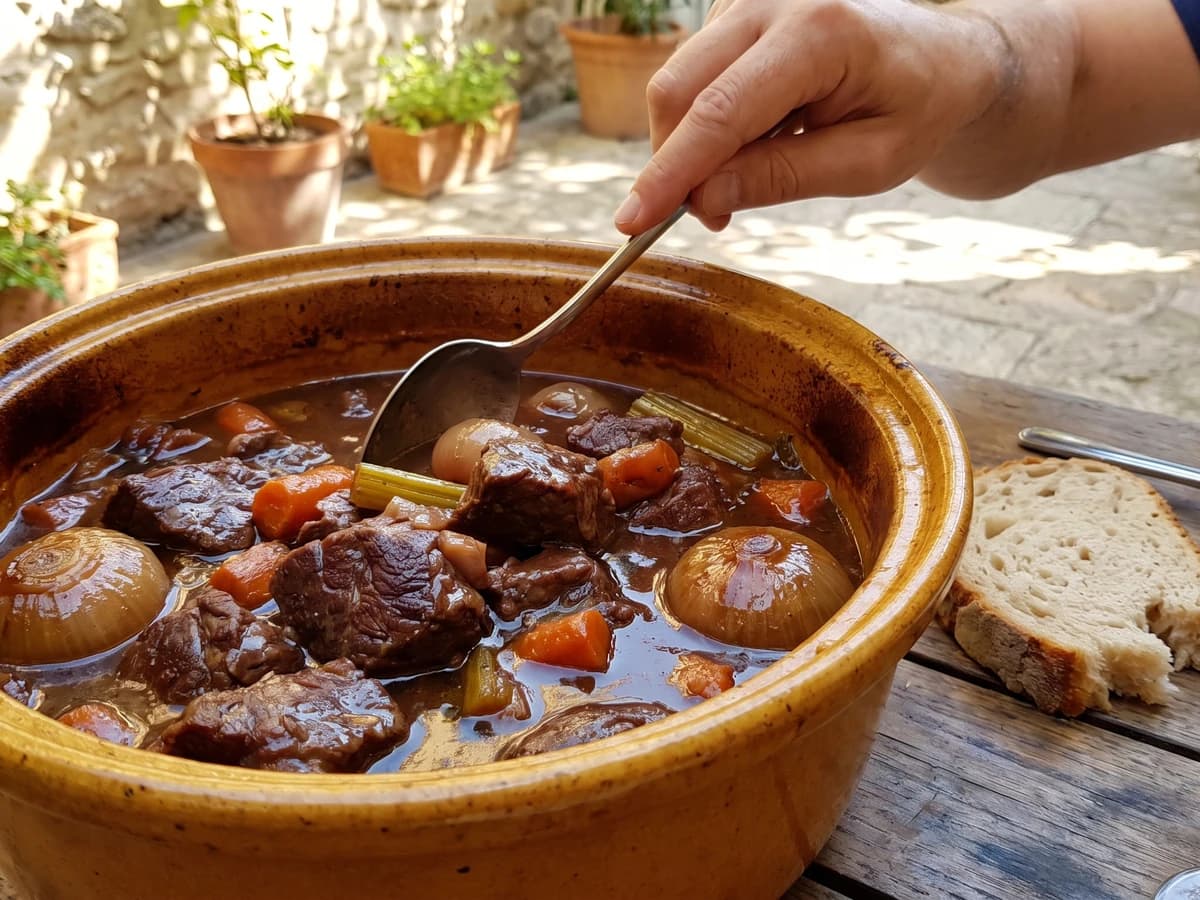
Beef shoulder larded with bacon, sharpened by red wine and vinegar, then sealed with garlic, vegetables, and dry lemon peel until the low oven turns it yielding and the gravy darkly glossy.