Chef Juliette
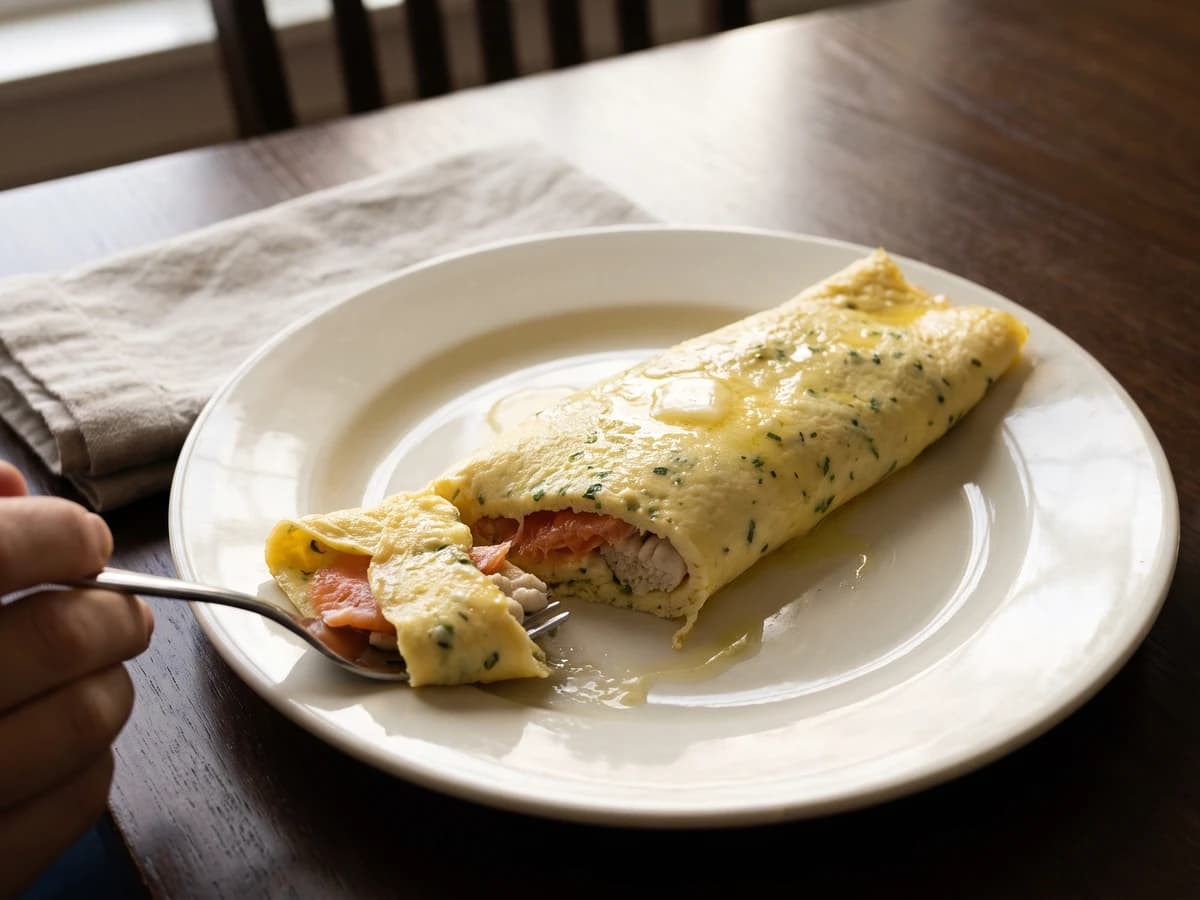
Omelette à l’Écossaise
A creamy omelette aux fines herbes closes around smoked-salmon-wrapped herring milts, gently poached in butter. Have the filling ready, then roll the eggs while they still shine.
A cooking platform built around craft, culture, and the stories behind what we eat.
Created by Chef Juliette
Based on No. 411, Procedure for Poached Eggs, from Le Guide Culinaire (1907) by Auguste Escoffier
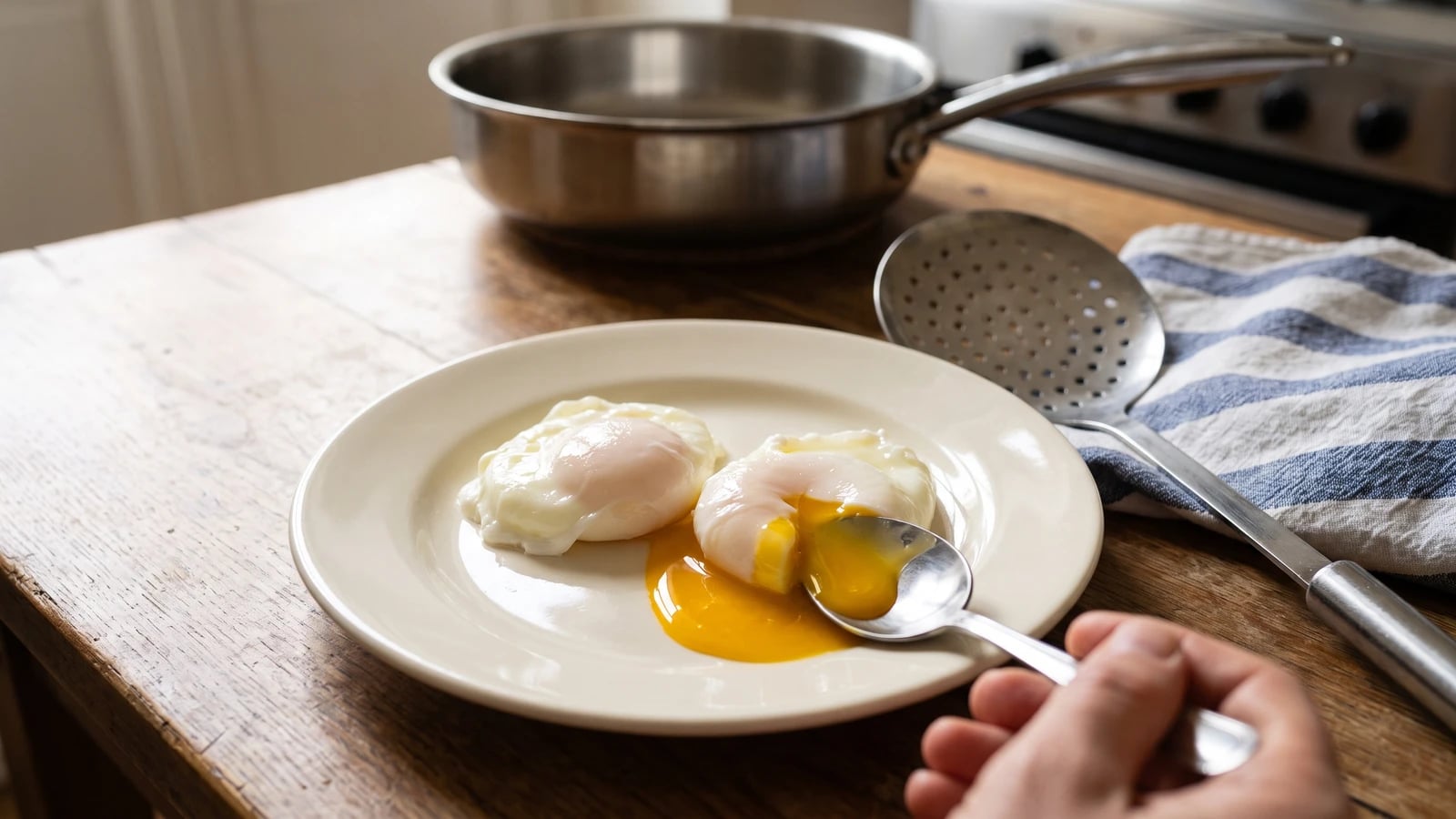
Œufs pochés teach the quiet discipline of egg cookery: truly fresh eggs, acidulated water at a bare simmer, and three attentive minutes for tender whites wrapped around liquid yolks.
Œufs pochés teach one true thing before all others: freshness determines form. A newly laid egg carries a firm inner white that gathers closely around its yolk; an older white runs through the water in threads, and no theatrical whirlpool can restore what time has loosened.
There is no saucier, stockpot, or salamander hiding in this procedure. The original kitchen assumed different luxuries: a broad sauté pan, a cook watching the water, room to poach six eggs evenly, and cold and warm baths standing ready for service. At home, a 12-inch straight-sided skillet, two bowls, and two batches of four do the same work. The batch became smaller because one cook can lower four eggs quickly enough for equal cooking, while eight would leave the first overdone before the last reached the water. One cook, one stove, one evening.
The cold dip, trimming, and warm hold are service scaffolding, retained here so eight eggs can reach four plates together. The fresh eggs, lightly acidulated water, and immediate change from boiling to simmering are the dish itself. Have every egg cracked and within reach before the first one meets the pan; that calm, quick entry is the step that matters most.
Œufs pochés belong to the French bourgeois breakfast table and the Paris bistro kitchen, where the bare egg became both a quick dish and the foundation for composed egg preparations. In Burgundy, the same technique anchors œufs en meurette beneath a red-wine sauce, while classical kitchens paired poached eggs with spinach, artichokes, and their proper sauces. The familiar whirlpool is not the canon's secret: broad acidulated water, true freshness, and enough room for the eggs to poach freely make the clean form.
Quantity
2 quarts (1.9 liters / 1.9 kg)
for poaching
Quantity
1 tablespoon (15 ml / 19 g)
Quantity
2 tablespoons (30 ml / 30 g)
Quantity
8
Quantity
1 quart (950 ml / 950 g)
for cooling
Quantity
1 quart (950 ml / 950 g)
about 120°F / 49°C, for holding
| Ingredient | Quantity |
|---|---|
| waterfor poaching | 2 quarts (1.9 liters / 1.9 kg) |
| fine salt | 1 tablespoon (15 ml / 19 g) |
| white wine vinegar or distilled white vinegar | 2 tablespoons (30 ml / 30 g) |
| very fresh large eggs | 8 |
| cold waterfor cooling | 1 quart (950 ml / 950 g) |
| moderately warm waterabout 120°F / 49°C, for holding | 1 quart (950 ml / 950 g) |
Pour the poaching water into a 12-inch straight-sided sauté pan and add the salt and vinegar. Bring it to an active boil. Beside the stove, set one bowl of cold water and another of moderately warm water, about 120°F / 49°C. The vinegar helps the outer white set promptly, while the salt follows the classical proportion; the water should taste lightly seasoned and smell only faintly sharp.
Crack four eggs, each into its own small ramekin, taking care not to break the yolks. A truly fresh egg has a tall yolk and a compact white with a thick portion gathered closely around it. If the white already floods the ramekin like water, it will not poach evenly; keep that egg for another preparation and choose a fresher one. The source is firm about this because the condition is firm: freshness is not garnish here, it is structure.
Working calmly but without delay, hold the first ramekin just above the water and slip the egg into a part of the pan that is actively boiling. Add the remaining three at separate points so they have room to move freely. As soon as all four are in, lower the heat to a quiet simmer, with small bubbles at the edge and only a gentle movement across the surface. If a little white feathers away, draw it back toward the yolk with the edge of the slotted spoon during the first twenty seconds. Ça se rattrape. If most of the white scatters into threads, the egg was too old for a neat result; let it finish cooking, but use a fresher egg for the serving plate.
Poach for three minutes at that quiet simmer. Do not stir the pan or turn the eggs. They are ready when each white has gathered around its yolk in a plump oval, the surface is opaque, and the white can withstand a light touch without breaking while the yolk remains yielding beneath it. If a thick part of the white still looks translucent, give it another fifteen to thirty seconds; a large egg or very cold egg may need that small allowance.
Lift each egg with a wide perforated skimmer, letting the poaching water drain away, and lower it into the cold water for twenty to thirty seconds. This arrests the cooking and rinses away the vinegar. Transfer the egg to a clean towel or board, trim only the loose ragged strands with a small knife, then place it in the moderately warm holding water. Skim stray white from the pan, return the poaching water to an active boil, and repeat with the remaining four eggs, lowering the heat to a simmer as soon as they enter.
Once the second batch is trimmed, let all eight eggs sit in the moderately warm water just long enough to reach the same temperature, no more than a minute for the second batch and no more than ten minutes altogether for the first. Lift them carefully, drain well, and blot the undersides on a clean towel so no water follows them onto the plates. Serve two per person immediately. À table!
1 serving (about 100g)
Culinary guides, cultural storytelling, and the editorial depth that makes cooking meaningful.
Discover Culinary ExplorerChef Juliette
A creamy omelette aux fines herbes closes around smoked-salmon-wrapped herring milts, gently poached in butter. Have the filling ready, then roll the eggs while they still shine.
Chef Juliette
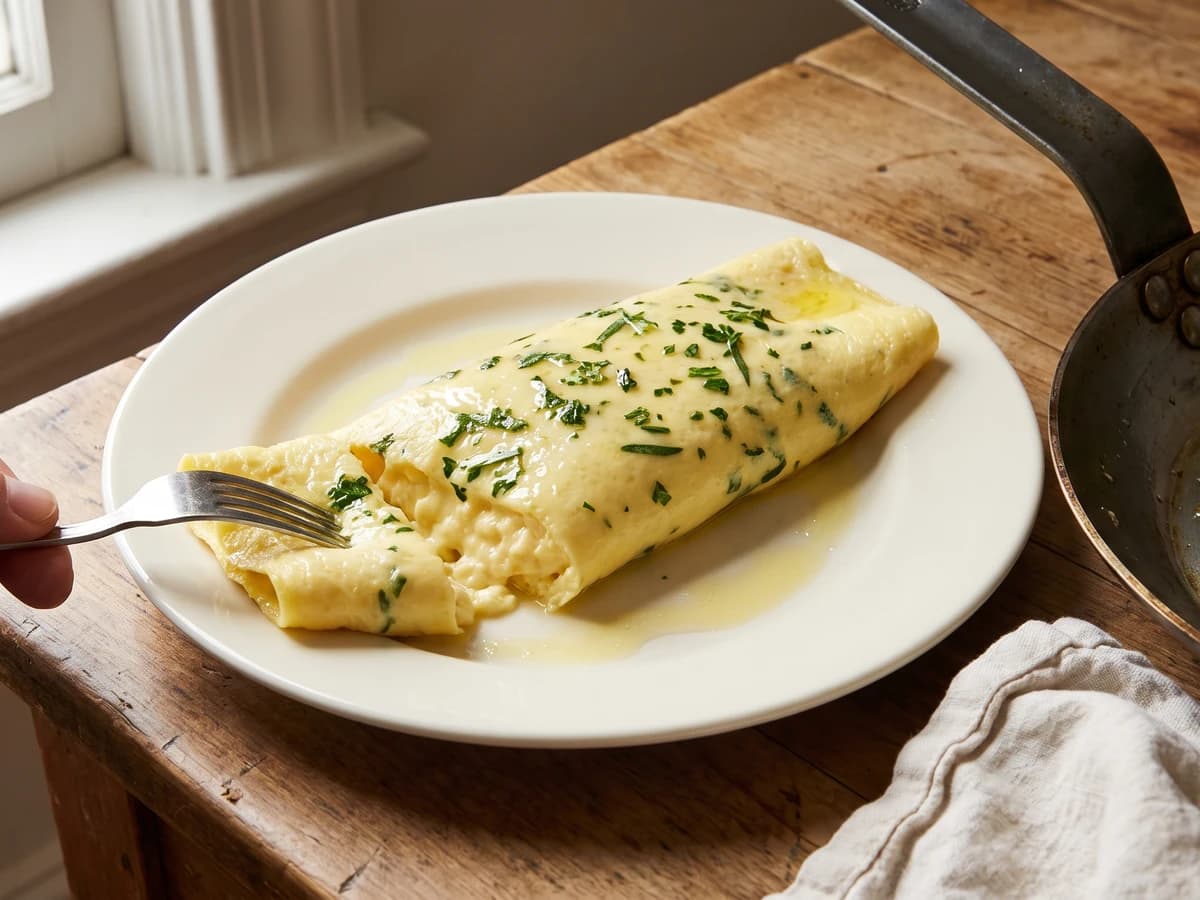
Four tender herbs, hot butter, and two eggs per pan: this rolled omelette teaches the quick hand and good judgment that keep the outside pale and the center creamy.
Chef Juliette
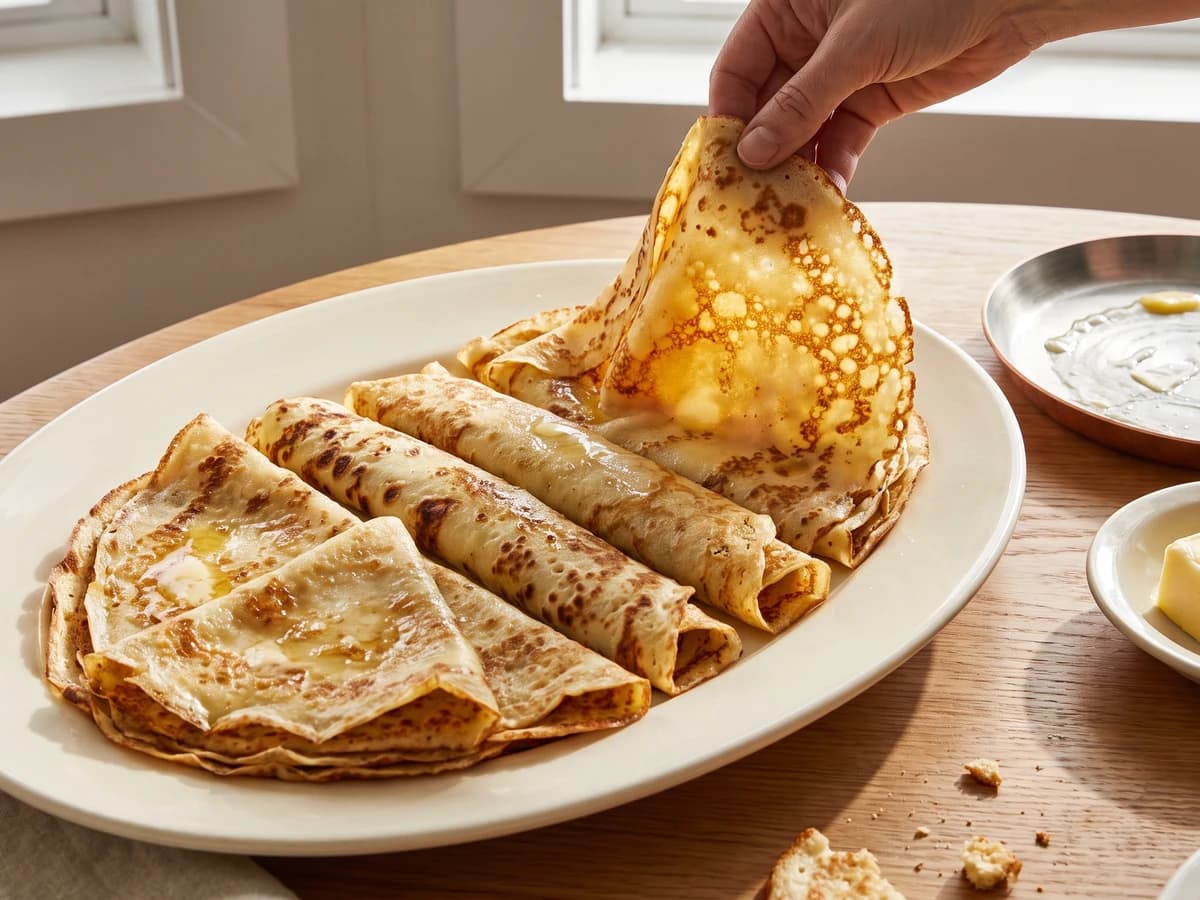
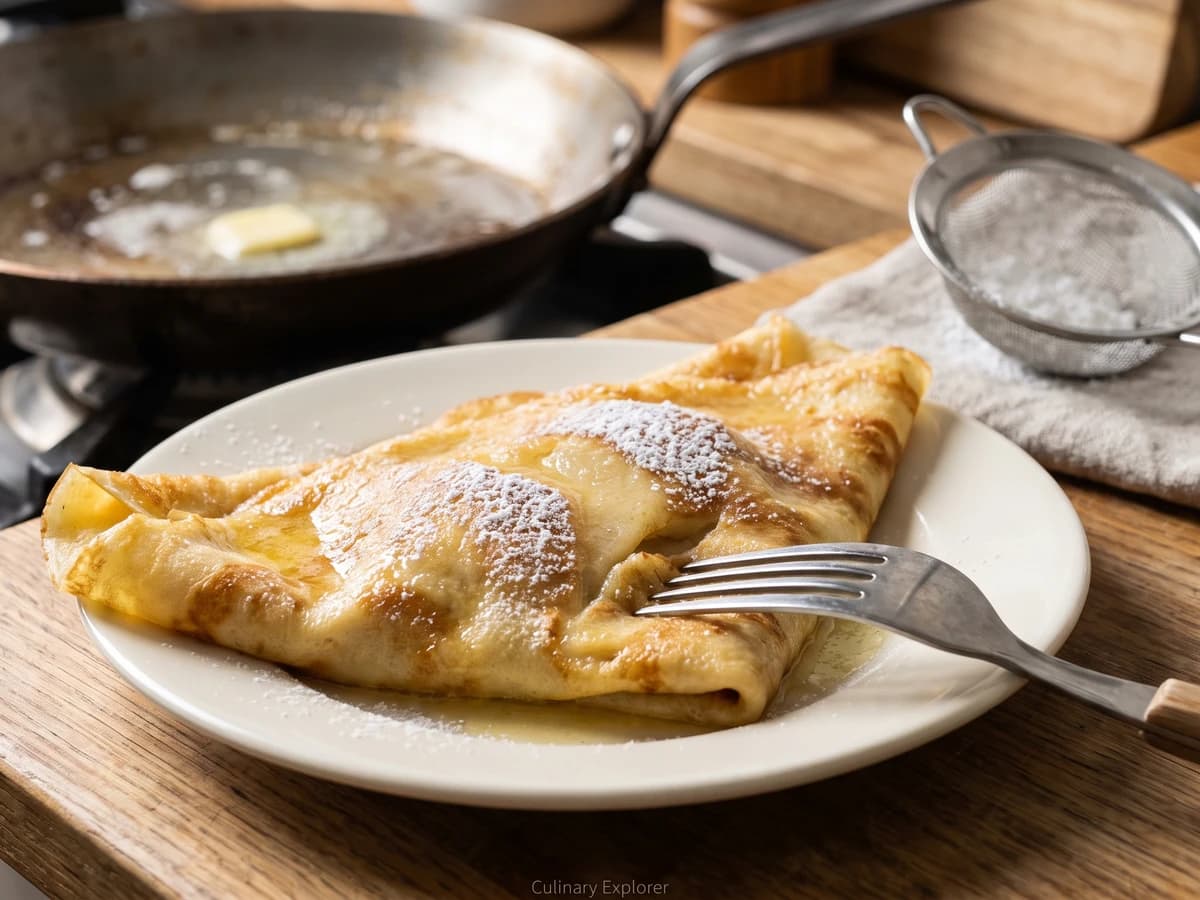
Four batters, one lesson: let the flour drink deeply before cooking, then spread the batter thinly in butter for crêpes and pannequets that bend without becoming tough.
Chef Juliette
Crêpes au Couvent trap ripe Williams pear dice between two thin pours of sweet batter, then turn in one clean toss and reach the table butter-gold, powdered, and burning hot.