Chef Juliette
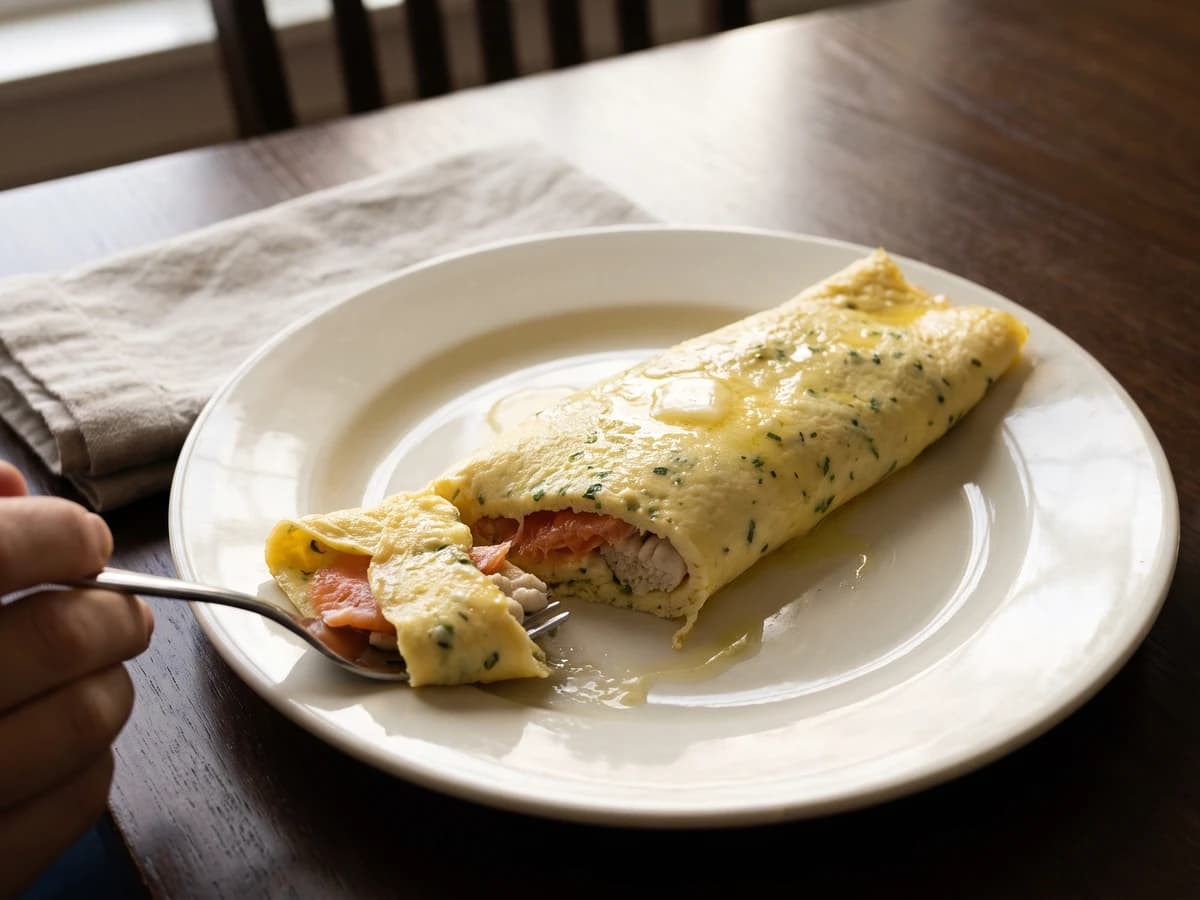
Omelette à l’Écossaise
A creamy omelette aux fines herbes closes around smoked-salmon-wrapped herring milts, gently poached in butter. Have the filling ready, then roll the eggs while they still shine.
A cooking platform built around craft, culture, and the stories behind what we eat.

Created by Chef Juliette
Based on No. 2443, Convent Pancakes, from Le Guide Culinaire (1907) by Auguste Escoffier
Crêpes au Couvent trap ripe Williams pear dice between two thin pours of sweet batter, then turn in one clean toss and reach the table butter-gold, powdered, and burning hot.
Crêpes au Couvent (Convent pancakes) teach the clean turn. This isn't a filled crêpe folded after cooking: ripe Williams pear dice are caught between two thin pours of sweet batter, so the upper layer must grip the fruit before the pan leaves your wrist. That bond is the one true thing to know before touching the pan.
The original entry assumed preparation A, its standard sweet crêpe batter, was already waiting by the bowlful and an omelet pan moved steadily through brigade service. At home, one small batch and a 20 cm skillet make four generous crêpes for one cook, one stove, one evening. I have reduced the quantity and replaced the formal serving napkin with a warmed plate, because linen was service scaffolding. The rested batter, two-pour construction, buttered pan, and tossed turn stay. They are the dish.
Keep the heat lively but not savage. Once the underside is butter-gold and the upper batter no longer runs when you tilt the pan, loosen the crêpe and toss it. If nerve or batter fails, slide it onto a plate and invert it back into the pan. Ça se rattrape. The step that matters is waiting for those two layers to become one before you turn.
Crêpes au Couvent belong to the Parisian classical sweet-crêpe repertoire, where named variations were assembled à la minute from a standard batter and a compact garnish rather than tied to a provincial table. Their Williams pear center distinguishes them from folded or sauced crêpes: the fruit is enclosed during cooking, then the whole crêpe is tossed so both sides meet the buttered pan. The convent name does not point to a securely documented monastic origin; it reflects the repertoire's fondness for evocative titles attached to precise preparations.
Quantity
1 cup (240 ml / 125 g)
sifted
Quantity
¼ cup (60 ml / 50 g)
Quantity
¼ teaspoon (1.25 ml / 1.5 g)
Quantity
3
Quantity
1½ cups (360 ml / 370 g)
Quantity
2 tablespoons (30 ml / 28 g)
melted and cooled
Quantity
2 small, yielding about 1 cup (240 ml / 160 g)
peeled, cored, and cut into 5 mm dice
Quantity
2 tablespoons (30 ml / 28 g)
Quantity
¼ cup (60 ml / 30 g)
for finishing
| Ingredient | Quantity |
|---|---|
| all-purpose floursifted | 1 cup (240 ml / 125 g) |
| superfine sugar | ¼ cup (60 ml / 50 g) |
| fine salt | ¼ teaspoon (1.25 ml / 1.5 g) |
| large eggs | 3 |
| whole milk | 1½ cups (360 ml / 370 g) |
| unsalted butter for preparation Amelted and cooled | 2 tablespoons (30 ml / 28 g) |
| William pears (Bartlett pears)peeled, cored, and cut into 5 mm dice | 2 small, yielding about 1 cup (240 ml / 160 g) |
| unsalted butter for the pan | 2 tablespoons (30 ml / 28 g) |
| powdered sugarfor finishing | ¼ cup (60 ml / 30 g) |
Whisk the flour, superfine sugar, and salt together in a bowl. Make a well, add the eggs, and whisk from the center outward, drawing in the flour gradually. Add the milk in a thin stream, then whisk in the melted butter until the sweet crêpe batter, preparation A, flows like light cream. If small lumps remain, don't punish the batter with endless whisking. Ça se rattrape: pass it through a fine sieve.
Cover the batter and let it rest for 30 minutes at room temperature. The flour hydrates and the bubbles settle, giving a crêpe that bends without becoming rubbery. Meanwhile, peel and core the pears, cut them into even 5 mm dice, and blot away any surface juice. Warm four plates. Wet fruit makes the layers slide apart, while dry, firm dice stay caught inside.
Set a 20 cm omelet pan or nonstick skillet over medium heat for 2 minutes. Add about 1 teaspoon of the cooking butter and swirl it across the pan as the foam subsides. Stir the batter, pour in a scant ¼ cup, and tilt the pan promptly to cover the base. Scatter ¼ cup of pear dice over the batter, leaving a narrow border, then cover the fruit with about 3 tablespoons more batter. Keep both pours thin. A heavy blanket of batter browns outside before it sets around the pear.
Cook for 2 to 3 minutes, adjusting toward medium-low if the butter darkens quickly. The rim should look dry, the underside should be an even butter-gold, and no liquid batter should run when you tilt the pan. Loosen the edge, shake until the crêpe slides freely, then send it forward and pull the pan back in one decisive motion so it turns. If it folds or your wrist refuses, slide it onto a plate, place the pan over it, and invert both together. Ça se rattrape. Cook the second side for 45 to 60 seconds, until mottled gold and set through.
Slide the crêpe directly onto a warmed plate and sift powdered sugar generously over it. Serve it burning hot, then butter the pan and repeat with the remaining batter and pears. Do not stack the crêpes or hold them while all four cook; a rested crêpe goes leathery, and this one deserves the table the moment it leaves the pan. À table!
1 serving (about 205g)
Culinary guides, cultural storytelling, and the editorial depth that makes cooking meaningful.
Discover Culinary ExplorerChef Juliette
A creamy omelette aux fines herbes closes around smoked-salmon-wrapped herring milts, gently poached in butter. Have the filling ready, then roll the eggs while they still shine.
Chef Juliette
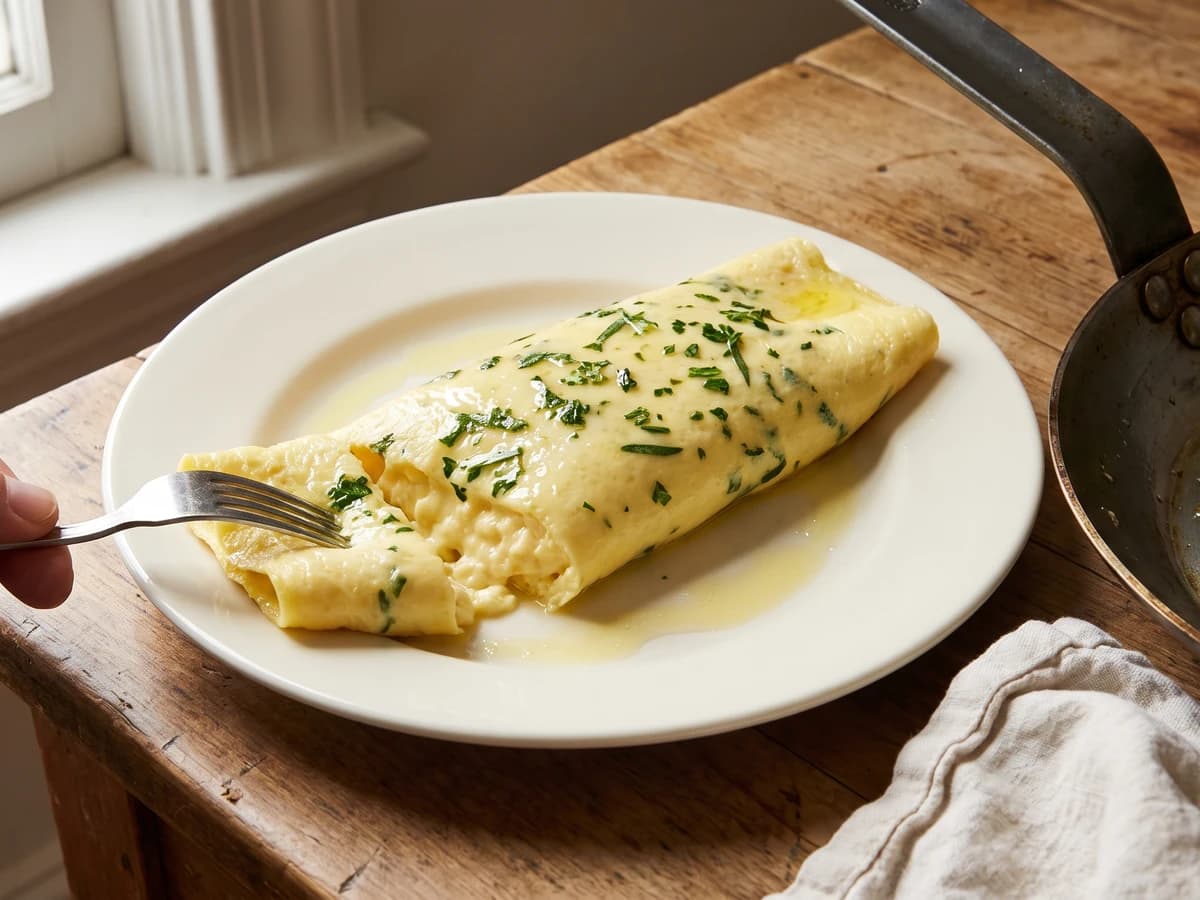
Four tender herbs, hot butter, and two eggs per pan: this rolled omelette teaches the quick hand and good judgment that keep the outside pale and the center creamy.
Chef Juliette
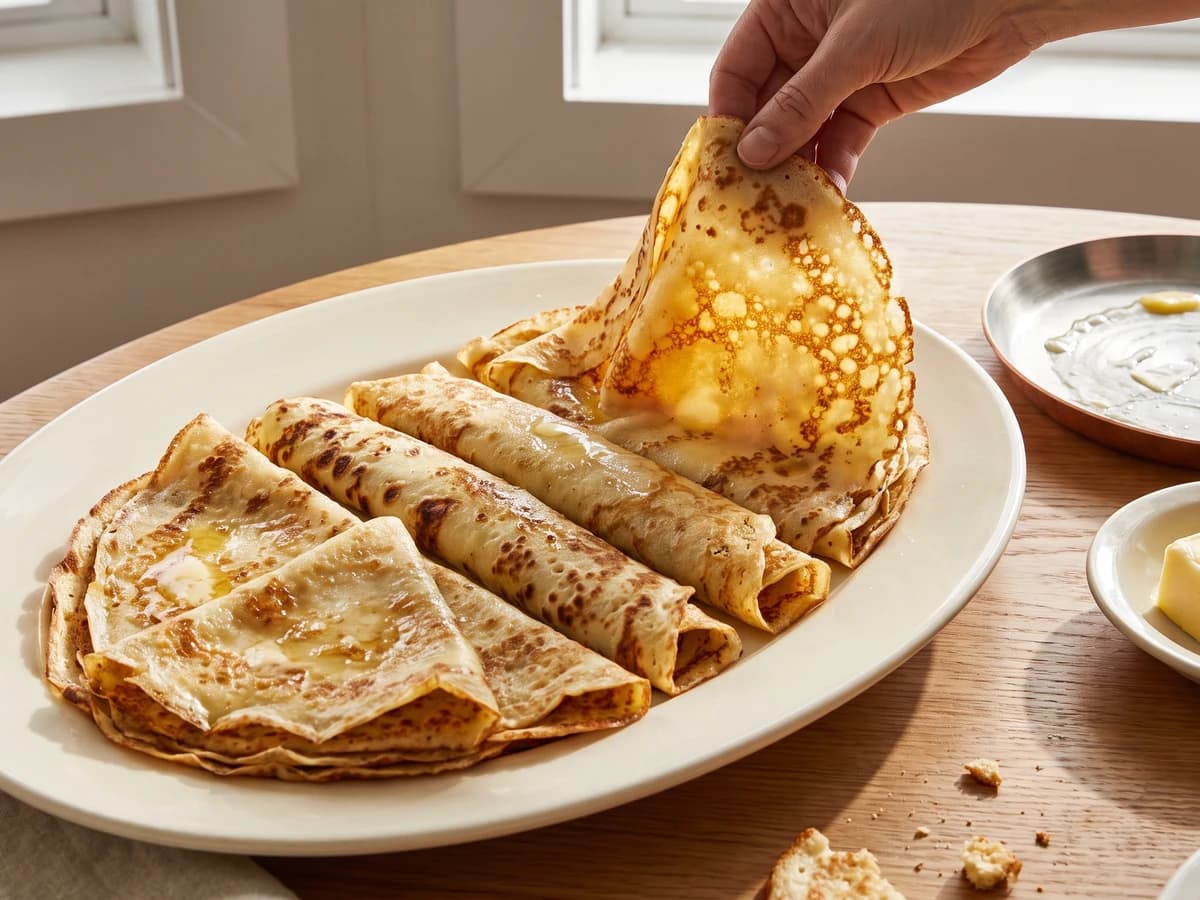
Four batters, one lesson: let the flour drink deeply before cooking, then spread the batter thinly in butter for crêpes and pannequets that bend without becoming tough.
Chef Juliette
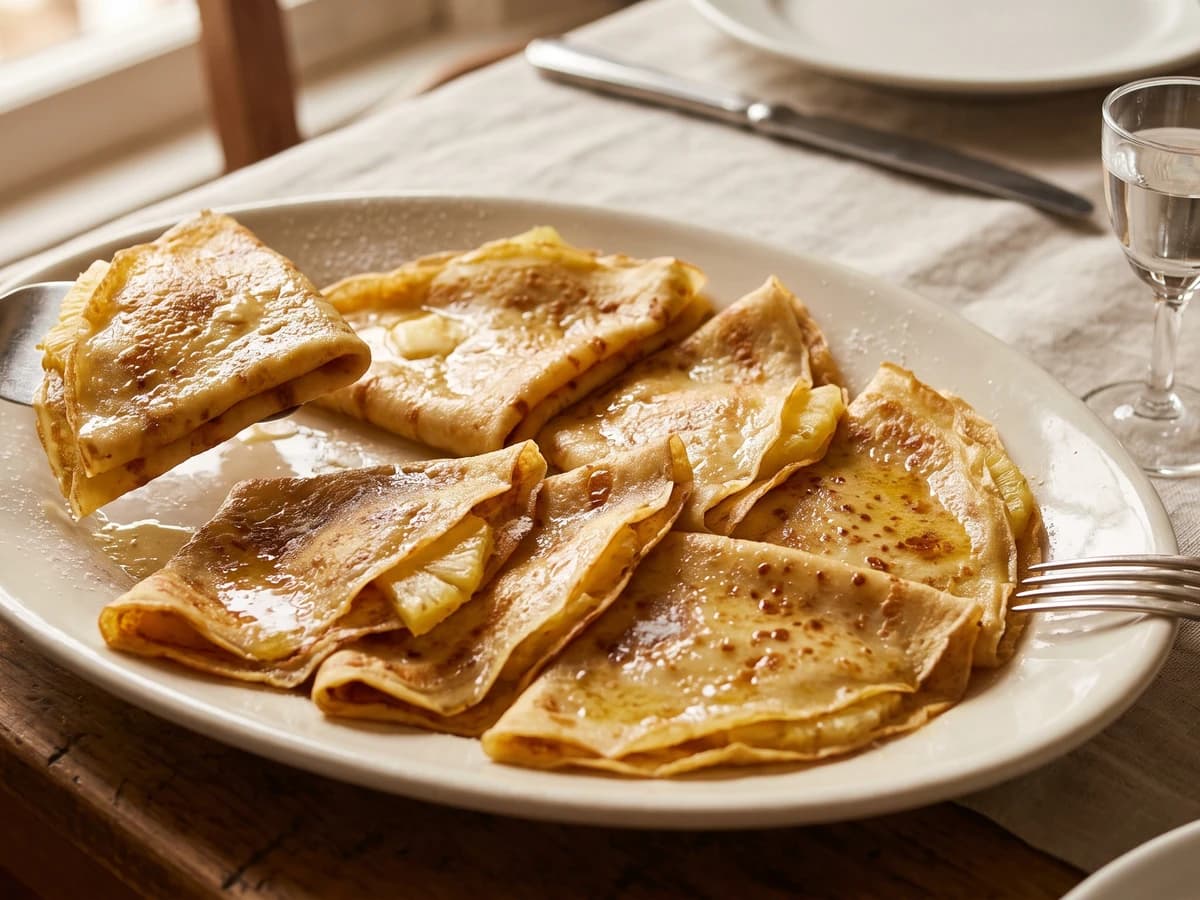
Paper-thin pineapple, maraschino, and supple buttered batter meet in a crêpe cooked golden at the edges and tender within, a composed French sweet built on moisture control, not ornament.