Chef Juliette
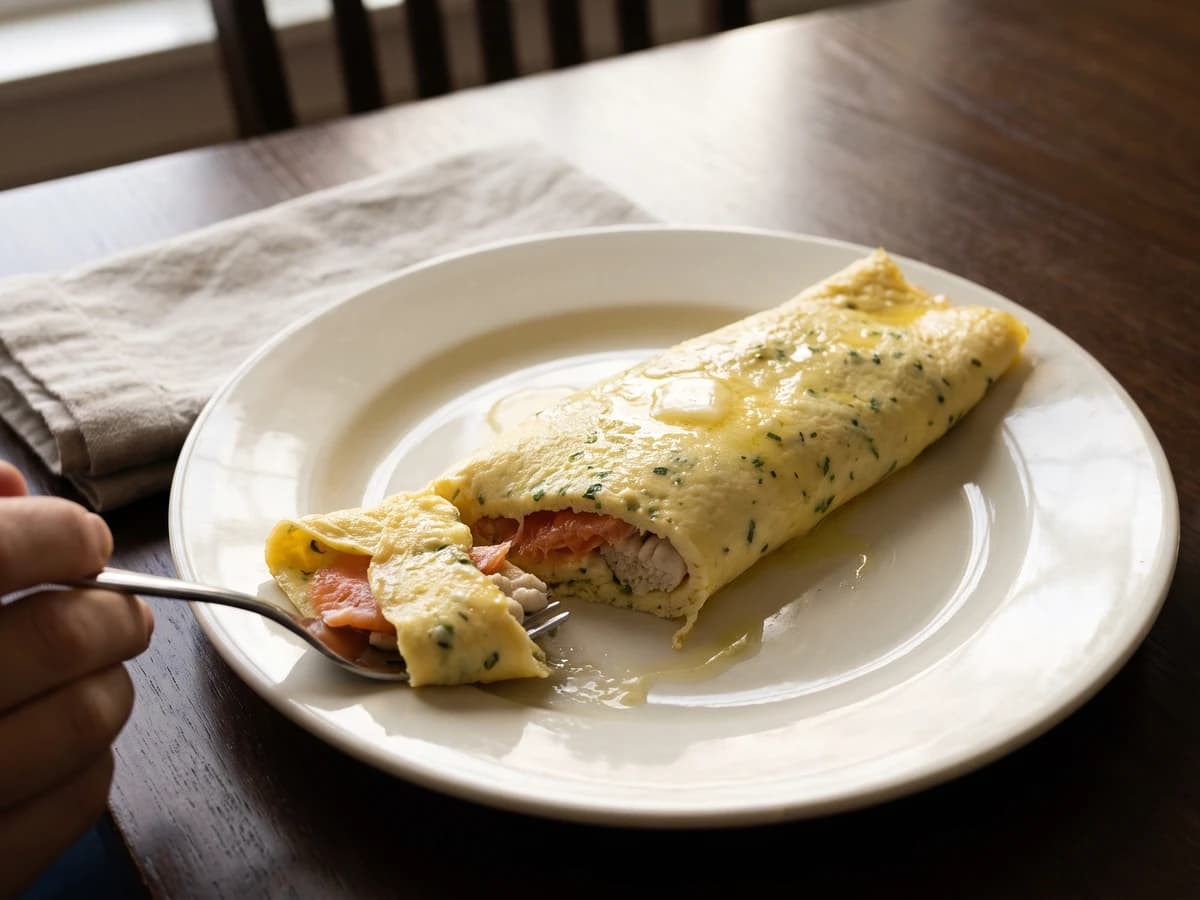
Omelette à l’Écossaise
A creamy omelette aux fines herbes closes around smoked-salmon-wrapped herring milts, gently poached in butter. Have the filling ready, then roll the eggs while they still shine.
A cooking platform built around craft, culture, and the stories behind what we eat.

Created by Chef Juliette
Based on No. 2444, Georgette Pancakes, from Le Guide Culinaire (1907) by Auguste Escoffier
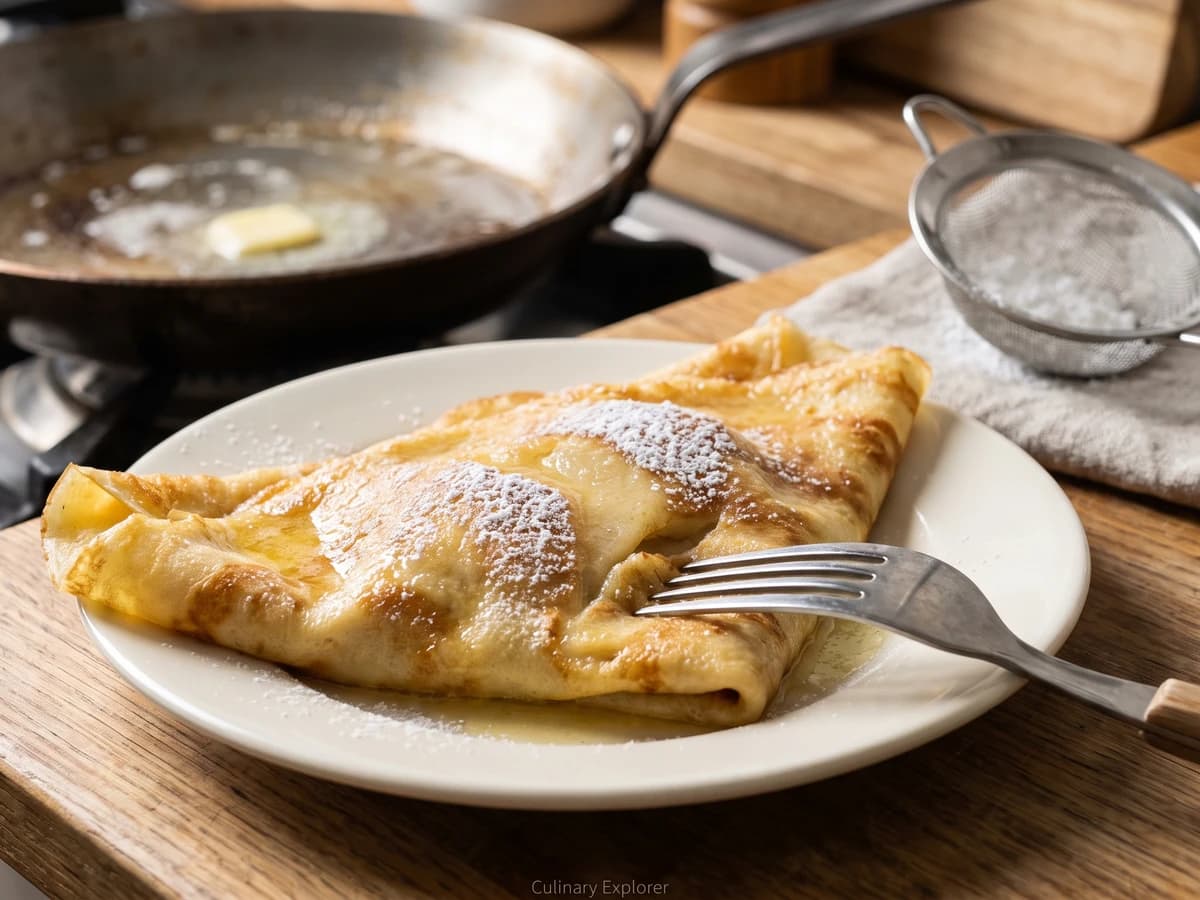
Paper-thin pineapple, maraschino, and supple buttered batter meet in a crêpe cooked golden at the edges and tender within, a composed French sweet built on moisture control, not ornament.
Crêpes Georgette (thin pancakes with maraschino pineapple) teach one true thing: fruit inside batter must be dry enough to brown rather than steam. Pineapple holds more juice than the pear dice used in Convent pancakes, so slice it nearly translucent, let the maraschino perfume it, then drain it without mercy.
The original gives barely a sentence because it assumes Convent pancake batter already on the bench and a cook turning crêpes to order in a battery of small pans. Here the base is written out, scaled to eight crêpes, and cooked in one 20-centimetre skillet. That is brigade scaffolding removed. The governing change remains untouched: very thin pineapple macerated in maraschino replaces the pear dice. One cook, one stove, one evening.
When they are right, the crêpes are butter-gold and flexible, with translucent slips of pineapple held inside rather than heaped on top. Drain and blot the fruit until it leaves no wet mark on the towel. That is the step that decides the dish before the pan is hot.
Crêpes Georgette belong to the Parisian grand-kitchen repertoire of named sweet crêpes, where a familiar preparation could be transformed by changing one fruit or liqueur. The entry is explicitly a variation on Convent pancakes: pineapple macerated in maraschino replaces diced pear while the underlying method remains intact. Despite their modern place on brunch menus, these crêpes were composed as a sweet course, and the fruit belongs within the pancake rather than piled over it.
Quantity
1½ cups loosely packed (360 ml / 225 g)
peeled, cored, and sliced 1 to 2 mm thick
Quantity
3 tablespoons (45 ml / 44 g)
Quantity
1 cup (240 ml / 125 g)
Quantity
1 tablespoon (15 ml / 13 g)
Quantity
¼ teaspoon (1.25 ml / 1.5 g)
Quantity
2
Quantity
1¼ cups (300 ml / 305 g)
at room temperature
Quantity
2 tablespoons (30 ml / 28 g)
melted and cooled
Quantity
1½ tablespoons (22 ml / 21 g)
for the pan
Quantity
2 tablespoons (30 ml / 25 g)
for finishing
| Ingredient | Quantity |
|---|---|
| fresh pineapplepeeled, cored, and sliced 1 to 2 mm thick | 1½ cups loosely packed (360 ml / 225 g) |
| maraschino liqueur | 3 tablespoons (45 ml / 44 g) |
| all-purpose flour | 1 cup (240 ml / 125 g) |
| superfine sugar | 1 tablespoon (15 ml / 13 g) |
| fine sea salt | ¼ teaspoon (1.25 ml / 1.5 g) |
| large eggs | 2 |
| whole milkat room temperature | 1¼ cups (300 ml / 305 g) |
| unsalted buttermelted and cooled | 2 tablespoons (30 ml / 28 g) |
| clarified butterfor the pan | 1½ tablespoons (22 ml / 21 g) |
| superfine sugarfor finishing | 2 tablespoons (30 ml / 25 g) |
Cut the pineapple across the grain into nearly translucent slices, no thicker than 2 mm. Put them in a shallow dish, pour over the maraschino, and turn them gently so every surface is moistened. Leave them for 30 minutes, turning once. The liqueur should perfume the fruit, not drown it.
Whisk the flour, 1 tablespoon superfine sugar, and salt together. Make a well, add the eggs, and whisk from the centre while pouring in the milk gradually. Drawing in the flour little by little prevents lumps. Whisk in the melted butter, then rest the batter for 30 minutes. It should pour like light cream; if it has thickened noticeably after resting, loosen it with 1 tablespoon of milk.
Lift the pineapple from the maraschino and spread it between clean towels. Blot gently but thoroughly, then leave it exposed for 5 minutes. Fold the slices through the rested batter, separating them as you go. Do not pour the drained liqueur into the bowl: excess liquid thins the batter and makes the fruit steam inside it. This drying is the dish, not expendable scaffolding.
Warm a 20-centimetre crêpe pan or skillet over medium heat and brush it with the thinnest film of clarified butter. Stir the batter before each crêpe so the pineapple stays distributed, then ladle in about ¼ cup (60 ml), including two or three slices. Swirl at once. Cook until the top loses its wet shine and the underside is mottled butter-gold, 60 to 90 seconds, then loosen the edge and turn with a broad spatula. Cook the second side for 30 to 45 seconds. If a crêpe tears, don't discard it. Ça se rattrape: lay it flat, patch the opening with a teaspoon of batter, cook the patch for 20 seconds, then turn it once more.
Fold each warm crêpe into quarters and arrange them loosely on a warmed platter, dusting each with a little of the finishing sugar as it joins the others. The sugar should catch the butter's sheen, while the crêpes remain supple enough to cut with the side of a fork. Serve at once. À table!
1 serving (about 205g)
Culinary guides, cultural storytelling, and the editorial depth that makes cooking meaningful.
Discover Culinary ExplorerChef Juliette
A creamy omelette aux fines herbes closes around smoked-salmon-wrapped herring milts, gently poached in butter. Have the filling ready, then roll the eggs while they still shine.
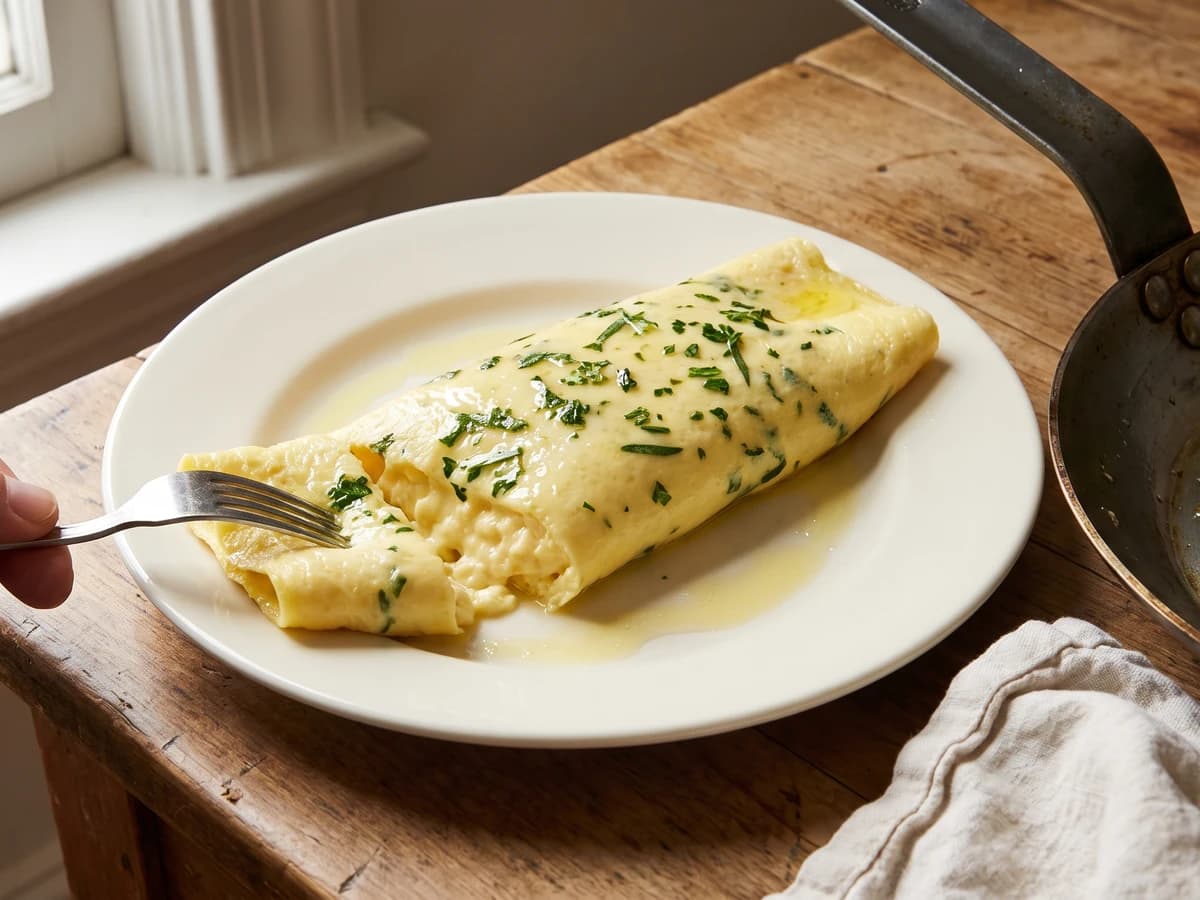
Chef Juliette
Four tender herbs, hot butter, and two eggs per pan: this rolled omelette teaches the quick hand and good judgment that keep the outside pale and the center creamy.
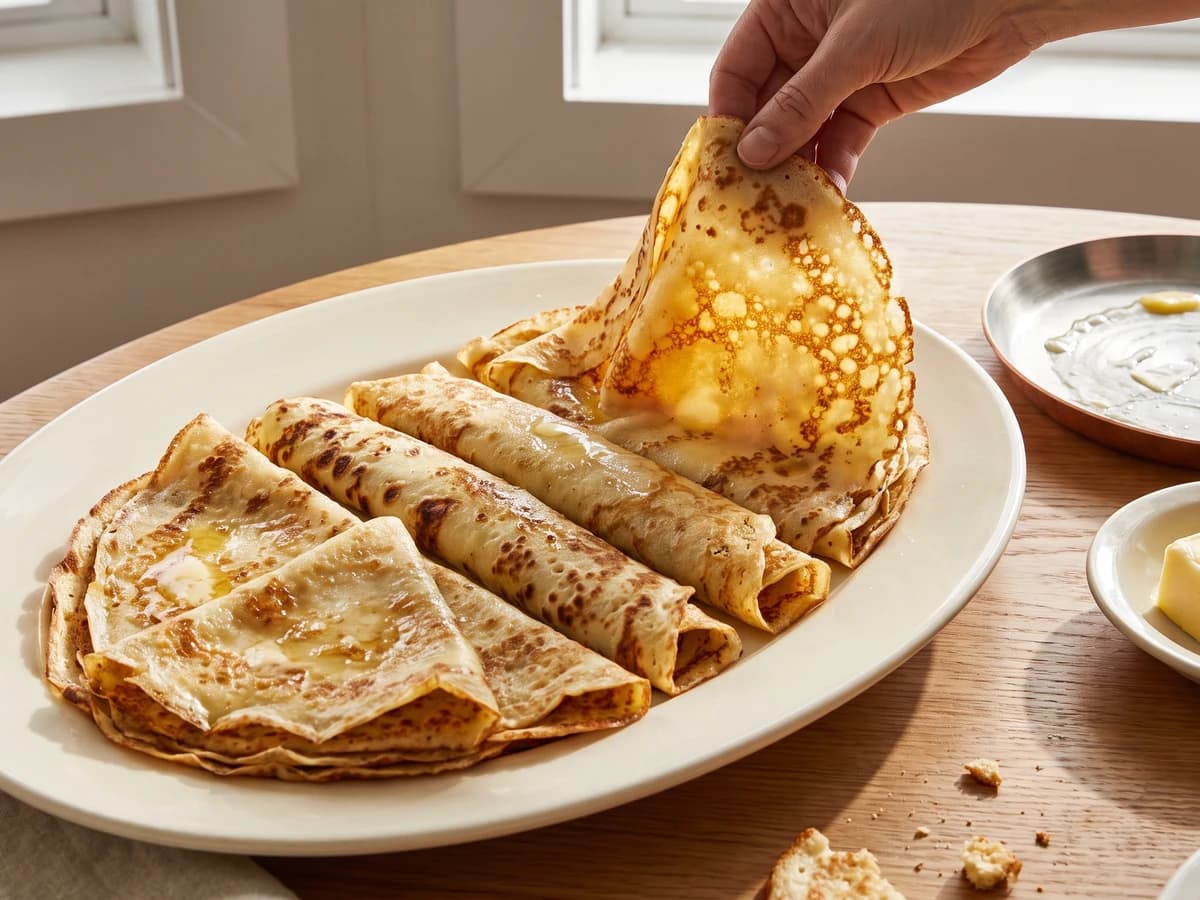
Chef Juliette
Four batters, one lesson: let the flour drink deeply before cooking, then spread the batter thinly in butter for crêpes and pannequets that bend without becoming tough.
Chef Juliette
Crêpes au Couvent trap ripe Williams pear dice between two thin pours of sweet batter, then turn in one clean toss and reach the table butter-gold, powdered, and burning hot.