Chef Juliette
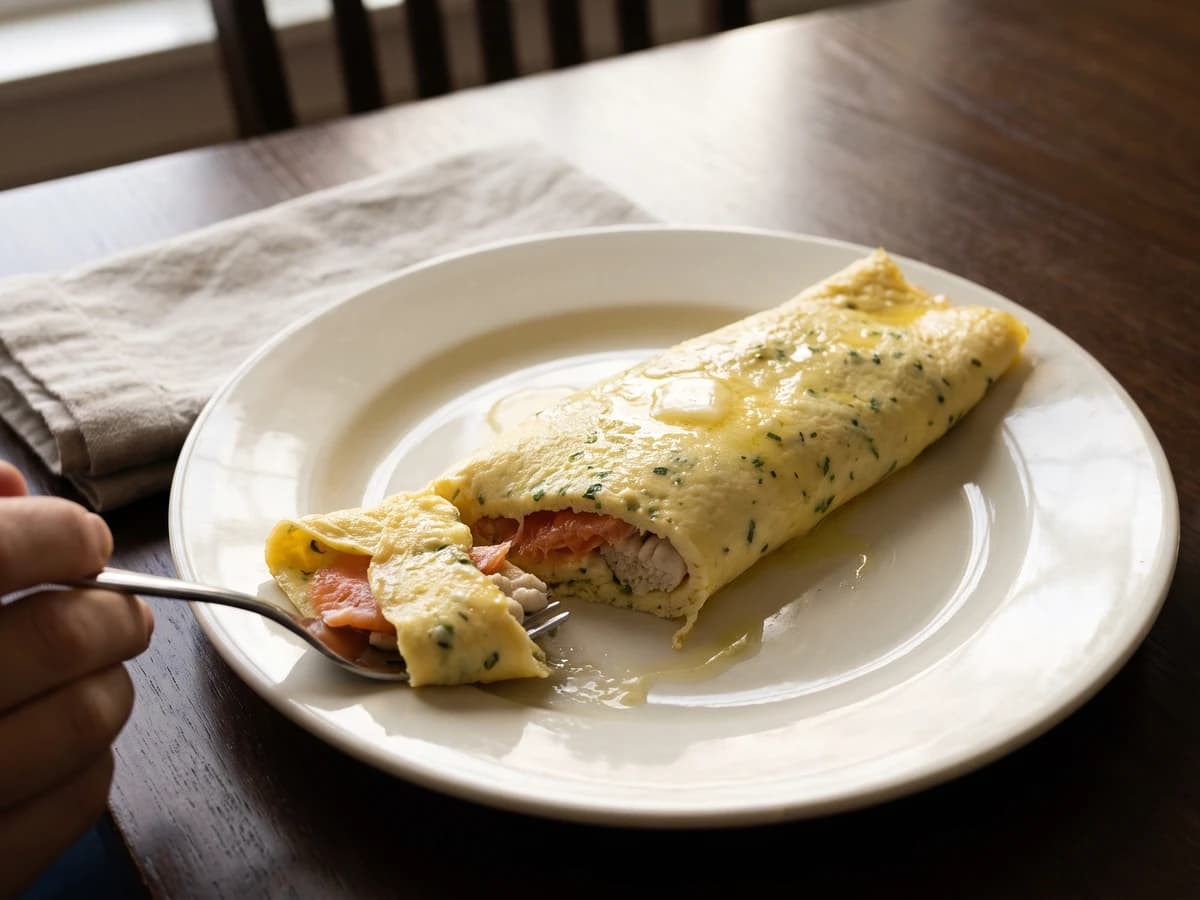
Omelette à l’Écossaise
A creamy omelette aux fines herbes closes around smoked-salmon-wrapped herring milts, gently poached in butter. Have the filling ready, then roll the eggs while they still shine.
A cooking platform built around craft, culture, and the stories behind what we eat.

Created by Chef Juliette
Based on No. 2403, Preparations for Pancakes and Pannequets, from Le Guide Culinaire (1907) by Auguste Escoffier
Four batters, one lesson: let the flour drink deeply before cooking, then spread the batter thinly in butter for crêpes and pannequets that bend without becoming tough.
Préparations pour Crêpes et Pannequets (four classical pancake batters) teach one true thing before the pan is touched: tenderness is made during the rest, not during frying. Flour given time to absorb its milk and eggs produces a supple crêpe; flour mixed and cooked in haste gives a rubbery one. The pan work is quick. The patience comes first.
The original formulas began with a pound of flour and nearly a dozen eggs in each basin, sensible quantities when several hands could mix, strain, aerate, and cook through a long service. Here every preparation is divided by five, and fractional eggs are weighed after beating so the ratios remain intact. A mixing bowl, a fine sieve, and one 20 cm skillet replace the large basin and row of crêpe pans. Quantity and equipment changed because one cook doesn't need forty crêpes; the mixing order, the straining of Preparation B, and the folded cream or whites in C and D remain because those steps are the dish.
Preparation A is the clean milk-and-egg foundation. B is richer, scented with brandy, Orgeat, and crushed almond macaroons. C gains softness from whipped cream, while D gains lift from stiffly whisked white. One cook, one stove, one evening. Whichever you choose, give the base its full hour of rest before the first spoonful meets the pan.
Crêpes belong most famously to Brittany, where buckwheat galettes hold the savory table and wheat-flour crêpes carry sweeter fillings, but the pannequet belongs to the wider French classical kitchen. In that register, pannequet names the thin pancake used as a wrapper, filled and folded or rolled before its final service. These four formulas show how classical cooks organized batters by enrichment, moving from plain milk and egg through Orgeat and almond macaroon to whipped cream or folded egg white.
Quantity
1 tablespoon (15 ml / 14 g)
melted
Quantity
3/4 cup (180 ml / 91 g)
Quantity
1/4 cup plus 1 teaspoon (65 ml / 34 g)
include 1 teaspoon orange, lemon, or vanilla sugar in this total if using
Quantity
1 small pinch (about 0.3 g)
Quantity
2
Quantity
scant 1 cup (227 ml / 234 g), or 213 ml / 219 g when using liqueur
Quantity
scant 1 tablespoon (14 ml / about 13 g)
replace the same volume of milk
Quantity
3/4 cup (180 ml / 91 g)
Quantity
2 tablespoons plus 2 teaspoons (40 ml / 20 g)
Quantity
1 small pinch (about 0.3 g)
Quantity
generous 1/3 cup (90 ml / 90 g)
weighed from about 2 large eggs
Quantity
scant 1/4 cup (57 ml / 59 g)
unwhipped
Quantity
scant 1 tablespoon (14 ml / 13 g)
Quantity
1 tablespoon (15 ml / 14 g)
melted and cooled slightly
Quantity
generous 2/3 cup (170 ml / 175 g)
Quantity
scant 1 tablespoon Orgeat (14 ml / 17 g), or almond milk (14 ml / 14 g)
Quantity
1/4 cup (60 ml / 17 g)
finely crushed
Quantity
3/4 cup (180 ml / 91 g)
Quantity
2 tablespoons plus 2 teaspoons (40 ml / 20 g)
include 1 teaspoon orange, lemon, or vanilla sugar in this total if using
Quantity
1 small pinch (about 0.3 g)
Quantity
generous 1/3 cup (90 ml / 90 g)
weighed from about 2 large eggs
Quantity
scant 1/4 cup (57 ml / 59 g)
unwhipped
Quantity
scant 1/2 cup (114 ml / 117 g)
Quantity
scant 1/4 cup (57 ml / about 30 g)
measured after whipping
Quantity
3/4 cup (180 ml / 91 g)
Quantity
2 tablespoons plus 2 teaspoons (40 ml / 20 g)
include 1 teaspoon orange, lemon, or vanilla sugar in this total if using
Quantity
1 small pinch (about 0.3 g)
Quantity
1
Quantity
2 1/4 teaspoons (11 ml / 11 g)
weighed from 1 large yolk
Quantity
3/4 cup plus 1 1/2 tablespoons (199 ml / 205 g)
Quantity
1 (30 ml / 30 g)
| Ingredient | Quantity |
|---|---|
| unsalted butter, for the panmelted | 1 tablespoon (15 ml / 14 g) |
| sifted all-purpose flour, Preparation A | 3/4 cup (180 ml / 91 g) |
| powdered sugar, Preparation Ainclude 1 teaspoon orange, lemon, or vanilla sugar in this total if using | 1/4 cup plus 1 teaspoon (65 ml / 34 g) |
| fine salt, Preparation A | 1 small pinch (about 0.3 g) |
| large eggs, Preparation A | 2 |
| whole milk, Preparation A | scant 1 cup (227 ml / 234 g), or 213 ml / 219 g when using liqueur |
| brandy, kirsch, or rum, Preparation A (optional)replace the same volume of milk | scant 1 tablespoon (14 ml / about 13 g) |
| sifted all-purpose flour, Preparation B | 3/4 cup (180 ml / 91 g) |
| powdered sugar, Preparation B | 2 tablespoons plus 2 teaspoons (40 ml / 20 g) |
| fine salt, Preparation B | 1 small pinch (about 0.3 g) |
| beaten egg, Preparation Bweighed from about 2 large eggs | generous 1/3 cup (90 ml / 90 g) |
| heavy cream, Preparation Bunwhipped | scant 1/4 cup (57 ml / 59 g) |
| brandy, Preparation B | scant 1 tablespoon (14 ml / 13 g) |
| unsalted butter, Preparation Bmelted and cooled slightly | 1 tablespoon (15 ml / 14 g) |
| whole milk, Preparation B | generous 2/3 cup (170 ml / 175 g) |
| Orgeat syrup or almond milk, Preparation B | scant 1 tablespoon Orgeat (14 ml / 17 g), or almond milk (14 ml / 14 g) |
| dry almond macaroons, Preparation Bfinely crushed | 1/4 cup (60 ml / 17 g) |
| sifted all-purpose flour, Preparation C | 3/4 cup (180 ml / 91 g) |
| powdered sugar, Preparation Cinclude 1 teaspoon orange, lemon, or vanilla sugar in this total if using | 2 tablespoons plus 2 teaspoons (40 ml / 20 g) |
| fine salt, Preparation C | 1 small pinch (about 0.3 g) |
| beaten egg, Preparation Cweighed from about 2 large eggs | generous 1/3 cup (90 ml / 90 g) |
| heavy cream, Preparation Cunwhipped | scant 1/4 cup (57 ml / 59 g) |
| whole milk, Preparation C | scant 1/2 cup (114 ml / 117 g) |
| whipped heavy cream, Preparation Cmeasured after whipping | scant 1/4 cup (57 ml / about 30 g) |
| sifted all-purpose flour, Preparation D | 3/4 cup (180 ml / 91 g) |
| powdered sugar, Preparation Dinclude 1 teaspoon orange, lemon, or vanilla sugar in this total if using | 2 tablespoons plus 2 teaspoons (40 ml / 20 g) |
| fine salt, Preparation D | 1 small pinch (about 0.3 g) |
| large egg, Preparation D | 1 |
| beaten egg yolk, Preparation Dweighed from 1 large yolk | 2 1/4 teaspoons (11 ml / 11 g) |
| whole milk, Preparation D | 3/4 cup plus 1 1/2 tablespoons (199 ml / 205 g) |
| large egg white, Preparation D | 1 (30 ml / 30 g) |
Choose Preparation A, B, C, or D and make only that batter. Each formula is exactly one-fifth of the book's brigade quantity, using the Imperial liquid measures of the source; the oddly precise millilitres and fractional eggs preserve its ratios. Weigh the beaten egg where directed. The large basin and service quantity were brigade scaffolding and can go. The prescribed sequence, the fine straining of B, the rest, and the aeration of C or D must stay.
Whisk the sifted flour, powdered sugar, and salt together, making sure any orange, lemon, or vanilla sugar forms part of the total sugar rather than an addition to it. Make a well, add the eggs, and whisk from the centre while drawing in the flour gradually. Add the milk in three or four additions until the batter flows like light cream. If using brandy, kirsch, or rum, add it with the final liquid and withhold the same volume of milk, just as the original formula requires.
Combine the flour, sugar, and salt, then work in the beaten egg until smooth. Add the unwhipped cream, brandy, cooled melted butter, and milk in that order, whisking each addition fully through before the next. Pass the batter through a fine sieve, then stir in the Orgeat, the almond syrup named by the book, and the finely crushed macaroons. Use dry almond macaroon biscuits, not filled sandwich macarons; they should dissolve into the batter rather than leave a paste of icing.
Combine the flour, sugar, salt, and chosen flavored sugar. Work in the beaten egg and stir well until the mixture is completely smooth, then add the unwhipped cream followed by the milk. Stop here. The whipped cream is the finish, and folding it in before the flour has rested would sacrifice the air while the batter waits.
Combine the flour, sugar, salt, and chosen flavored sugar. Whisk the whole egg with the measured yolk, then work this into the dry ingredients from the centre outward. Add the milk by degrees until the base is smooth and fluid. Keep the egg white cold and untouched for now; its stiff froth belongs in the batter only after the flour has rested.
Cover the selected batter or base and rest it for 1 hour. A cool room is suitable for the hour; refrigerate it if the kitchen is warm, then let it stand for 15 minutes before cooking so it isn't ice-cold. This is the step that decides tenderness. The flour swells, the smallest lumps soften, and the batter spreads without fighting the pan. If it still shows stubborn lumps after resting, press it through a fine sieve. Ça se rattrape.
For Preparation C, whip the final cream until it holds a soft mound, then fold it gently into the rested base. For Preparation D, whisk the egg white to a stiff froth and fold it through in three additions. If the white looks dry and clumps against the batter, loosen it first with one spoonful of the base, then fold that mixture back into the bowl. Stop as soon as no large white streaks remain. Stirring hard would remove the very lightness these formulas were built to provide.
Set a 20 cm crêpe pan or low-sided skillet over medium heat for several minutes. Brush it with the thinnest film of melted butter, then test with a teaspoon of batter. It should set at once with a quiet sizzle and turn butter-gold underneath without scorching. If it sits pale and wet, heat the pan longer; if the butter browns before the batter spreads, lower the heat and wipe the pan clean.
Pour about 3 tablespoons (45 ml) batter just off-centre and immediately tilt the pan in a full circle, carrying it into a thin, even layer. Preparations C and D are airier and may need a gentle nudge with the back of the ladle. If the first crêpe is thick and refuses to spread, whisk in milk 1 teaspoon at a time. If it tears, let the batter rest another 15 minutes first; if it still tears, mix 1 teaspoon flour with 1 tablespoon batter until smooth and return it to the bowl. Ça se rattrape. The first crêpe is a diagnosis, not a verdict.
Cook until the surface loses its wet shine, the edge looks dry, and the underside is freckled deep gold, about 45 to 60 seconds. Slip a flexible spatula underneath, turn the crêpe, and cook the second side for 15 to 30 seconds. Stack the finished crêpes under an inverted plate or a clean folded cloth so their own warmth keeps them supple. Brush the pan with more butter only when it looks dry; butter, not a greasy puddle.
Serve the crêpes folded, rolled, or stacked. For pannequets, cook them a shade paler so they remain especially flexible, place the filling required by the dish across the lower third, and roll or fold while the wrapper is still supple. This entry supplies the four canonical batters, so the filling properly belongs to the preparation the pannequet will complete. Bring them to the table warm. À table!
1 serving (about 90g)
Culinary guides, cultural storytelling, and the editorial depth that makes cooking meaningful.
Discover Culinary ExplorerChef Juliette
A creamy omelette aux fines herbes closes around smoked-salmon-wrapped herring milts, gently poached in butter. Have the filling ready, then roll the eggs while they still shine.
Chef Juliette
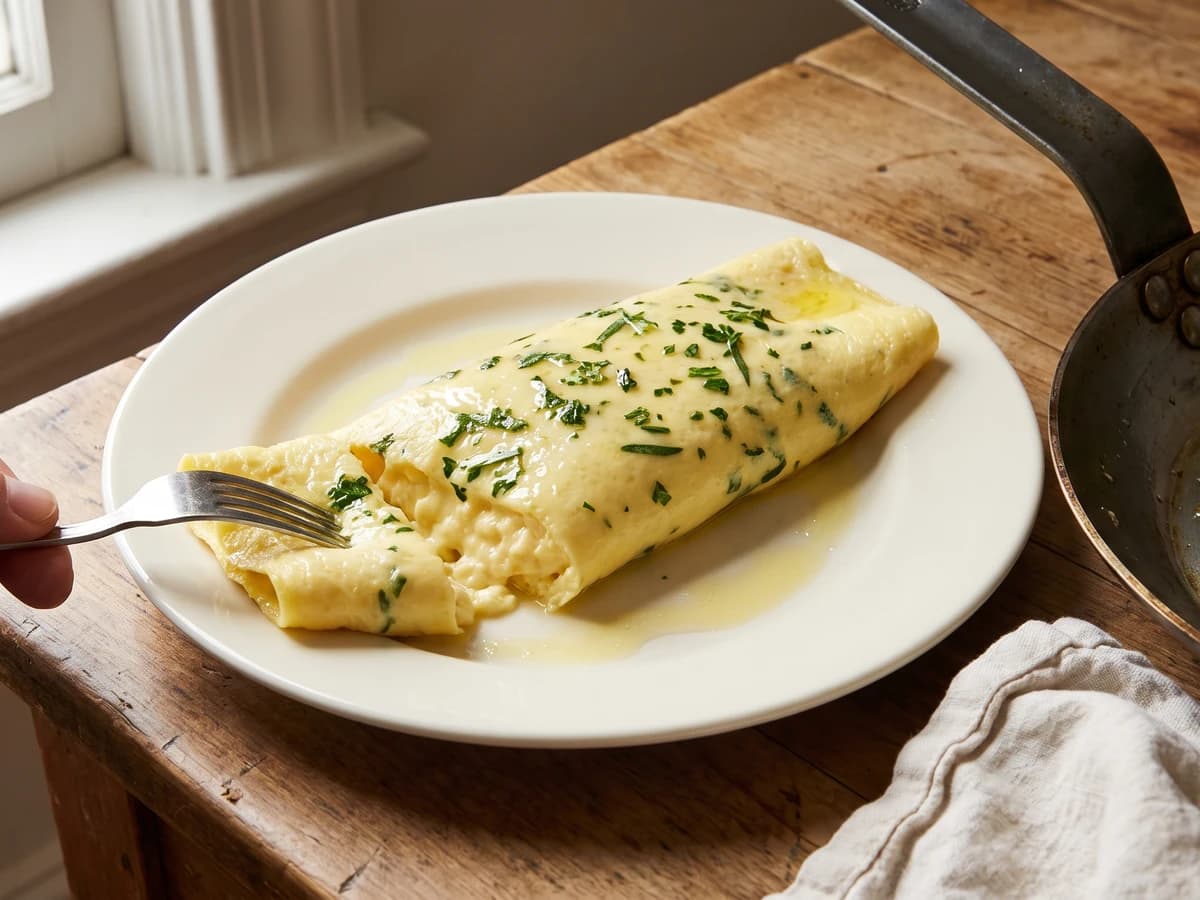
Four tender herbs, hot butter, and two eggs per pan: this rolled omelette teaches the quick hand and good judgment that keep the outside pale and the center creamy.
Chef Juliette
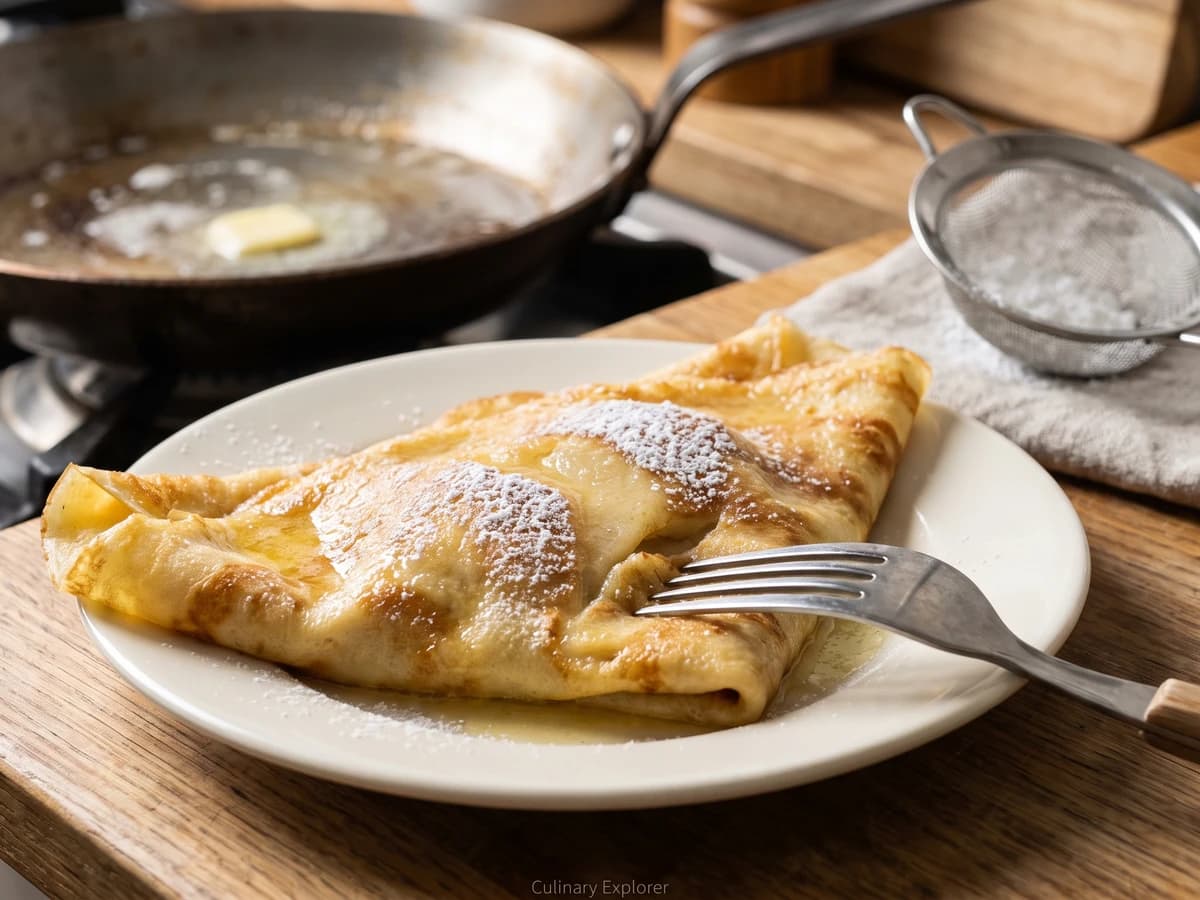
Crêpes au Couvent trap ripe Williams pear dice between two thin pours of sweet batter, then turn in one clean toss and reach the table butter-gold, powdered, and burning hot.
Chef Juliette
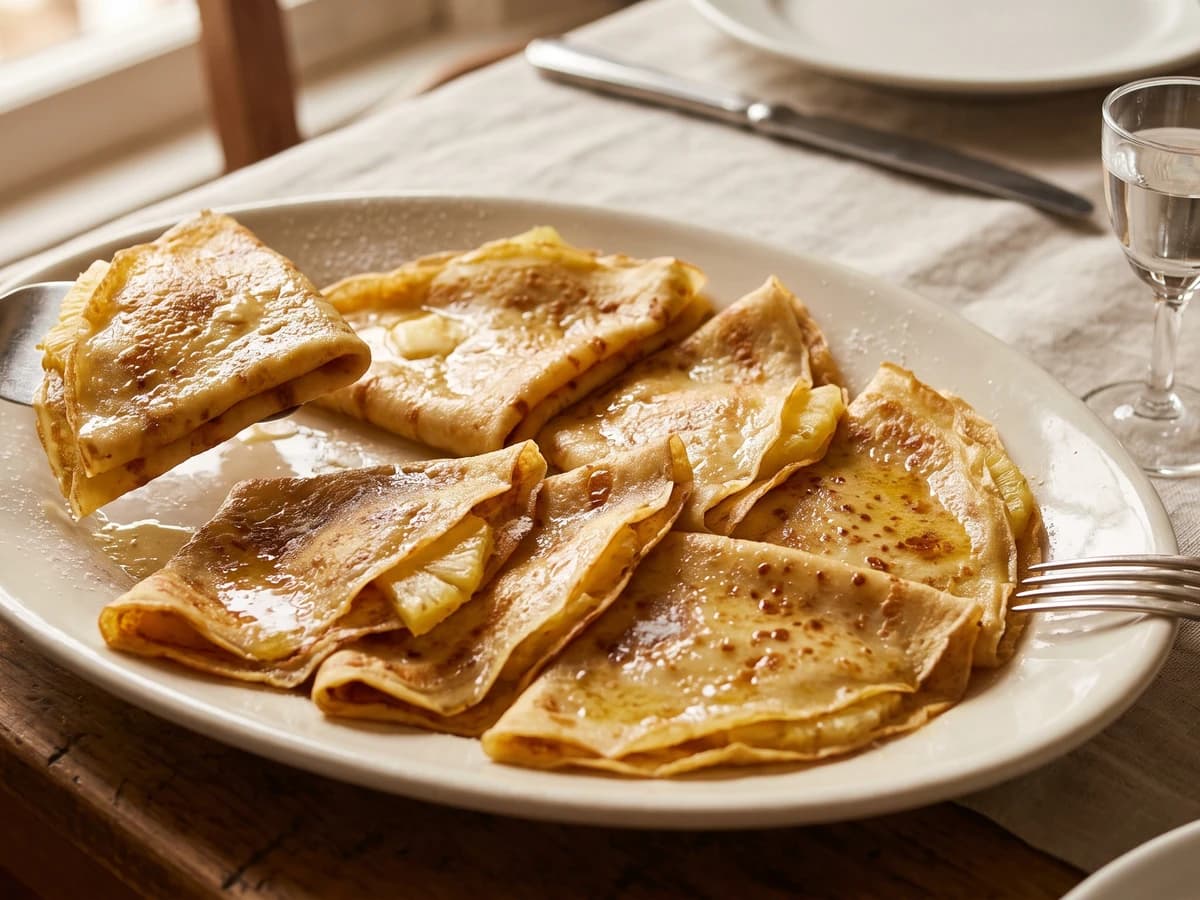
Paper-thin pineapple, maraschino, and supple buttered batter meet in a crêpe cooked golden at the edges and tender within, a composed French sweet built on moisture control, not ornament.