Chef Juliette
Bouillabaisse à la Marseillaise
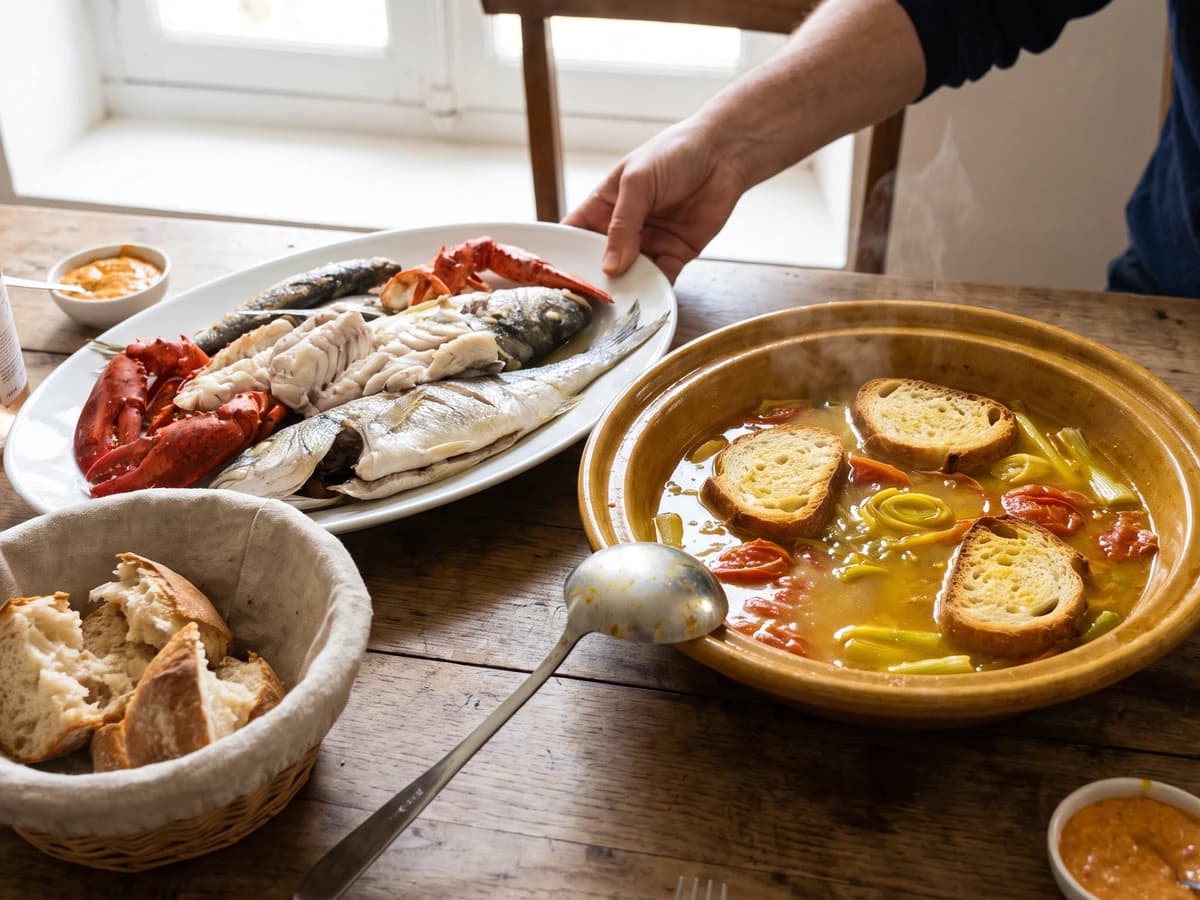
Marseille's great fish stew, saffron-gold and garlic-scented, proves that a hard boil can be the careful choice: it binds olive oil into broth before the whole pot meets bread.
A cooking platform built around craft, culture, and the stories behind what we eat.
Created by Chef Juliette
Based on No. 601, Consommé Printanier, from Le Guide Culinaire (1907) by Auguste Escoffier
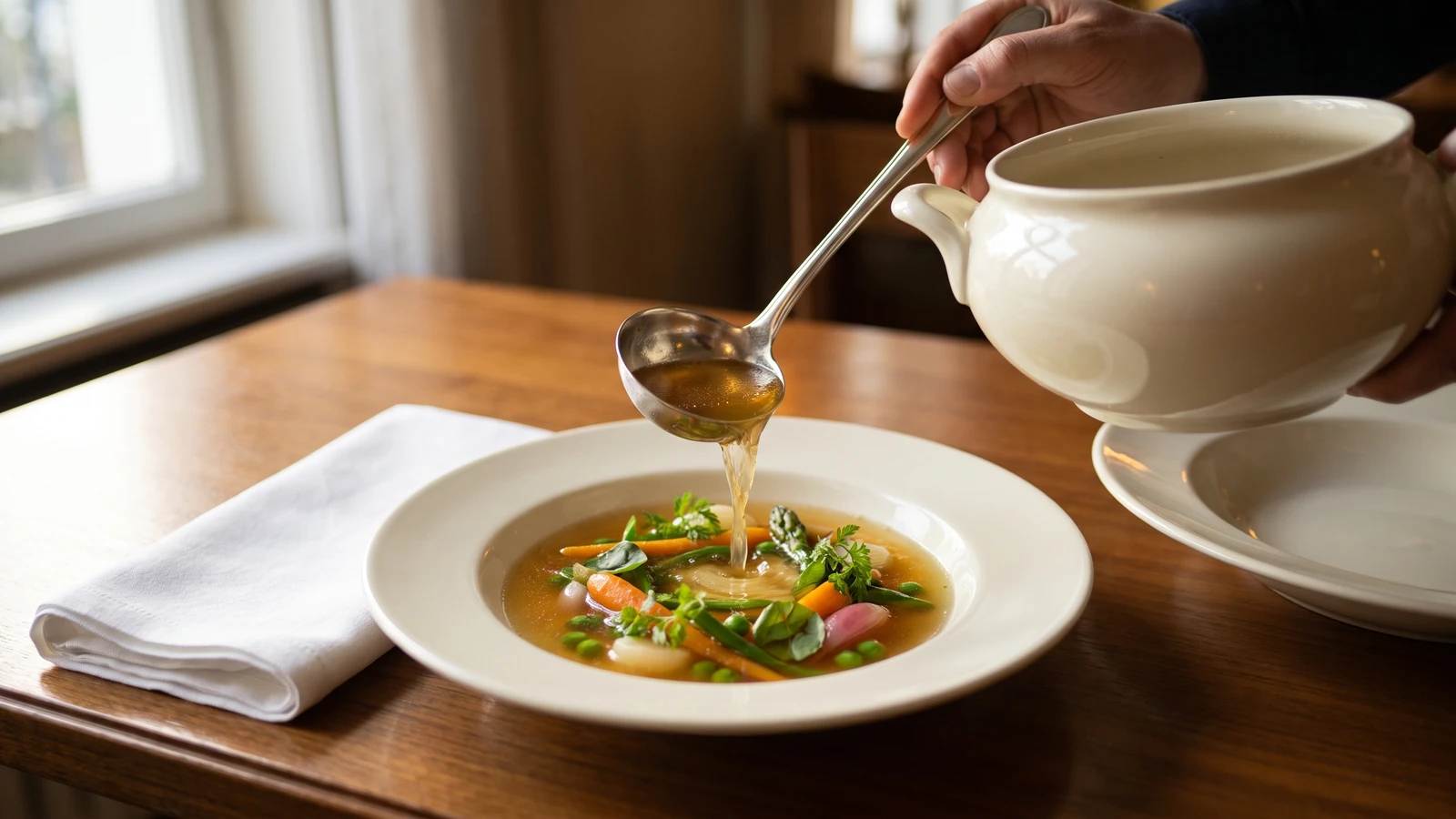
Consommé Printanier teaches the discipline of clarity: jewel-small spring vegetables cooked apart, glazed or poached with care, then gathered beneath brilliant chicken consommé at the last possible moment.
Consommé Printanier (clear chicken consommé with spring vegetables) teaches the discipline of separation. The broth must arrive brilliant, the roots glazed, the green vegetables just tender, and none may surrender enough starch or colour to muddy the consommé. Before touching a pan, know this one true thing: the garnish cooks beside the serving broth, not in it. They meet only at the table.
The old entry assumed a clear stock never off the fire, a saucier tending several little pans, and a tubular cutter ready to punch perfect rods. At home, one large pot, one small saucepan, and a sharp knife do the work; there is no salamander step because this soup is finished by the heat of the broth, not beneath a broiler. The source's one-quart service formula is doubled here for a practical two-quart make-ahead pot, with every garnish ratio kept intact. The many pans were brigade scaffolding and can go. The finished consommé, separate cooking, and precise little cuts are the dish and must stay. One cook, one stove, one evening.
When it is right, the broth shines amber around orange carrot, ivory turnip, green peas, beans, asparagus, and tender leaf rounds, each piece small enough to fit gracefully on a spoon. Make every cut even before you light the flame; uniformity is the step that decides the dish.
Consommé Printanier belongs to the codified Parisian grand-kitchen repertoire, where clear soups were commonly named for the garnish placed in them and served at formal tables before the principal courses. Printanier names this particular spring garnish, not a regional broth: carrot and turnip rods, peas, haricots verts, asparagus, sorrel, lettuce, and chervil, each prepared to preserve its shape and the consommé's clarity. It is not simply vegetable soup, since the consommé remains a finished preparation and the vegetables enter only at service.
Quantity
2 quarts (1.9 L / about 1.9 kg)
divided
Quantity
2 tablespoons (30 ml / 20 g)
cut 1/8 inch thick and 1/2 inch long
Quantity
2 tablespoons (30 ml / 25 g)
cut 1/8 inch thick and 1/2 inch long
Quantity
2 tablespoons (30 ml / 20 g)
Quantity
2 tablespoons (30 ml / 18 g)
cut diagonally into small lozenges
Quantity
2 tablespoons (30 ml / 20 g)
Quantity
20 small rounds (about 4 g)
cut from sound leaves
Quantity
20 small rounds (about 5 g)
cut from tender inner leaves
Quantity
2 large pinches (about 2 teaspoons / 10 ml / 2 g)
| Ingredient | Quantity |
|---|---|
| finished chicken consommédivided | 2 quarts (1.9 L / about 1.9 kg) |
| carrot rodscut 1/8 inch thick and 1/2 inch long | 2 tablespoons (30 ml / 20 g) |
| turnip rodscut 1/8 inch thick and 1/2 inch long | 2 tablespoons (30 ml / 25 g) |
| small peas | 2 tablespoons (30 ml / 20 g) |
| small haricots verts (French green beans)cut diagonally into small lozenges | 2 tablespoons (30 ml / 18 g) |
| small asparagus heads | 2 tablespoons (30 ml / 20 g) |
| sorrel leavescut from sound leaves | 20 small rounds (about 4 g) |
| lettuce leavescut from tender inner leaves | 20 small rounds (about 5 g) |
| chervil pluches (small picked shreds) | 2 large pinches (about 2 teaspoons / 10 ml / 2 g) |
Peel the carrot and turnip and cut them crosswise into 1/2-inch-thick roundels. Use a 1/8-inch tubular cutter to punch out little round rods, or cut them with a sharp knife into rods 1/8 inch square and 1/2 inch long, measuring two tablespoons of each. The round cross-section was a brigade refinement; the knife-cut equivalent preserves the size and cooking time without requiring a drawer of special cutters. Cut the haricots verts diagonally into tiny lozenges, leave the peas and asparagus heads whole, stamp twenty small rounds each from the sorrel and lettuce, and pick the chervil into fine pluches.
Reserve about 1 cup (240 ml) of the consommé for cooking the garnishes and put the remainder in a clean covered pot. Add 1/2 cup (120 ml) of the reserved consommé, the carrot rods, and the turnip rods to the smallest saucepan that holds them in a shallow layer. Glacer means cooking in a little liquid until that liquid reduces to a shining coat. Simmer gently until the rods are tender and the consommé has reduced to a clear glaze, swirling rather than stirring so the pieces keep their shape. If the vegetables soften before the liquid glazes, lift them out, reduce the consommé, then return them. If the glaze catches at the edge, add a spoonful of consommé and loosen it at once. Ça se rattrape. The vegetables should gleam, not brown.
Lift the glazed roots onto a clean plate and rinse the saucepan. Bring the remaining reserved consommé to a bare simmer. Poach the haricots verts for about 2 minutes, the asparagus heads for 1 minute, and the peas for 30 to 60 seconds, lifting each with a small strainer as soon as it is tender but still distinctly green. Poach the lettuce rounds last for about 10 seconds, just until supple. Leave the sorrel raw; the boiling consommé will soften it at service. Strain any clear cooking liquor back into the main pot through damp muslin. If it carries green sediment or tastes overcooked, leave it out. Clarity is worth more than the last spoonful of broth.
Heat the main pot of consommé uncovered just before service. Taste it while hot; it should be fully seasoned and deeply chicken-scented, since nothing added at the table will correct a weak foundation. Skim away any trace of fat, bring the consommé to a full boil, then take it off the heat immediately. If flecks appear, let them settle briefly and strain the liquid through damp muslin into a clean pot, without pressing. Ça se rattrape. Return it to the boil only when the tureen is ready.
Warm the soupière (soup tureen) with hot water, then drain and dry it thoroughly. Arrange the glazed carrot and turnip rods, peas, haricots verts, asparagus heads, poached lettuce rounds, and raw sorrel rounds across its bottom. Pour the boiling consommé directly over the garnish and add the chervil pluches at the last instant. Ladle at once, giving every bowl a little of each vegetable. À table!
1 serving (about 250g)
Culinary guides, cultural storytelling, and the editorial depth that makes cooking meaningful.
Discover Culinary ExplorerChef Juliette
Marseille's great fish stew, saffron-gold and garlic-scented, proves that a hard boil can be the careful choice: it binds olive oil into broth before the whole pot meets bread.
Chef Juliette
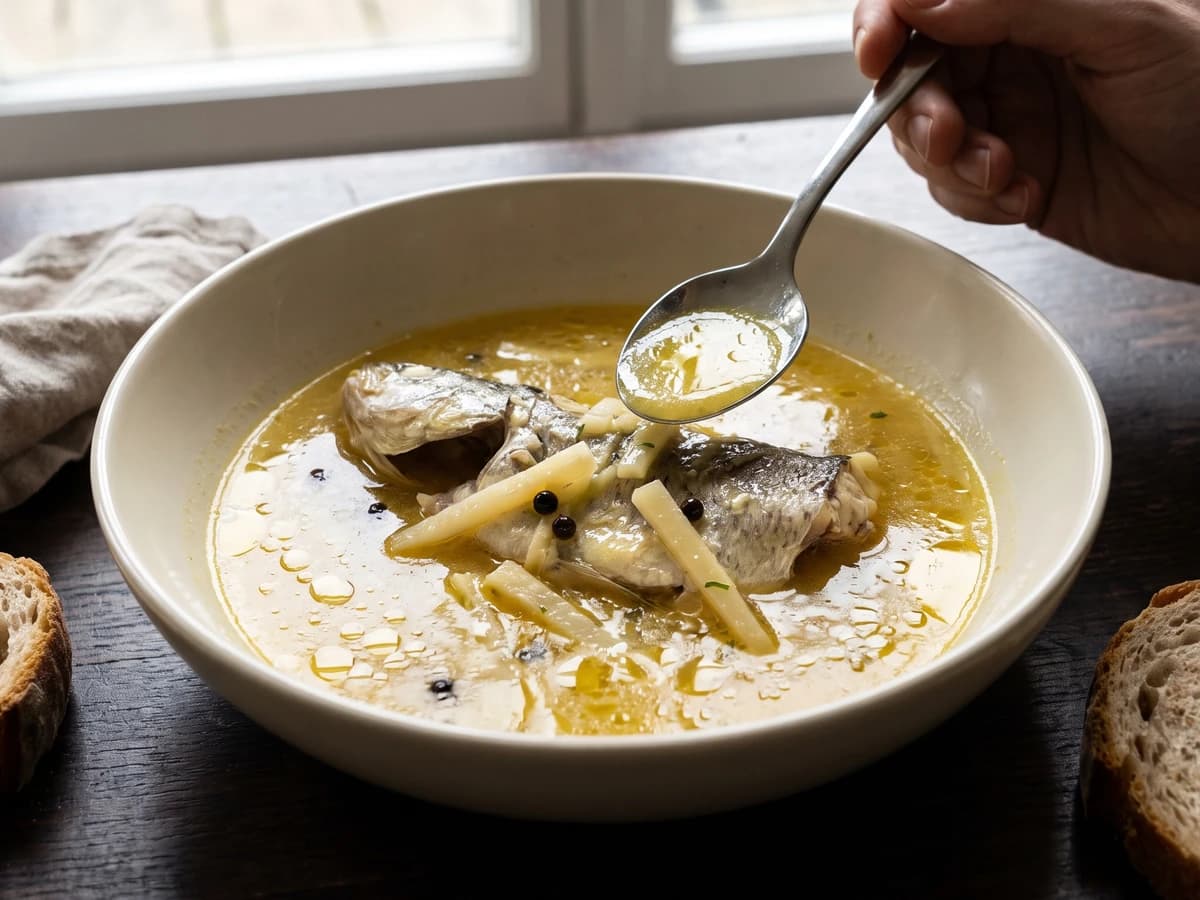
Waterzoi asks fresh, bone-in river fish to thicken its own buttery broth, with parsley root and pepper for company. No flour, no stockpot, just a brisk simmer watched closely.
Chef Juliette
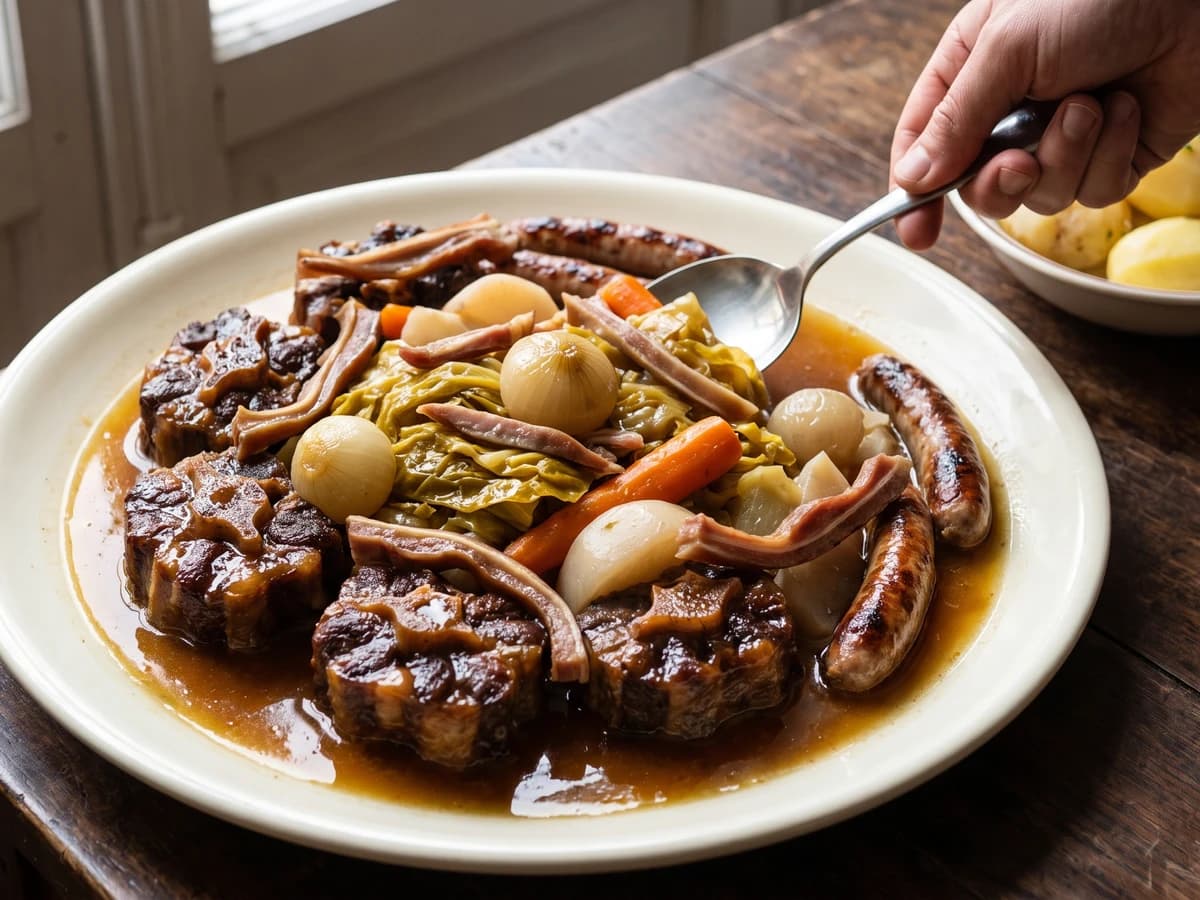
Queue de Bœuf en Hochepot gathers oxtail, pig's trotter and ear, cabbage, roots, and grilled chipolatas around a clear, gelatin-rich broth whose quiet simmer keeps every piece tender and distinct.
Chef Juliette
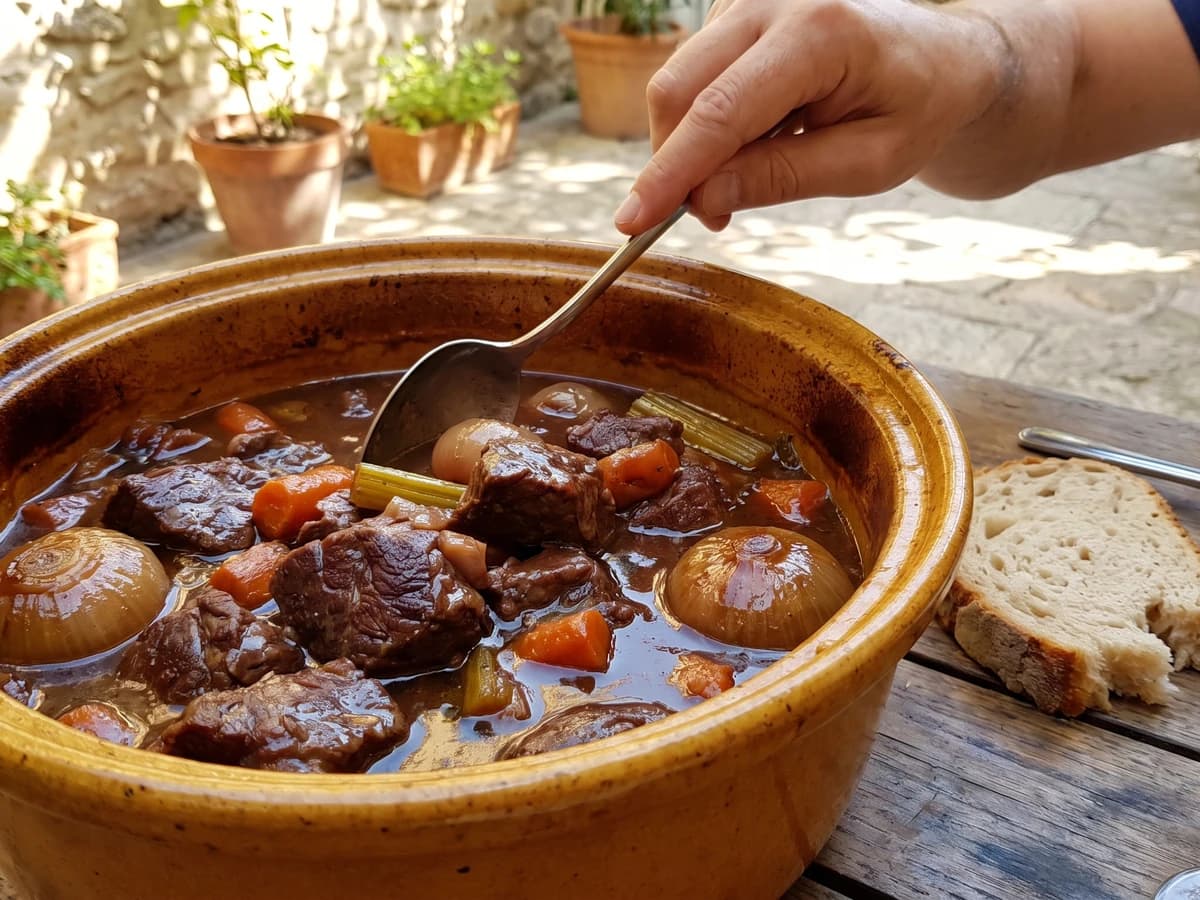
Beef shoulder larded with bacon, sharpened by red wine and vinegar, then sealed with garlic, vegetables, and dry lemon peel until the low oven turns it yielding and the gravy darkly glossy.