Chef Juliette
Ordinary or White Consommé
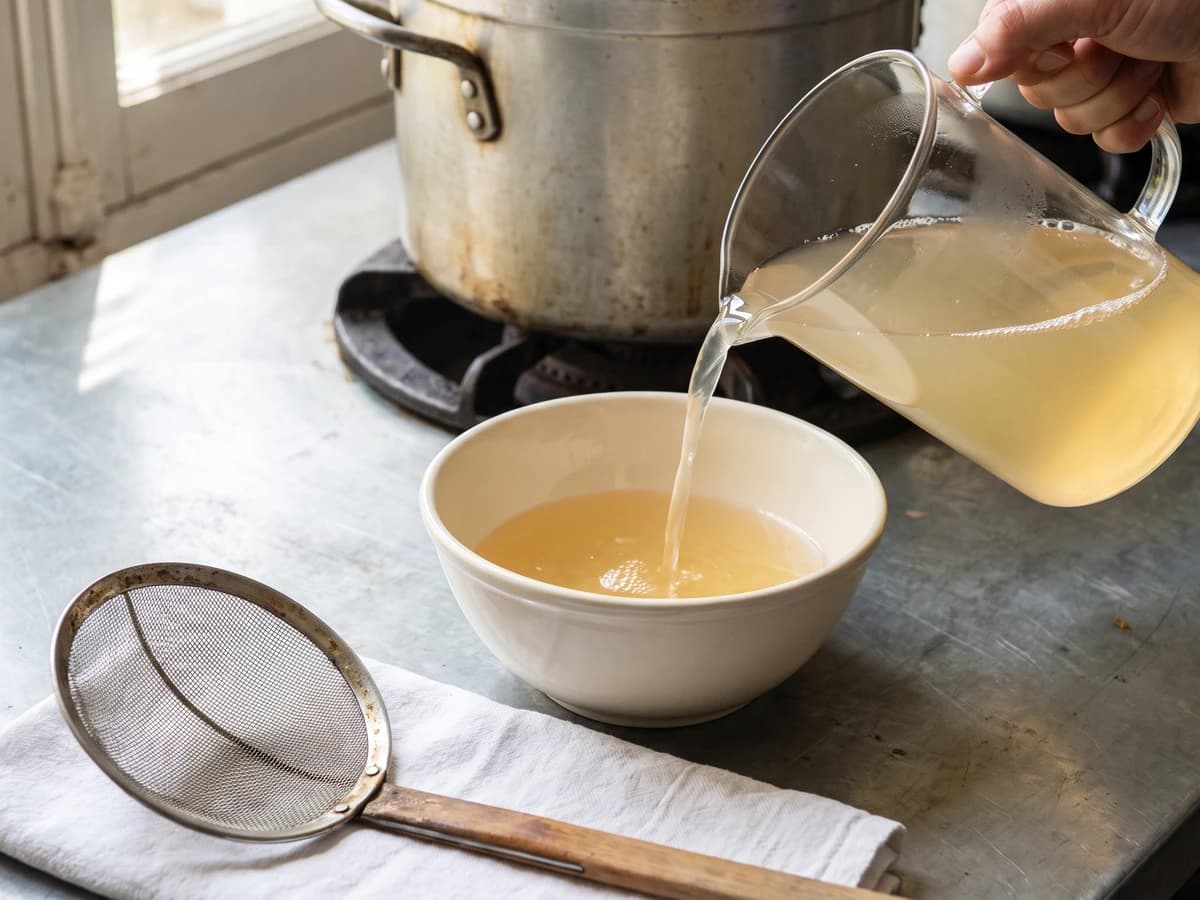
Beef shin, lean beef, and fowl begin in cold water and rise slowly toward a tremble. Skim before the boil, and you learn the quiet discipline that gives every clear French broth its backbone.
A cooking platform built around craft, culture, and the stories behind what we eat.
Created by Chef Juliette
Based on No. 50, Poivrade Sauce For Venison, from Le Guide Culinaire (1907) by Auguste Escoffier
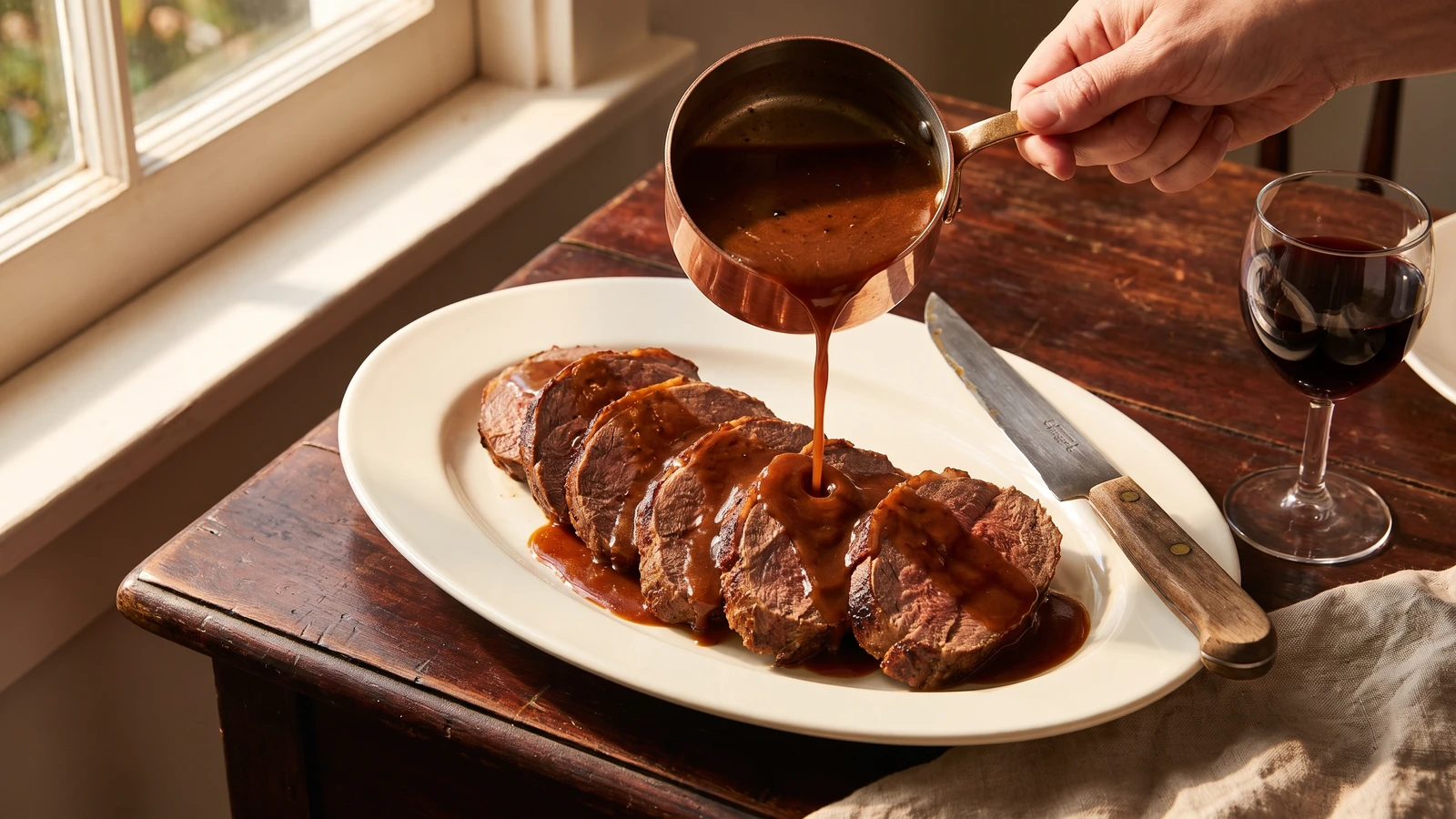
Sauce poivrade turns browned game bones, vinegar, wine, stock, and Espagnole into a dark, brilliant reduction for venison, sharp enough to wake the meat and mellow enough to carry its deepest flavor.
Sauce poivrade pour venaison (sharp vinegar-and-wine game sauce for venison) teaches the discipline of reduction. The one true thing is simple: reduction concentrates only what you have already built. Brown the bones and Mirepoix (No. 228) deeply and the sauce becomes profound; leave them pale and hours of simmering merely concentrate paleness.
The source assumed a saucier, a dedicated sauce cook, game stock never off the fire, several heavy saucepans, and hands available to skim and pass the sauce repeatedly through muslin. A salamander stood elsewhere on such a line, but it has no work here, so no home broiler substitute is needed. Your equivalents are one large lidded stockpot, a tall reducing pan, a fine sieve, and two deliberate muslin passes. The repeated transfers between ever-smaller brigade pans are scaffolding and can go. The browning, three-quarter acid reduction, covered oven extraction, pressing, dépouiller, and final concentration are the dish itself, and every one stays.
This two-quart batch doubles the source formula, whose astonishing potful finished at only one concentrated quart; its ratios and sequence have not moved. Make it ahead and the work becomes perfectly civil for one cook, one stove, one evening. Before you touch the pan, commit to the browning. It is the only step no later refinement can replace.
Sauce poivrade belongs to the French hunting table and the grand-kitchen family of sauces for venaison, where vinegar, wine, reduced game juices, and a pepper-bearing marinade balance meat that is lean and mineral. It traveled from practical game cookery into the codified sauce repertoire, gaining Espagnole for body and an optional butter finish for fragrance and roundness. Despite its name, this formula is not made by tipping loose pepper into the saucepan; much of its poivrade character arrives through the Cooked Marinade for Venison (No. 168).
Quantity
½ cup (120 ml / 113 g)
for browning
Quantity
½ cup (120 ml / 110 g)
Quantity
6 cups (1.4 L / 910 g) raw Mirepoix (No. 228)
Quantity
8 pounds (3.6 kg)
bones well broken and trimmings coarsely ground
Quantity
4 cups (960 ml / 960 g)
Quantity
4 cups (960 ml / 950 g)
Quantity
6 quarts (24 cups / 5.7 L / 5.7 kg)
Quantity
2 quarts (8 cups / 1.9 L / 2 kg)
Quantity
Up to 3 quarts (12 cups / 2.8 L / 2.8 kg)
held ready for adjusting the strained sauce
Quantity
Up to 3 quarts (12 cups / 2.8 L / 2.9 kg) Cooked Marinade for Venison (No. 168)
used only as needed in equal volume with additional game stock
Quantity
1 cup (240 ml / 227 g)
cubed for the optional finish
| Ingredient | Quantity |
|---|---|
| unsalted butterfor browning | ½ cup (120 ml / 113 g) |
| neutral oil | ½ cup (120 ml / 110 g) |
| raw Mirepoix | 6 cups (1.4 L / 910 g) raw Mirepoix (No. 228) |
| venison bones and ground-game trimmingsbones well broken and trimmings coarsely ground | 8 pounds (3.6 kg) |
| plain wine vinegar | 4 cups (960 ml / 960 g) |
| dry white wine | 4 cups (960 ml / 950 g) |
| game stock | 6 quarts (24 cups / 5.7 L / 5.7 kg) |
| Espagnole Sauce | 2 quarts (8 cups / 1.9 L / 2 kg) |
| additional game stockheld ready for adjusting the strained sauce | Up to 3 quarts (12 cups / 2.8 L / 2.8 kg) |
| Cooked Marinade for Venisonused only as needed in equal volume with additional game stock | Up to 3 quarts (12 cups / 2.8 L / 2.9 kg) Cooked Marinade for Venison (No. 168) |
| cold unsalted butter (optional)cubed for the optional finish | 1 cup (240 ml / 227 g) |
Heat the oven to 325°F (165°C). Have the butcher saw the venison bones into pieces no larger than 2 to 3 inches and coarsely grind the game trimmings. Dry them thoroughly before they meet the pot; wet bones shed water, and water delays the deep browning the sauce requires.
Heat the browning butter and oil over medium-high heat in a heavy 20- to 24-quart oven-safe stockpot. Cook the raw Mirepoix (No. 228) until its edges begin to bronze, then brown the bones and trimmings in manageable batches, returning each finished batch to the pot. Give them real color, chestnut rather than pale gold, while keeping the fond on the pot floor deep brown and never black. Spoon or pour away the free grease once everything is browned, leaving the fond behind.
Pour in the wine vinegar and white wine, scraping every brown deposit from the pot floor. Boil steadily until the combined 8 cups of liquid have reduced by three-quarters to about 2 cups. The raw vinegar smell should soften into something sharp but rounded. If the liquid slips below 2 cups without scorching, add ½ cup each vinegar and wine and reduce again to the mark. Ça se rattrape. A black, bitter fond cannot be hidden, so transfer the unburned contents to a clean pot immediately if the bottom catches.
Whisk the Espagnole Sauce with several ladles of hot game stock until smooth, then add it to the pot with the remaining initial stock. Bring the whole pot to a boil, cover tightly, and place it in the oven for at least 3 hours. The liquid should remain at a gentle tremble beneath the lid, extracting the bones and trimmings without battering the sauce cloudy.
Set a fine sieve over a large heatproof vessel and ladle in the contents of the pot. Press the solids firmly with the back of the ladle to expel the sauce they hold, but do not grind them through the mesh. Discard the exhausted bones and mirepoix, then transfer the strained sauce to a tall, heavy saucepan.
Measure the strained sauce. If you have more than 6 quarts, simmer it gently until exactly 6 quarts remain. If you have less, add equal volumes of additional game stock and Cooked Marinade for Venison (No. 168) until the sauce reaches 6 quarts. For every cup missing, add ½ cup of each. This measured correction preserves the source formula's balance rather than leaving the final acidity to guesswork.
Dépouiller, skim and clarify, the sauce as it reduces at a quiet simmer. Remove foam and rising fat frequently, keeping the sides of the saucepan clean with a damp brush. When 4 quarts remain, pass the sauce through dampened muslin or a double layer of cheesecloth into a clean, smaller saucepan. Continue reducing gently until exactly 2 quarts remain and the sauce is dark, brilliant, and lightly coats the back of a spoon. If the bottom begins to catch, pour the sauce into a clean pan without scraping; when no burnt flavor has entered it, the sauce is rescued.
Pass the finished sauce once more through dampened muslin. It may be served exactly as it stands, clear, glossy, and sharply fragrant. For the mellower finish, monter au beurre, whisk in cold butter off the heat at the source ratio of 2 tablespoons (28 g) per cup of sauce, up to the full cup for the entire batch. Keep the sauce below a simmer once the butter enters. If the emulsion separates, whisk 1 tablespoon of cold water in a clean pan, then beat in the broken sauce gradually. Ça se rattrape.
Warm only the quantity needed for service and spoon it around roasted or pan-seared venison so the browned surface remains visible. The sauce should pool generously without drowning the meat. Bring the rest in a warmed sauceboat. À table!
1 serving (about 60g)
Culinary guides, cultural storytelling, and the editorial depth that makes cooking meaningful.
Discover Culinary ExplorerChef Juliette
Beef shin, lean beef, and fowl begin in cold water and rise slowly toward a tremble. Skim before the boil, and you learn the quiet discipline that gives every clear French broth its backbone.
Chef Juliette
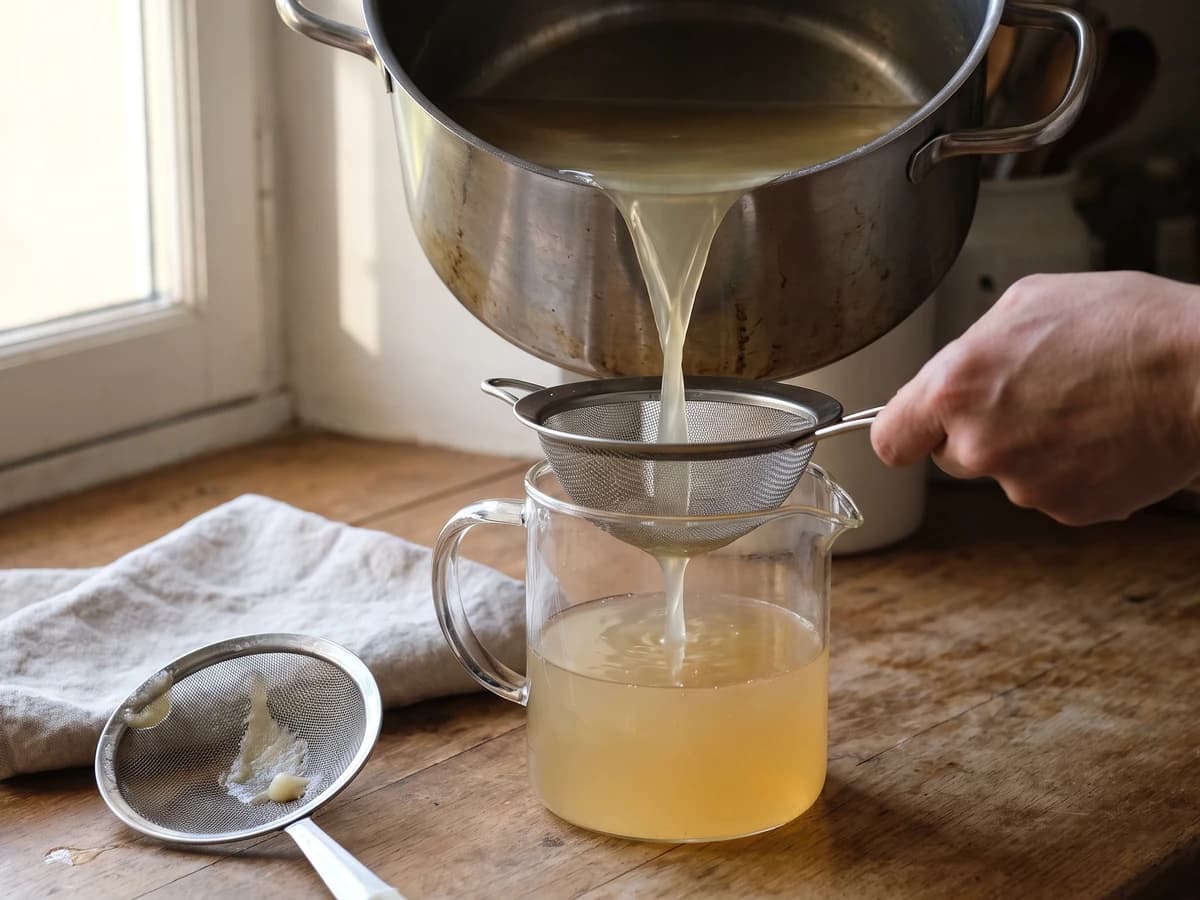
Break the veal bones small, then give them eight hours at a bare tremble. This pale, gelatinous fond becomes the quiet foundation beneath velouté, blanquette, and every sauce that must stay light.
Chef Juliette
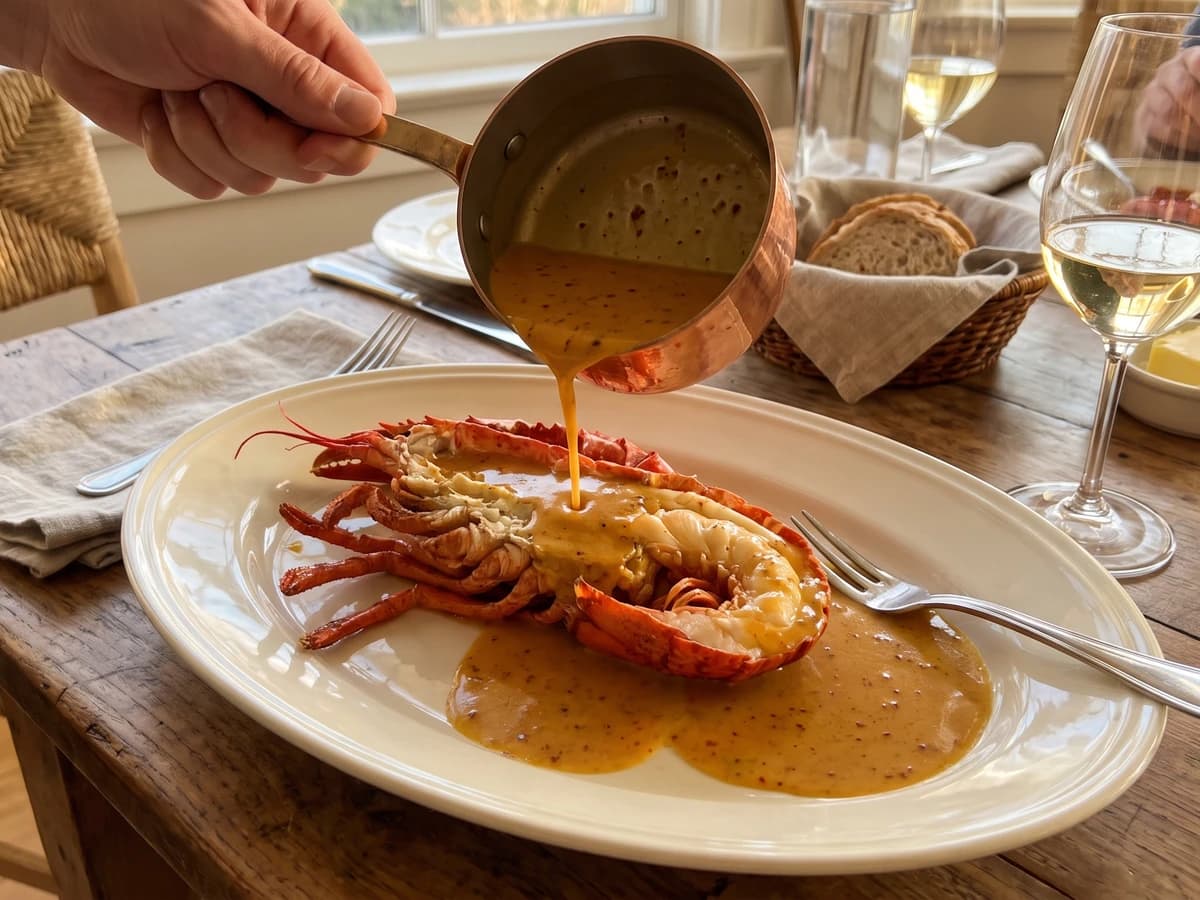
Sauce Orientale concentrates lobster-rich American Sauce with curry, then folds in cream away from the fire: a glossy, gently spiced derivative made for lobster, crayfish, and firm fish.
Chef Juliette
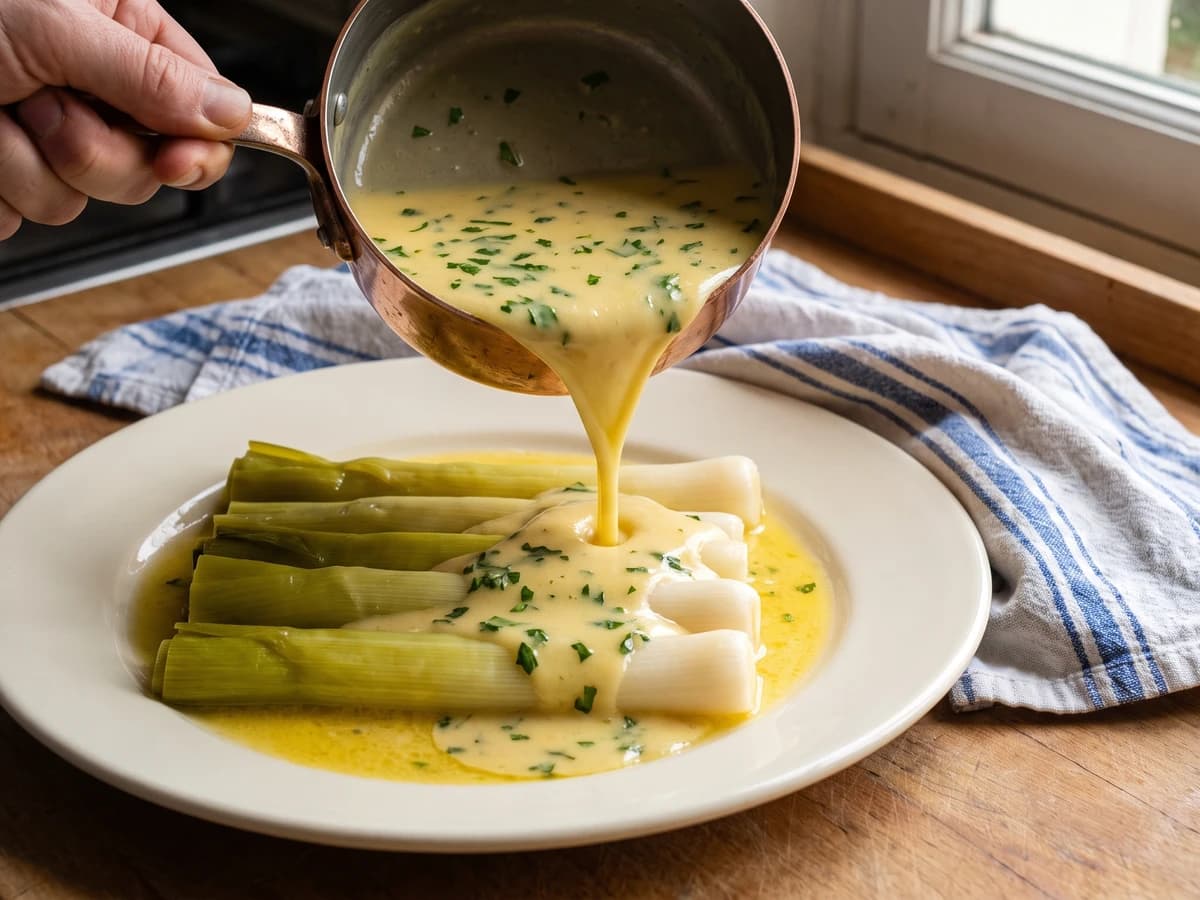
An old lesson in sauce families: Sauce Allemande takes mushroom liquor, then butter, lemon, and parsley, becoming a glossy Poulette for sheep's trotters, leeks, cauliflower, and anything needing gentle richness with a bright edge.