Chef Juliette
Ordinary or White Consommé
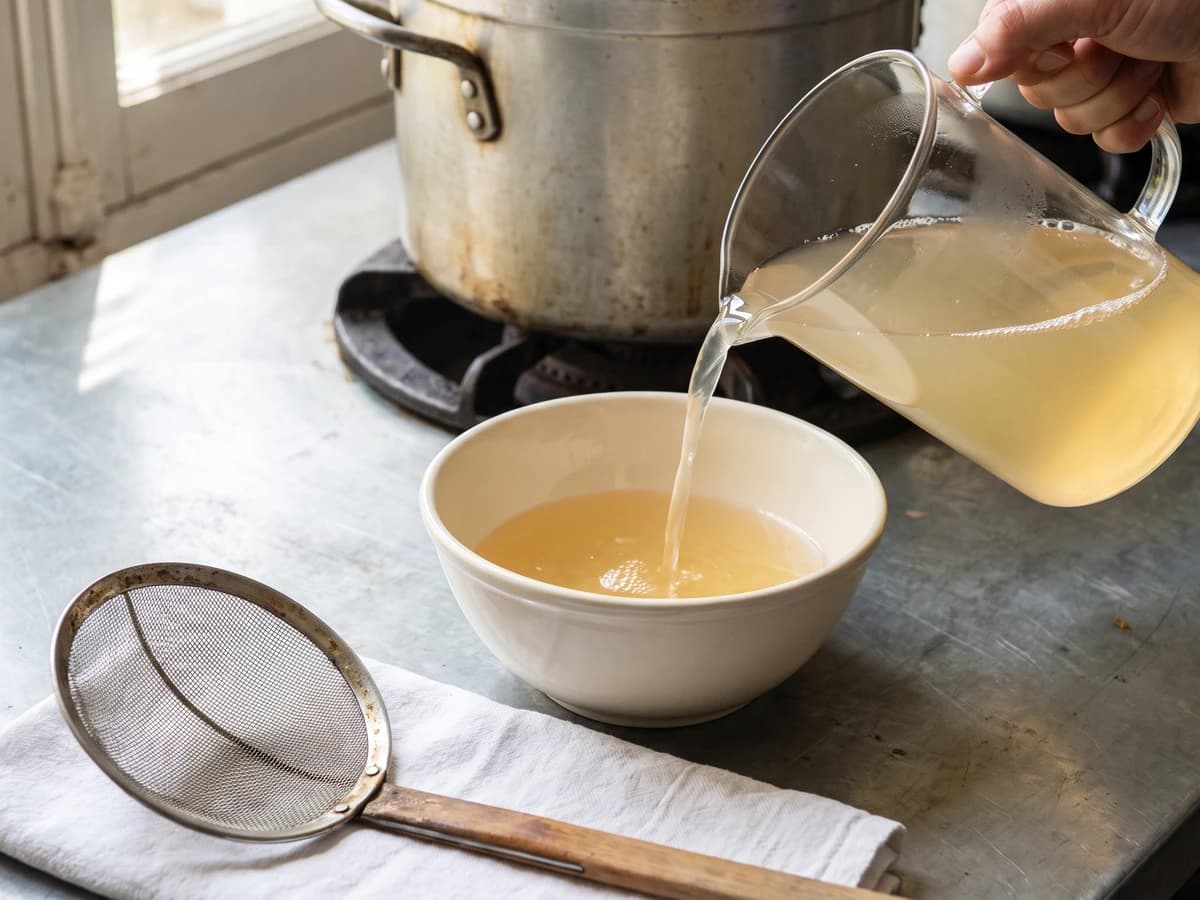
Beef shin, lean beef, and fowl begin in cold water and rise slowly toward a tremble. Skim before the boil, and you learn the quiet discipline that gives every clear French broth its backbone.
A cooking platform built around craft, culture, and the stories behind what we eat.
Created by Chef Juliette
Based on No. 34, Brown Chaud-froid Sauce, from Le Guide Culinaire (1907) by Auguste Escoffier
Sauce chaud-froid brune teaches the decisive moment between liquid and set: truffle-scented half-glaze and aspic reduced with care, finished with Madeira, then cooled until it veils cold meat in one even, savory gloss.
Sauce chaud-froid brune (brown coating sauce for cold dishes) teaches one true thing: judge a gelatin-bound sauce cold, because the saucepan cannot tell you how it will set. At the proper point it flows like cream, catches a chilled piece of meat in one smooth pass, then firms into a supple mahogany veil. Too warm and it drains away. Too cold and it lands in ridges.
The old cold-buffet kitchen assumed a saucier, a stockpot never off the fire, truffle essence ready by the ladle, and a Venetian-hair sieve. A salamander might have stood nearby, but it has no work in this sauce. Here, prepared half-glaze, firmly set savory aspic, pure jus de truffe, and a damp cloth-lined sieve provide the honest equivalents. The quantities make about two quarts, enough for a dinner party rather than a full service. One cook, one stove, one evening.
The permanent stockpots and specialist sieve were brigade scaffolding, so they can go. The original proportions, gradual addition of the jelly, reduction by a good third, Madeira added away from the fire, and the cold consistency test are the dish itself, so they stay. Make that cold-saucer test before you stop reducing. It is the step that decides everything.
Chaud-froid belongs to the Parisian grand-kitchen tradition of cold buffet work, where cooked poultry, game, and fish were masked in sauces that set into a protective, decorative coat. The name, literally hot-cold, describes the method: a sauce built hot is cooled to coat food served cold, and the brown version takes its depth from half-glaze, meat jelly, truffle, and fortified wine. It traveled from formal buffets into charcuterie and bourgeois entertaining, but it is not merely chilled gravy; the jelly and precise coating point are what make it chaud-froid.
Quantity
6¾ cups (1.6 L / 1.65 kg)
preferably unsalted
Quantity
⅔ cup (160 ml / 160 g)
pure jus de truffe or liquid from preserved black truffles, not truffle oil
Quantity
5 cups (1.2 L / 1.2 kg)
firmly set and cut into small cubes
Quantity
¼ cup (60 ml / 60 g)
Quantity
as needed
Quantity
up to ½ cup (120 ml / 120 g)
only to correct over-reduction
| Ingredient | Quantity |
|---|---|
| prepared half-glaze (demi-glace)preferably unsalted | 6¾ cups (1.6 L / 1.65 kg) |
| truffle essencepure jus de truffe or liquid from preserved black truffles, not truffle oil | ⅔ cup (160 ml / 160 g) |
| prepared clear savory aspic jellyfirmly set and cut into small cubes | 5 cups (1.2 L / 1.2 kg) |
| Madeira or tawny Port | ¼ cup (60 ml / 60 g) |
| fine salt | as needed |
| hot water (optional)only to correct over-reduction | up to ½ cup (120 ml / 120 g) |
Pour 8½ cups (2 L) water into a wide, heavy sauté pan and mark its depth on a clean wooden skewer. Discard the water and dry the pan. This mark is the home cook's honest equivalent of the saucier's practiced eye: when the sauce reaches it, the combined half-glaze, truffle essence, and jelly will have reduced by a good third. Put three small saucers in the refrigerator for the consistency tests.
Combine the prepared half-glaze and truffle essence in the pan. Bring them to a controlled, active simmer over medium-high heat, the home equivalent of the source recipe's open fire. Reduce for about 10 minutes, skimming away any fat or grey foam that gathers on the surface. Keep the boil broad but orderly; a violent boil throws sauce up the sides and scorches the concentrated glaze.
Add the cubed aspic jelly in six or eight small batches, allowing each addition to melt and the sauce to return to its simmer before adding the next. Stir gently along the bottom with a heatproof spatula, especially near the corners, but don't whisk air into it. Once all the jelly is incorporated, continue reducing until the sauce reaches the mark on the skewer, about 45 to 60 minutes in all. The bubbles will grow slower and glossier as the sauce concentrates.
Spoon 1 teaspoon (5 ml / 5 g) onto a chilled saucer and return it to the refrigerator for 2 minutes. Tilt the plate. The sauce should settle into a smooth, flexible film that holds its edge without becoming rubbery. If it runs, reduce the pan for another 5 minutes and test again. If it sets too firmly, take the pan off the heat and stir in hot water 1 tablespoon (15 ml / 15 g) at a time, testing after each addition. Ça se rattrape. The cold test, not the hot sauce's apparent thickness, is the final judge.
Remove the pan from the heat. Let a tasting spoon cool before checking the seasoning, then add salt only if the reduced sauce needs it. Stir in the Madeira or tawny Port away from the fire so its fragrance remains distinct. Immediately strain the sauce through a fine-mesh chinois or sieve lined with dampened muslin or two layers of damp cheesecloth. Let it pass without pressing; force makes a clear sauce cloudy.
Set the strained sauce in a wide stainless-steel bowl over cool water and stir it gently every few minutes, scraping the base and sides so it cools evenly. Don't whisk. It is ready near 30 to 32°C (86 to 90°F), when a lifted spoon releases a broad ribbon and a chilled spoon emerges under one continuous coat. Too warm, it drains thinly; too cold, it forms ridges. If the edges begin to set before the center, place the bowl over barely warm water and stir until smooth, then cool it again.
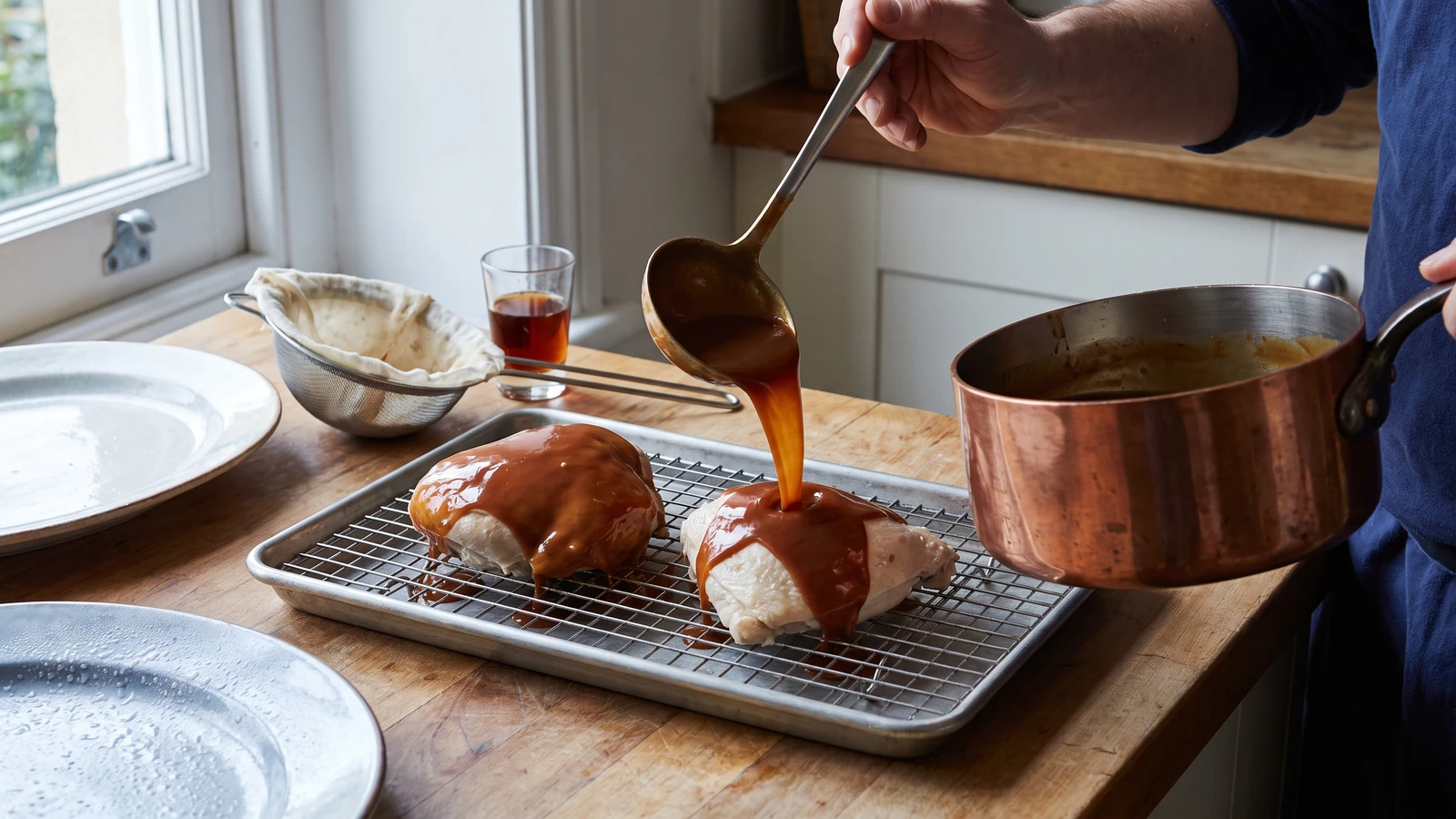
Set thoroughly chilled, very dry portions of cooked poultry, game, or meat on a wire rack over a tray. Ladle the chaud-froid over each portion from the center outward, or immerse smaller pieces and let the excess drain, aiming for one thin, even film. Refrigerate until the coat is firm, about 15 minutes. If the sauce thickens halfway through the work, warm the bowl briefly over barely warm water rather than forcing on a heavy coat. Hold the finished pieces cold until serving. À table!
1 serving (about 110g)
Culinary guides, cultural storytelling, and the editorial depth that makes cooking meaningful.
Discover Culinary ExplorerChef Juliette
Beef shin, lean beef, and fowl begin in cold water and rise slowly toward a tremble. Skim before the boil, and you learn the quiet discipline that gives every clear French broth its backbone.
Chef Juliette
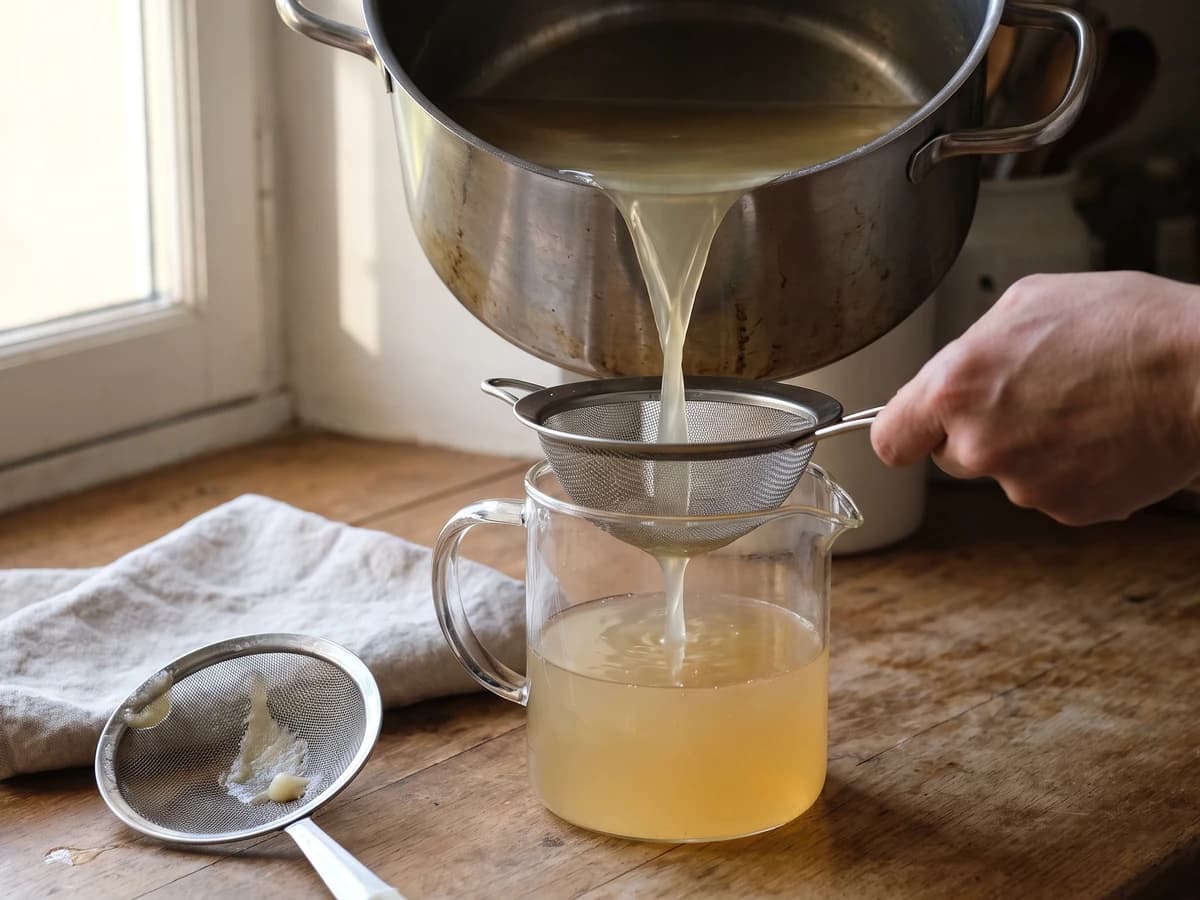
Break the veal bones small, then give them eight hours at a bare tremble. This pale, gelatinous fond becomes the quiet foundation beneath velouté, blanquette, and every sauce that must stay light.
Chef Juliette
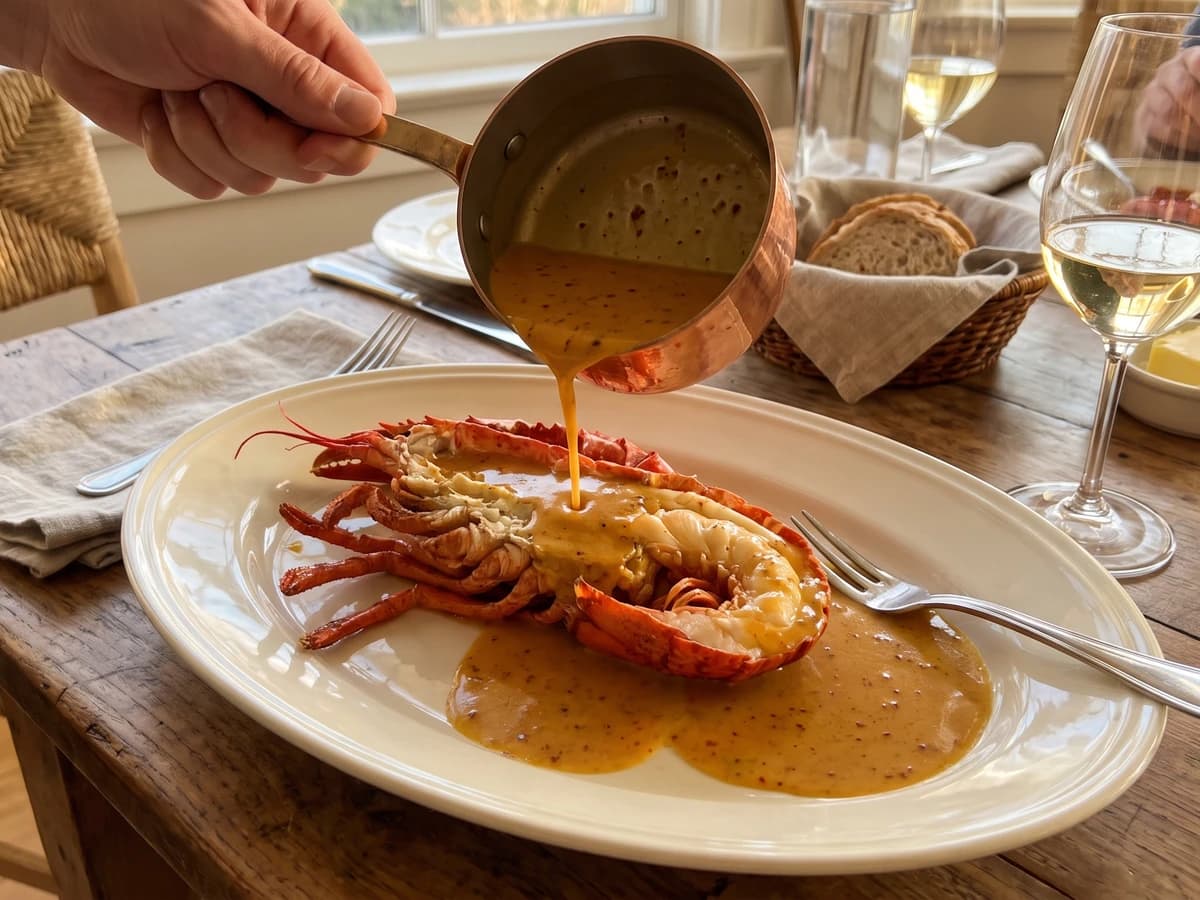
Sauce Orientale concentrates lobster-rich American Sauce with curry, then folds in cream away from the fire: a glossy, gently spiced derivative made for lobster, crayfish, and firm fish.
Chef Juliette
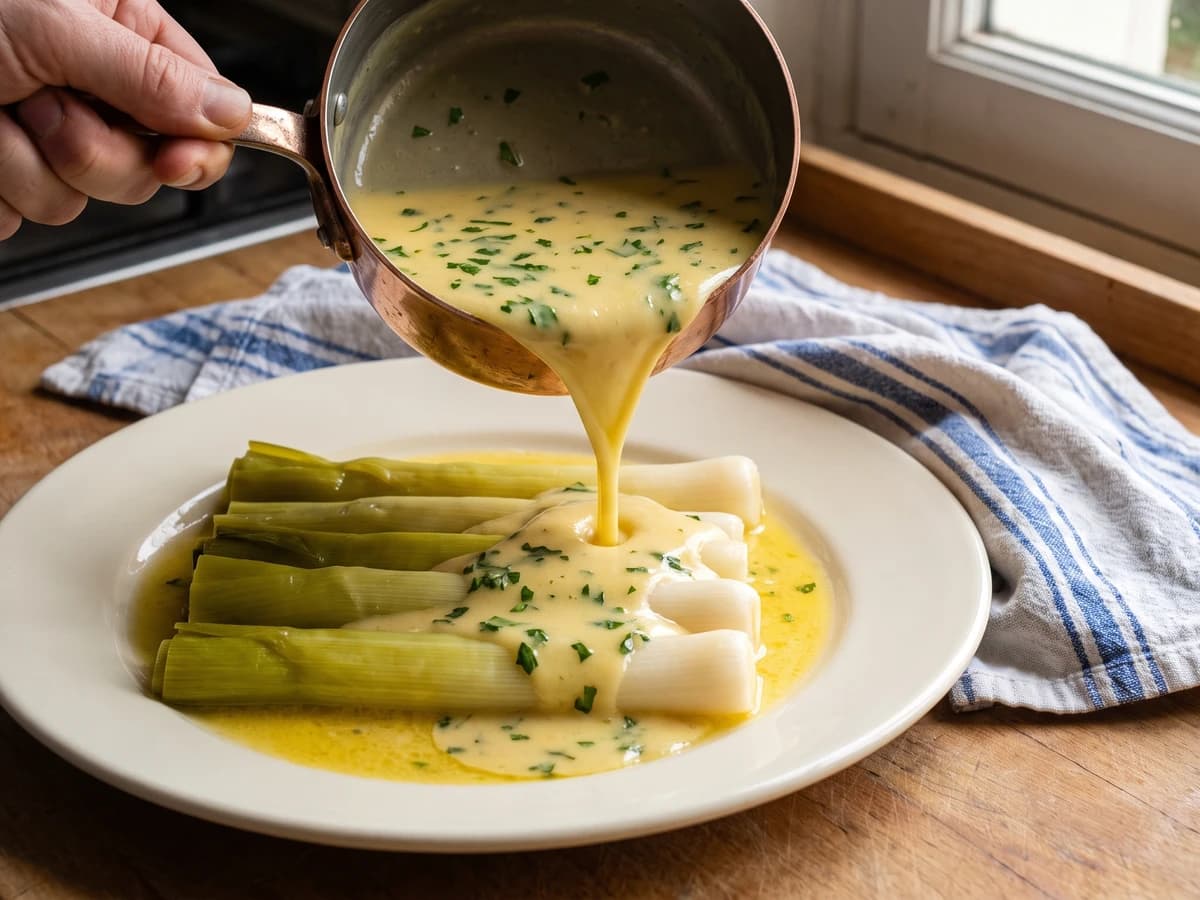
An old lesson in sauce families: Sauce Allemande takes mushroom liquor, then butter, lemon, and parsley, becoming a glossy Poulette for sheep's trotters, leeks, cauliflower, and anything needing gentle richness with a bright edge.