Chef Juliette
Ordinary or White Consommé
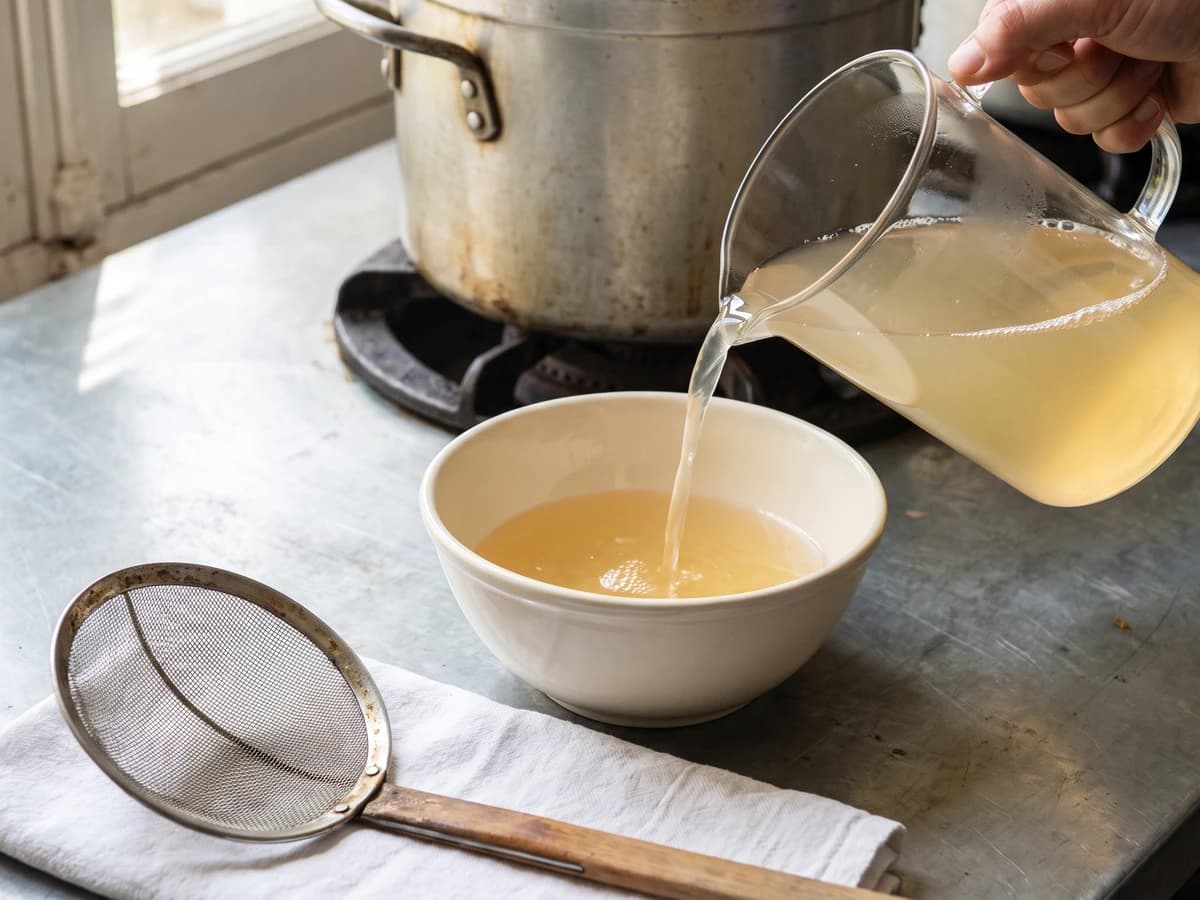
Beef shin, lean beef, and fowl begin in cold water and rise slowly toward a tremble. Skim before the boil, and you learn the quiet discipline that gives every clear French broth its backbone.
A cooking platform built around craft, culture, and the stories behind what we eat.
Created by Chef Juliette
Based on No. 33, Chasseur Sauce (Escoffier’s Method), from Le Guide Culinaire (1907) by Auguste Escoffier
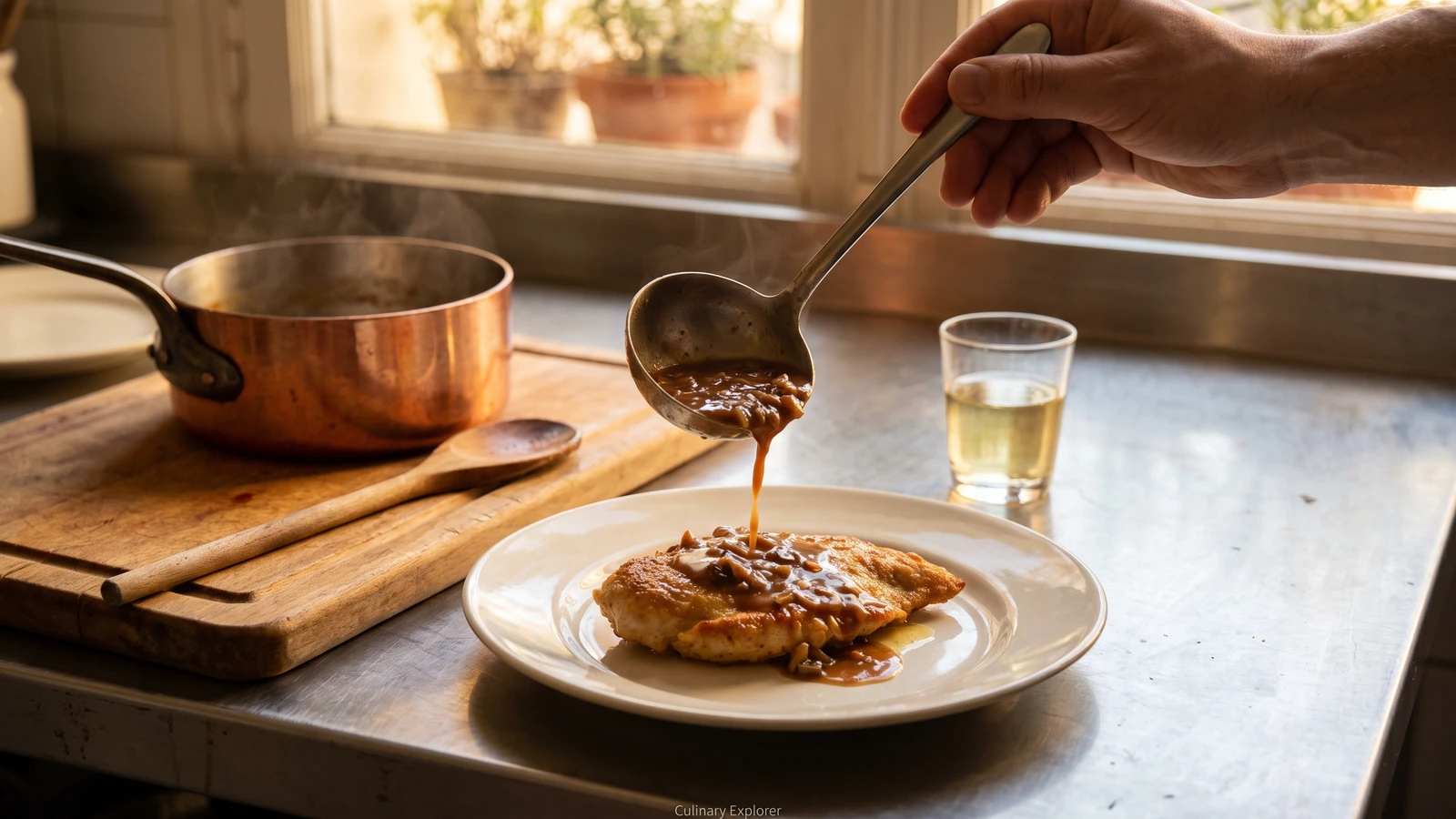
Butter-bronzed mushrooms and shallot meet a white wine and brandy reduction, then demi-glace, Sauce Tomate, and glace de viande make a glossy chasseur for poultry, veal, rabbit, or game.
Sauce chasseur (hunter’s sauce) teaches reduction. The one true thing to know before touching the pan is that the white wine and brandy must lose half their volume before the finished sauces enter. Rush that reduction and the chasseur tastes raw, loose, and divided; finish it properly and the sauce becomes glossy, concentrated, and deep enough to carry mushrooms without becoming mushroom gravy.
The original method assumed a saucier on staff, a stockpot never off the fire, and finished demi-glace, Sauce Tomate, and glace de viande waiting beside the stove. A salamander may have stood nearby, but it has no work here. At home, one wide heavy pan and good finished foundations, made ahead or bought without excess salt, are the honest equivalents. The separate vegetable pan and brigade mise en place are scaffolding and can go; quickly browning the mushrooms, removing half the fat, reducing the alcohol, and boiling the completed sauce for five minutes are the dish and must stay. Only the units and working pan have changed, with the original sequence and proportions held intact in a two-quart batch one cook can divide among several dinners.
Done correctly, chasseur is mahogany-brown with a quiet tomato tint, finely studded with mushrooms, and thick enough to cloak a spoon without sitting heavily upon it. We don’t apologize for butter, but we do remove the excess before building the sauce. Reduce the wine and brandy to half. Everything depends on it.
Sauce chasseur belongs to the classical national repertoire shaped in Parisian kitchens rather than to one provincial larder. Its hunter’s name reflects the old pairing of mushrooms, shallots, wine, and concentrated meat sauce with game, though generations of cooks carried it readily to sautéed poultry, rabbit, and veal. It is not a rustic mushroom gravy: the mushrooms sit inside a disciplined reduction strengthened with demi-glace, Sauce Tomate, and glace de viande.
Quantity
24 medium (about 5 cups / 400 g)
peeled and finely minced
Quantity
4 tablespoons (60 ml / 57 g)
Quantity
¼ cup (60 ml / 55 g)
Quantity
1 tablespoon plus 1 teaspoon (20 ml / 20 g)
finely minced
Quantity
4 cups (950 ml / 950 g)
Quantity
1 cup (240 ml / 225 g)
Quantity
4 cups (950 ml / 1 kg)
Quantity
2 cups (475 ml / 490 g)
Quantity
¼ cup (60 ml / 75 g)
Quantity
1 tablespoon plus 1 teaspoon (20 ml / 5 g)
finely chopped
| Ingredient | Quantity |
|---|---|
| medium button mushroomspeeled and finely minced | 24 medium (about 5 cups / 400 g) |
| unsalted butter | 4 tablespoons (60 ml / 57 g) |
| olive oil | ¼ cup (60 ml / 55 g) |
| shallotfinely minced | 1 tablespoon plus 1 teaspoon (20 ml / 20 g) |
| dry white wine | 4 cups (950 ml / 950 g) |
| brandy | 1 cup (240 ml / 225 g) |
| finished demi-glace (half-glaze) | 4 cups (950 ml / 1 kg) |
| finished Sauce Tomate (tomato sauce) | 2 cups (475 ml / 490 g) |
| finished glace de viande (meat glaze) | ¼ cup (60 ml / 75 g) |
| flat-leaf parsleyfinely chopped | 1 tablespoon plus 1 teaspoon (20 ml / 5 g) |
Peel and finely mince the mushrooms, then measure every remaining ingredient before heating the pan. Keep the finished demi-glace, Sauce Tomate, and glace de viande close at hand. Once the alcohol has reduced, the foundations must follow without delay.
Heat the butter and olive oil in a wide, heavy pan over medium-high heat. When the butter’s foam subsides, add the mushrooms and fry them quickly, tossing only as needed, until their released moisture has evaporated and their edges are lightly browned. They should remain supple, not dark or dry. If the pan floods and the mushrooms begin to stew, keep it uncovered and let the liquid cook away before browning them. Ça se rattrape.
Add the minced shallot and toss it through the mushrooms for about 20 seconds, just long enough to release its fragrance without colouring. Immediately tilt the pan and spoon away roughly half the visible cooking fat. Remove what runs freely, not what the mushrooms have absorbed; the finished chasseur should gleam, never carry an oily slick.
Take the pan off the heat before pouring in the white wine and brandy, particularly if you cook over gas. Return it to high heat, scrape the pan floor clean, and boil uncovered until the liquid has reduced from 5 cups to about 2½ cups, roughly 12 to 18 minutes. The sharp alcoholic smell will soften, the bubbles will become finer, and the liquid will taste concentrated rather than raw. This reduction is the heart of the sauce. If it slips below 2½ cups, add enough water to restore the lost volume; only water has evaporated, so the balance remains intact. Ça se rattrape.
Stir in the finished demi-glace, Sauce Tomate, and glace de viande until completely combined. Bring the sauce to a boil, then maintain a lively simmer for five minutes, skimming away any excess fat that gathers at the surface. It should become nappé, coating the back of a spoon in a glossy, even film. If it remains thin after five minutes, continue simmering only until it coats; if it tightens too far, stir in hot water one tablespoon at a time.
Remove the pan from the heat and stir in the chopped parsley so it keeps its fresh green character. Use the chasseur at once over sautéed chicken, veal, rabbit, or game, or cool it promptly for later. Do not boil the parsley into dullness. The sauce is finished. À table!
1 serving (about 60g)
Culinary guides, cultural storytelling, and the editorial depth that makes cooking meaningful.
Discover Culinary ExplorerChef Juliette
Beef shin, lean beef, and fowl begin in cold water and rise slowly toward a tremble. Skim before the boil, and you learn the quiet discipline that gives every clear French broth its backbone.
Chef Juliette
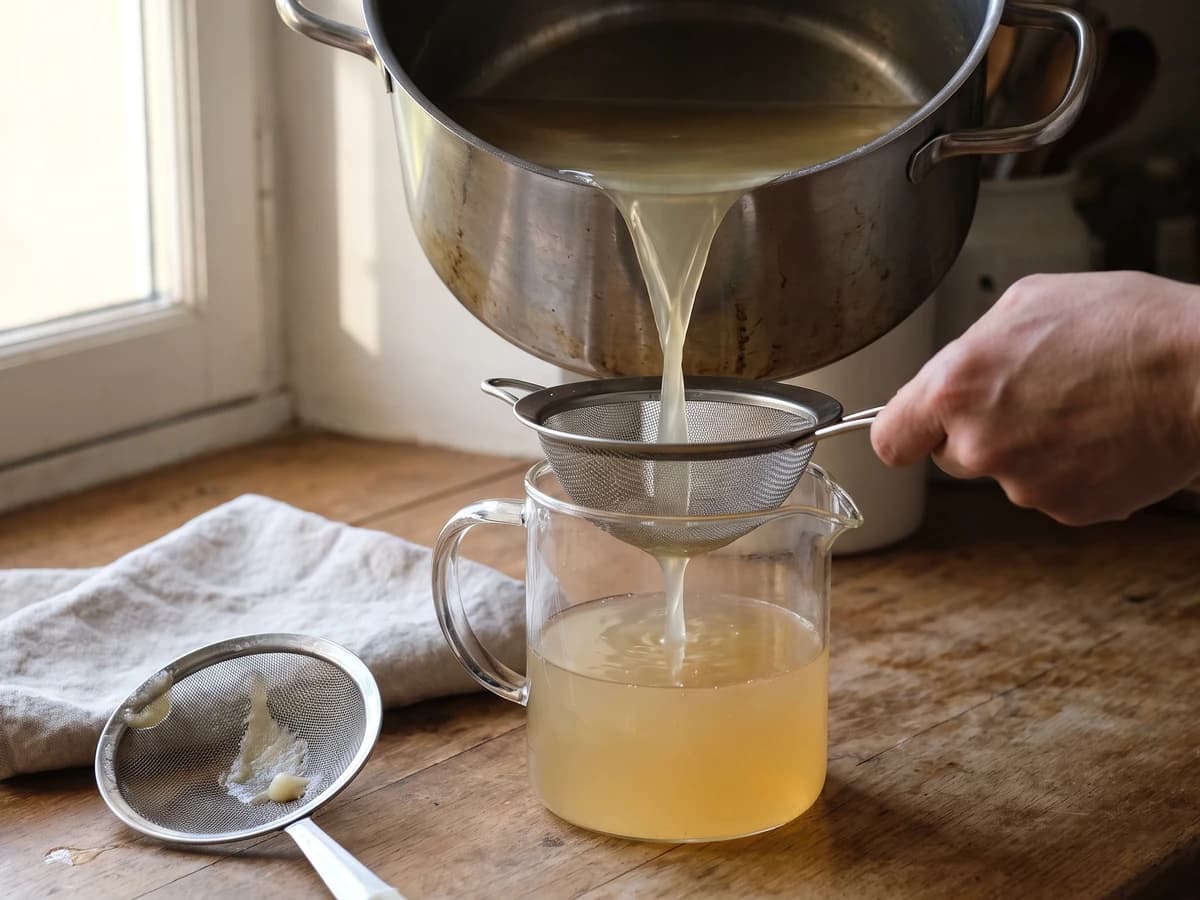
Break the veal bones small, then give them eight hours at a bare tremble. This pale, gelatinous fond becomes the quiet foundation beneath velouté, blanquette, and every sauce that must stay light.
Chef Juliette
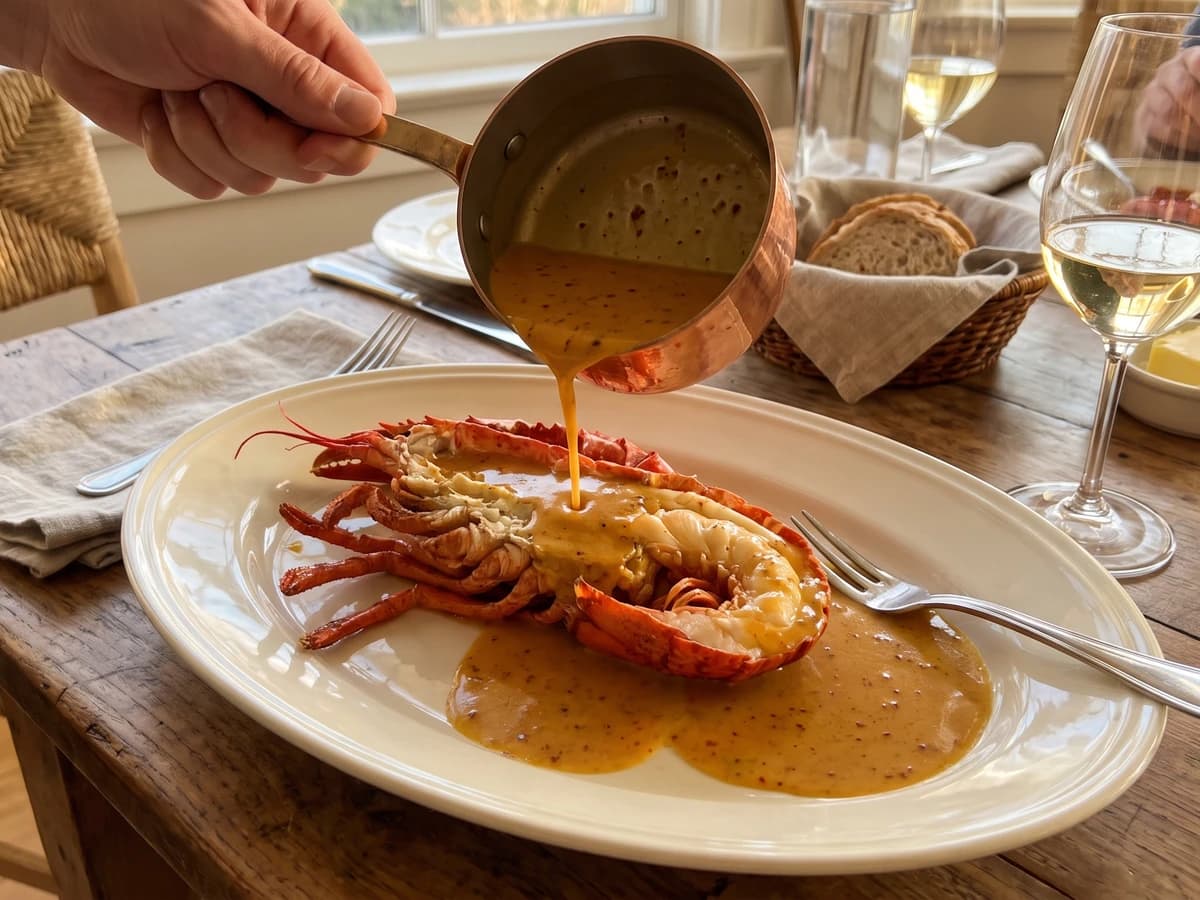
Sauce Orientale concentrates lobster-rich American Sauce with curry, then folds in cream away from the fire: a glossy, gently spiced derivative made for lobster, crayfish, and firm fish.
Chef Juliette
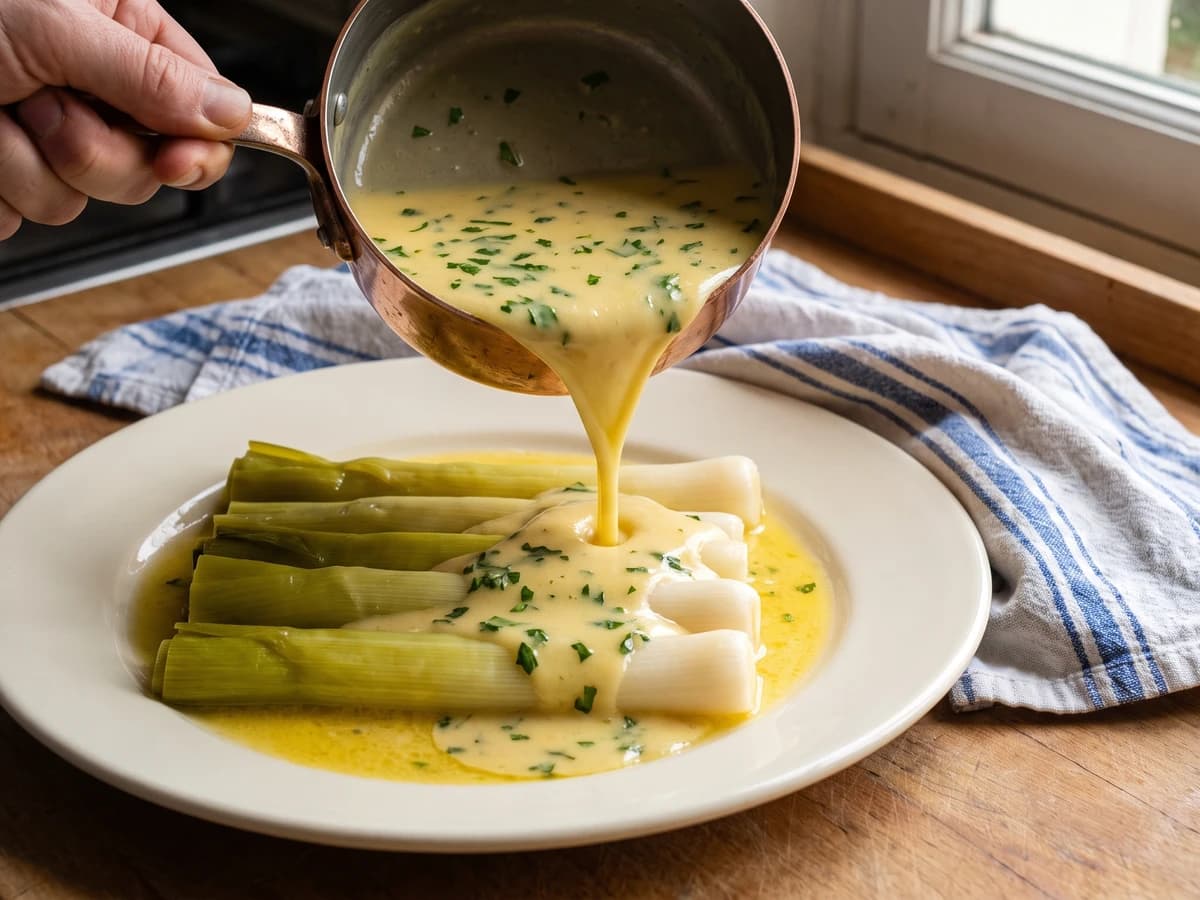
An old lesson in sauce families: Sauce Allemande takes mushroom liquor, then butter, lemon, and parsley, becoming a glossy Poulette for sheep's trotters, leeks, cauliflower, and anything needing gentle richness with a bright edge.