Chef Juliette
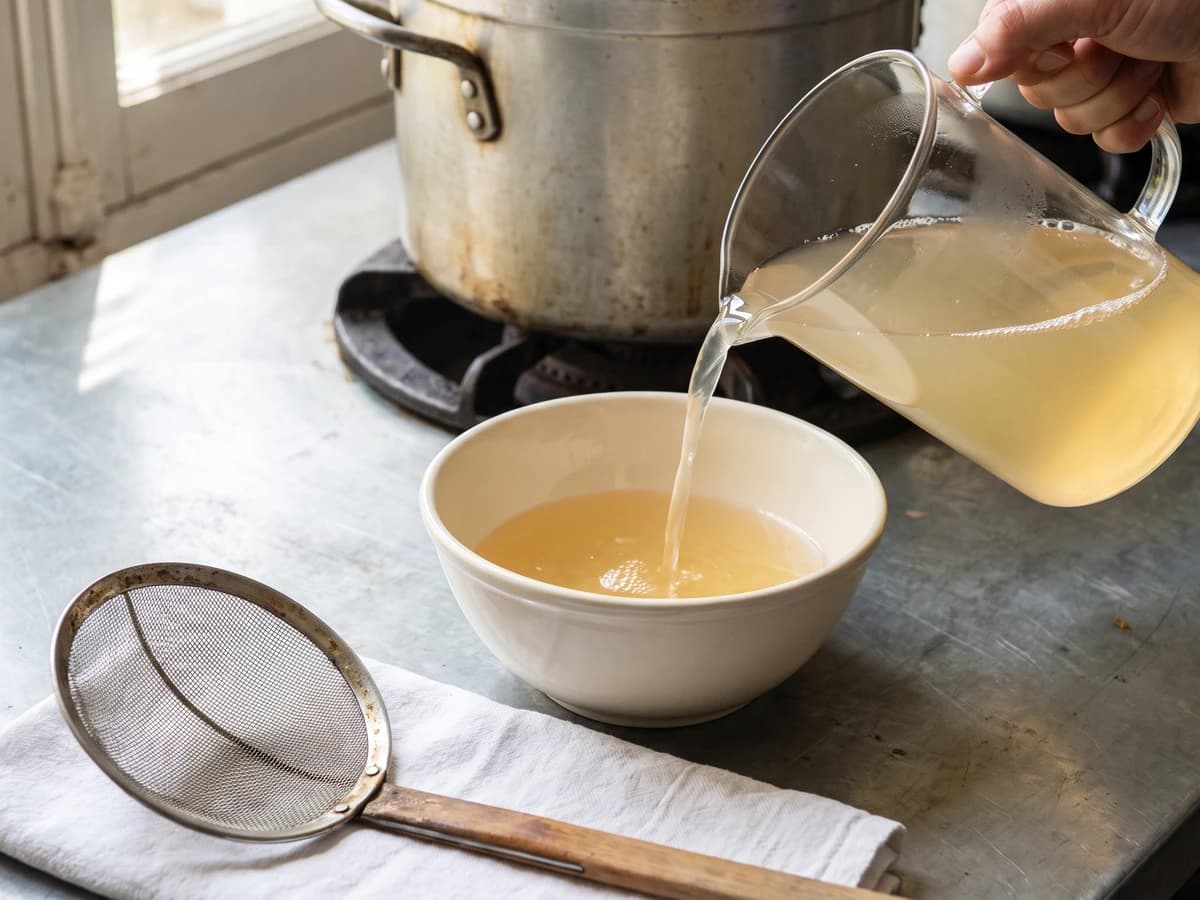
Ordinary or White Consommé
Beef shin, lean beef, and fowl begin in cold water and rise slowly toward a tremble. Skim before the boil, and you learn the quiet discipline that gives every clear French broth its backbone.
A cooking platform built around craft, culture, and the stories behind what we eat.
Created by Chef Juliette
Based on No. 32, Sauce Bordelaise, from Le Guide Culinaire (1907) by Auguste Escoffier
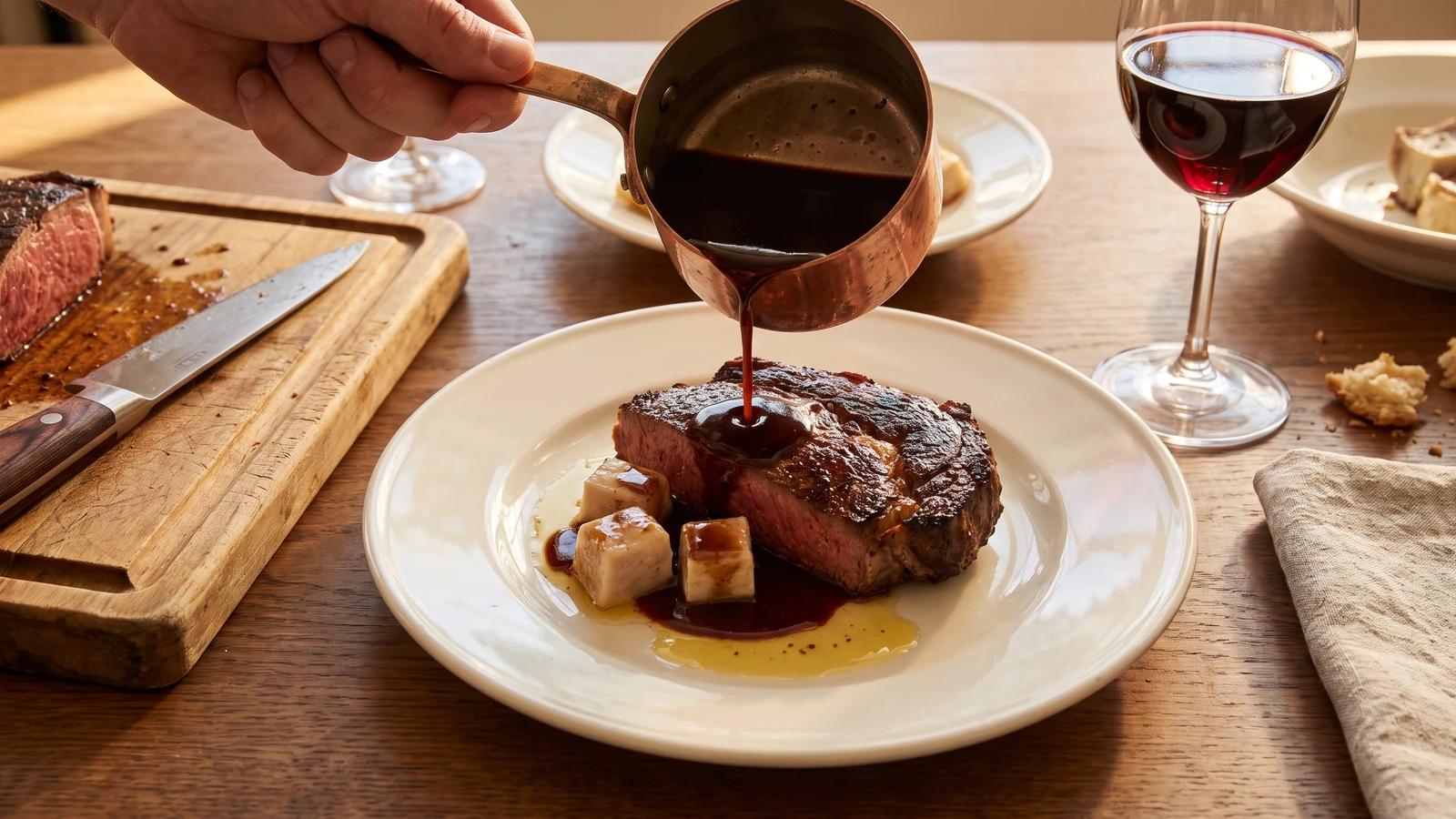
Sauce Bordelaise (Bordeaux red-wine sauce) teaches reduction without haste: wine, shallot, herbs, and pepper tightened into half-glaze, brightened with lemon, then made generous with tender cubes of poached beef marrow.
Sauce Bordelaise (Bordeaux red-wine sauce) teaches one essential lesson: reduce the wine by three-quarters before the half-glaze touches it. That order drives off raw alcohol and concentrates the shallot, thyme, bay, and poivre mignonette (coarsely crushed pepper) into a garnet backbone strong enough to carry beef marrow. Add the half-glaze too early and you merely create a large pot of winey stock that takes an age to correct.
The source formula assumed a saucier on staff, half-glaze and meat glaze drawn from stock never off the fire, and a sauce station where skimming could continue between orders. A salamander has no role here. Prepared half-glaze and meat glaze from your freezer or a careful supplier are the honest home equivalents, a wide heavy pan replaces the vegetable-pan, and a fine-mesh sieve replaces linen. The quantities are multiplied evenly to make about two quarts for serving and freezing, while the source ratios and sequence remain intact. The dedicated station and linen are brigade scaffolding; the three-quarter reduction, half-hour simmer, final meat glaze, lemon, and poached marrow are the dish. One cook, one stove, one evening.
Finished properly, the Bordelaise is clear, wine-dark, and glossy enough to cling to grilled meat without sitting on it like paste. Pale cubes of marrow soften in the sauce but keep their shape. Measure the wine before and after reduction, because that first reduction decides everything that follows.
Sauce Bordelaise belongs to Bordeaux and the Gironde, where red wine naturally entered the pan sauces served with grilled and roasted butcher's meat. In the classical kitchen it joined the family of demi-glace derivatives, but its identity remained rooted in shallot, red wine, mignonette, and beef marrow rather than any single château bottle. The garlic-heavy sauces called bordelaise in parts of New Orleans belong to a different local tradition and should not be confused with this wine-and-marrow sauce.
Quantity
about 3 cups (710 ml / 454 g)
very finely minced
Quantity
8 cups (1.9 L / 1.9 kg)
Quantity
1/2 teaspoon (2.5 ml / 1 g)
coarsely crush black peppercorns
Quantity
8 sprigs
Quantity
4
Quantity
8 cups (1.9 L / about 2.1 kg)
fully thawed
Quantity
1 cup (240 ml / about 280 g)
Quantity
2 teaspoons (10 ml / 10 g)
Quantity
about 4 cups (950 ml / 907 g)
cut into 1/2-inch cubes
Quantity
8 cups (1.9 L / 1.9 kg)
for poaching
Quantity
2 teaspoons (10 ml / 12 g)
for the poaching water
Quantity
up to 1 1/2 cups (355 ml / 340 g)
cut into small cubes
| Ingredient | Quantity |
|---|---|
| shallotsvery finely minced | about 3 cups (710 ml / 454 g) |
| good dry red wine, preferably a red Bordeaux | 8 cups (1.9 L / 1.9 kg) |
| mignonette peppercoarsely crush black peppercorns | 1/2 teaspoon (2.5 ml / 1 g) |
| thyme | 8 sprigs |
| small bay leaves | 4 |
| prepared half-glaze (demi-glace)fully thawed | 8 cups (1.9 L / about 2.1 kg) |
| dissolved meat glaze | 1 cup (240 ml / about 280 g) |
| fresh lemon juice | 2 teaspoons (10 ml / 10 g) |
| chilled beef marrowcut into 1/2-inch cubes | about 4 cups (950 ml / 907 g) |
| waterfor poaching | 8 cups (1.9 L / 1.9 kg) |
| fine sea saltfor the poaching water | 2 teaspoons (10 ml / 12 g) |
| cold unsalted butter (optional)cut into small cubes | up to 1 1/2 cups (355 ml / 340 g) |
Keep the beef marrow thoroughly cold while you cut it into 1/2-inch cubes. A short stay in the freezer firms soft marrow enough for clean cutting, but don't freeze it solid. Return the cubes to the cold while the sauce cooks; warm marrow smears under the knife and melts before it can be poached.
Put the shallots, red wine, mignonette pepper, thyme, and bay into a wide, heavy pan. Measure the liquid depth against a wooden skewer, then mark one-quarter of that height. Bring the wine to a lively simmer and reduce it uncovered to 2 cups (475 ml), exactly one-quarter of its starting volume, stirring near the end so the shallots don't catch. This is the step that makes Bordelaise rather than wine-flavoured gravy. If it slips below the mark and becomes syrupy but doesn't smell scorched, add enough fresh wine to return it to 2 cups and simmer for another minute. Ça se rattrape. If it smells burnt, begin the wine reduction again; scraping bitterness into the finished sauce rescues nothing.
Add the prepared half-glaze to the wine reduction and stir until completely united. Bring the sauce just to a simmer, then lower the heat and hold it at a quiet tremble for 30 minutes. Skim away the grey foam and excess fat as they gather at the surface; this despumage, or careful skimming, gives the sauce its clean flavour and clear gloss. If the sauce becomes sticky before the half hour is complete, the heat is too fierce. Add a small ladle of hot water, lower the burner, and continue gently.
Pass the sauce through a fine-mesh sieve into a clean saucepan. Let it drain, then press the shallots only lightly; forcing them through muddies the sauce and brings bitterness with them. The source's linen straining cloth served the same purpose, but a good sieve is the honest home equivalent. Keep the strained sauce barely warm while you prepare the marrow, never boiling.
Bring the water and salt to a boil in a separate saucepan. Add the chilled marrow in several batches so the cubes have room, return the water to a quiet boil, and poach for 1 to 2 minutes, until the edges turn opaque and the centres are hot and tender. Lift the cubes out with a slotted spoon and drain them carefully. If a batch begins losing its corners, remove it at once and spread it on a cold plate. The shape may soften, but the marrow is still good; prolonged boiling is what turns it into a slick of fat.
Stir the dissolved meat glaze into the strained sauce and simmer for 2 minutes, then add the lemon juice a few drops at a time. Taste after each addition; the lemon should sharpen the wine, never announce itself. For the clearest Bordelaise, stop here. For a smoother but less transparent sauce, monter au beurre (finish by whisking in cold butter): take the pan completely off the heat and whisk in the butter a few cubes at a time, using up to the full amount. Never boil a buttered Bordelaise. If it looks greasy, whisk in 1 tablespoon (15 ml / 15 g) cold water away from the heat until the gloss returns. We don't apologize for butter, but we do treat it properly.
Fold the poached marrow cubes into the Bordelaise just before serving and warm them for no more than a minute without boiling. Spoon about 1/4 cup (60 ml) over each portion of grilled or roasted beef, keeping several marrow cubes visible in every serving. The sauce should cling in a glossy coat and pool generously at the edge of the meat. À table!
1 serving (about 100g)
Culinary guides, cultural storytelling, and the editorial depth that makes cooking meaningful.
Discover Culinary ExplorerChef Juliette
Beef shin, lean beef, and fowl begin in cold water and rise slowly toward a tremble. Skim before the boil, and you learn the quiet discipline that gives every clear French broth its backbone.
Chef Juliette
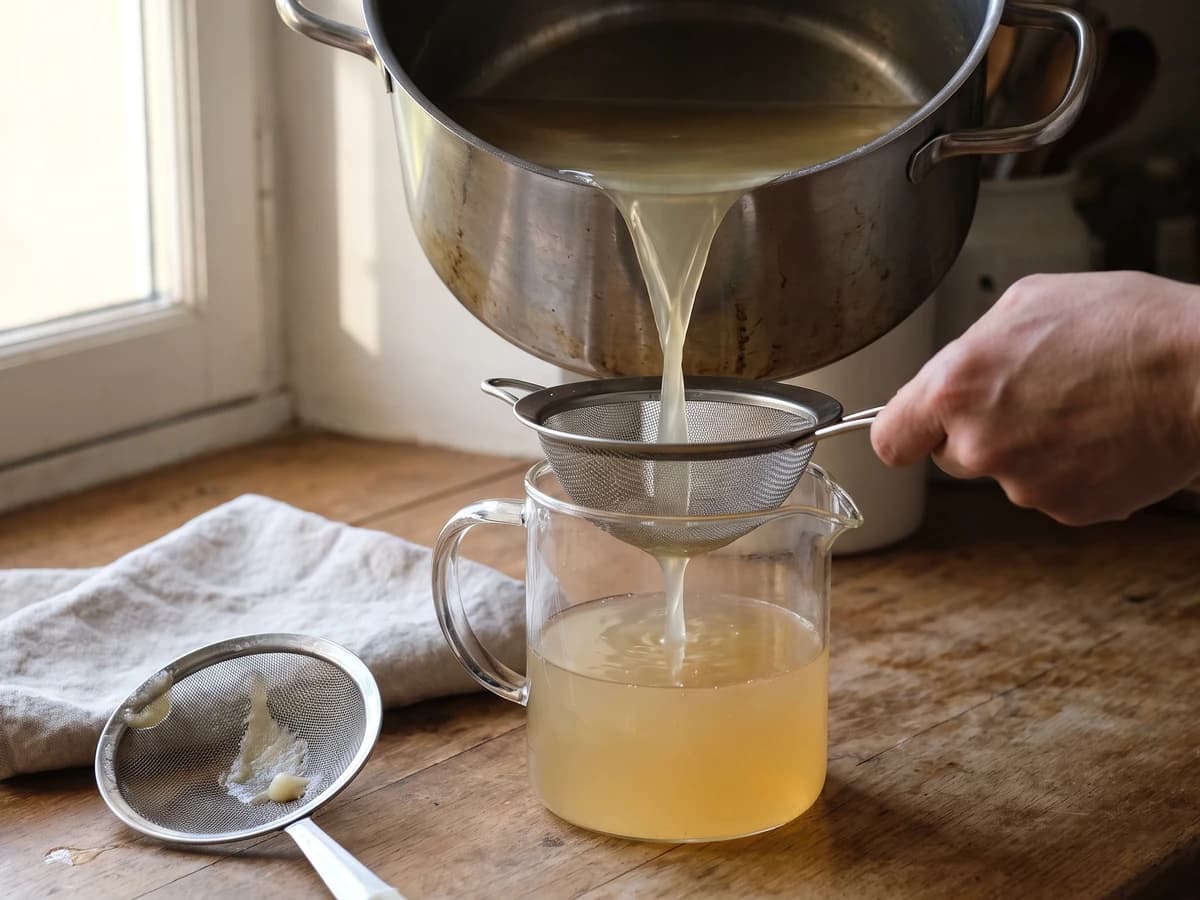
Break the veal bones small, then give them eight hours at a bare tremble. This pale, gelatinous fond becomes the quiet foundation beneath velouté, blanquette, and every sauce that must stay light.
Chef Juliette
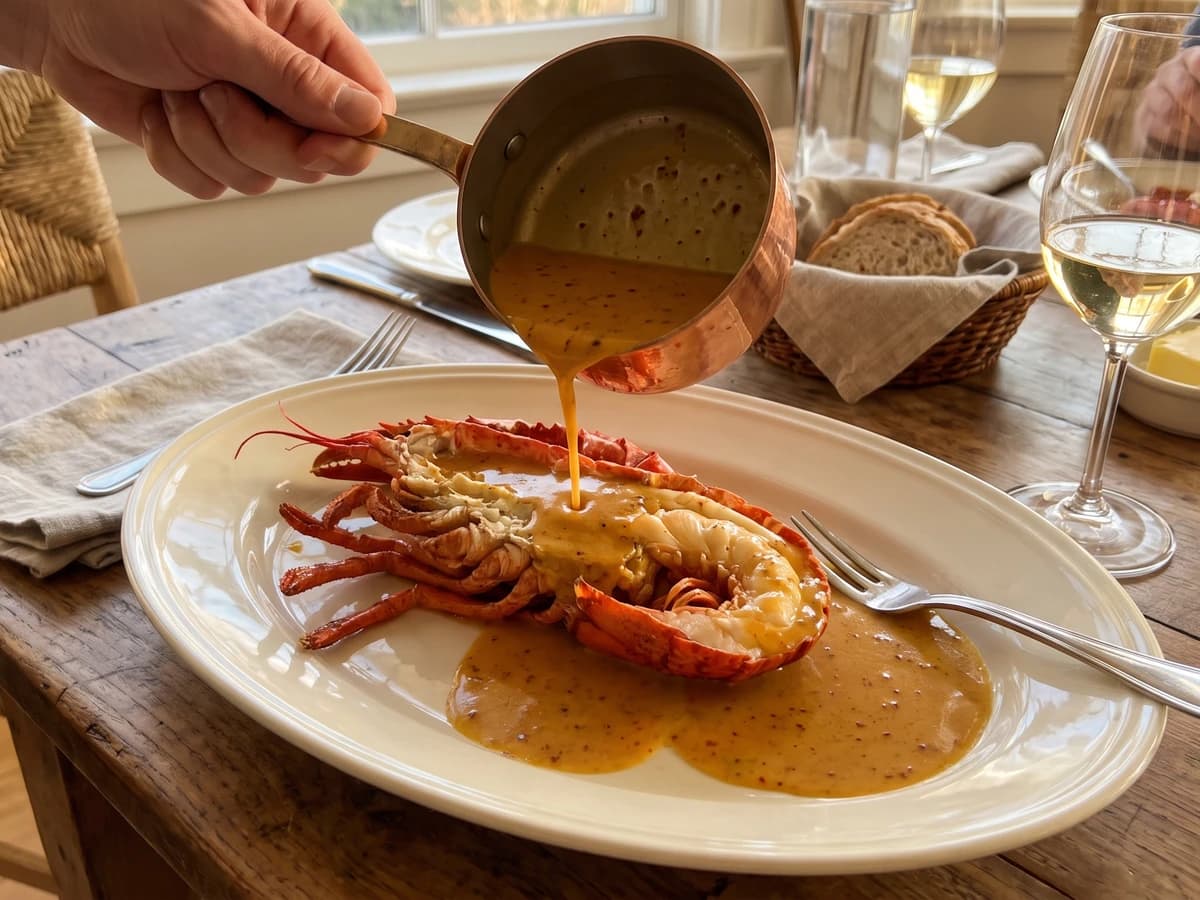
Sauce Orientale concentrates lobster-rich American Sauce with curry, then folds in cream away from the fire: a glossy, gently spiced derivative made for lobster, crayfish, and firm fish.
Chef Juliette
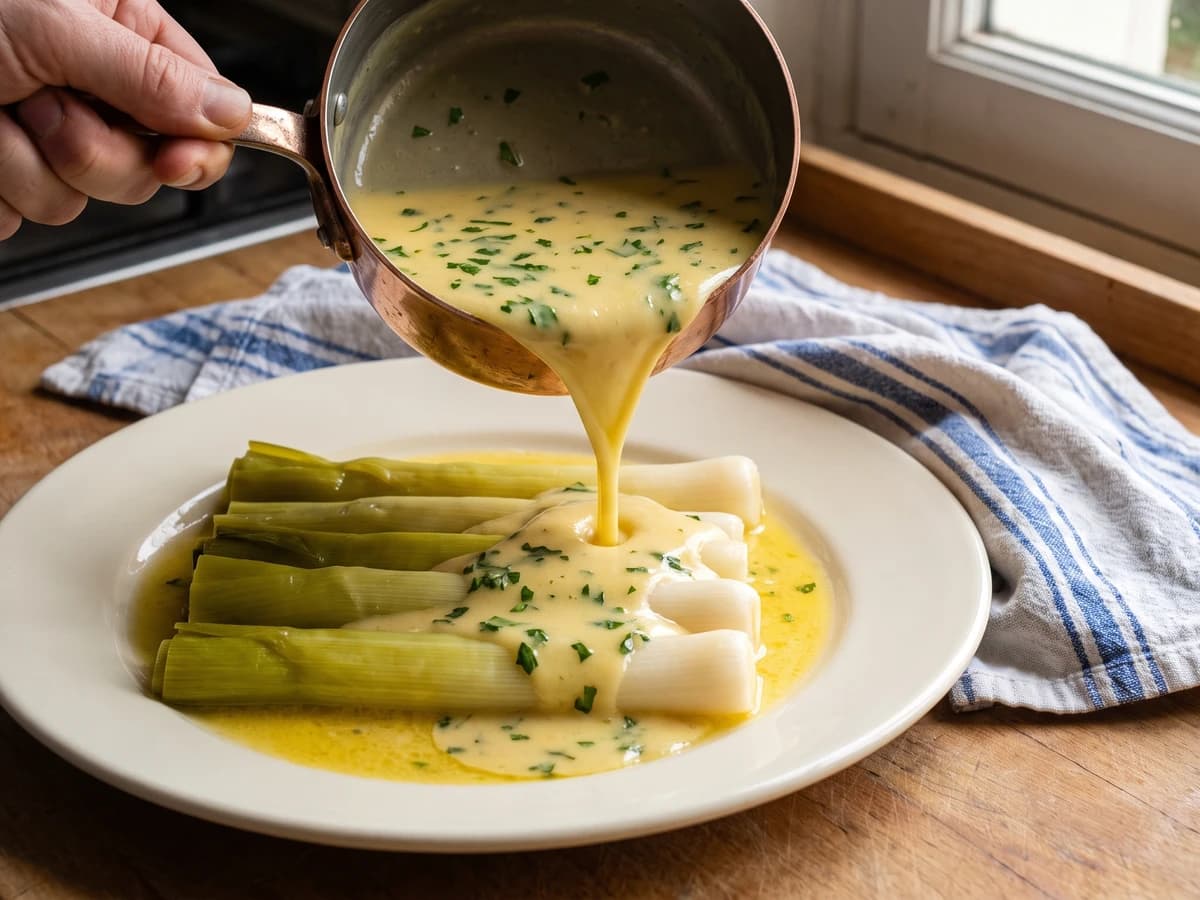
An old lesson in sauce families: Sauce Allemande takes mushroom liquor, then butter, lemon, and parsley, becoming a glossy Poulette for sheep's trotters, leeks, cauliflower, and anything needing gentle richness with a bright edge.