Chef Juliette
Ordinary or White Consommé
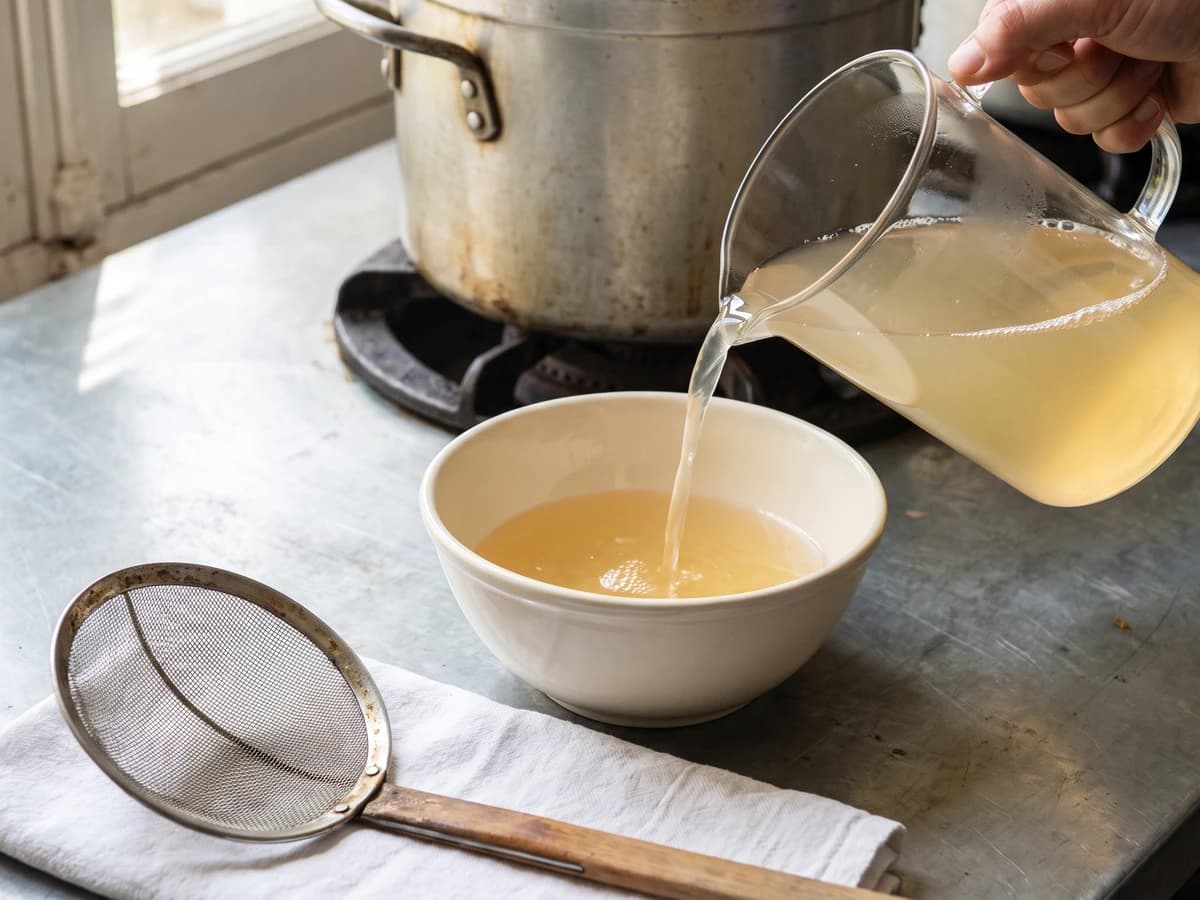
Beef shin, lean beef, and fowl begin in cold water and rise slowly toward a tremble. Skim before the boil, and you learn the quiet discipline that gives every clear French broth its backbone.
A cooking platform built around craft, culture, and the stories behind what we eat.
Created by Chef Juliette
Based on No. 31, Sauce Bigarrade, from Le Guide Culinaire (1907) by Auguste Escoffier
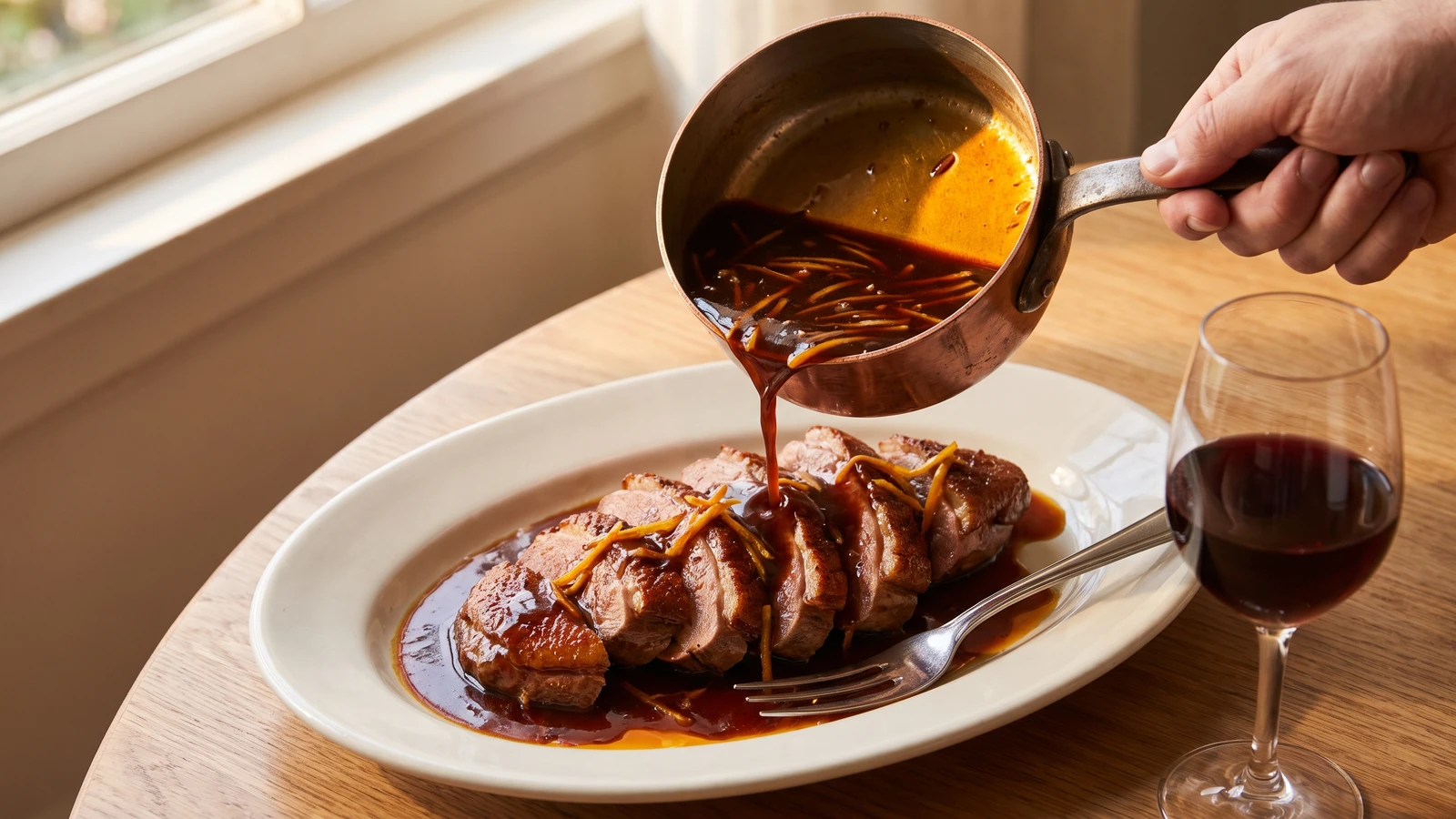
Duck stock reduced dense, sharpened with an amber gastrique, then restored with orange, lemon, and fine blanched rind: Sauce Bigarrade teaches that clarity comes from balance, not sweetness.
Sauce Bigarrade (orange-and-caramel sauce for duck) teaches balance through reduction. Before you touch a pan, know the one true thing: the duck cooking liquor must be completely free of grease before it reduces. Leave fat behind and the citrus tastes muffled; remove it cleanly and the finished sauce gleams, tasting first of duck, then caramel, orange, and lemon.
The original formula assumed a saucier on staff, clear poëling stock ready from Poëlings (No. 250), a stockpot never cold, prepared pieces of caramel sugar, and muslin strong enough to twist. At home, make the caramel directly in a saucepan and pass the stock through a fine sieve lined with a damp kitchen towel. Pressing rather than twisting hot cloth and abandoning prepared caramel pieces remove brigade scaffolding, nothing more. A salamander has no work here; the whole sauce lives on the stove. One cook, one stove, one evening.
Full degreasing, dense reduction, the ratio of six oranges to one lemon per quart, and the five-minute blanch for the rind must stay. Those steps are the sauce. When everything lands properly, Bigarrade is mahogany-dark and lightly syrupy, with fine citrus threads and enough acidity to cut a rich duck cleanly. Degrease completely before reduction. That is the step that decides it.
Sauce Bigarrade belongs to the formal kitchens and bourgeois dining tables of Paris, where the national classical repertoire made it the established companion to braised and poëled duckling rather than the possession of any one province. Its name points to the bigarade, the bitter orange, which corrects a common misconception: this sauce should be bittersweet and sharply balanced, never merely orange-sweet. When sweet oranges supply the juice, lemon and, in the clear-stock version, vinegar caramel preserve that bitter-orange tension.
Quantity
2 quarts (1.9 L / about 1.9 kg)
Quantity
12 (about 5 lb / 2.3 kg), yielding about 3 cups (720 ml / 720 g) strained juice
reserve one 3 by 1 inch strip of rind
Quantity
2 (about 8 oz / 225 g), yielding about 6 tablespoons (90 ml / 90 g) strained juice
reserve one 2 by 1 inch strip of rind
Quantity
32 cubes, or 2/3 cup (160 ml / 125 g)
Quantity
1/2 cup (120 ml / 120 g)
| Ingredient | Quantity |
|---|---|
| clear, fully degreased poëling stock from Poëlings (No. 250) | 2 quarts (1.9 L / about 1.9 kg) |
| medium orangesreserve one 3 by 1 inch strip of rind | 12 (about 5 lb / 2.3 kg), yielding about 3 cups (720 ml / 720 g) strained juice |
| medium lemonsreserve one 2 by 1 inch strip of rind | 2 (about 8 oz / 225 g), yielding about 6 tablespoons (90 ml / 90 g) strained juice |
| small sugar cubes or granulated sugar | 32 cubes, or 2/3 cup (160 ml / 125 g) |
| wine vinegar | 1/2 cup (120 ml / 120 g) |
Use a vegetable peeler to remove the reserved strips of orange and lemon rind without digging into the bitter white pith. Trim away any pith that remains, then cut both rinds julienne-fashion, into fine, regular matchsticks. Scald the julienne in gently boiling water for exactly five minutes, drain it, and reserve. Juice the oranges and lemons, strain out seeds and heavy pulp, and combine the juices. Measure out 1/2 cup (120 ml / 120 g) and hold it separately for the finish.
Inspect the poëling stock from Poëlings (No. 250) before it reaches the heat. If cold, lift away the entire firm fat cap; if warm, pass it through a fat separator, let it settle, and draw off the clear stock from beneath the butter. Line a fine-mesh sieve with a damp, lint-free kitchen towel and strain the stock into a clean wide saucepan. Wick away the final beads of fat with the corner of a fresh towel. A few beads are not harmless here: reduction magnifies them, and citrus laid over grease tastes blunt.
Bring the stock to a controlled boil in the wide saucepan and reduce it to about 4 1/2 cups (1.1 L), roughly half its starting volume. Skim any grey froth and watch the sides of the pan as the level falls. The stock is ready when its bubbles look close and glossy and a spoon drawn through it emerges with a definite coating. If it turns sticky before reaching the measure, remove it from the heat and loosen it one tablespoon at a time with the measured citrus juice, deducting each spoonful from the main portion. Ça se rattrape. Do not scrape up anything scorched from the pan floor.
Put the sugar in a clean, light-colored saucepan and melt it over medium heat. Once the edges liquefy, swirl the pan instead of stirring, and cook until the caramel is a deep amber, never black. Remove the pan from the heat and add the wine vinegar gradually, standing back because it will spit. This is the gastrique, the vinegar caramel that gives clear-stock Bigarrade its bittersweet edge. The caramel may seize into a hard sheet. It will look alarming, but it is exactly right: return it to low heat and stir until it dissolves. If stubborn crystals remain, add one tablespoon of the measured citrus juice and warm gently. Ça se rattrape.
Pour the hot gastrique into the dense duck reduction and simmer for two minutes, stirring until the two become one glossy sauce. Pass it through a fine sieve lined with a fresh damp kitchen towel into a clean saucepan, pressing gently with the back of a ladle. The original twisting of hot muslin belonged to a staffed kitchen; patient pressing gives the home cook the same clear result without wrestling a scalding cloth.
Add all but the reserved 1/2 cup (120 ml / 120 g) of combined orange and lemon juice in three additions, whisking after each. Bring the sauce back to a lively simmer and reduce until it reaches about 7 1/2 cups (1.8 L) and lightly coats the back of a spoon, about five to ten minutes. Whisk in the reserved juice and taste. The finish should be bright, bittersweet, and unmistakably savory. If the sauce is still loose, simmer it briefly; if it has tightened too far, the last spoonfuls of reserved juice are your rescue.
Fold in the blanched orange and lemon julienne and warm it for one minute without a hard boil. The finished Bigarrade should pour in a continuous glossy ribbon, not sit like jam, and the citrus threads should remain distinct. Spoon it beside braised or poëled duckling, or serve it in a warmed sauceboat so each guest can be generous. À table!
1 serving (about 60g)
Culinary guides, cultural storytelling, and the editorial depth that makes cooking meaningful.
Discover Culinary ExplorerChef Juliette
Beef shin, lean beef, and fowl begin in cold water and rise slowly toward a tremble. Skim before the boil, and you learn the quiet discipline that gives every clear French broth its backbone.
Chef Juliette
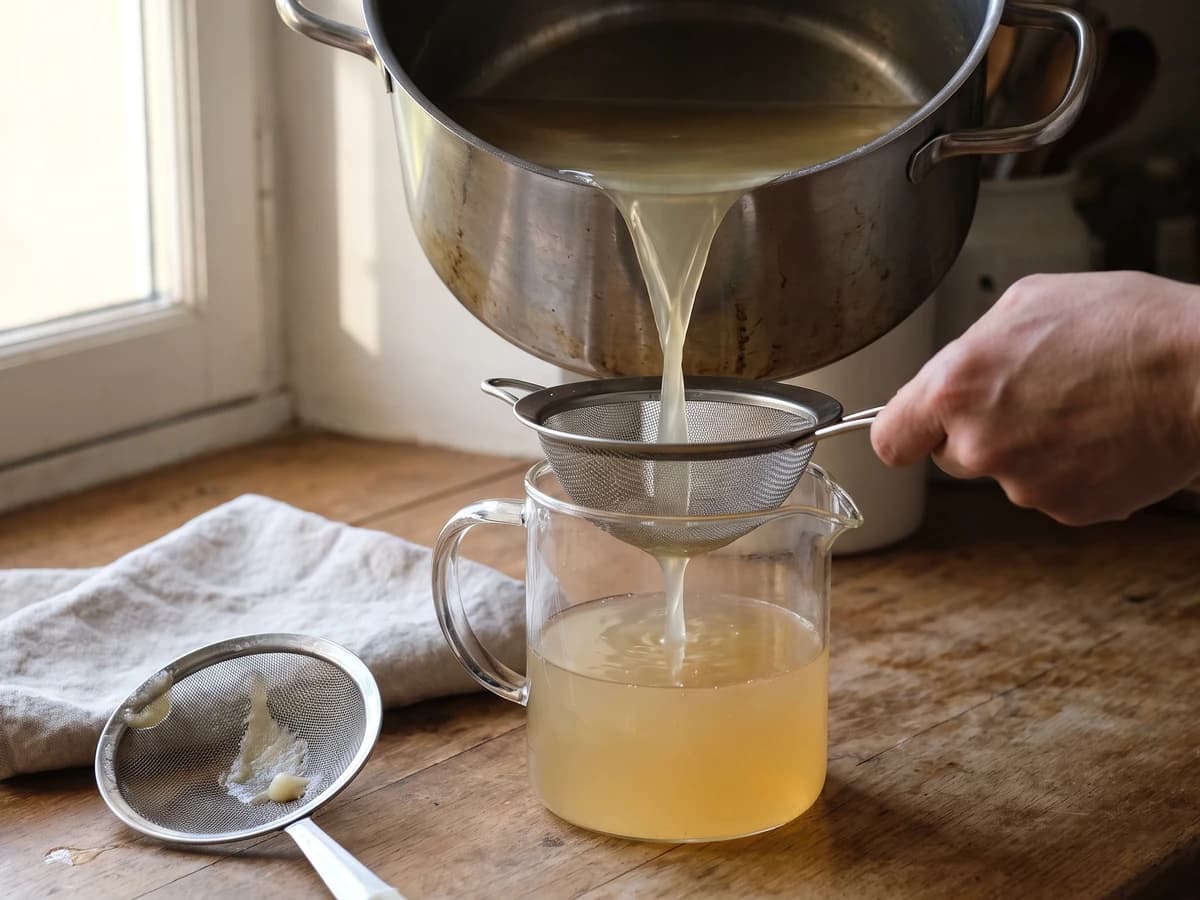
Break the veal bones small, then give them eight hours at a bare tremble. This pale, gelatinous fond becomes the quiet foundation beneath velouté, blanquette, and every sauce that must stay light.
Chef Juliette
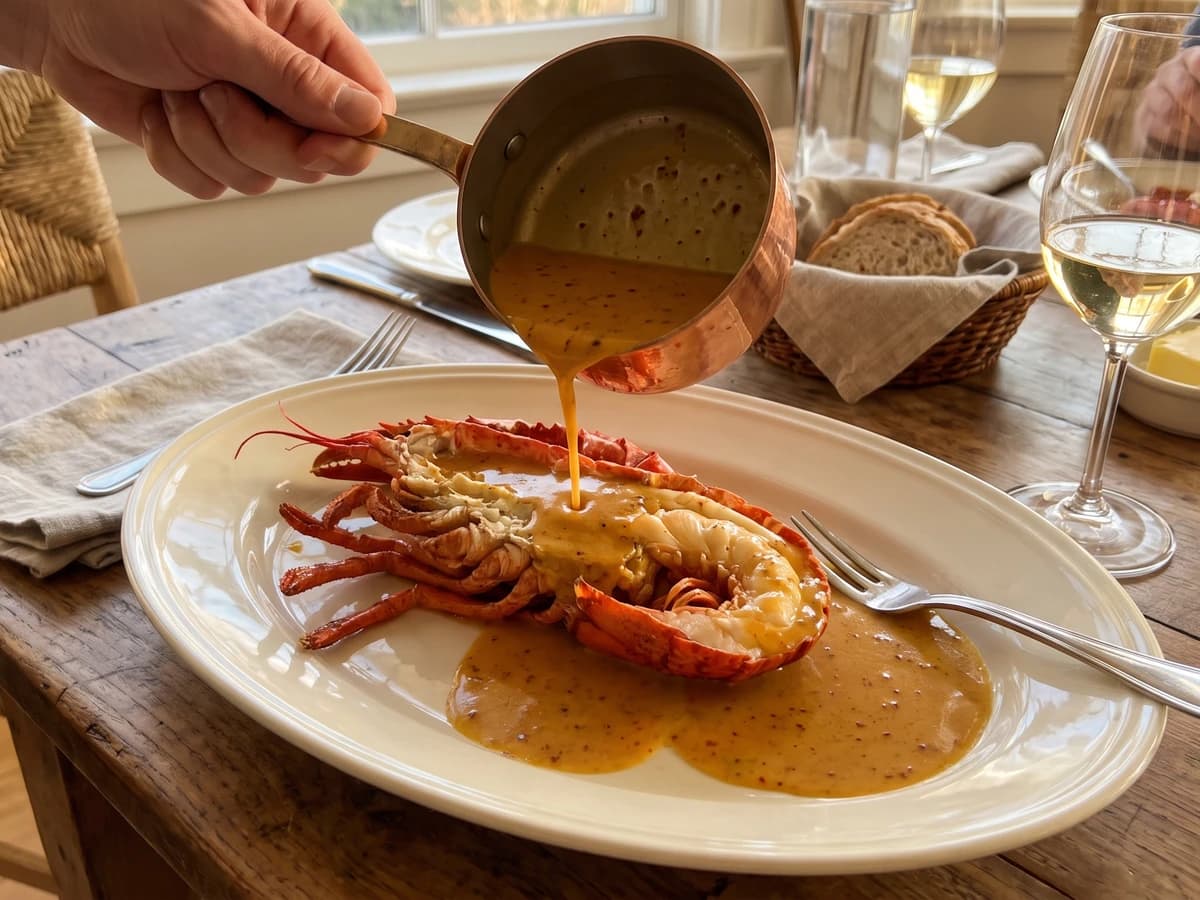
Sauce Orientale concentrates lobster-rich American Sauce with curry, then folds in cream away from the fire: a glossy, gently spiced derivative made for lobster, crayfish, and firm fish.
Chef Juliette
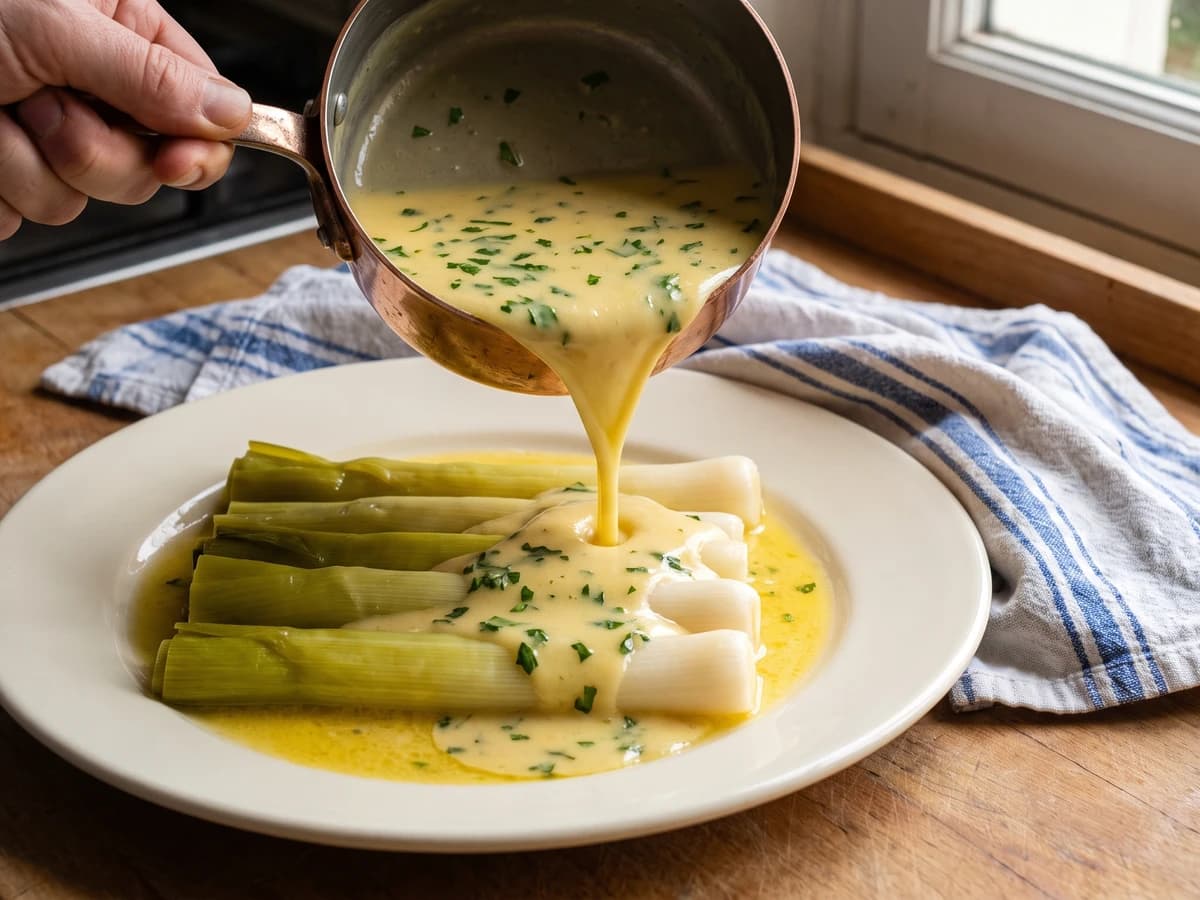
An old lesson in sauce families: Sauce Allemande takes mushroom liquor, then butter, lemon, and parsley, becoming a glossy Poulette for sheep's trotters, leeks, cauliflower, and anything needing gentle richness with a bright edge.