Chef Juliette
Ordinary or White Consommé
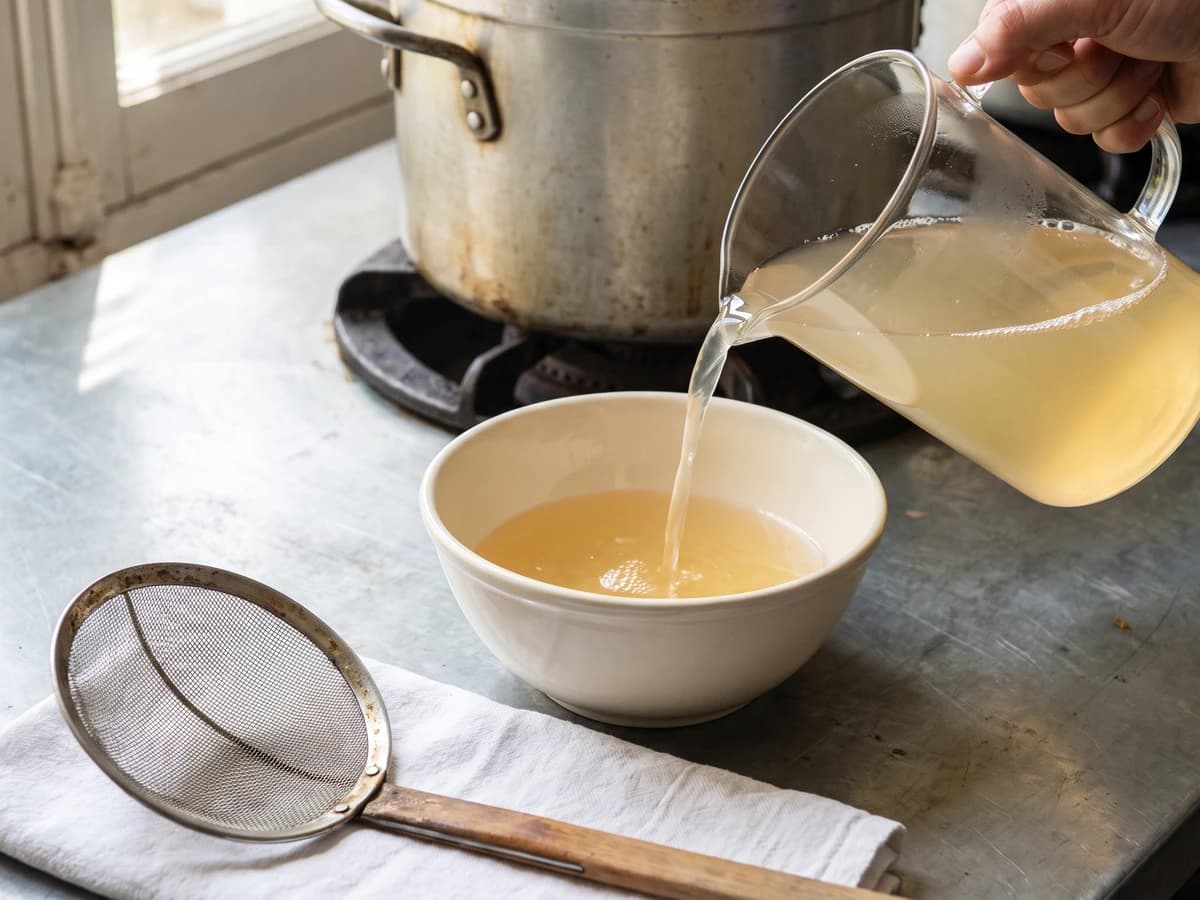
Beef shin, lean beef, and fowl begin in cold water and rise slowly toward a tremble. Skim before the boil, and you learn the quiet discipline that gives every clear French broth its backbone.
A cooking platform built around craft, culture, and the stories behind what we eat.
Created by Chef Juliette
Based on No. 35, Varieties of the Chaud-froid Sauce, from Le Guide Culinaire (1907) by Auguste Escoffier
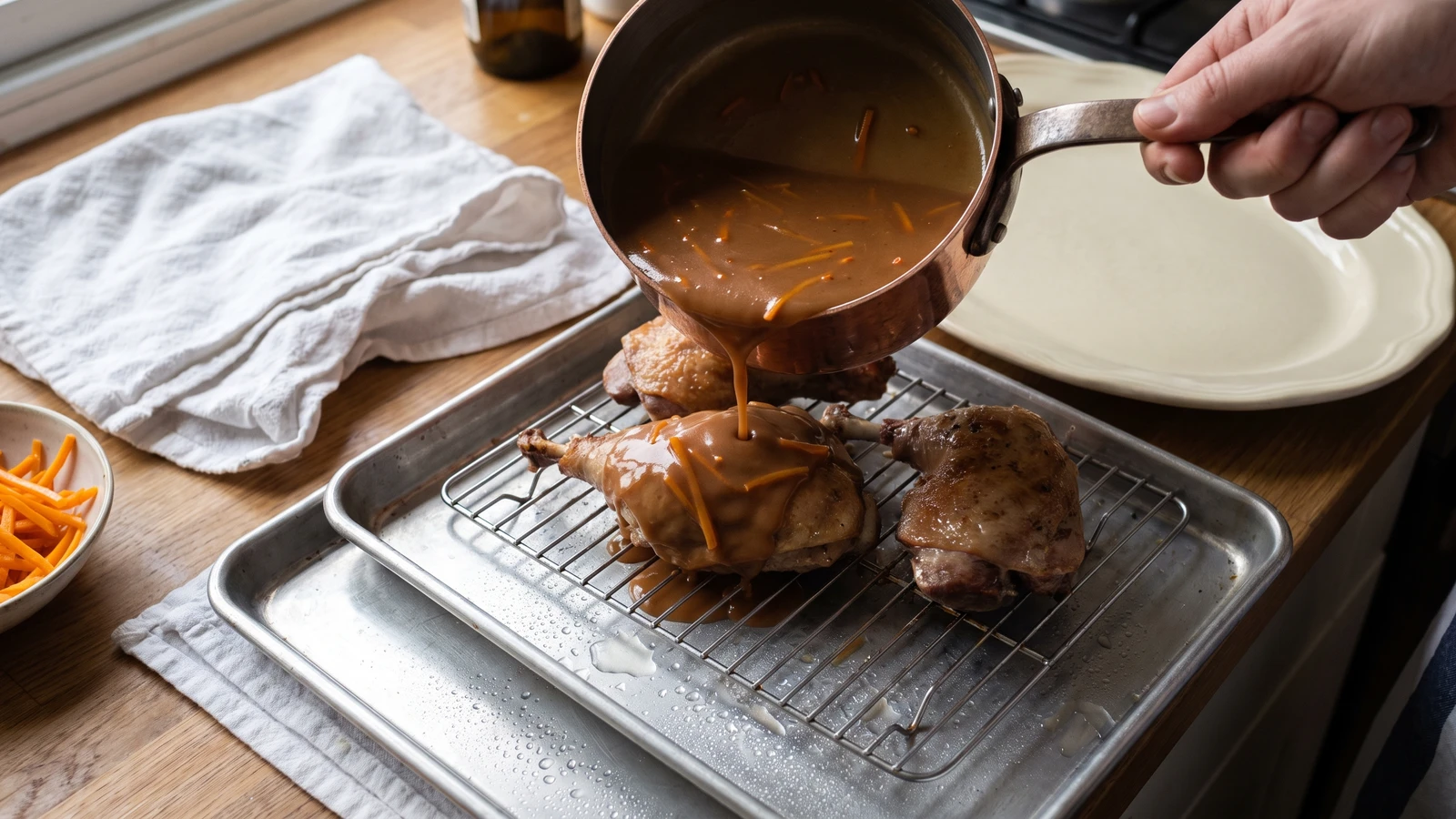
Three chaud-froid sauces, tuned to duck, feathered game, or fish, teach the cold-buffet art: flavor the correct foundation, cool it with attention, and coat only when the film sets smooth and glossy.
Variétés de sauce chaud-froid (cold-coating sauce variations) teach one truth before you touch the pan: flavor chooses the sauce, but temperature decides whether it becomes an even, gleaming film or a puddle beneath the platter. The sauce must be warm enough to flow and cool enough to cling. That narrow moment is the dish.
The original formula assumed a saucier on staff, half-glaze, fumets, and meat or Lenten jellies always ready, brigade quantities, and a Venetian-hair sieve. At home, you reach for Brown Chaud-froid Sauce (No. 34) as a finished component for duck or game, use concentrated fumets made from the animal being coated, and replace the hair sieve with a fine-mesh sieve lined in damp muslin. Each choice is scaled to about two quarts. The quantity and sieve changed; the matching fumet, reduction, off-heat finish, and careful cooling did not. One cook, one stove, one evening.
Duck receives its own fumet, fresh orange juice, and scalded orange rind cut in julienne. Feathered game receives the fumet of that same bird. Fish changes the whole foundation, using fish Espagnole, clear fish essence, and Lenten jelly so no meat flavor trespasses. Repeated service batches are brigade scaffolding and can go. The chilled-saucer test is the dish, so make that test before coating anything.
Chaud-froid belongs to the formal cold buffet of the Parisian grand kitchen, where cooked poultry, feathered game, and fish were protected beneath a seasoned sauce-and-jelly coating before presentation. Its paradoxical name records the practice: the sauce is prepared warm, applied while fluid, and served cold. From grand service it passed into traiteur displays and home celebration platters, but its variations kept a strict rule: the fumet and jelly must taste of the food beneath them, not merely decorate it.
Quantity
5⅔ cups (1.34 L / about 1.37 kg) Brown Chaud-froid Sauce (No. 34)
Quantity
1⅛ cups (270 ml / 270 g)
made from the carcass and remains of roast duckling
Quantity
4, yielding 1⅛ cups (270 ml / 275 g) strained juice and 1 heaped tablespoon (18 ml / 8 g) rind
rind cut in fine julienne
Quantity
2 cups (475 ml / 475 g)
Quantity
6⅔ cups (1.58 L / about 1.61 kg) Brown Chaud-froid Sauce (No. 34)
Quantity
1⅓ cups (315 ml / 315 g)
made from the same bird being coated
Quantity
5¾ cups (1.36 L / about 1.39 kg)
Quantity
½ cup plus 1 tablespoon (135 ml / 135 g)
Quantity
1⅜ cups plus 1 tablespoon (340 ml / 340 g)
Quantity
4¼ cups plus 1 tablespoon (1.02 L / about 1.02 kg)
Quantity
3 tablespoons (45 ml / 45 g)
Quantity
as needed
| Ingredient | Quantity |
|---|---|
| Brown chaud-froid foundation for duck | 5⅔ cups (1.34 L / about 1.37 kg) Brown Chaud-froid Sauce (No. 34) |
| duck fumetmade from the carcass and remains of roast duckling | 1⅛ cups (270 ml / 270 g) |
| large orangesrind cut in fine julienne | 4, yielding 1⅛ cups (270 ml / 275 g) strained juice and 1 heaped tablespoon (18 ml / 8 g) rind |
| water for scalding the orange rind | 2 cups (475 ml / 475 g) |
| Brown chaud-froid foundation for feathered game | 6⅔ cups (1.58 L / about 1.61 kg) Brown Chaud-froid Sauce (No. 34) |
| feathered-game fumetmade from the same bird being coated | 1⅓ cups (315 ml / 315 g) |
| fish Espagnole | 5¾ cups (1.36 L / about 1.39 kg) |
| truffle essence or strained liquid from preserved truffles | ½ cup plus 1 tablespoon (135 ml / 135 g) |
| very clear fish essence | 1⅜ cups plus 1 tablespoon (340 ml / 340 g) |
| Lenten jelly | 4¼ cups plus 1 tablespoon (1.02 L / about 1.02 kg) |
| Madeira or Port | 3 tablespoons (45 ml / 45 g) |
| fine salt and freshly ground white pepper | as needed |
Choose one variation and set two small saucers in the cold. Have the poultry, game, or fish fully cooked, thoroughly chilled, and blotted dry before the sauce approaches it. Surface moisture dilutes chaud-froid and makes the coating slide. Strain the chosen fumet, a concentrated essence from the animal itself, until perfectly clear; clouded stock gives a clouded finish.
For duck, place the Brown Chaud-froid Sauce (No. 34) in a wide saucepan and melt it over low heat, stirring from the bottom. Add the duck fumet in several small additions, letting each disappear before adding the next. Bring the sauce only to a bare simmer and hold it there for 5 to 8 minutes, until it regains nappage, the coating consistency that leaves an opaque film on the back of a spoon. Never boil it hard; prolonged fierce heat weakens the jelly and flattens the fumet.
While the duck sauce loosens, drop the orange rind, cut in julienne (fine matchsticks), into the simmering water and scald it for 5 minutes. Drain and blot it well. Take the sauce completely off the fire, then stir in the strained orange juice and scalded rind. The off-heat finish keeps the orange fresh and prevents its rind from turning harsh. Taste only after the juice is incorporated, then correct the salt and white pepper.
For feathered game, gently melt the Brown Chaud-froid Sauce (No. 34) in a wide saucepan. Stir in the matching game fumet a little at a time, then hold the sauce at the barest simmer until it coats the spoon again. Pheasant fumet belongs with pheasant, partridge with partridge, and so on; this matching taste is not ceremony, it is the reason the variation exists. Remove the pan from the heat and correct the seasoning.
For fish, use the method of Brown Chaud-froid Sauce (No. 34) as written, making only the source's three substitutions. Replace the half-glaze with the fish Espagnole, the fish-based brown foundation; intensify it with the very clear fish essence; and use Lenten jelly instead of meat jelly. Keep the truffle essence in its proper sequence, reduce the mixture by a good third, and finish away from the fire with the Madeira or Port. Pass it through a fine-mesh sieve lined with damp muslin without pressing. Pressing forces sediment through and costs the sauce its clarity.
Transfer the chosen sauce to a clean bowl and stir it occasionally with a flexible spatula as it cools, scraping the sides back into the center before they set. Use a cool-water bath if time is short, but do not whisk; bubbles become pale holes in the finished coating. The sauce is approaching the right point when it falls from the spatula in a broad ribbon and the surface closes slowly behind it.
Drop a spoonful onto a chilled saucer and wait 1 minute. It should set into a smooth, opaque film that does not run when the saucer is tilted. If it slides, the sauce is too warm, so cool it and test again. If it lands in ridges or drags from the spoon, warm the bowl briefly over barely warm water. If it remains thin even when cold, melt it gently and reduce it for a few minutes before retesting. Ça se rattrape. Never guess from the hot pan, because jelly reveals its true consistency only as it cools.
Set the cold, dry pieces on a wire rack over a rimmed tray. Immerse small pieces where practical, or pour the chaud-froid over larger pieces in one continuous pass, letting the excess fall away. Do not brush back and forth. If the first film leaves a bare spot, let it set before applying a second thin coat; working wet sauce over half-set sauce tears the surface. Transfer the coated pieces to their serving platter and chill until the film is firm.
For advance use, press parchment or reusable wrap directly against the sauce and chill it. Reheat it over barely simmering water, stirring gently, only until it becomes fluid enough to coat. It must not become hot again. Test on a chilled saucer, adjust by cooling or warming, and coat the food close enough to serving that the film remains fresh and glossy. À table!
1 serving (about 60g)
Culinary guides, cultural storytelling, and the editorial depth that makes cooking meaningful.
Discover Culinary ExplorerChef Juliette
Beef shin, lean beef, and fowl begin in cold water and rise slowly toward a tremble. Skim before the boil, and you learn the quiet discipline that gives every clear French broth its backbone.
Chef Juliette
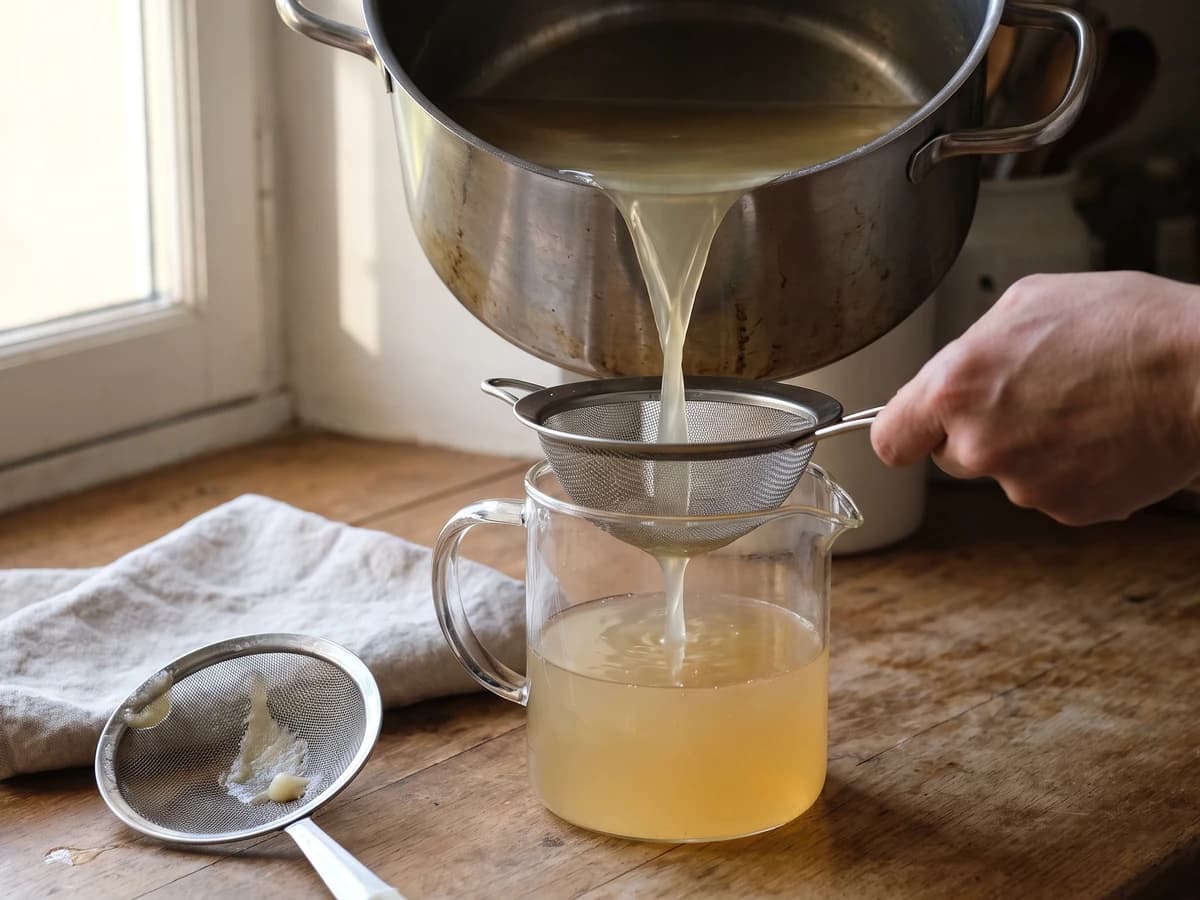
Break the veal bones small, then give them eight hours at a bare tremble. This pale, gelatinous fond becomes the quiet foundation beneath velouté, blanquette, and every sauce that must stay light.
Chef Juliette
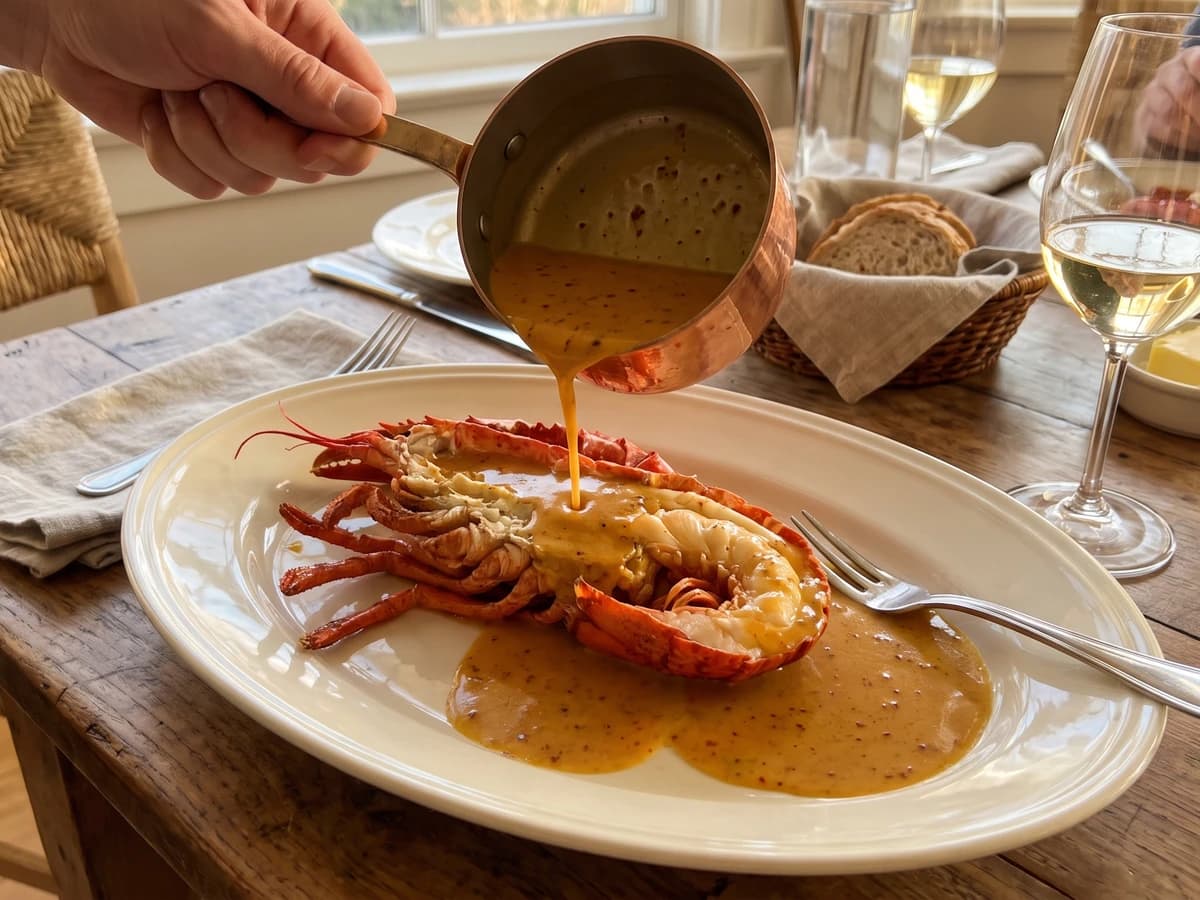
Sauce Orientale concentrates lobster-rich American Sauce with curry, then folds in cream away from the fire: a glossy, gently spiced derivative made for lobster, crayfish, and firm fish.
Chef Juliette
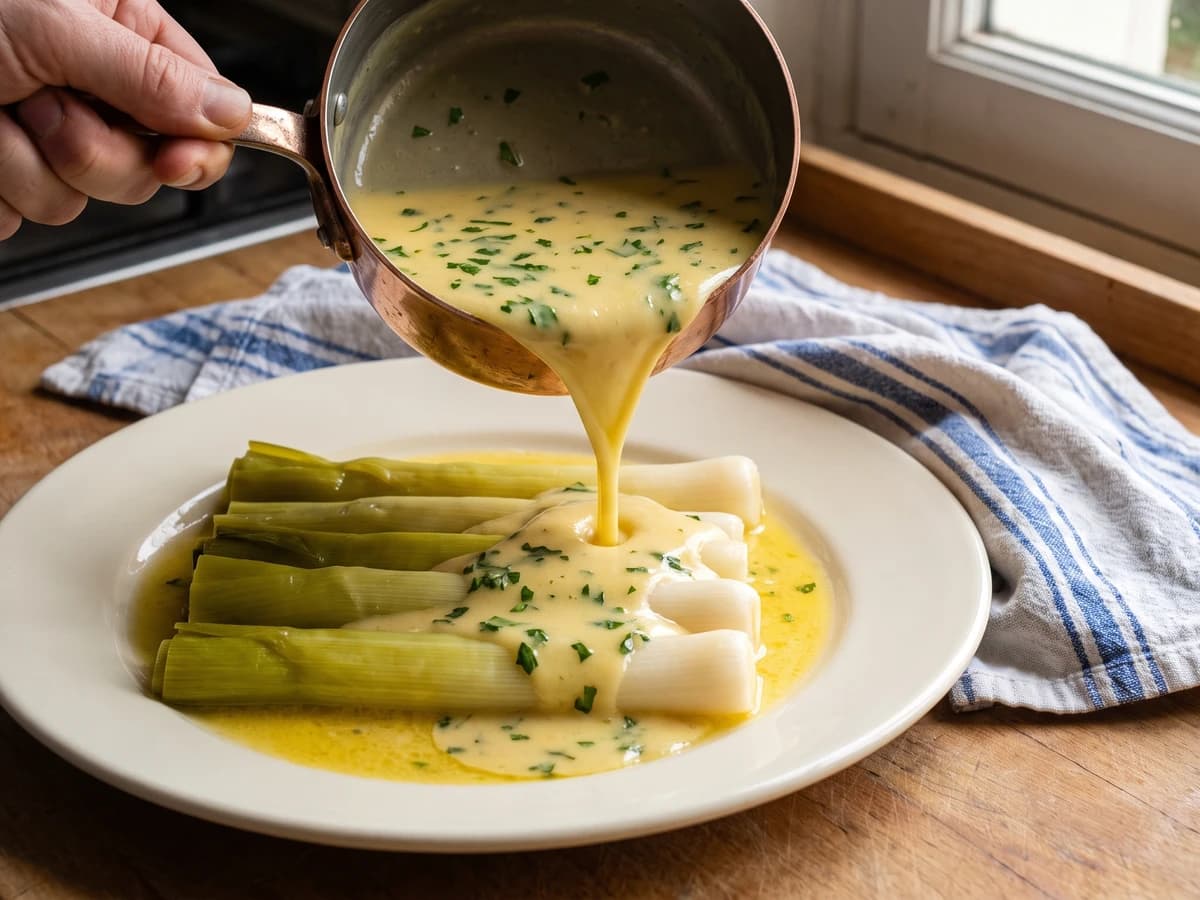
An old lesson in sauce families: Sauce Allemande takes mushroom liquor, then butter, lemon, and parsley, becoming a glossy Poulette for sheep's trotters, leeks, cauliflower, and anything needing gentle richness with a bright edge.