Chef Juliette
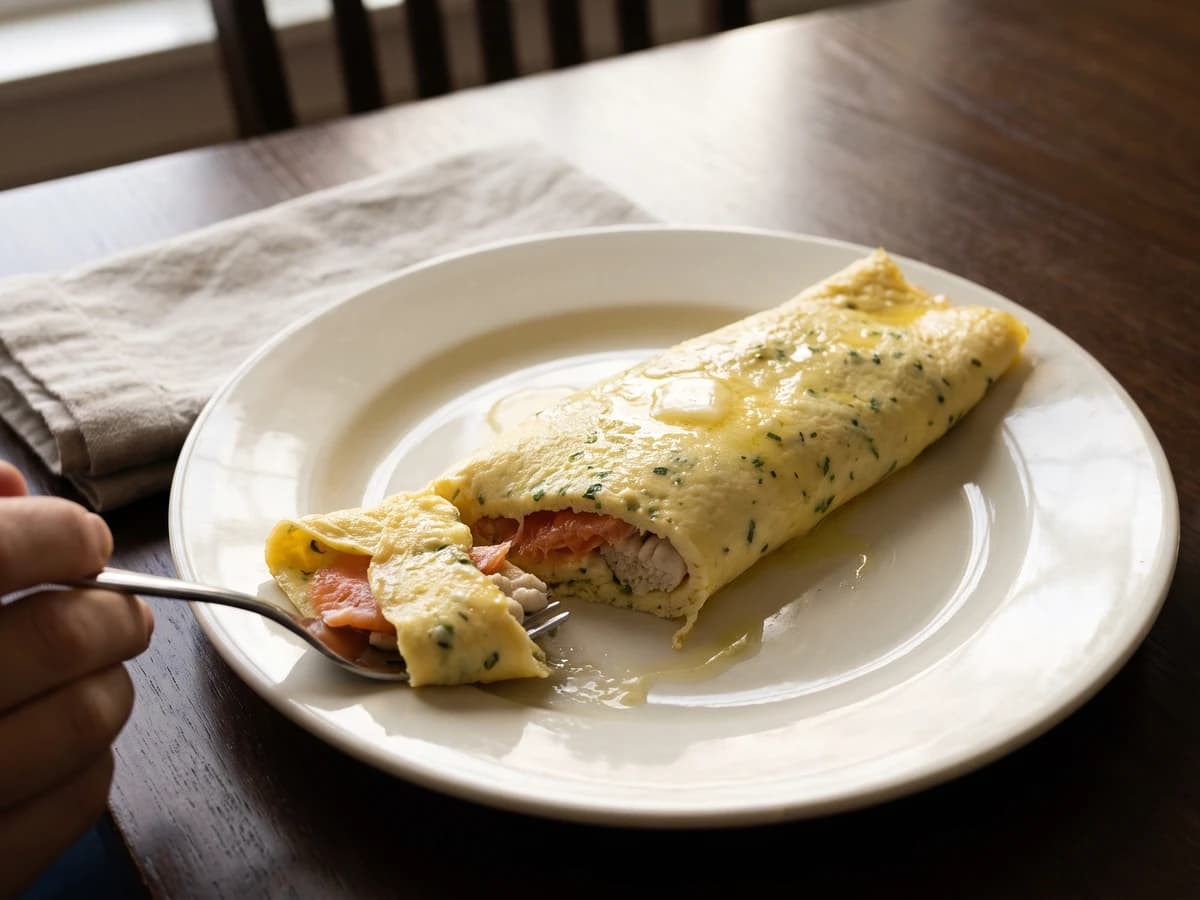
Omelette à l’Écossaise
A creamy omelette aux fines herbes closes around smoked-salmon-wrapped herring milts, gently poached in butter. Have the filling ready, then roll the eggs while they still shine.
A cooking platform built around craft, culture, and the stories behind what we eat.
Created by Chef Juliette
Based on No. 486, Fried Poached Eggs, from Le Guide Culinaire (1907) by Auguste Escoffier
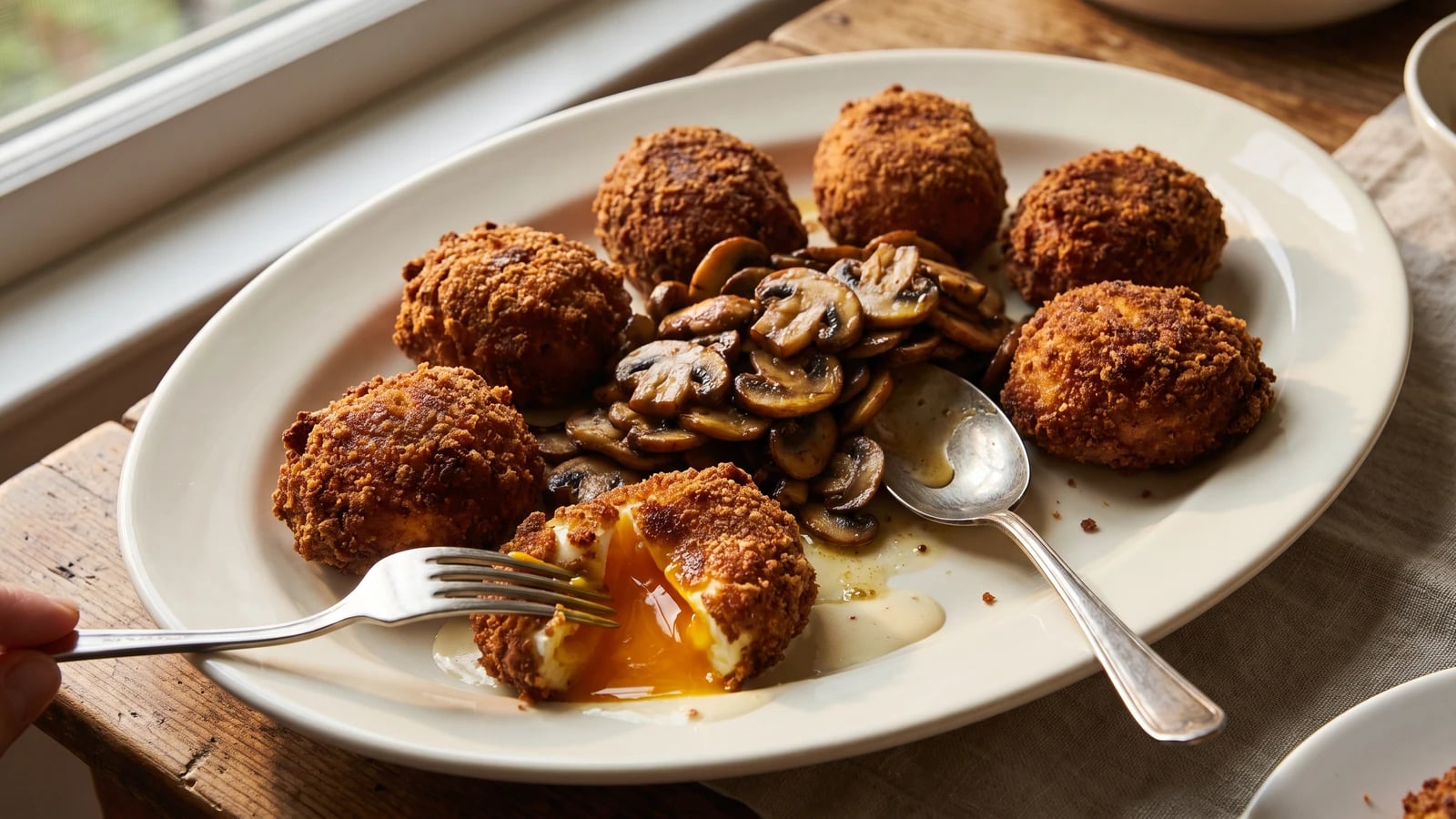
A fragile poached egg becomes a crisp golden parcel beneath stiff sauce and fine crumbs, proof that the cold set, not the fryer, decides whether the center reaches the table whole.
Œufs pochés frits teach the architecture of a crust around something fragile. The one true thing is this: the sauce coat must be completely cold and firm before the breading or frying begins. Chill it properly and the crust protects a yielding egg; rush it and the coat slides into the fat.
The original kitchen assumed poached eggs waiting at one station, Villeroy Sauce (No. 108) supplied by a saucier with stock never off the fire, Anglaise (for Egg-and-bread-crumbing) (No. 174) ready in the pantry, and a service fryer held hot. You begin with those two finished components from their own entries, then use a refrigerator, a parchment-lined tray, and a deep saucepan. Separate hands and holding pans were brigade scaffolding and can go. Poaching, drying, coating, setting, breading, and frying in very hot fat are the dish and must stay. One cook, one stove, one evening.
The finished eggs should arrive as burnished parcels, the crumb crisp under the fork, a thin ivory layer of sauce beneath it, and the yolk still flowing at the center. Dry each poached egg thoroughly before coating, then give the sauce its full time in the cold. That set decides everything.
Œufs pochés frits belong to the classical grand-kitchen repertoire centered in Paris, where egg dishes appeared as composed entrées with a vegetable or mushroom garnish rather than being confined to breakfast. The method carried the ordinary poached egg to the formal table by setting stiff sauce around it, then sealing that coat beneath breading before the frying fat could reach the yolk. It is not a croquette: nothing is chopped or bound inside, and the intact, softly yielding egg is the point.
Quantity
3 quarts (2.8 L / 2.8 kg)
Quantity
1/4 cup (60 ml / 60 g)
Quantity
8
Quantity
2 quarts (1.9 L / 1.9 kg)
Quantity
2 cups (480 ml / about 500 g) Villeroy Sauce (No. 108)
finished and warm enough to coat thickly
Quantity
1 cup (240 ml / about 240 g) Anglaise (for Egg-and-bread-crumbing) (No. 174)
Quantity
3 cups (720 ml / 180 g)
Quantity
5 cups (1.2 L / 340 g)
thinly sliced
Quantity
3 tablespoons (45 ml / 42 g)
Quantity
2 quarts (1.9 L / about 1.75 kg)
refined sunflower or peanut oil
Quantity
1 teaspoon (5 ml / 6 g)
divided
| Ingredient | Quantity |
|---|---|
| water for poaching | 3 quarts (2.8 L / 2.8 kg) |
| white wine vinegar | 1/4 cup (60 ml / 60 g) |
| large eggs | 8 |
| ice water | 2 quarts (1.9 L / 1.9 kg) |
| Villeroy Saucefinished and warm enough to coat thickly | 2 cups (480 ml / about 500 g) Villeroy Sauce (No. 108) |
| Anglaise (for Egg-and-bread-crumbing) | 1 cup (240 ml / about 240 g) Anglaise (for Egg-and-bread-crumbing) (No. 174) |
| very fine fresh white breadcrumbs | 3 cups (720 ml / 180 g) |
| button or cremini mushroomsthinly sliced | 5 cups (1.2 L / 340 g) |
| unsalted butter | 3 tablespoons (45 ml / 42 g) |
| neutral frying oilrefined sunflower or peanut oil | 2 quarts (1.9 L / about 1.75 kg) |
| fine saltdivided | 1 teaspoon (5 ml / 6 g) |
Line a rimmed tray with parchment and set a wire rack over a second tray. Put the ice water beside the stove, spread the breadcrumbs in a shallow dish, and reserve another shallow dish for the breading mixture. A calm sequence matters here because the eggs become more delicate with every layer.
Bring the water and vinegar to a bare tremble in a wide saucepan. Crack each egg into a small cup, then slide in four at a time, keeping the water below a boil. Poach for about 3 minutes, folding any loose white gently around its yolk with a spoon, until the white is set but the center still yields. If the white feathers outward, the water is moving too hard; lower the heat, gather it gently, and trim the wisps after chilling. Lift each egg directly into the ice water and repeat with the remaining eggs.
Leave the eggs in the ice water for 2 minutes, then lift them onto a clean towel. Trim loose white and blot every surface thoroughly without pressing the yolk. Bring the finished Villeroy Sauce (No. 108) to a warm, very thick coating consistency. Support one egg on a small offset spatula, lower it carefully into the sauce, spoon sauce over the top, and lift it onto the parchment. Coat all eight eggs and leave space between them. If the sauce slides off, stop. Ça se rattrape: blot the egg again, let the sauce cool until it blankets a spoon heavily, then cover the bare place with another spoonful.
Chill the coated eggs uncovered for 45 to 60 minutes, until the sauce is firm enough to touch without marking. Run the point of a small knife around each egg to remove the skirt of excess sauce, then lift it carefully from the parchment. Pour the Anglaise (for Egg-and-bread-crumbing) (No. 174) into its shallow dish. Turn each egg gently through it, let the excess drip away, and roll it in the fine breadcrumbs until completely enclosed. Do not squeeze. If a seam cracks, patch it with a dab of cold Villeroy Sauce (No. 108), cover the patch with crumbs, and chill again. Refrigerate the breaded eggs for 20 minutes.
Melt the butter in a wide skillet until it foams. Add the sliced mushrooms in one uncrowded layer and sauté over lively heat, turning only after their undersides have browned. Cook until their released moisture has evaporated and the edges are bronzed and glossy, then season with half the salt. Hold them just warm while the eggs fry.
Pour the oil into a heavy 5 to 6 quart pot, which should remain no more than half full, and heat it to 365°F (185°C). Lower two eggs at a time into the fat with a spider and fry for 90 seconds to 2 minutes, turning once, until evenly deep gold. Let the oil return to temperature between batches. If the first coat begins to split, lift that egg out immediately. Ça se rattrape for the rest: return the unfried eggs to the cold, patch any thin seams, chill for 15 minutes, and restore the fat to temperature. Drain the fried eggs on the wire rack and salt them lightly while the crust is fresh.
Arrange two eggs per person, or set all eight in a ring on a warm oval platter as the original service intends. Spoon the butter-sautéed mushrooms into the center and bring the dish to the table immediately. The fork should meet crisp crumb, then tender sauce, then the yielding egg beneath. À table!
1 serving (about 425g)
Culinary guides, cultural storytelling, and the editorial depth that makes cooking meaningful.
Discover Culinary ExplorerChef Juliette
A creamy omelette aux fines herbes closes around smoked-salmon-wrapped herring milts, gently poached in butter. Have the filling ready, then roll the eggs while they still shine.
Chef Juliette
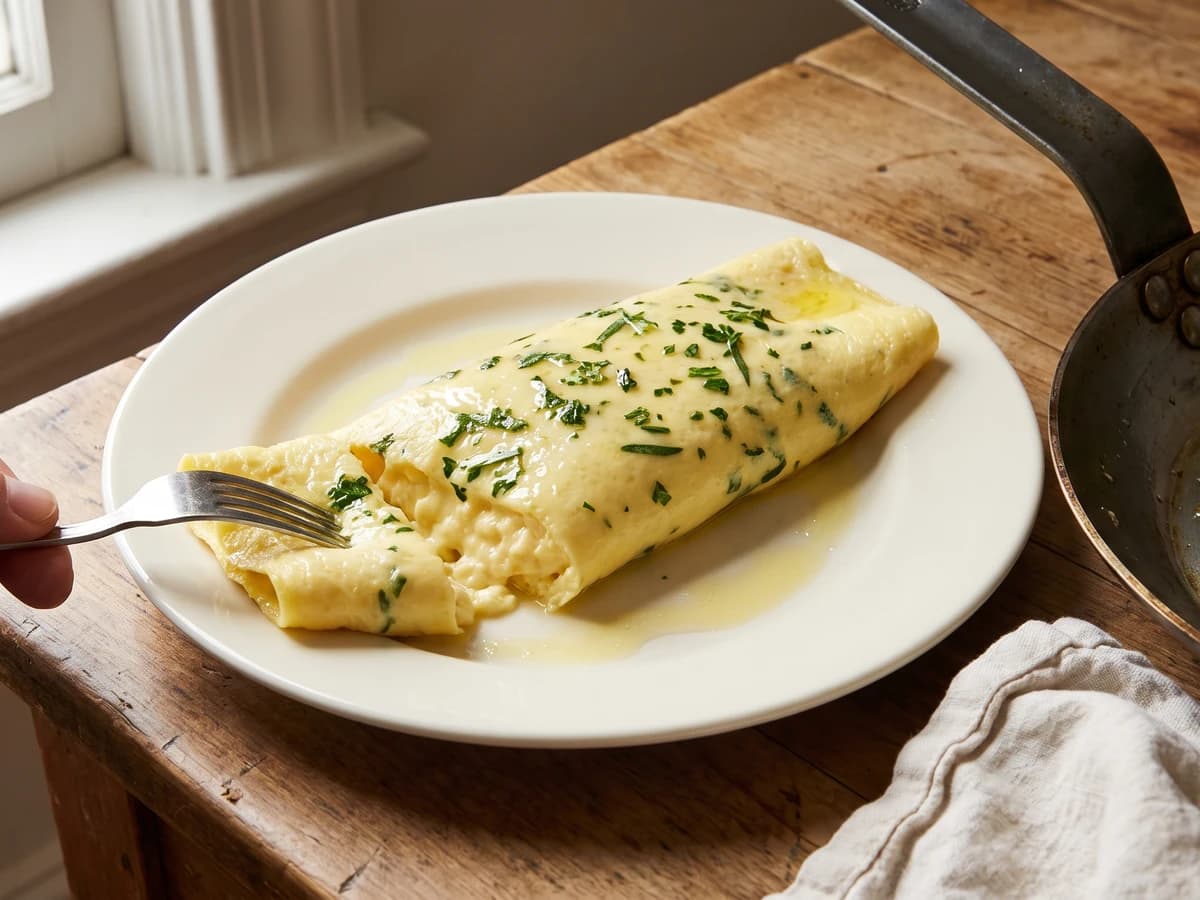
Four tender herbs, hot butter, and two eggs per pan: this rolled omelette teaches the quick hand and good judgment that keep the outside pale and the center creamy.
Chef Juliette
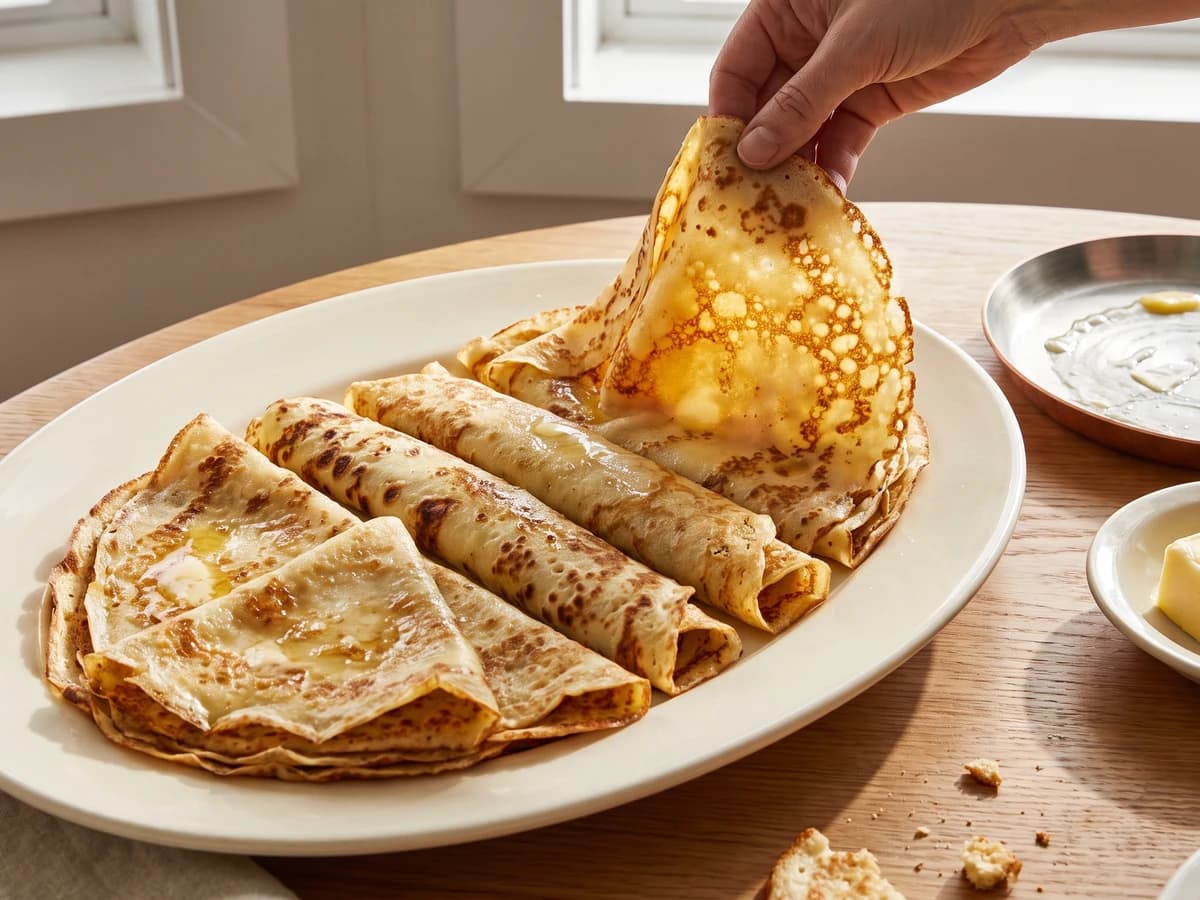
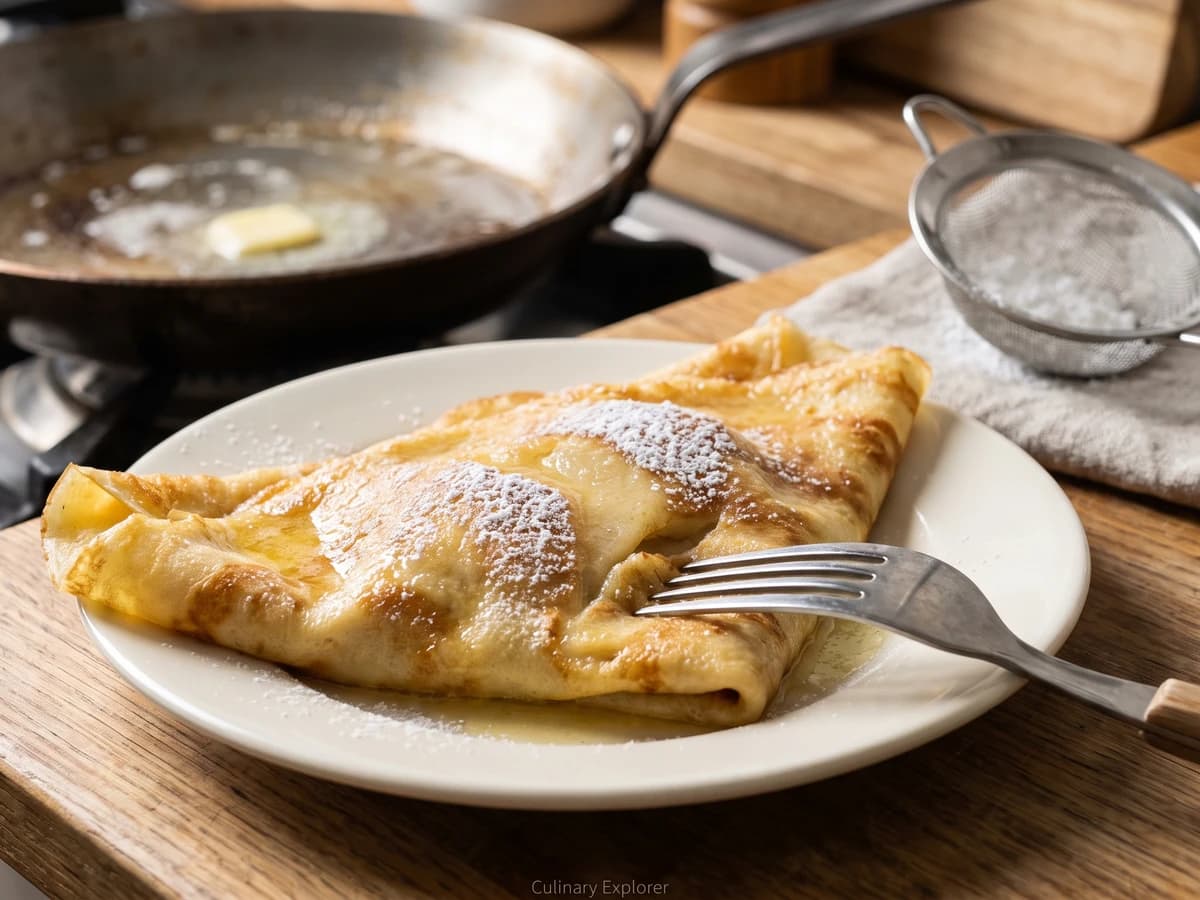
Four batters, one lesson: let the flour drink deeply before cooking, then spread the batter thinly in butter for crêpes and pannequets that bend without becoming tough.
Chef Juliette
Crêpes au Couvent trap ripe Williams pear dice between two thin pours of sweet batter, then turn in one clean toss and reach the table butter-gold, powdered, and burning hot.