Chef Juliette
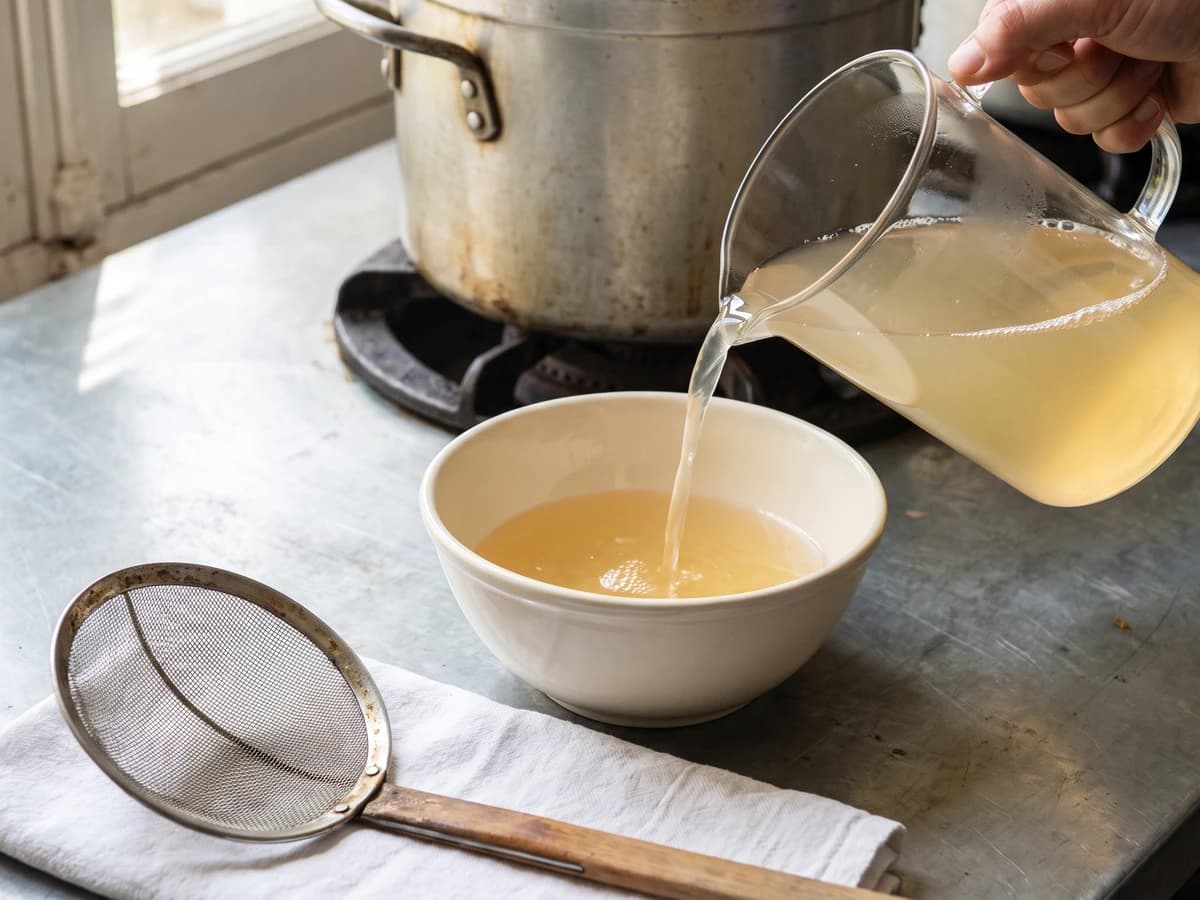
Ordinary or White Consommé
Beef shin, lean beef, and fowl begin in cold water and rise slowly toward a tremble. Skim before the boil, and you learn the quiet discipline that gives every clear French broth its backbone.
A cooking platform built around craft, culture, and the stories behind what we eat.
Created by Chef Juliette
Based on No. 108, Villeroy Sauce, from Le Guide Culinaire (1907) by Auguste Escoffier
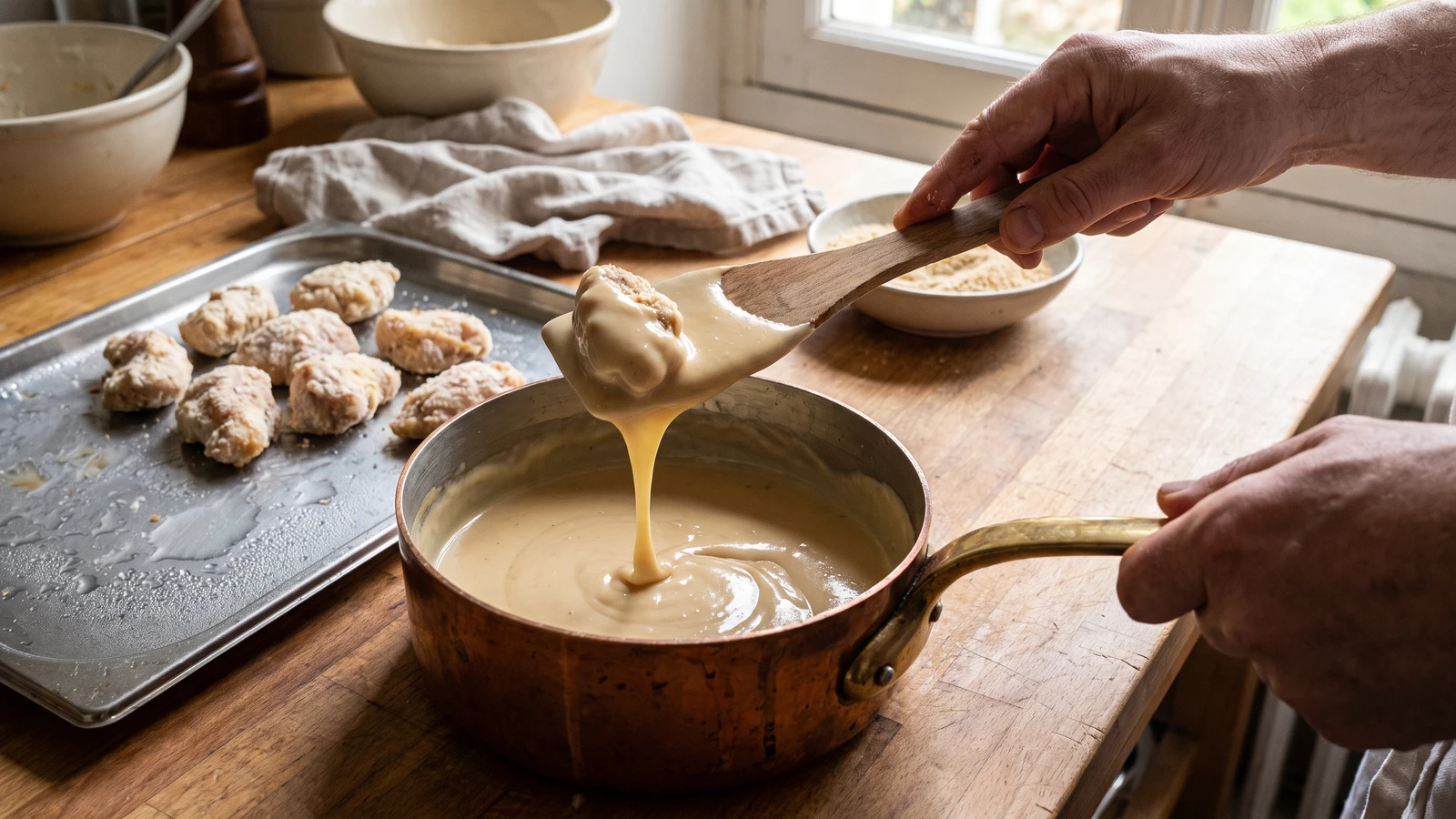
Sauce Villeroy takes finished Allemande, truffle essence, and ham essence to a dense, savory gloss that grips a morsel, sets cleanly, and survives crumbing and frying.
Sauce Villeroy (a thick Allemande coating sauce) teaches the difference between a sauce made to flow and one made to hold. The one true thing to know before touching the pan is this: reduction, not added starch, gives Villeroy its grip. It must cloak a cold morsel in one opaque layer, yet remain smooth enough to settle without ridges.
The source formula assumed a saucier on staff, Allemande drawn from a stockpot never off the fire, and a broad sauté pan over an open flame. A salamander had no work in this entry; the crumbing and frying came later. For one cook, one stove, one evening, this batch halves the original pint while preserving its ratio exactly: one cup of finished Allemande and one tablespoon each of truffle and ham essence. The stockmaking and extra service pans are brigade scaffolding, so they remain in the separate Allemande preparation. The constant stirring and firm reduction are the dish, and they stay.
Watch the trail left by the spatula. At first it vanishes immediately, then it closes slowly, and finally the sauce falls from the spoon in a heavy ribbon with a quiet satin gloss. That is Villeroy. The deciding step is the final reduction, judged by cling rather than the clock.
Sauce Villeroy belongs to the Parisian grand-kitchen tradition, where sauces were not only poured at service but used to build a protective layer around cooked poultry, sweetbreads, fish, or eggs. Its name is tied to the Villeroy household, while its lasting identity comes from practice: Allemande enriched with truffle and ham essences, then reduced until it can be chilled, breaded, and fried with the morsel it covers. It is not a table sauce made too thick by accident, but the working foundation of preparations à la Villeroy.
Quantity
1 cup (240 ml / 240 g)
Quantity
1 tablespoon (15 ml / 15 g)
Quantity
1 tablespoon (15 ml / 15 g)
| Ingredient | Quantity |
|---|---|
| finished Allemande Sauce | 1 cup (240 ml / 240 g) |
| culinary truffle essence | 1 tablespoon (15 ml / 15 g) |
| culinary ham essence | 1 tablespoon (15 ml / 15 g) |
Set a small metal saucer or spoon in the cold before beginning. Have the morsels you intend to coat cooked, thoroughly chilled, and patted dry; moisture makes Villeroy slide away instead of gripping. Choose a broad, heavy sauté pan so evaporation can do the work without a violent boil.
Put the finished Allemande Sauce in the cold pan and whisk in the truffle essence and ham essence until completely even. Allemande is a finished component here, not something rebuilt inside the Villeroy entry. Taste only to understand its strength, and add no salt yet; reduction will concentrate the ham essence considerably.
Set the pan over medium-low heat and bring the sauce to a steady simmer, stirring constantly with a flat-edged spatula and sweeping the entire pan floor on every pass. Continue until the sauce grows dense, the bubbles become slow and glossy, and the trail behind the spatula remains open for a full second. If it begins catching at one point, lift the pan immediately and pour the sauce into a clean pan without scraping the browned patch; whisk in 1 teaspoon (5 ml / 5 g) cold water and continue over gentler heat. Ça se rattrape. Once the burnt flavor is stirred through, it does not.
Dip the chilled spoon or one cold, dry morsel into the sauce, lift it, and turn it once. The nappe épaisse, or heavy coat, should remain opaque and even, with no bare patch opening as it settles. If it runs off, return the sauce to the heat and reduce for another minute. If it stands in stiff ridges, whisk in hot water 1 teaspoon (5 ml / 5 g) at a time over low heat until the surface smooths.
Work while the Villeroy is warm and fluid. Immerse each chilled, dry morsel, lift it with a fork or small skimmer, let only the excess fall away, then place it on a lightly buttered tray without disturbing the coat. Chill until the sauce is firm before proceeding with the crumbing and frying called for by the à la Villeroy preparation. The sauce should become a close-fitting cloak, not a puddle around the food.
1 serving (about 20g)
Culinary guides, cultural storytelling, and the editorial depth that makes cooking meaningful.
Discover Culinary ExplorerChef Juliette
Beef shin, lean beef, and fowl begin in cold water and rise slowly toward a tremble. Skim before the boil, and you learn the quiet discipline that gives every clear French broth its backbone.
Chef Juliette
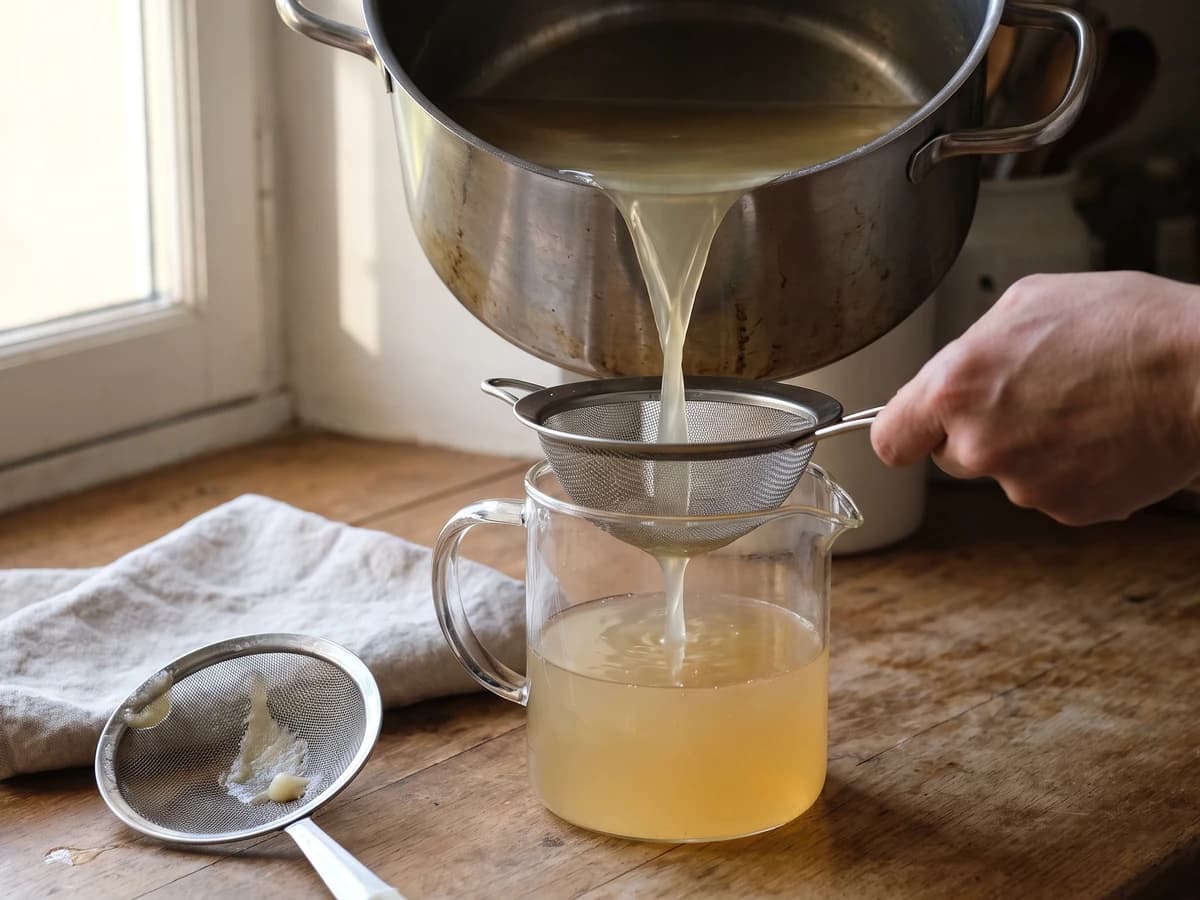
Break the veal bones small, then give them eight hours at a bare tremble. This pale, gelatinous fond becomes the quiet foundation beneath velouté, blanquette, and every sauce that must stay light.
Chef Juliette
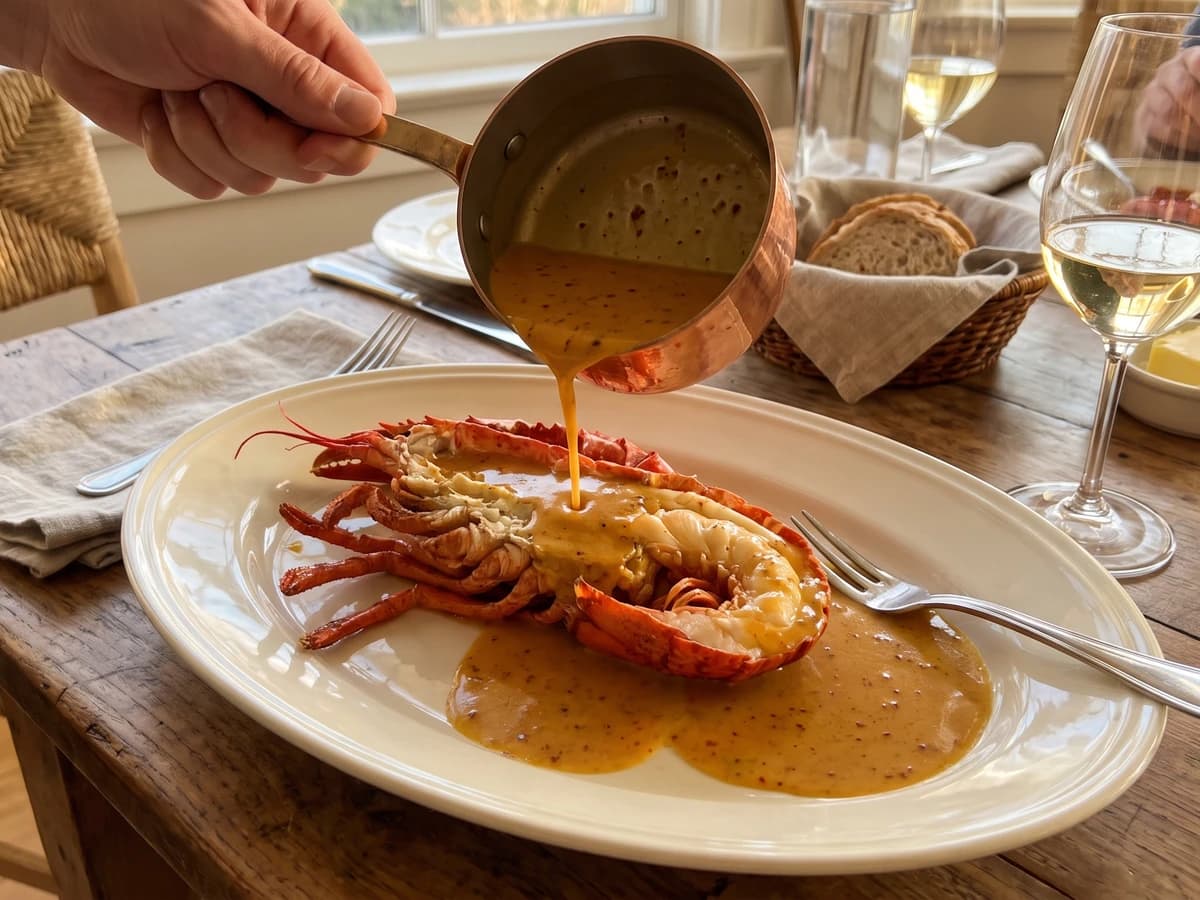
Sauce Orientale concentrates lobster-rich American Sauce with curry, then folds in cream away from the fire: a glossy, gently spiced derivative made for lobster, crayfish, and firm fish.
Chef Juliette
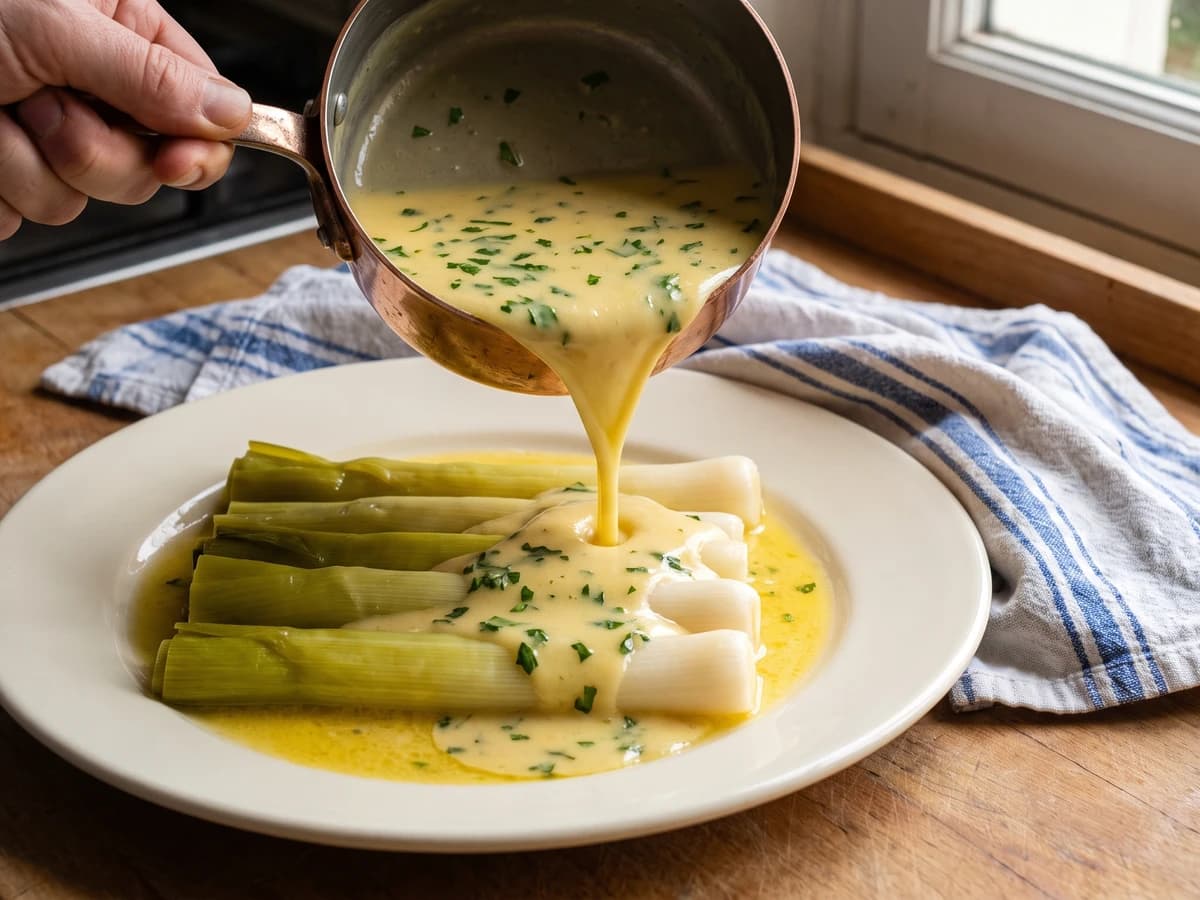
An old lesson in sauce families: Sauce Allemande takes mushroom liquor, then butter, lemon, and parsley, becoming a glossy Poulette for sheep's trotters, leeks, cauliflower, and anything needing gentle richness with a bright edge.