
Chef Juliette
Smelt (Éperlans)
Tiny éperlans, lightly floured and fried until their tails stand crisp, arrive in a generous heap on a napkin with fried parsley and grooved lemon, a weeknight lesson in heat and restraint.
A cooking platform built around craft, culture, and the stories behind what we eat.
Created by Chef Juliette
Based on No. 393, Quartered Tomatoes, from Le Guide Culinaire (1907) by Auguste Escoffier
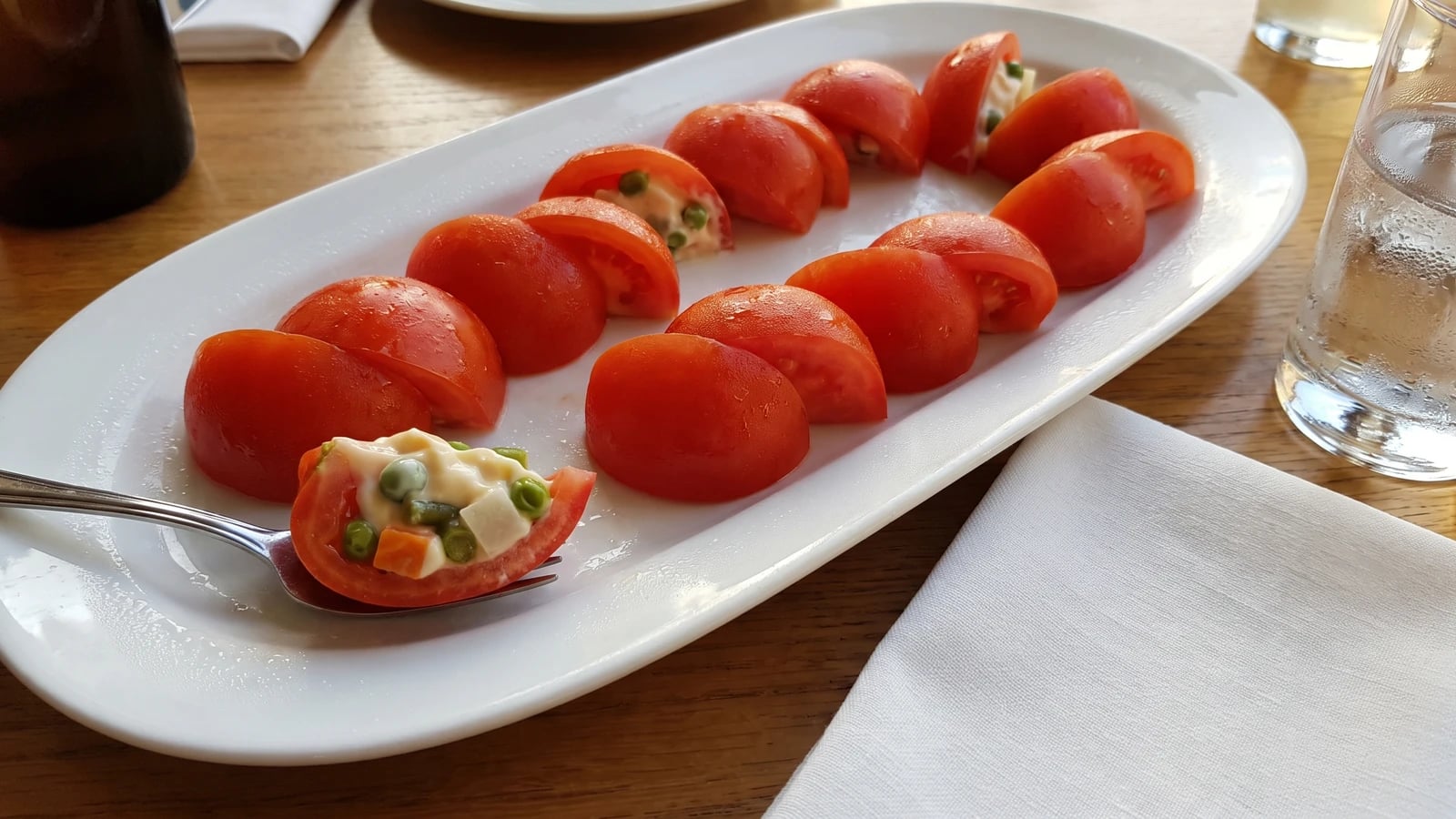
Firm peeled tomatoes, packed with a jewel-cut Macédoine bound in softly set mayonnaise, chilled until cleanly sliceable, then quartered into cold, trim bites for the first glass of the evening.
Tomates en quartiers (quartered tomatoes) teach the discipline of the garde-manger (cold kitchen): a cold preparation succeeds or fails at the cut. The tomato must be firm, dry inside, and filled with a Macédoine (small mixture of young vegetables) bound in mayonnaise collée (mayonnaise lightly set with jelly). If the filling slumps under the knife, the whole little ceremony is lost.
The original entry assumed prepared jelly, a cold larder, crushed ice, and enough hands to peel and fill a trayful. At home, powdered gelatin melted into clear vegetable stock supplies the jelly, the refrigerator replaces the bed of ice, and four tomatoes make sixteen bites. One cook, one stove, one evening. The grooved piping bag is brigade scaffolding for the compound-butter version and can go here. Peeling, emptying, setting, and cutting are the dish, and they stay.
The finished quarters are scarlet and cool, their cut faces showing peas, green beans, carrot, and turnip held in pale, glossy mayonnaise. Chill the filled tomatoes until their centres resist a gentle press before you cut. That set is the one step that matters most, and if the knife drags, ça se rattrape: give them fifteen more minutes in the cold.
Tomates en quartiers belong to the Parisian garde-manger repertoire, where cold hors-d'œuvre service turned garden vegetables, mayonnaise, and jelly into orderly platters for dining-room and bourgeois tables. The preparation moved readily into home entertaining because it could be finished ahead, yet it kept the professional cold kitchen's demand for dry surfaces and clean cuts. Despite the tomato, this is not specifically a Provençal dish; its identity comes from classical cold-kitchen technique rather than an olive-oil southern larder.
Quantity
4 (about 20 ounces / 560 g total)
Quantity
1/4 cup (60 ml / 35 g)
peeled and cut into 1/4-inch dice
Quantity
1/4 cup (60 ml / 35 g)
peeled and cut into 1/4-inch dice
Quantity
1/4 cup (60 ml / 30 g)
trimmed and cut into 1/4-inch pieces
Quantity
1/4 cup (60 ml / 35 g)
Quantity
1
Quantity
1 teaspoon (5 ml / 5 g)
Quantity
2 teaspoons (10 ml / 10 g)
divided
Quantity
1/3 cup (80 ml / 74 g)
Quantity
2 tablespoons (30 ml / 30 g)
Quantity
1 teaspoon (5 ml / 3 g)
Quantity
1 teaspoon (5 ml / 6 g)
divided
Quantity
1/8 teaspoon (0.6 ml / 0.3 g)
| Ingredient | Quantity |
|---|---|
| medium ripe but firm, smooth-skinned tomatoes | 4 (about 20 ounces / 560 g total) |
| carrotpeeled and cut into 1/4-inch dice | 1/4 cup (60 ml / 35 g) |
| turnippeeled and cut into 1/4-inch dice | 1/4 cup (60 ml / 35 g) |
| green beanstrimmed and cut into 1/4-inch pieces | 1/4 cup (60 ml / 30 g) |
| fresh or frozen peas | 1/4 cup (60 ml / 35 g) |
| pasteurized large egg yolk | 1 |
| Dijon mustard | 1 teaspoon (5 ml / 5 g) |
| fresh lemon juicedivided | 2 teaspoons (10 ml / 10 g) |
| neutral oil | 1/3 cup (80 ml / 74 g) |
| clear vegetable stock | 2 tablespoons (30 ml / 30 g) |
| unflavored powdered gelatin | 1 teaspoon (5 ml / 3 g) |
| fine sea saltdivided | 1 teaspoon (5 ml / 6 g) |
| ground white pepper | 1/8 teaspoon (0.6 ml / 0.3 g) |
Bring a saucepan of water to a boil and prepare a bowl of ice water. Cut a very shallow cross in the blossom end of each tomato, lower them into the boiling water for 10 to 15 seconds, then transfer them directly to the ice water. Peel from the scored end without bruising the flesh. If a patch of skin resists, return that tomato to the boiling water for five seconds; do not tug, because torn flesh will split when quartered.
Cut a thin lid from the stem end of each peeled tomato. With a small spoon or melon baller, remove the seeds, loose pulp, and hard core without piercing the walls. Set the hollow tomatoes upside down on a clean towel for 20 minutes, then blot the cavities carefully. This drying is not decorative fuss: water inside the tomato loosens the mayonnaise collée and spoils the clean cut.
Bring a small saucepan of water to a boil with half the salt. Add the diced carrot and turnip and cook for two minutes, add the green beans for two minutes more, then add the peas for the final minute. The vegetables should be tender under the tooth but still hold sharp edges. Drain immediately, cool in fresh ice water, and spread them on a towel until thoroughly dry; wet vegetables dilute an emulsion.
Sprinkle the gelatin evenly over half the cold vegetable stock and leave it for five minutes to bloom. Warm the remaining stock until hot but not boiling, then stir it into the bloomed gelatin until perfectly clear. Let the mixture cool until barely warm while keeping it fluid. If it sets before the mayonnaise is ready, ça se rattrape: stand the cup briefly in warm water and stir until liquid again.
Whisk the egg yolk with the Dijon mustard, one teaspoon of lemon juice, one quarter of the salt, and the white pepper. Add the oil first drop by drop, then in a thin thread once the emulsion becomes thick and glossy. Whisk in the fluid gelatin mixture gradually. If the mayonnaise breaks, stop. Ça se rattrape: put the reserved lemon juice in a clean bowl and whisk in the broken mayonnaise one teaspoon at a time until smooth, then continue slowly.
Fold the dry Macédoine into the mayonnaise collée and taste, adding the remaining salt only if needed. The filling should mound softly rather than run. If it looks loose, chill it for five to ten minutes before filling; if it becomes too firm, set the bowl over warm water for a few seconds and fold once. Pack the tomatoes completely with a small spoon, pressing gently to remove hidden air pockets. Stand them upright, cover without touching their surfaces, and chill for 45 to 60 minutes. The original half-hour on crushed ice cools more fiercely than a home refrigerator, so the extra time replaces the ice, not the technique.
Test one tomato with a gentle press at the centre; the filling should feel set. With a very sharp, thin knife, cut each tomato from top to bottom into four regular quarters, wiping the blade after every cut. If the filling smears or pulls free, stop and chill the remaining tomatoes for fifteen minutes. Arrange the quarters cut-side up and serve properly cold. À table!
1 serving (about 200g)
Culinary guides, cultural storytelling, and the editorial depth that makes cooking meaningful.
Discover Culinary ExplorerChef Juliette
Tiny éperlans, lightly floured and fried until their tails stand crisp, arrive in a generous heap on a napkin with fried parsley and grooved lemon, a weeknight lesson in heat and restraint.

Chef Juliette
Brandade de Morue turns salt cod, warm olive oil, and milk into a pale, silky emulsion: keep everything warm and add the oil slowly, then crown the generous dome with butter-fried bread.

Chef Juliette
Salt cod worked warm with cream, one patient spoonful at a time, until the rough flakes become a glossy Nîmes paste, domed generously and ringed with butter-fried croutons for the table.

Chef Juliette
Wine-poached char packed in its earthenware crock beneath butter gold: a make-ahead first course that turns careful cooling, thorough boning, and one unbroken seal into quiet abundance.