
Chef Juliette
Smelt (Éperlans)
Tiny éperlans, lightly floured and fried until their tails stand crisp, arrive in a generous heap on a napkin with fried parsley and grooved lemon, a weeknight lesson in heat and restraint.
A cooking platform built around craft, culture, and the stories behind what we eat.
Created by Chef Juliette
Based on No. 388, Tunny in Oil, from Le Guide Culinaire (1907) by Auguste Escoffier
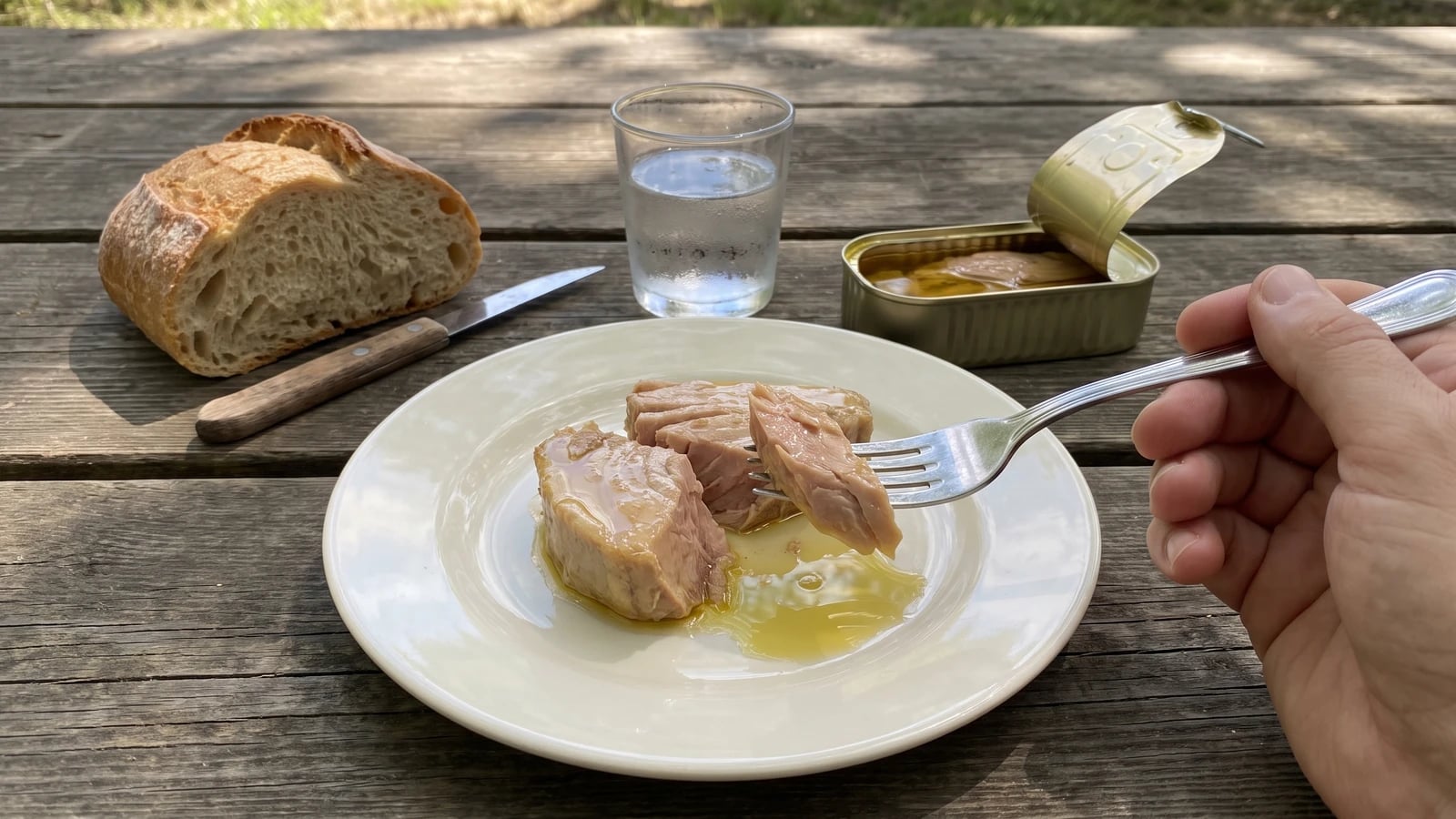
Thon à l’huile proves that restraint is a technique: firm flakes, good preserving oil, and no meddling. Open one tin carefully, keep the fish whole, and the cold table is ready.
Thon à l’huile (tunny in oil) teaches the hardest kind of restraint: knowing when the work is already done. The fish has been cooked, seasoned, and protected under oil by the preserver. Before you touch a pan, know this one true thing: there is no pan.
The entry assumes a finished market provision and a brigade portioning many trays of hors-d’œuvres, not a saucier on staff, a stock never off the fire, or a salamander. Any bulk portioning is scaffolding and can go. At home, one good tin replaces the service quantity because four people need generous flakes, not a catering tray. What remains is the dish itself: sound fish, good preserving oil, and a careful hand opening it. One cook, one plate, five minutes.
Serve it cool enough to feel fresh but warm enough for the oil to flow. The step that matters is keeping the tuna in broad, tender pieces and tasting it before adding anything. Cooking well is not cooking fancy.
Thon à l’huile was a finished provision of the conserveries in France’s Atlantic and Mediterranean fishing ports, then a familiar purchase from grocers across the country. On the Niçois table it found a particularly natural home among cold vegetables and eggs, while hors-d’œuvres services elsewhere used intact flakes as a ready garnish. The misconception is that the tin is merely an ingredient: in this entry, the preserving house has already cooked and seasoned the fish, so the tin is the preparation.
Quantity
1 jar or can (6.7 oz / 190 g net; about 5 oz / 140 g fish)
whole pieces or large flakes, preferably packed in olive oil
| Ingredient | Quantity |
|---|---|
| good-quality tuna packed in oilwhole pieces or large flakes, preferably packed in olive oil | 1 jar or can (6.7 oz / 190 g net; about 5 oz / 140 g fish) |
Serve the thon à l’huile cool, not refrigerator-hard. If the unopened tin or jar has been chilled, leave it at room temperature for about 15 minutes so the oil loosens and the fish regains its tenderness. If the olive oil looks cloudy or congealed, don’t heat it. Ça se rattrape: give the sealed container another 10 minutes at room temperature and the oil will clear by itself.
Open the container and slide the tuna onto a small shallow dish with enough of its preserving oil to coat the fish and pool lightly beneath it. Keep the largest pieces whole. If one breaks, ease it into broad natural flakes with a fork, but don’t mash or stir it into paste. The intact, oil-glossed flesh is the dish.
Bring the thon à l’huile to the table exactly as it stands. For a composed hors-d’œuvres plate, separate it into generous flakes only when you arrange the other cold elements, then spoon a little preserving oil back over each piece. No pan, no sauce, no decorative fuss. À table!
1 serving (about 48g)
Culinary guides, cultural storytelling, and the editorial depth that makes cooking meaningful.
Discover Culinary ExplorerChef Juliette
Tiny éperlans, lightly floured and fried until their tails stand crisp, arrive in a generous heap on a napkin with fried parsley and grooved lemon, a weeknight lesson in heat and restraint.

Chef Juliette
Brandade de Morue turns salt cod, warm olive oil, and milk into a pale, silky emulsion: keep everything warm and add the oil slowly, then crown the generous dome with butter-fried bread.

Chef Juliette
Salt cod worked warm with cream, one patient spoonful at a time, until the rough flakes become a glossy Nîmes paste, domed generously and ringed with butter-fried croutons for the table.

Chef Juliette
Wine-poached char packed in its earthenware crock beneath butter gold: a make-ahead first course that turns careful cooling, thorough boning, and one unbroken seal into quiet abundance.