
Chef Juliette
Smelt (Éperlans)
Tiny éperlans, lightly floured and fried until their tails stand crisp, arrive in a generous heap on a napkin with fried parsley and grooved lemon, a weeknight lesson in heat and restraint.
A cooking platform built around craft, culture, and the stories behind what we eat.
Created by Chef Juliette
Based on No. 385, Smoked Salmon, from Le Guide Culinaire (1907) by Auguste Escoffier
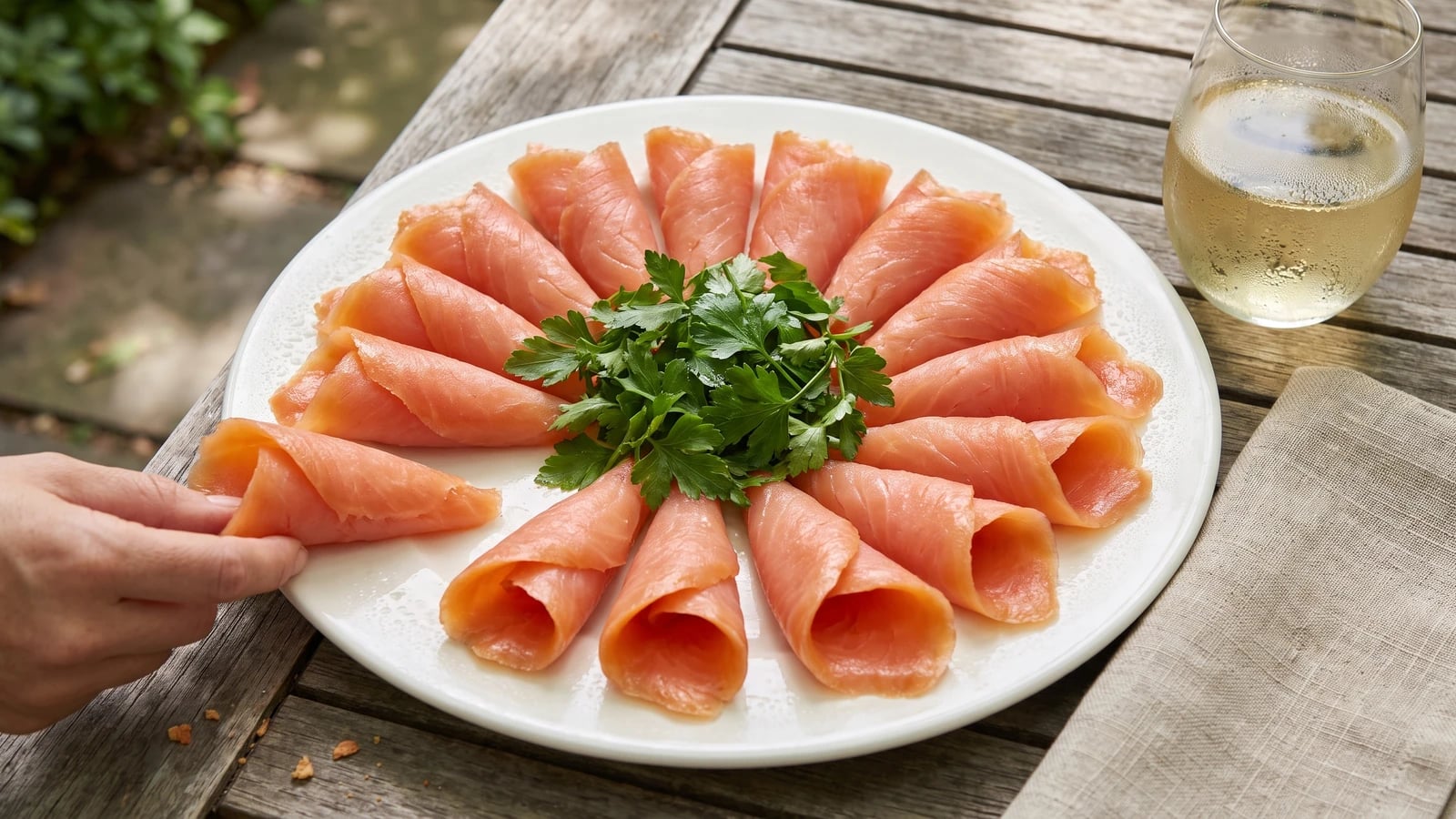
Silken smoked salmon, cut into thin triangles, rolled into neat cones, and ranged in a parsley-centered crown. The cure has done the deep work; cold hands and clean geometry bring it to the table.
Saumon fumé (smoked salmon) teaches restraint: the cure and smoke have built the flavor, so your work is temperature, cut, and shape. Don't touch a pan. Cold is the technique, because chilled salmon cuts cleanly and holds a cone, while warm salmon clings, smears, and loses its satin surface.
The formula hides no saucier, stockpot, or salamander. What it assumed was a garde-manger with a whole smoked side, a long salmon knife, and enough hands to prepare a brigade platter. This home version uses 8 ounces of supple, ready-sliced fish, enough for four. Trimming an entire side for service was scaffolding and can go; the thin triangles, rolled cones, circular crown, and curled-leaf parsley are the dish, so they stay.
At the table, the salmon should look coral and glossy, each open cone resting against the next around a vivid green center. Work lightly and without squeezing. The decisive step is rolling each triangle while it is still cold enough to hold its shape.
At the French classical table, saumon fumé found its precise home among the hors-d'œuvre froids of Paris, where the garde-manger cut preserved fish into composed arrangements before the meal. Smoking was not a Parisian invention; French service drew on the salmon-curing traditions of northern Europe and the Atlantic, then made the quality of the slice and arrangement its own discipline. The parsley-filled cone crown is a service form, not a recipe for smoking fish, and its brevity is deliberate.
Quantity
8 ounces (225 g)
thinly sliced and kept cold
Quantity
1 loosely packed cup (240 ml / 25 g)
washed, thoroughly dried, and divided into small sprigs
| Ingredient | Quantity |
|---|---|
| cold-smoked salmonthinly sliced and kept cold | 8 ounces (225 g) |
| curled-leaf parsleywashed, thoroughly dried, and divided into small sprigs | 1 loosely packed cup (240 ml / 25 g) |
Place a 30 cm round platter in the refrigerator for 10 minutes. Keep the salmon sealed and cold while you pick the parsley into small, full sprigs. Blot the parsley thoroughly; water makes the leaves slump and leaves dull patches on the fish. Have the board, knife, and chilled platter ready before opening the salmon.
Separate the salmon one slice at a time, peeling any backing away from the fish rather than pulling the fish from it. Cut each broad slice diagonally into two thin triangles. If the slices are long and narrow, make an angled cut near the middle and keep their natural tapered edges. Aim for 16 to 20 pieces measuring roughly 8 to 10 cm across the longest side. Work in a single layer and wipe the blade between cuts so the edges stay clean.
Set one triangle with its longest edge toward you. Beginning at one corner, roll it diagonally and loosely around the tip of your index finger, keeping one end open while the other tapers. Overlap the outer point by about 1 cm, then rest the cone seam-side down without squeezing it. If the salmon grows soft and the cones open, chill the pieces for 5 minutes and roll them again. If a triangle tears, overlap the torn edges and hide the join underneath. Ça se rattrape.
Gather the parsley loosely in the center of the chilled platter, keeping its curled leaves full rather than pressing them into a tight mound. Range the salmon cones around it in an even circle, tapered ends pointing inward and open rims facing outward and slightly upward. Let neighboring cones touch lightly so they support one another, but keep their edges distinct. Turn every seam underneath.
Serve at once, or cover the crown without pressing on the cones and refrigerate it for up to 4 hours. Let the platter stand for 5 to 10 minutes before serving, just long enough for the salmon to lose its deepest refrigerator chill while remaining cool and supple. Return leftovers to the cold within 2 hours. The cure has supplied the flavor; the clean slice and generous arrangement finish the work. À table!
1 serving (about 63g)
Culinary guides, cultural storytelling, and the editorial depth that makes cooking meaningful.
Discover Culinary ExplorerChef Juliette
Tiny éperlans, lightly floured and fried until their tails stand crisp, arrive in a generous heap on a napkin with fried parsley and grooved lemon, a weeknight lesson in heat and restraint.

Chef Juliette
Brandade de Morue turns salt cod, warm olive oil, and milk into a pale, silky emulsion: keep everything warm and add the oil slowly, then crown the generous dome with butter-fried bread.

Chef Juliette
Salt cod worked warm with cream, one patient spoonful at a time, until the rough flakes become a glossy Nîmes paste, domed generously and ringed with butter-fried croutons for the table.

Chef Juliette
Wine-poached char packed in its earthenware crock beneath butter gold: a make-ahead first course that turns careful cooling, thorough boning, and one unbroken seal into quiet abundance.