
Chef Juliette
Smelt (Éperlans)
Tiny éperlans, lightly floured and fried until their tails stand crisp, arrive in a generous heap on a napkin with fried parsley and grooved lemon, a weeknight lesson in heat and restraint.
A cooking platform built around craft, culture, and the stories behind what we eat.
Created by Chef Juliette
Based on No. 384, Foie-gras Sausages, from Le Guide Culinaire (1907) by Auguste Escoffier
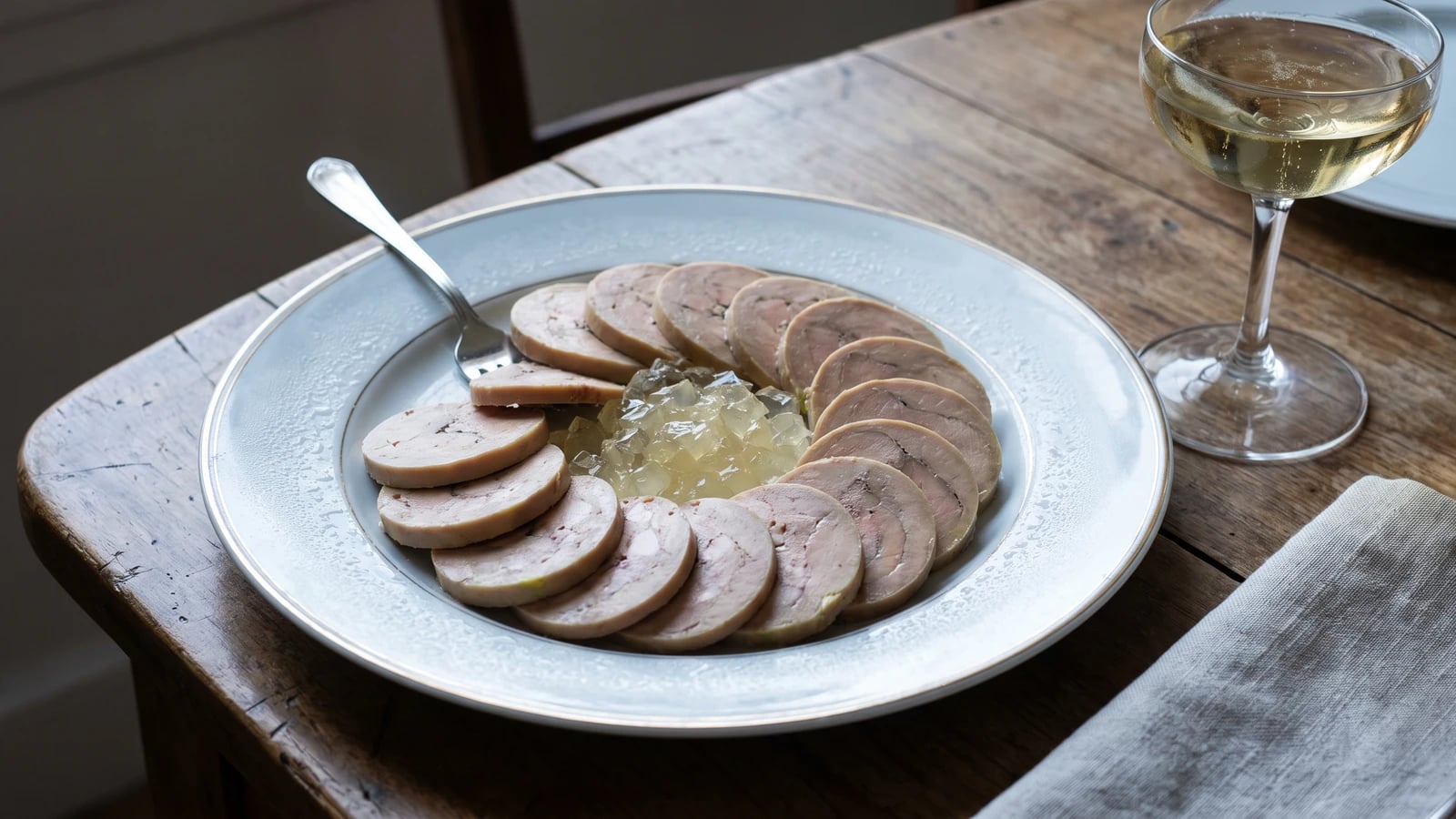
Pale, buttery roundels of foie-gras sausage circle a cool mound of finely chopped aspic: a lesson in cold charcuterie service where clean slicing and measured chill make the whole dish.
Saucisses de foie gras (foie-gras sausages) teach the discipline of service à froid, cold service: rich charcuterie must be cold enough to cut cleanly, then allowed just enough temper to taste of itself. The one true thing is temperature. Let the fat soften before slicing and the roundels smear; serve them icy and their perfume goes quiet.
The original entry assumed a garde-manger with foie-gras sausage already made, clear aspic set in the cold room, and hands to slice platters for the dining room. It begins with finished charcuterie, so this recipe does too; inventing a forcemeat formula here would change the entry rather than translate it. At home, buy one fine, fully cooked sausage from a proper charcutier and use a small quantity of well-set poultry aspic. The brigade's broad platters and constant cold room are scaffolding and can go. The thin roundels and chopped aspic at the centre are the dish and must stay. One cook, one stove, one evening, though the stove may rest tonight.
The platter should arrive pale, cool, and generous, the smooth slices answering the clear, trembling jelly. Chill the sausage until firm and sharpen the knife before anything else. That clean first cut decides the dish.
Saucisses de foie gras belong to the French garde-manger and the formal hors-d'oeuvre tables of Paris, where charcuterie was arranged as composed cold service rather than passed in its wrapping. The title can mislead a modern cook: this is not a fresh sausage to fry, but a fully cooked foie-gras preparation served in roundels, with chopped aspic providing savory contrast and the brilliant centre garnish prized at the fine table. The presentation traveled easily from the charcutier's counter to the home dining room because every difficult component could be completed before the guests sat down.
Quantity
2 small sausages (8 oz / 225 g total)
well chilled
Quantity
¾ cup (180 ml / 180 g)
fully set and well chilled
| Ingredient | Quantity |
|---|---|
| fully cooked foie-gras sausageswell chilled | 2 small sausages (8 oz / 225 g total) |
| prepared clear poultry aspic jellyfully set and well chilled | ¾ cup (180 ml / 180 g) |
Refrigerate the serving platter and foie-gras sausages for 20 minutes. Sharpen a thin-bladed knife, then set out a mug of hot water and a clean towel for warming and drying the blade. The sausages should feel firm through the centre but must not be frozen; freezing makes the fat grainy and dulls its flavor.
Turn the cold aspic onto a chilled board and chop it into irregular crystals about ¼ inch (6 mm) across. Use clean downward cuts rather than crushing it, because distinct facets catch the light and keep the centre garnish lively. If liquid collects around the chopped jelly, drain it in a fine-mesh sieve and refrigerate it for 10 minutes. Ça se rattrape. Return the aspic to the cold while you slice the sausages.
Remove only an inedible outer casing, following the charcutier's directions. Dip the knife in hot water, wipe it completely dry, and cut the sausage crosswise into roundels about ⅛ inch (3 mm) thick, reheating and cleaning the blade between cuts. Use almost no downward pressure; let the edge travel through the firm fat. If the surface begins to smear or the slices bend, stop and chill the sausage for 10 minutes before continuing. Nothing is lost.
Arrange the roundels in a broad, slightly overlapping ring around the edge of the chilled platter, leaving the centre open. Spoon the chopped aspic into that space as a loose, generous mound. Do not press it into a mold or add herbs, toast points, or decorative flourishes. The source asks for thin roundels with chopped aspic at the centre, and that clear contrast is the whole presentation.
Cover the platter without letting the wrapping touch the food and refrigerate it for 15 minutes. Bring it out about 5 minutes before serving, just long enough for the foie gras to lose its refrigerator chill while remaining firm. For a picnic, carry the platter below 40°F (4°C) with ice packs and uncover it only at the table. Serve with a small charcuterie fork. À table!
1 serving (about 101g)
Culinary guides, cultural storytelling, and the editorial depth that makes cooking meaningful.
Discover Culinary ExplorerChef Juliette
Tiny éperlans, lightly floured and fried until their tails stand crisp, arrive in a generous heap on a napkin with fried parsley and grooved lemon, a weeknight lesson in heat and restraint.

Chef Juliette
Brandade de Morue turns salt cod, warm olive oil, and milk into a pale, silky emulsion: keep everything warm and add the oil slowly, then crown the generous dome with butter-fried bread.

Chef Juliette
Salt cod worked warm with cream, one patient spoonful at a time, until the rough flakes become a glossy Nîmes paste, domed generously and ringed with butter-fried croutons for the table.

Chef Juliette
Wine-poached char packed in its earthenware crock beneath butter gold: a make-ahead first course that turns careful cooling, thorough boning, and one unbroken seal into quiet abundance.