
Chef Juliette
Smelt (Éperlans)
Tiny éperlans, lightly floured and fried until their tails stand crisp, arrive in a generous heap on a napkin with fried parsley and grooved lemon, a weeknight lesson in heat and restraint.
A cooking platform built around craft, culture, and the stories behind what we eat.
Created by Chef Juliette
Based on No. 380, Sardines, from Le Guide Culinaire (1907) by Auguste Escoffier
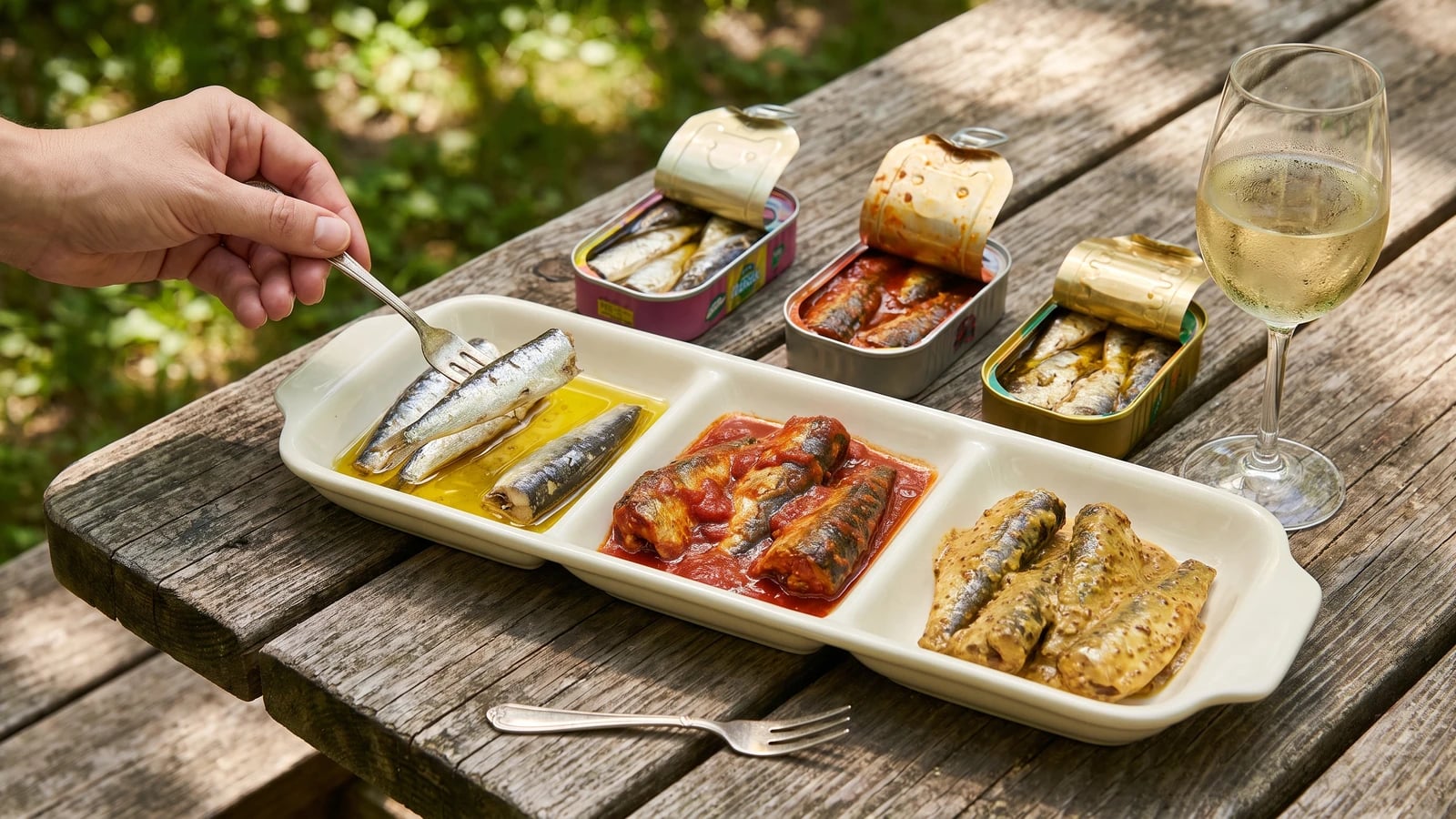
Three good tins, three distinct seasonings, and no needless fuss: sardines assorties teach the cold table’s quiet discipline, choosing well, preserving each fish whole, and serving every variety exactly as packed.
Sardines assorties (assorted sardines for the cold table) teach the discipline of leaving a finished thing alone. The one true thing to know before touching a pan is that there is no pan: the preserving house has already cooked, seasoned, and packed the fish. Your work is to choose well and serve without interference.
The original entry assumed neither a saucier on staff, a stockpot never off the fire, nor a salamander. It assumed a provisioner whose shelves held several prepared kinds, ready for the hors-d’œuvre table. For one cook, one stove, one evening, the honest equivalent is three small tins, enough for four people. The surrounding abundance of a grand cold buffet is scaffolding and can go; intact sardines, their distinct packing media, and unadorned service are the dish and must stay.
On the platter, the olive-oil sardines should remain silver and glossy, the tomato-packed fish red at the edges, the mustard variety warmly ochre. Lift each sardine whole and keep the three preparations separate. That careful handling is the step that matters most.
Sardines assorties belong to the French cold hors-d’œuvre table, with their pantry logic rooted in Atlantic canning ports from Nantes to Douarnenez, where seasonal catches became provisions that could travel far beyond the coast. From the provisioner’s shelf, tins moved directly onto bourgeois and bistro cold tables, valued precisely because the preserving house had completed the cooking. Fine olive-oil-packed sardines are among the rare canned foods prized for mellowing in the tin, but once opened they are still served simply, with their own oil and seasoning intact.
Quantity
1 tin (4¼ oz / 120 g net weight)
at cool room temperature
Quantity
1 tin (4¼ oz / 120 g net weight)
at cool room temperature
Quantity
1 tin (4¼ oz / 120 g net weight)
at cool room temperature
| Ingredient | Quantity |
|---|---|
| sardines à l’huile d’olive (sardines in olive oil)at cool room temperature | 1 tin (4¼ oz / 120 g net weight) |
| sardines à la tomate (sardines in tomato sauce)at cool room temperature | 1 tin (4¼ oz / 120 g net weight) |
| sardines à la moutarde (sardines in mustard sauce)at cool room temperature | 1 tin (4¼ oz / 120 g net weight) |
Choose one tin packed in olive oil, one in tomato sauce, and one in mustard sauce. The point is several distinct kinds, not three labels hiding the same fish. Look for whole sardines listed first among the ingredients, and reject any tin that bulges, leaks, rusts deeply, or carries a sharp dent along its seams.
Set the sealed tins at cool room temperature for about 20 minutes if they have been chilled or carried over ice. Cold oil turns thick and mute, while cool room temperature restores its gloss and lets the fish taste fully of itself. Keep the tins sealed until the platter and forks are ready.
Wipe the lids clean, open each tin carefully, and mind the sharp metal edges. Slide a narrow spatula beneath each sardine and lift from below rather than tugging at the tail. If one breaks, don’t mash it into paste. Ça se rattrape: nest the pieces together at the end of their row and spoon over a little of their own packing medium so the break nearly disappears.
Lay the sardines in three tidy groups on a divided platter, preserving their original shape and keeping the preparations apart. Spoon enough of each tin’s oil or sauce around its fish to leave the surface gleaming, but do not flood the platter. Add no lemon, onion, herbs, or vinaigrette. The packing medium is the finished seasoning, not something to rinse away.
Bring the platter straight to the cold table with small forks, allowing each person to taste the varieties separately before choosing a favorite. Once opened, keep the sardines out no longer than 2 hours, or 1 hour in very hot picnic weather. Cooking well is not cooking fancy. À table!
1 serving (about 90g)
Culinary guides, cultural storytelling, and the editorial depth that makes cooking meaningful.
Discover Culinary ExplorerChef Juliette
Tiny éperlans, lightly floured and fried until their tails stand crisp, arrive in a generous heap on a napkin with fried parsley and grooved lemon, a weeknight lesson in heat and restraint.

Chef Juliette
Brandade de Morue turns salt cod, warm olive oil, and milk into a pale, silky emulsion: keep everything warm and add the oil slowly, then crown the generous dome with butter-fried bread.

Chef Juliette
Salt cod worked warm with cream, one patient spoonful at a time, until the rough flakes become a glossy Nîmes paste, domed generously and ringed with butter-fried croutons for the table.

Chef Juliette
Wine-poached char packed in its earthenware crock beneath butter gold: a make-ahead first course that turns careful cooling, thorough boning, and one unbroken seal into quiet abundance.