
Chef Juliette
Smelt (Éperlans)
Tiny éperlans, lightly floured and fried until their tails stand crisp, arrive in a generous heap on a napkin with fried parsley and grooved lemon, a weeknight lesson in heat and restraint.
A cooking platform built around craft, culture, and the stories behind what we eat.
Created by Chef Juliette
Based on No. 378, Rillettes and Rillons, from Le Guide Culinaire (1907) by Auguste Escoffier
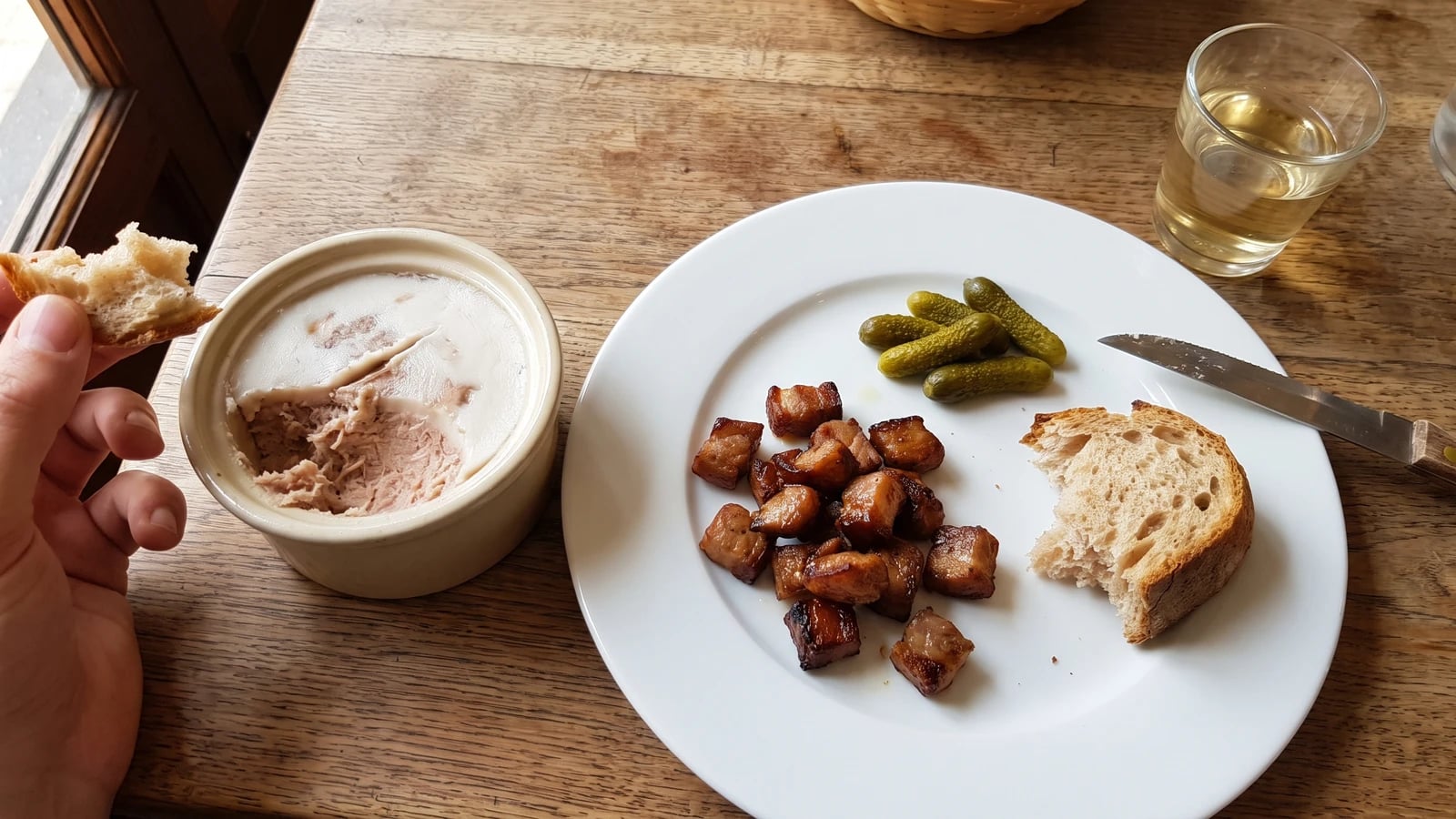
Rillettes et rillons arrive as the charcutier intended: one spreadable and fibrous, the other in succulent browned pieces, both very cold, with bread and sharp cornichons waiting.
Rillettes et rillons (slow-cooked shredded pork and pork confit pieces) teach one true thing before you touch a pan: temperature is part of the technique. The cold sets the rillettes into a rich, fibrous spread and firms the cooking fat around the browned rillons. Serve them warm and you lose the contrast the pork butcher worked to build.
There is no saucier, stockpot, or salamander to replace here. The original entry assumed a charcutier had already salted, rendered, shredded, browned, and packed a professional batch, then sold it ready for the table. At home, buy one modest quantity of each and chill them properly. This isn't a shortcut; it is exactly the division of labor the entry prescribes. The full production batch is professional scaffolding and can go. The cold service, the rillettes in their pot, and the contrast between spreadable fibers and tender rillons are the dish and must stay. One cook, one stove, one evening, and for once the stove gets the evening off.
Keep both preparations sealed and very cold until the table is ready. If they soften on the journey home, don't stir or mash them. Chill them again until firm, ça se rattrape. That patient chilling is the step that matters most.
Rillettes and rillons belong to the charcutier tradition of Touraine, particularly Tours: rillettes preserve pork as long fibers slowly cooked and packed in fat, while rillons are salted pieces of pork belly browned and cooked until tender in the same preserving medium. The pairing traveled from household pork preparation to market counters, picnics, and first courses without ever requiring cooking at the point of service. Rillons are sometimes mistaken for crisp cracklings, but the Touraine preparation is meaty and tender within, with browning on the outside rather than brittle crunch throughout.
Quantity
¾ cup (180 ml / 200 g)
preferably sold in its pot
Quantity
8 pieces (about 2 cups / 475 ml / 320 g total)
with any clinging cooking fat intact
Quantity
1 small loaf (about 12 oz / 340 g)
sliced or torn
Quantity
½ cup (120 ml / 75 g)
drained
Quantity
¼ cup (60 ml / 65 g)
| Ingredient | Quantity |
|---|---|
| ready-to-eat Rillettes de Tourspreferably sold in its pot | ¾ cup (180 ml / 200 g) |
| ready-to-eat rillonswith any clinging cooking fat intact | 8 pieces (about 2 cups / 475 ml / 320 g total) |
| country loafsliced or torn | 1 small loaf (about 12 oz / 340 g) |
| cornichonsdrained | ½ cup (120 ml / 75 g) |
| strong Dijon mustard (optional) | ¼ cup (60 ml / 65 g) |
Ask for ready-to-eat Rillettes de Tours with visible strands of pork beneath a thin protective layer of fat, not a whipped, perfectly smooth paste. Choose rillons that are irregular, well browned, and substantial enough to show both meat and fat. Carry everything home cold; if the journey takes more than thirty minutes, use an insulated bag.
Leave both preparations sealed and refrigerate them at or below 40°F (4°C) for at least 2 hours. Chill the serving pot and dish as well. If the fat has softened during transport, don't mix it back through the meat while warm; level only what has shifted, cover, and chill until the surface is firm again. Ça se rattrape.
If the rillettes came in a proper serving pot, wipe its rim and leave them exactly where the charcutier packed them. If they came in plastic, loosen the edges and transfer the rillettes as one cold mass into a chilled 1-cup (240 ml) stoneware pot, pressing only enough to settle them. Arrange the rillons in a separate shallow chilled dish and retain the little traces of set cooking fat; that fat carries seasoning and belongs to the preparation.
Slice or tear the country loaf shortly before serving so its crumb stays supple. Drain the cornichons well and place them beside the pork, with the Dijon mustard in a small pot if using. Keep the accompaniments plain and sharp. The rillettes and rillons already contain all the richness the plate requires.
Bring the rillettes and rillons directly from the refrigerator to the table. Draw a sturdy spreading knife across the rillettes in short strokes to lift their fibers, then eat the rillons as whole or halved bites with bread and cornichons. If the rillettes are too firm for the knife, warm only the blade under hot water, dry it thoroughly, and try again; don't warm the entire pot. Serve modest portions and replenish from the refrigerator if needed. À table!
1 serving (about 250g)
Culinary guides, cultural storytelling, and the editorial depth that makes cooking meaningful.
Discover Culinary ExplorerChef Juliette
Tiny éperlans, lightly floured and fried until their tails stand crisp, arrive in a generous heap on a napkin with fried parsley and grooved lemon, a weeknight lesson in heat and restraint.

Chef Juliette
Brandade de Morue turns salt cod, warm olive oil, and milk into a pale, silky emulsion: keep everything warm and add the oil slowly, then crown the generous dome with butter-fried bread.

Chef Juliette
Salt cod worked warm with cream, one patient spoonful at a time, until the rough flakes become a glossy Nîmes paste, domed generously and ringed with butter-fried croutons for the table.

Chef Juliette
Wine-poached char packed in its earthenware crock beneath butter gold: a make-ahead first course that turns careful cooling, thorough boning, and one unbroken seal into quiet abundance.