
Chef Juliette
Smelt (Éperlans)
Tiny éperlans, lightly floured and fried until their tails stand crisp, arrive in a generous heap on a napkin with fried parsley and grooved lemon, a weeknight lesson in heat and restraint.
A cooking platform built around craft, culture, and the stories behind what we eat.
Created by Chef Juliette
Based on No. 371, Lapwings’ Eggs à la Christiana, from Le Guide Culinaire (1907) by Auguste Escoffier
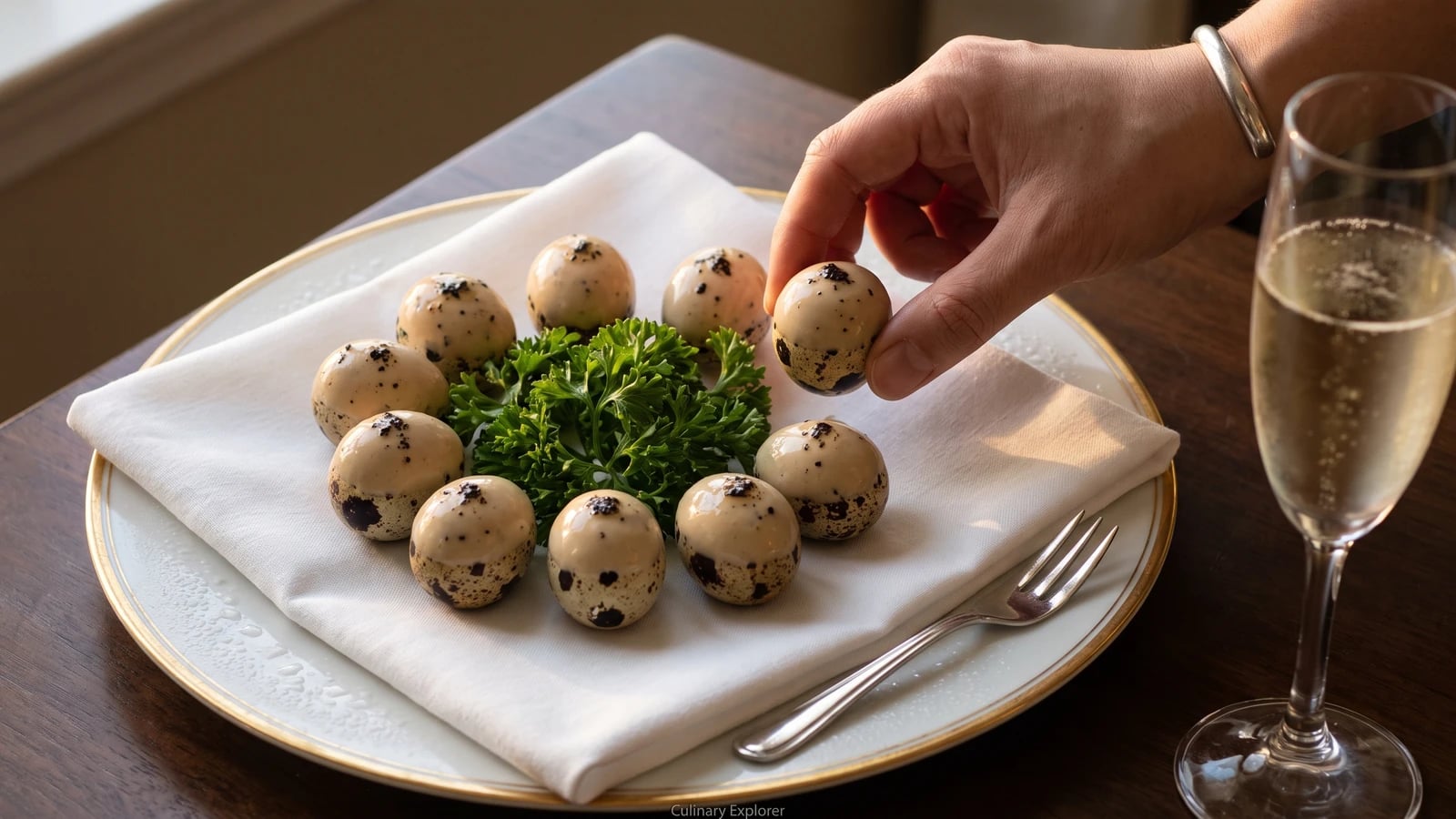
Petits œufs à la Christiana become eight cold, glossy bites: crisp butter tartlets, smooth foie gras, firm quail eggs, chopped truffle, and aspic, arranged generously for a dinner-party table.
Œufs de Vanneau à la Christiana (Lapwings’ Eggs à la Christiana) teaches the discipline of a cold glaze: everything beneath it must be cold, while the coating must be just fluid enough to fall in a smooth veil. That is the one true thing. Warm glaze melts the foie-gras footing; cool glaze clumps before it reaches the base.
The book assumed a garde-manger with hard-cooked lapwing eggs, tartlet shells, foie-gras purée, and gelée (clear meat aspic) already waiting, made from a stockpot never off the fire. A home kitchen has none of that mise en place, and eggs from protected wild lapwings should not be sought. Farmed quail eggs preserve the small, rich delicacy and turn the original twelve into eight neat bites for four; quick consommé gelée and hand-baked shells give one cook, one stove, one evening the honest equivalent.
The ready tray of shells and aspic was brigade scaffolding. Making pâte brisée (short butter pastry) with real butter, keeping the book’s two-to-one-to-one glaze of foie gras, truffle, and melted gelée, coating each egg completely, and letting it set cold are the dish itself. Chill the mounted tartlets before warming the glaze. Everything depends on that temperature contrast.
Œufs de Vanneau à la Christiana belongs to the Parisian grand-kitchen register of cold hors-d’œuvre, where rare seasonal eggs were mounted on pastry and finished with foie gras, truffle, and aspic. Lapwing eggs came from marsh and heath collecting rather than the farmyard, and their scarcity became part of the luxury surrounding them. The title marks a composed classical presentation, not a regional egg tradition, and its intent survives honestly with farmed quail eggs.
Quantity
8
Quantity
½ cup (120 ml / 60 g)
Quantity
2 tablespoons (30 ml / 28 g)
diced
Quantity
⅛ teaspoon (0.6 ml / 0.8 g)
Quantity
2 to 3 teaspoons (10 to 15 ml / 10 to 15 g)
Quantity
½ cup (120 ml / 120 g)
Quantity
1 leaf (about 2 g)
Quantity
⅓ cup (80 ml / 80 g)
reserve ¼ cup for the tartlets and 1 tablespoon plus 1 teaspoon for the glaze
Quantity
2 teaspoons (10 ml / 8 g)
drained and finely chopped
Quantity
1 cup (240 ml / 25 g)
washed and dried thoroughly
| Ingredient | Quantity |
|---|---|
| quail eggs | 8 |
| all-purpose flour | ½ cup (120 ml / 60 g) |
| cold unsalted butterdiced | 2 tablespoons (30 ml / 28 g) |
| fine salt | ⅛ teaspoon (0.6 ml / 0.8 g) |
| ice water | 2 to 3 teaspoons (10 to 15 ml / 10 to 15 g) |
| clear chicken consommé | ½ cup (120 ml / 120 g) |
| bronze-strength leaf gelatin | 1 leaf (about 2 g) |
| smooth foie-gras purée, preferably sieved bloc de foie grasreserve ¼ cup for the tartlets and 1 tablespoon plus 1 teaspoon for the glaze | ⅓ cup (80 ml / 80 g) |
| preserved black truffledrained and finely chopped | 2 teaspoons (10 ml / 8 g) |
| curled-leaf parsley sprigswashed and dried thoroughly | 1 cup (240 ml / 25 g) |
Soak the gelatin leaf in plenty of cold water until supple, about 5 minutes. Warm the consommé in a small saucepan just until it begins to tremble, then remove it from the heat. Squeeze the gelatin dry and stir it into the consommé until completely dissolved. Pour into a shallow bowl and chill until firm, at least 1 hour. This small batch replaces the clear meat jelly a grand kitchen kept ready all day.
Rub the cold butter into the flour and salt until the mixture resembles coarse sand with a few small flakes of butter remaining. Add the ice water a teaspoon at a time, stopping as soon as the dough holds together when pressed. Flatten it into a small disc and chill for 30 minutes. Roll it 2 mm thick between sheets of parchment, cut eight rounds about 7 cm wide, and line eight 4 cm tartlet moulds. If the pastry cracks, patch it with a thin scrap and press the seam smooth. Ça se rattrape.
Prick the pastry bases, chill them for another 10 minutes, then line each shell with a small piece of foil and fill with dry rice or baking beans. Bake at 190°C (375°F) for 10 minutes. Remove the weights and bake for 4 to 6 minutes more, until the shells are butter-gold and dry at the centre. Cool completely before unmoulding. Warm pastry would soften the foie gras, so give it the full cooling time.
Bring a small saucepan of water to a steady boil. Lower in the quail eggs and cook for 4 minutes, then transfer them immediately to ice water for 5 minutes. Crack and shell them under cool water, working gently beneath the membrane. Slice the thinnest possible cap from each broad end so the eggs stand upright without exposing the yolk. If an egg is nicked, turn the damaged side downward into the foie-gras purée; it will still present neatly.
Reserve 1 tablespoon plus 1 teaspoon (20 ml / 20 g) of foie-gras purée for the glaze. Divide the remaining ¼ cup (60 ml / 60 g) among the cold tartlet shells and smooth it into low, level mounds. Stand one trimmed egg firmly in each tartlet. Transfer the mounted tartlets to a chilled plate and refrigerate for 20 minutes, until the eggs and their foie-gras footing are thoroughly cold.
Spoon 2 teaspoons (10 ml / 10 g) of the set gelée into the smallest saucepan you own and melt it over very gentle heat. Add the reserved foie-gras purée and the chopped truffle, preserving the book’s two-to-one-to-one ratio by volume. Stir only until the mixture is smooth, glossy, and fluid enough to pour. It must be barely warm. If it separates into oily streaks, lift the pan from the heat, set its base in cool water, and stir steadily until it comes together. Ça se rattrape. If it tightens before coating, loosen it with a few drops of additional melted gelée.
Keep the tartlets on their chilled plate. Using a warmed teaspoon, pour the glaze over the crown of one egg and let it run down every side, turning the plate rather than touching the coating. A teaspoon replaces the source’s tablespoon because the quail eggs are smaller. Coat each egg completely, then chill the tartlets for at least 30 minutes. If a bare patch appears after setting, gently remelt the remaining glaze, cover that spot, and chill again.
Line a round serving platter with a clean, unscented white linen napkin. Arrange the eight cold tartlets in a generous circle and fill the centre with the dry curled-leaf parsley, keeping the arrangement full rather than fussy. Serve directly from the cold and return any waiting tartlets to the refrigerator. À table!
1 serving (about 100g)
Culinary guides, cultural storytelling, and the editorial depth that makes cooking meaningful.
Discover Culinary ExplorerChef Juliette
Tiny éperlans, lightly floured and fried until their tails stand crisp, arrive in a generous heap on a napkin with fried parsley and grooved lemon, a weeknight lesson in heat and restraint.

Chef Juliette
Brandade de Morue turns salt cod, warm olive oil, and milk into a pale, silky emulsion: keep everything warm and add the oil slowly, then crown the generous dome with butter-fried bread.

Chef Juliette
Salt cod worked warm with cream, one patient spoonful at a time, until the rough flakes become a glossy Nîmes paste, domed generously and ringed with butter-fried croutons for the table.

Chef Juliette
Wine-poached char packed in its earthenware crock beneath butter gold: a make-ahead first course that turns careful cooling, thorough boning, and one unbroken seal into quiet abundance.