
Chef Juliette
Smelt (Éperlans)
Tiny éperlans, lightly floured and fried until their tails stand crisp, arrive in a generous heap on a napkin with fried parsley and grooved lemon, a weeknight lesson in heat and restraint.
A cooking platform built around craft, culture, and the stories behind what we eat.
Created by Chef Juliette
Based on No. 351, Frogs or Nymphs à l’Aurore, from Le Guide Culinaire (1907) by Auguste Escoffier
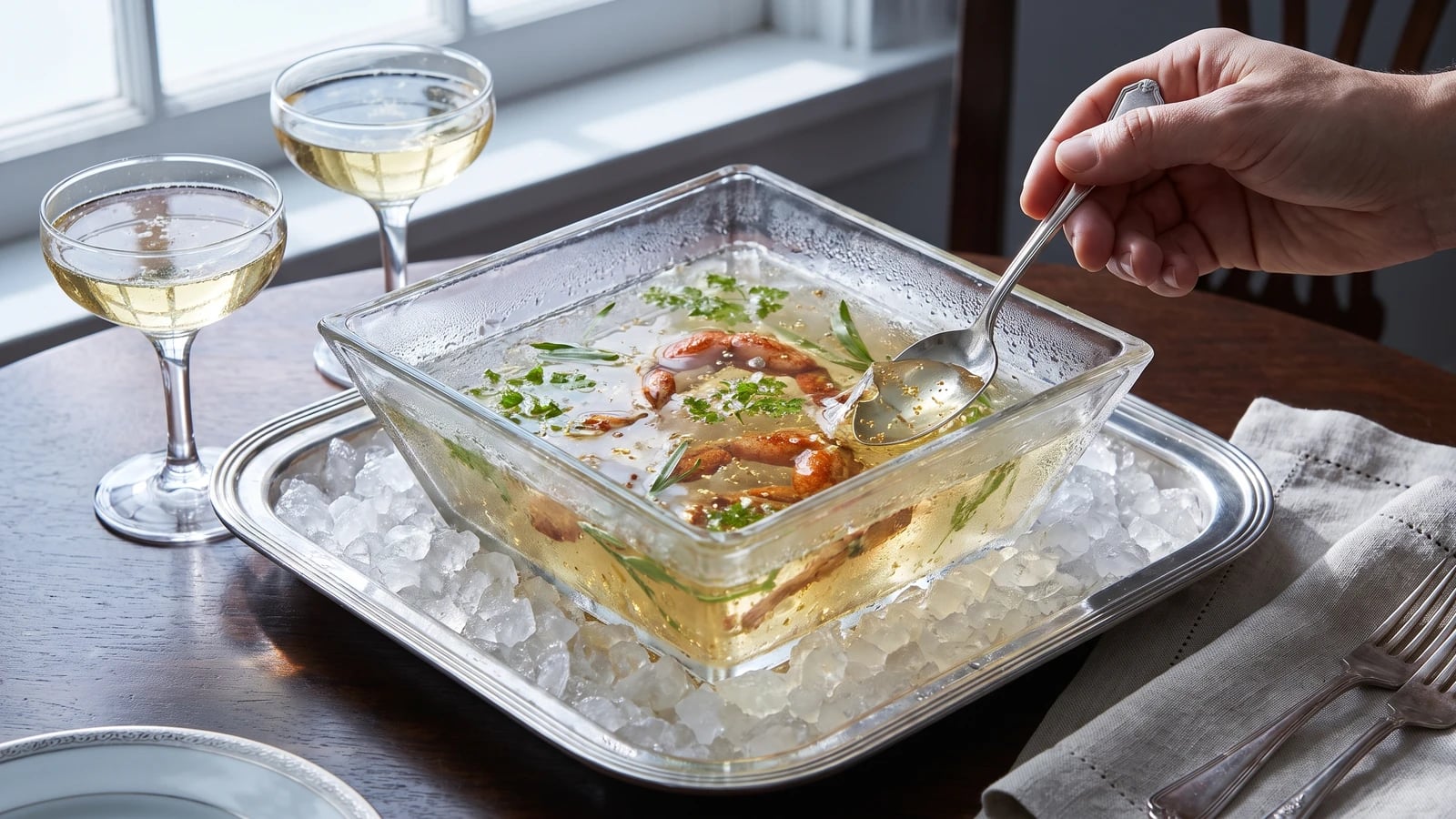
Golden paprika chaud-froid clings to tender frogs’ legs beneath clear Champagne jelly, with chervil pluches and tarragon suspended like water-grasses: the cold showpiece that teaches temperature, dryness, and patience.
Nymphes à l’Aurore (frogs’ legs in paprika chaud-froid and Champagne jelly) teaches the discipline of cold saucing: every layer must be cool enough to hold the next, yet supple enough to join it. The one true thing is dryness. If the poached legs carry even a film of water, the chaud-froid slips away and no amount of decoration will persuade it back.
The original assumed a saucier on staff, fish stock never off the fire, Champagne jelly waiting in the cold pantry, and enough hands to carve a block of ice for service. A salamander has no work in this cold dish; temperature control is the apparatus that matters. Here a small fish velouté becomes chaud-froid with cream and gelatin, the poaching liquor is clarified for the jelly, and a shallow glass dish rests over crushed ice. The carved block and brigade quantities were scaffolding and can go. The white-wine poach, golden paprika coating, clear Champagne jelly, chervil pluches, and tarragon water-grasses are the dish itself, so they stay.
Work in stages and let the cold do its part. Poach gently, chill promptly, then trim and dry every leg until the linen comes away clean and the surface feels tack-free. That drying decides whether the finished coating gleams or slides.
Nymphes à l’Aurore belongs to the French grand-service cold table rather than to one regional farmhouse tradition. Nymphes was deliberately substituted for frogs on formal menus, and this preparation made the poetic name particularly fitting by arranging the legs beneath clear jelly as though they rested among water-grasses; à l’Aurore describes the dawn-gold tint supplied by paprika. The dish traveled from banquet service to formal home tables with its poaching, chaud-froid, and gelée intact, while the carved ice remained presentation scaffolding rather than essential cookery.
Quantity
12 joined pairs (about 1 lb / 450 g)
thawed in the refrigerator if frozen
Quantity
3¼ cups (780 ml / 780 g)
Quantity
1⅔ cups (400 ml / 395 g)
Quantity
1 (about 4 oz / 115 g)
sliced
Quantity
1 (about 3 oz / 85 g)
sliced
Quantity
1 (about 4 oz / 115 g)
sliced
Quantity
10 (about ⅓ oz / 10 g)
Quantity
4
Quantity
1
Quantity
1 teaspoon (5 ml / 3 g)
lightly crushed
Quantity
2 teaspoons (10 ml / 12 g)
Quantity
1½ cups (360 ml / 360 g)
Quantity
2 tablespoons (30 ml / 28 g)
Quantity
3 tablespoons (45 ml / 24 g)
Quantity
½ cup (120 ml / 120 g)
Quantity
¾ teaspoon (4 ml / 2 g)
Quantity
1¼ teaspoons (6 ml / 4 g)
Quantity
2 tablespoons (30 ml / 30 g)
Quantity
to taste
Quantity
3 (about 6 tablespoons / 90 ml / 90 g)
divided
Quantity
2 cups (480 ml / 480 g)
Quantity
1 cup (240 ml / 235 g)
chilled
Quantity
4½ teaspoons (22 ml / 14 g)
Quantity
¼ cup (60 ml / 60 g)
Quantity
¼ cup loosely packed (60 ml / 5 g)
fine picked shreds
Quantity
16
Quantity
about 6 cups (1.4 liters / 1 kg)
for service
| Ingredient | Quantity |
|---|---|
| dressed frog legsthawed in the refrigerator if frozen | 12 joined pairs (about 1 lb / 450 g) |
| cold water | 3¼ cups (780 ml / 780 g) |
| dry white wine | 1⅔ cups (400 ml / 395 g) |
| medium leek, white and pale green parts onlysliced | 1 (about 4 oz / 115 g) |
| medium carrotsliced | 1 (about 3 oz / 85 g) |
| small yellow onionsliced | 1 (about 4 oz / 115 g) |
| flat-leaf parsley stems | 10 (about ⅓ oz / 10 g) |
| fresh tarragon sprigs | 4 |
| bay leaf | 1 |
| black peppercornslightly crushed | 1 teaspoon (5 ml / 3 g) |
| fine sea salt | 2 teaspoons (10 ml / 12 g) |
| good unsalted fish stock | 1½ cups (360 ml / 360 g) |
| unsalted butter | 2 tablespoons (30 ml / 28 g) |
| all-purpose flour | 3 tablespoons (45 ml / 24 g) |
| heavy cream | ½ cup (120 ml / 120 g) |
| sweet unsmoked paprika | ¾ teaspoon (4 ml / 2 g) |
| powdered gelatin for the chaud-froid | 1¼ teaspoons (6 ml / 4 g) |
| cold water for blooming the chaud-froid gelatin | 2 tablespoons (30 ml / 30 g) |
| fine sea salt and ground white pepper | to taste |
| large egg whitesdivided | 3 (about 6 tablespoons / 90 ml / 90 g) |
| clarified court-bouillon reserved from the poaching liquor | 2 cups (480 ml / 480 g) |
| brut Champagnechilled | 1 cup (240 ml / 235 g) |
| powdered gelatin for the Champagne jelly | 4½ teaspoons (22 ml / 14 g) |
| cold water for blooming the Champagne jelly gelatin | ¼ cup (60 ml / 60 g) |
| chervil pluchesfine picked shreds | ¼ cup loosely packed (60 ml / 5 g) |
| small fresh tarragon leaves | 16 |
| crushed icefor service | about 6 cups (1.4 liters / 1 kg) |
Combine the cold water, white wine, leek, carrot, onion, parsley stems, tarragon sprigs, bay leaf, peppercorns, and salt in a wide nonreactive saucepan. Bring it slowly to a simmer, then hold it at a quiet tremble for 20 minutes so the wine loses its raw edge and the vegetables give the liquor their sweetness. A violent boil drives away the wine before it has seasoned the broth.
Lower the frog-leg pairs into the court-bouillon and adjust the heat so the liquid barely trembles. Poach for 4 to 7 minutes, depending on size, until the flesh is opaque, gently firm, and reaches 145°F (63°C) at the thickest part. Lift the legs onto a rack set over a chilled tray and refrigerate promptly until completely cold. Strain and reserve the poaching liquor. When the legs are cold, trim away loose cartilage or ragged tissue without separating the joined pairs, then press them carefully in a clean lint-free linen towel until every surface is dry.
Measure 3 cups (720 ml) of strained poaching liquor into a clean saucepan, reducing it first if you have more. Cool it completely over an ice bath, then whisk in two egg whites. Heat very slowly, stirring until pale curds begin to rise; once they form a raft across the surface, stop stirring, open a small hole in the raft, and maintain the gentlest simmer for 10 minutes. Ladle the clear liquor through a damp, fine cloth without pressing the solids. If it remains cloudy, cool it again and repeat the clarification with the remaining egg white. Ça se rattrape. Reserve 2 cups (480 ml) of clear court-bouillon for the jelly.
Sprinkle the smaller measure of gelatin over its 2 tablespoons of cold water and leave it to bloom for 5 minutes. Melt the butter over medium-low heat, whisk in the flour, and cook this roux for 2 minutes without letting it brown. Stir in the paprika for 10 seconds, then whisk in the fish stock gradually so no lumps form. Simmer gently for 8 to 10 minutes, add the cream, and continue until the sauce is smooth, glossy, and thick enough to nap the back of a spoon. Remove it from the heat, whisk in the bloomed gelatin, season with salt and white pepper, and pass it through a fine sieve.
Set the bowl of chaud-froid over an ice bath and stir until the sauce is cool but still fluid, about the texture of thick cream. Holding each cold, dry pair by the bone ends, lower it into the sauce one after another, let the excess fall back into the bowl, and place it on a rack to set. Chill the coated legs for 20 minutes. If the coating slides off, either the legs are damp or the sauce is too warm: blot the legs again, chill the sauce for a few minutes, and repeat. If the sauce sets in the bowl, stand it briefly in lukewarm water and stir until supple. Ça se rattrape.
Sprinkle the larger measure of gelatin over its ¼ cup of cold water and leave it for 5 minutes. Warm 1 cup (240 ml) of clarified court-bouillon until hot but not boiling, remove it from the heat, and dissolve the bloomed gelatin in it completely. Stir in the remaining clarified court-bouillon, then the chilled Champagne. Skim away any foam and let the jelly mixture cool until it is no warmer than the room and remains freely pourable. Once the Champagne is added, do not boil it. If the jelly begins setting in the pitcher, stand the pitcher in lukewarm water and stir gently.
Pour about ¾ cup (180 ml) of Champagne jelly into a shallow 8-inch (20 cm) square glass serving dish. Refrigerate for 30 to 45 minutes, until completely set and firm enough to support the coated legs. This first layer is not decoration alone; it keeps the nymphs suspended rather than stranded against the bottom.
Arrange the coated frog-leg pairs neatly over the set base, leaving small channels of clear jelly visible between them. Lay the chervil pluches and tarragon leaves between the pairs in loose strands like water-grasses. Spoon over just enough liquid jelly to anchor the legs and herbs, about ½ cup (120 ml), then chill for 15 to 20 minutes. Once anchored, pour the remaining jelly slowly down the side of the dish until the legs are covered by about ¼ inch (6 mm). If anything floats, lift it out before the jelly sets, return it to the base, and anchor it with two spoonfuls at a time before continuing.
Refrigerate the finished dish for at least 4 hours, preferably overnight, until the Champagne jelly is clear and softly firm. Set the glass dish in a low tray of fresh crushed ice just before serving. This replaces the carved ice block honestly: the nymphs remain properly cold, while the jelly supplies all the spectacle needed. Keep the dish over ice and return any remainder to the refrigerator promptly. À table!
1 serving (about 350g)
Culinary guides, cultural storytelling, and the editorial depth that makes cooking meaningful.
Discover Culinary ExplorerChef Juliette
Tiny éperlans, lightly floured and fried until their tails stand crisp, arrive in a generous heap on a napkin with fried parsley and grooved lemon, a weeknight lesson in heat and restraint.

Chef Juliette
Brandade de Morue turns salt cod, warm olive oil, and milk into a pale, silky emulsion: keep everything warm and add the oil slowly, then crown the generous dome with butter-fried bread.

Chef Juliette
Salt cod worked warm with cream, one patient spoonful at a time, until the rough flakes become a glossy Nîmes paste, domed generously and ringed with butter-fried croutons for the table.

Chef Juliette
Wine-poached char packed in its earthenware crock beneath butter gold: a make-ahead first course that turns careful cooling, thorough boning, and one unbroken seal into quiet abundance.