
Chef Juliette
Smelt (Éperlans)
Tiny éperlans, lightly floured and fried until their tails stand crisp, arrive in a generous heap on a napkin with fried parsley and grooved lemon, a weeknight lesson in heat and restraint.
A cooking platform built around craft, culture, and the stories behind what we eat.
Created by Chef Juliette
Based on No. 350, Frivolities, from Le Guide Culinaire (1907) by Auguste Escoffier
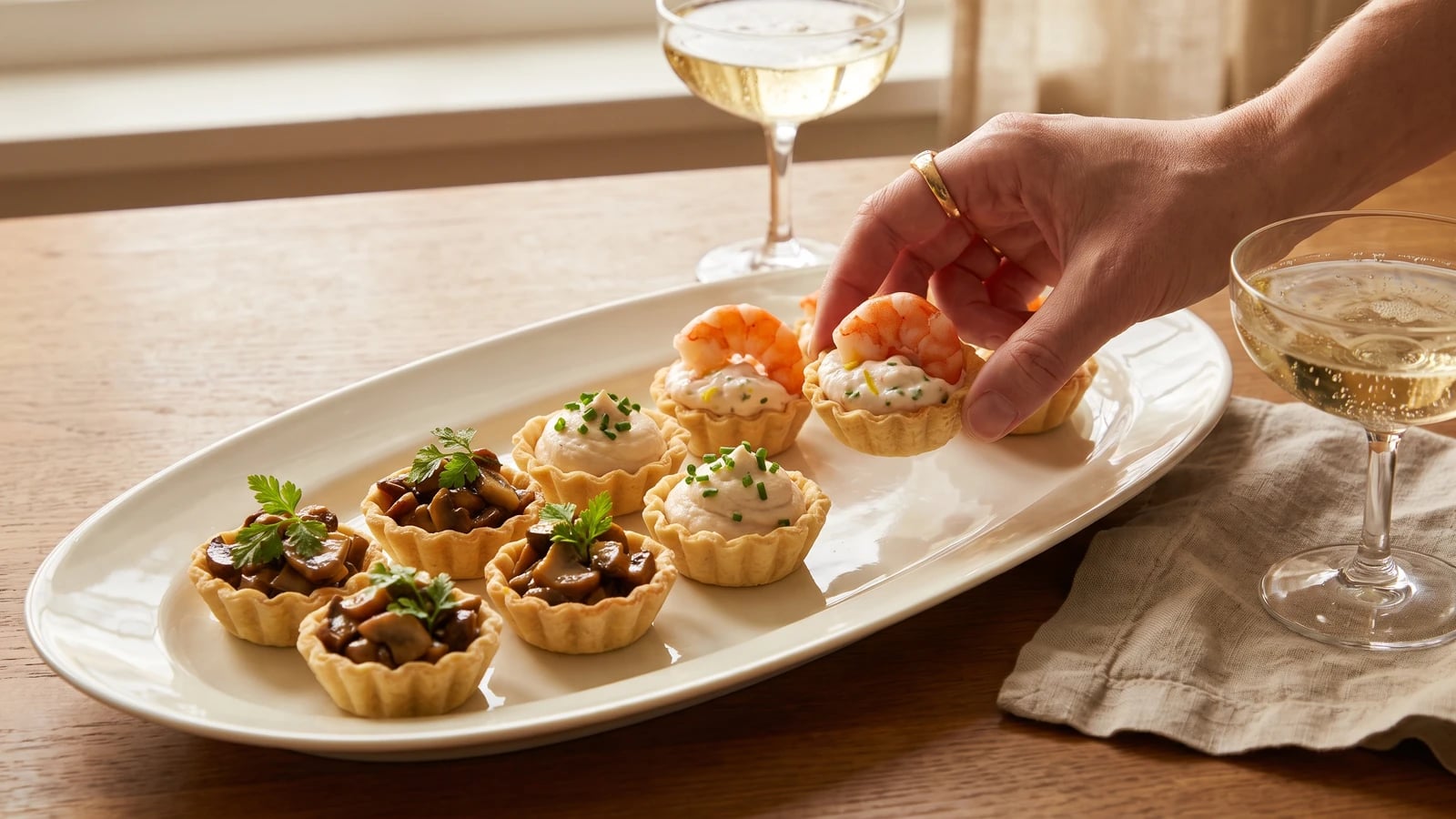
Three precise fillings, one crisp fleet of Barquettes (No. 314): mushroom duxelles, silken ham mousse, and lemony shrimp cream, assembled late so every little shell reaches the table light and crisp.
Frivolités (small filled pastry boats) teach proportion. The one true thing to know before touching a pan is this: shell and filling must each be cool, dry, and properly seasoned before they meet. A damp filling ruins crisp pastry, while too much filling turns an elegant first bite into a small pie with ambitions.
The classical entry defines a family, not a fixed garnish. Its kitchen assumed a pâtissier turning out ranks of tiny shells and a garde-manger holding many fillings ready for service. At home, 24 baked Barquettes (No. 314) and three contrasting garnishes preserve the intent without pretending you have a brigade in the pantry. The parade of dozens is scaffolding and can go; the crisp shell, concentrated filling, and variety are the dish and must stay. One cook, one stove, one evening.
Cook the mushroom duxelles until no loose moisture remains, keep the ham mousse cold enough to hold its shape, and dry the shrimp before binding it. If a filling loosens, don't surrender the shells to it. Reduce or chill the filling first, ça se rattrape. The step that decides everything is the last one: fill the Barquettes (No. 314) only shortly before they go to the table.
Frivolités belong to the formal Parisian cold table rather than to a single provincial larder. The term entered the classical repertoire as a category, not a fixed garnish: tiny boat-shaped shells and tartlets, filled in countless ways, could replace the opening hors-d’œuvres on a composed menu. Their lightness comes from scale and structure, thin crisp pastry carrying one restrained spoonful of concentrated filling.
Quantity
24 Barquettes (No. 314)
Quantity
1½ cups (165 ml / 110 g)
very finely chopped
Quantity
1 small shallot (20 g)
finely minced
Quantity
1 tablespoon (15 ml / 14 g)
Quantity
1 tablespoon (15 ml / 15 g)
Quantity
2 tablespoons (30 ml / 30 g)
Quantity
½ teaspoon (2.5 ml / 3 g)
divided
Quantity
¼ teaspoon (1.2 ml / 0.5 g)
divided
Quantity
½ cup packed (120 ml / 75 g)
diced
Quantity
1 tablespoon (15 ml / 14 g)
softened
Quantity
1 teaspoon (5 ml / 5 g)
Quantity
2 tablespoons (30 ml / 30 g)
well chilled
Quantity
1 small bunch (10 g)
2 teaspoons chopped and 8 small leaves reserved
Quantity
½ cup (120 ml / 85 g)
patted dry, with 8 left whole and the remainder chopped
Quantity
2 tablespoons (30 ml / 30 g)
Quantity
1 teaspoon (5 ml / 5 g)
Quantity
½ teaspoon (2.5 ml / 1 g)
Quantity
2 teaspoons (10 ml / 2 g)
finely sliced and divided
Quantity
1/16 teaspoon (0.3 ml / 0.1 g)
| Ingredient | Quantity |
|---|---|
| small baked pastry shells | 24 Barquettes (No. 314) |
| button mushroomsvery finely chopped | 1½ cups (165 ml / 110 g) |
| shallotfinely minced | 1 small shallot (20 g) |
| unsalted butter for the mushroom duxelles | 1 tablespoon (15 ml / 14 g) |
| dry white wine | 1 tablespoon (15 ml / 15 g) |
| heavy cream for the mushroom duxelles | 2 tablespoons (30 ml / 30 g) |
| fine sea saltdivided | ½ teaspoon (2.5 ml / 3 g) |
| ground white pepperdivided | ¼ teaspoon (1.2 ml / 0.5 g) |
| jambon blancdiced | ½ cup packed (120 ml / 75 g) |
| unsalted butter for the ham moussesoftened | 1 tablespoon (15 ml / 14 g) |
| Dijon mustard | 1 teaspoon (5 ml / 5 g) |
| heavy cream for the ham moussewell chilled | 2 tablespoons (30 ml / 30 g) |
| fresh chervil2 teaspoons chopped and 8 small leaves reserved | 1 small bunch (10 g) |
| cooked small shrimppatted dry, with 8 left whole and the remainder chopped | ½ cup (120 ml / 85 g) |
| crème fraîche | 2 tablespoons (30 ml / 30 g) |
| fresh lemon juice | 1 teaspoon (5 ml / 5 g) |
| finely grated lemon zest | ½ teaspoon (2.5 ml / 1 g) |
| fresh chivesfinely sliced and divided | 2 teaspoons (10 ml / 2 g) |
| cayenne pepper | 1/16 teaspoon (0.3 ml / 0.1 g) |
Heat the oven to 325°F (165°C). Arrange the baked Barquettes (No. 314) open-side up on a wire rack set over a sheet pan and warm them for 5 to 7 minutes, just until the pastry feels dry and smells distinctly of butter. Cool them completely on the rack. Warm shells soften butter-based fillings, and trapped moisture softens pastry; if a shell still bends slightly when cool, return the whole batch to the oven for 2 minutes. Ça se rattrape.
Melt 1 tablespoon (15 ml / 14 g) butter in a 10-inch (25 cm) sauté pan over medium heat. Add the shallot and cook for 1 minute without browning, then add the mushrooms with a pinch of the salt. Raise the heat to medium-high and stir until the mushrooms release their water, the liquid evaporates, and the pan begins to sizzle again. Add the wine and reduce it completely. Stir in 2 tablespoons (30 ml / 30 g) cream and cook until the duxelles holds a furrow when the spoon passes through it. Season with white pepper, spread it thinly on a plate, and chill. If liquid gathers around it as it cools, return it to the pan and reduce again; flour would dull the filling and is no rescue at all.
Process the jambon blanc with the softened butter, Dijon mustard, half the chopped chervil, a small pinch of salt, and a pinch of white pepper until smooth. Whisk the cold cream in a small bowl until it holds soft folds, then incorporate it into the ham mixture with a spatula. The mousse should hold a soft peak without looking oily. If warmth makes it loose or greasy, chill it for 10 minutes and beat it firmly with the spatula until smooth again. Ça se rattrape. Cover and keep cold.
Set aside 8 whole shrimp for finishing and chop the remainder finely enough to fit inside the shells while retaining some texture. Fold the chopped shrimp into the crème fraîche with the lemon juice, zest, cayenne, half the chives, a pinch of salt, and a little white pepper. Keep the mixture cold. If liquid appears at the bottom of the bowl, the shrimp carried too much water; set the mixture in a fine sieve over a bowl for 5 minutes, then chill it again. Don't bury the problem under crumbs.
No more than 30 minutes before serving, divide the Barquettes (No. 314) into three groups of 8. Spoon the cold duxelles into the first group, stopping just above the rim. Pipe or spoon the ham mousse into the second group and finish each with a small chervil leaf. Fill the final group with shrimp cream, then top each with one reserved shrimp and a few sliced chives. Use about 2 teaspoons (10 ml) filling per shell. Generosity here means a complete bite, not a top-heavy mound.
Alternate the three fillings across a long platter so guests can recognize the assortment without a little speech from the cook. Let the filled shells stand for 5 to 10 minutes at cool room temperature, which softens the butter just enough for the flavors to open, then serve at once. Keep any second tray cold and bring it out later rather than letting shrimp and ham sit out for more than 2 hours. À table!
1 serving (3 pieces, about 68g)
Culinary guides, cultural storytelling, and the editorial depth that makes cooking meaningful.
Discover Culinary ExplorerChef Juliette
Tiny éperlans, lightly floured and fried until their tails stand crisp, arrive in a generous heap on a napkin with fried parsley and grooved lemon, a weeknight lesson in heat and restraint.

Chef Juliette
Brandade de Morue turns salt cod, warm olive oil, and milk into a pale, silky emulsion: keep everything warm and add the oil slowly, then crown the generous dome with butter-fried bread.

Chef Juliette
Salt cod worked warm with cream, one patient spoonful at a time, until the rough flakes become a glossy Nîmes paste, domed generously and ringed with butter-fried croutons for the table.

Chef Juliette
Wine-poached char packed in its earthenware crock beneath butter gold: a make-ahead first course that turns careful cooling, thorough boning, and one unbroken seal into quiet abundance.