
Chef Juliette
Smelt (Éperlans)
Tiny éperlans, lightly floured and fried until their tails stand crisp, arrive in a generous heap on a napkin with fried parsley and grooved lemon, a weeknight lesson in heat and restraint.
A cooking platform built around craft, culture, and the stories behind what we eat.
Created by Chef Juliette
Based on No. 349, Foie Gras, from Le Guide Culinaire (1907) by Auguste Escoffier
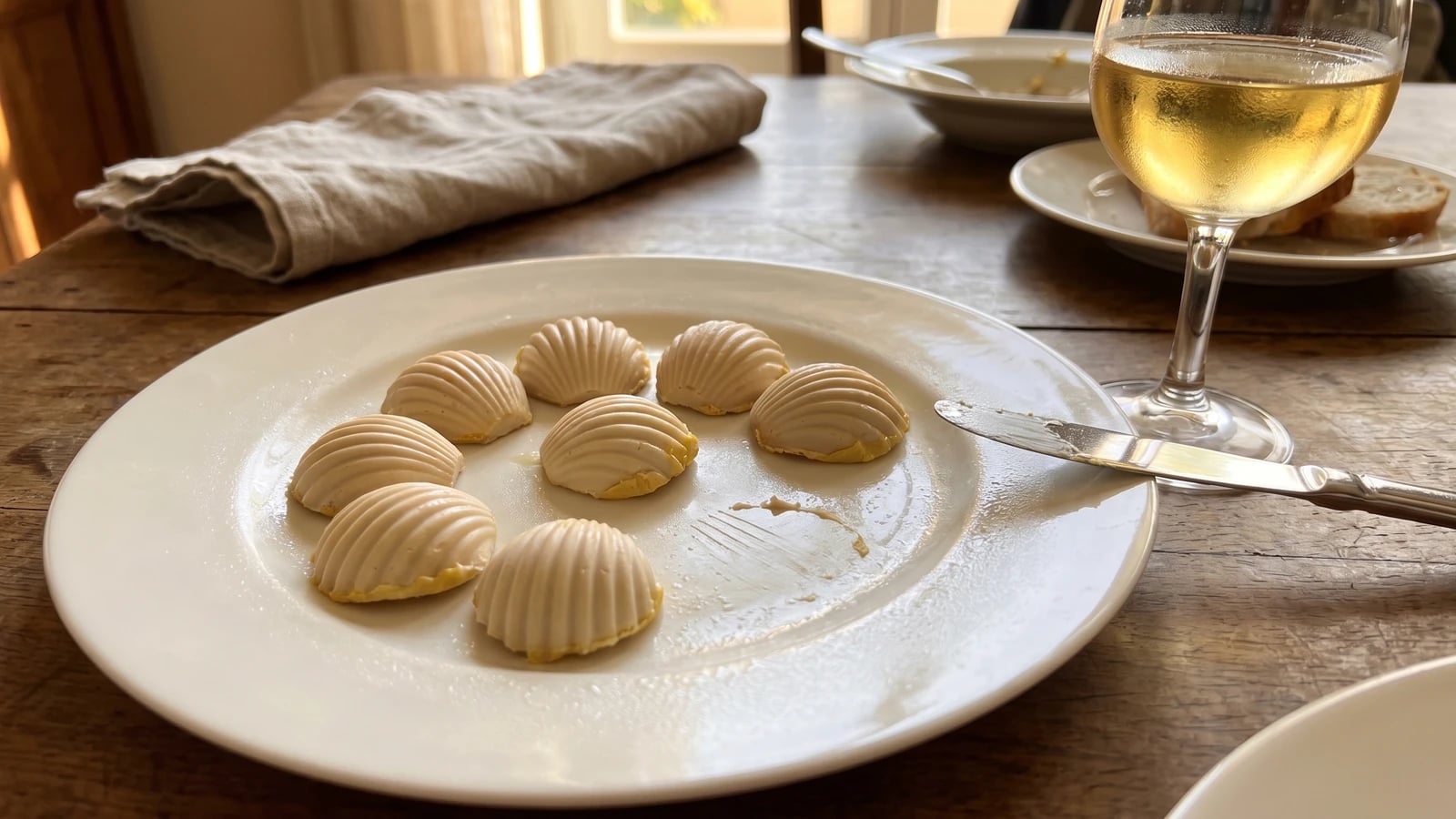
Foie gras at its most exacting and simplest: a chilled cylinder cut into thin, clean slices, or a pot shaped into little shells, served immediately while its texture is cool, dense, and silken.
Foie gras froid (chilled duck or goose liver) teaches restraint. The one true thing to know before reaching for a pan is this: don't. The source begins with foie gras already cooked, seasoned, and set. Your work is temperature, cutting, and prompt service. Add heat and you've left the dish behind.
The source entry assumed a garde-manger with finished foie gras in a sausage-shaped cylinder or pot, an ice-cold platter, and enough hands to shape each portion at the final moment. It needed no saucier, simmering stock, or salamander because none belongs here. The honest home equivalent is a fully cooked foie gras, a refrigerator, a chilled plate, and either a thin knife or the little fluted curler once used for serving butter. The cold station has changed; the preparation has not.
Slicing the cylinder thinly or shaping the potted foie gras into little shells is the dish, not brigade scaffolding, and it must stay. Everything else can go. Keep the foie gras fully chilled until your plate and tools are ready, because that last-minute cold is the step that decides everything.
Foie gras belongs especially to Gascony, the Landes, and Périgord, where households preserved ducks and geese and served their rich livers cold beside the rest of the charcuterie table. The preparation traveled from farm preserving pots into the work of charcutiers and grand kitchens, which refined it into smooth cylinders, terrines, and carefully molded portions. Alsace maintains its own distinct goose-liver tradition, but the duck foie gras served across France still speaks most clearly of the Southwest.
Quantity
1 package, 8.8 ounces (250 g)
thoroughly chilled
| Ingredient | Quantity |
|---|---|
| fully cooked ready-to-serve foie gras, cylinder or potthoroughly chilled | 1 package, 8.8 ounces (250 g) |
Keep the sealed foie gras in the coldest part of the refrigerator for at least 1 hour. Chill the serving plate and your chosen tool for 20 minutes as well. This replaces the source kitchen's iced service without letting melting ice touch the foie gras and spoil its clean surface. Do not freeze it; the texture can turn brittle and crumble when cut.
Open the foie gras only when the plate is cold and the table is ready. If it is a sausage-shaped cylinder, remove the wrapper without pressing the sides. If it is potted, uncover only the section you intend to shape and leave the remainder protected from the air. Cold dulls aromas, but it also gives foie gras the close texture this particular service requires.
For the sausage form, dip a thin, sharp knife into hot water, wipe it completely dry, and cut the foie gras crosswise into slices about 1/8 inch (3 mm) thick. Clean and warm the blade between cuts so it passes through rather than dragging. Arrange the slices on the chilled plate as you work. If the edges smear, stop and return the cylinder to the refrigerator for 10 minutes; if it fractures, let it stand for 2 minutes and try again with a warmer, dry blade.
For potted foie gras, draw a small fluted butter curler through the surface at a shallow angle, using short strokes so each portion curls into a little shell smaller than a pat of butter. A demitasse spoon can make a simple concave shell if you have no curler. Work lightly and return each piece to the chilled plate at once. If the shells slump or smear, ça se rattrape: cover the pot and chill it for 10 minutes before continuing. If they crack, give the pot 2 minutes at room temperature.
Carry the foie gras to the table as soon as the slices or shells are ready. Serve it on the cold plate with no sauce, seasoning, or garnish added to the foie gras itself. If service is briefly delayed, cover the plate and return it to the refrigerator, but don't leave those cut surfaces waiting. Cold and prompt, exactly as the source directs. À table!
1 serving (about 63g)
Culinary guides, cultural storytelling, and the editorial depth that makes cooking meaningful.
Discover Culinary ExplorerChef Juliette
Tiny éperlans, lightly floured and fried until their tails stand crisp, arrive in a generous heap on a napkin with fried parsley and grooved lemon, a weeknight lesson in heat and restraint.

Chef Juliette
Brandade de Morue turns salt cod, warm olive oil, and milk into a pale, silky emulsion: keep everything warm and add the oil slowly, then crown the generous dome with butter-fried bread.

Chef Juliette
Salt cod worked warm with cream, one patient spoonful at a time, until the rough flakes become a glossy Nîmes paste, domed generously and ringed with butter-fried croutons for the table.

Chef Juliette
Wine-poached char packed in its earthenware crock beneath butter gold: a make-ahead first course that turns careful cooling, thorough boning, and one unbroken seal into quiet abundance.