
Chef Juliette
Smelt (Éperlans)
Tiny éperlans, lightly floured and fried until their tails stand crisp, arrive in a generous heap on a napkin with fried parsley and grooved lemon, a weeknight lesson in heat and restraint.
A cooking platform built around craft, culture, and the stories behind what we eat.
Created by Chef Juliette
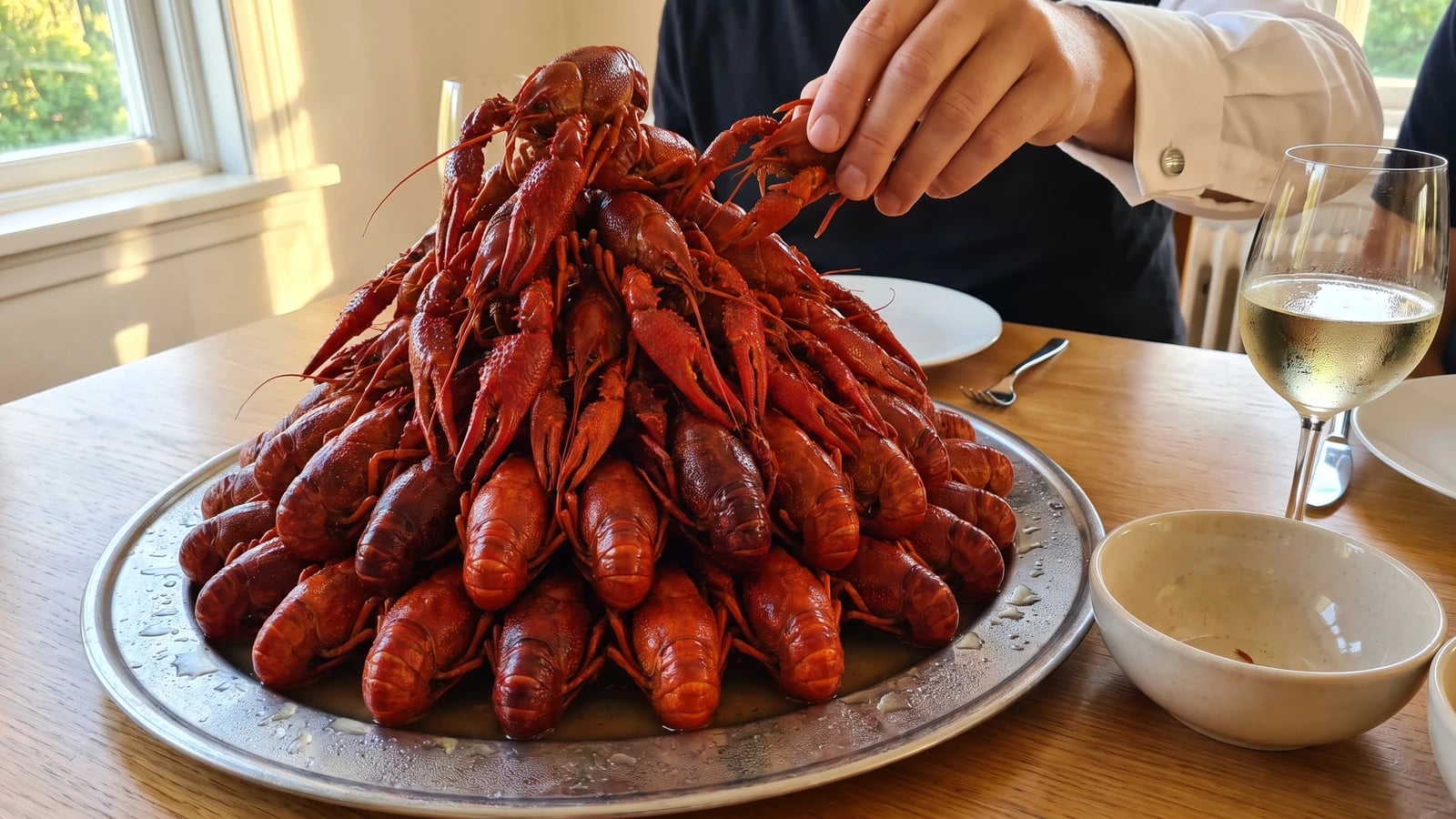
Based on No. 345, Crayfish en Buisson, from Le Guide Culinaire (1907) by Auguste Escoffier
Scarlet whole crayfish, seasoned through in their cooking liquor and chilled to the center, rise in a generous buisson: a cold-table lesson in restraint, structure, and timing.
Écrevisses en Buisson (crayfish piled cold in a tall heap) teaches a severe and useful lesson: the cooking liquor does the seasoning, and the crayfish must be cold all the way through before you build the platter. The buisson is not a garnish and not a sauce. It is the presentation, a scarlet mound of whole crayfish whose abundance is the pleasure.
The original entry assumed Crayfish à la Nage or Crayfish à la Marinière already coming from another station, a cold larder waiting, and a purpose-made stand for the display. For one cook, one stove, one evening, make one home-scale batch of either finished preparation, chill it in shallow trays over ice, and hide an inverted bowl beneath the napkin. I have changed the quantity and the support, nothing else. Those are brigade scaffolding. Cooking the crayfish in the chosen liquor and serving them very cold are the dish, and they stay.
Drain them only after the cold has reached the thickest part of the body, then build from a broad, steady base. That deep chilling is the step that matters most. A cold shell around a warm center gives you neither safe keeping nor the firm, clean pleasure this platter promises.
Écrevisses en buisson belongs to the formal French cold table rather than to a single province, a display used when whole river crayfish arrived in enough number to become both food and centerpiece. The name describes the bushlike heap, not a seasoning: the crayfish take their flavor from à la nage or à la marinière, then their scarlet shells provide the architecture. Lyon, the Dombes, and Nantua have deep crayfish traditions, but the buisson traveled through the national classical service and should not be confused with sauce Nantua.
Quantity
1 home-scale batch, made with 24 medium whole crayfish (about 3 lb / 1.4 kg)
finished cooking liquor kept with them
Quantity
12 cups (2.8 L / about 1.8 kg)
divided between chilling and presentation
Quantity
8 cups (1.9 L / 1.9 kg)
for the ice bath
| Ingredient | Quantity |
|---|---|
| Crayfish à la Nage or Crayfish à la Marinièrefinished cooking liquor kept with them | 1 home-scale batch, made with 24 medium whole crayfish (about 3 lb / 1.4 kg) |
| crushed icedivided between chilling and presentation | 12 cups (2.8 L / about 1.8 kg) |
| cold waterfor the ice bath | 8 cups (1.9 L / 1.9 kg) |
Complete one home-scale batch of either Crayfish à la Nage or Crayfish à la Marinière, using 24 medium whole crayfish and keeping every shell and claw intact. Choose one preparation and follow it whole. This entry depends on that finished component exactly as the classical kitchen did, so its seasoning and cooking method remain in its own recipe; don't combine the two preparations or season the shells again here.
As soon as the chosen preparation is finished, divide the crayfish between two shallow metal trays and spoon their finished cooking liquor over them. Nest the trays in a bath made with 8 cups of the crushed ice and all the cold water. Turn the crayfish gently as they cool, taking care not to break the claws, then cover and refrigerate for at least 2 hours, until the thickest bodies are cold to the center, ideally 40°F (4°C) or below. Very cold is not decorative language here. It is the dish.
Fifteen minutes before assembly, lift the crayfish into a colander set over a bowl and let the liquor drain away. Never rinse them, because the liquor has done the seasoning. Blot only the undersides with a clean cloth if drops cling to the shells; the surface should remain glossy but not slippery. Return the drained crayfish to the refrigerator while you prepare the support.
Chill a large rimmed platter and a 1-quart (1 L) metal bowl. Invert the bowl in the center of the platter, bank the remaining 4 cups of crushed ice around its base, and drape a clean damp cotton or linen napkin snugly over the bowl and ice. Tuck every loose edge underneath. This replaces the purpose-made buisson stand of the grand kitchen: the hidden bowl gives height, the ice guards the cold, and neither changes the food.
Arrange the 8 largest crayfish in a broad bottom ring with their tails angled inward against the support and their heads and claws facing outward. Add a second ring of 7, then 5 above it, alternating their angles so the claws rest naturally against neighboring shells. Crown the mound with the final 4. If one side slips, stop and remove the upper ring. Ça se rattrape: blot any wet shells, widen the bottom ring, and rebuild from that sound base. No skewers, no fussy symmetry. The buisson should look abundant, not engineered.
Keep the completed buisson refrigerated until the guests are seated, preferably no longer than 30 minutes before serving so the shells retain their gloss. Bring it out with napkins and a bowl for the empty shells. Add no sauce or decorative garnish unless the chosen finished preparation specifically provides one; the seasoned crayfish, the cold, and the scarlet heap are complete. À table!
1 serving (about 65g)
Culinary guides, cultural storytelling, and the editorial depth that makes cooking meaningful.
Discover Culinary ExplorerChef Juliette
Tiny éperlans, lightly floured and fried until their tails stand crisp, arrive in a generous heap on a napkin with fried parsley and grooved lemon, a weeknight lesson in heat and restraint.

Chef Juliette
Brandade de Morue turns salt cod, warm olive oil, and milk into a pale, silky emulsion: keep everything warm and add the oil slowly, then crown the generous dome with butter-fried bread.

Chef Juliette
Salt cod worked warm with cream, one patient spoonful at a time, until the rough flakes become a glossy Nîmes paste, domed generously and ringed with butter-fried croutons for the table.

Chef Juliette
Wine-poached char packed in its earthenware crock beneath butter gold: a make-ahead first course that turns careful cooling, thorough boning, and one unbroken seal into quiet abundance.