
Chef Juliette
Smelt (Éperlans)
Tiny éperlans, lightly floured and fried until their tails stand crisp, arrive in a generous heap on a napkin with fried parsley and grooved lemon, a weeknight lesson in heat and restraint.
A cooking platform built around craft, culture, and the stories behind what we eat.
Created by Chef Juliette
Based on No. 342, Smoked-salmon Duchesses, from Le Guide Culinaire (1907) by Auguste Escoffier
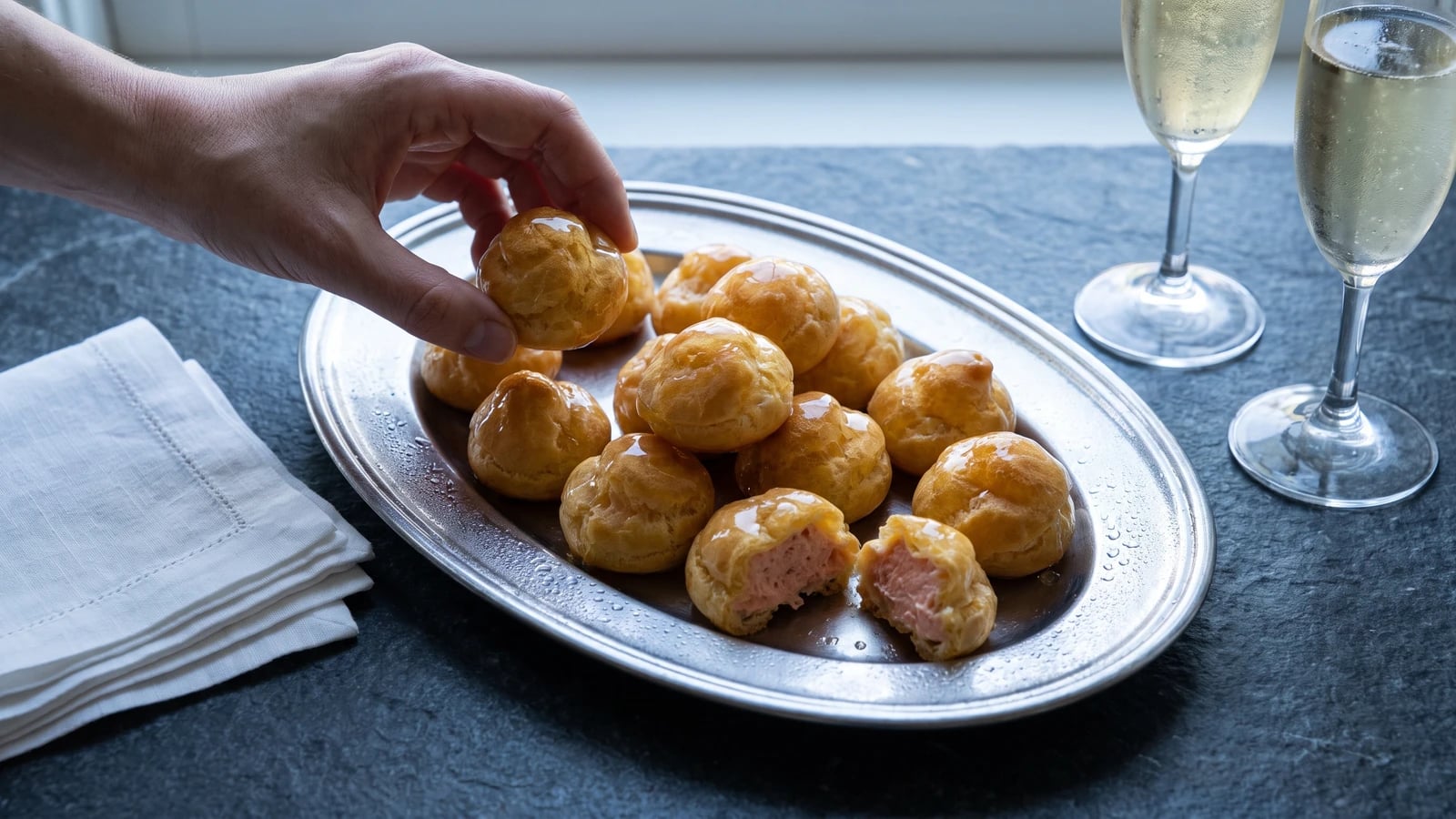
Duchesses au Saumon Fumé turn crisp little Choux into cold, rose-filled bites under a clear maigre glaze, a precise lesson in temperature, texture, and the savory reach of pâte à choux.
Duchesses au Saumon Fumé (little choux pastries filled with smoked-salmon butter) teach one exact lesson: temperature is part of structure. The Choux must be dry and hollow, the salmon butter cold enough to hold yet supple enough to pipe, and the maigre jelly, a meatless fish aspic, cool enough to cling without melting what lies beneath. Get those temperatures right and each bite gives you delicate pastry, a rose-colored heart, and a clear, trembling glaze.
The original assumed a pastry section sending out trays of little Choux, a garde-manger with clarified maigre jelly already set, and fish stock never far from the fire. At home, you will bake one small batch, replace the naturally setting fish jelly with clear stock and measured fish gelatin, and use a food processor where the brigade used a mortar and tamis. I have changed the quantity and the staffing, not the intent: equal weights of smoked salmon and butter, hollow Choux, a clear fish glaze, and thorough chilling remain. The waiting trays were brigade scaffolding; the cold glaze over the filled pastry is the dish. One cook, one stove, one evening.
The moment that matters comes before glazing. Chill the filled Duchesses until firm, then bring the jelly to nappage, a light-coating consistency, no warmer than your fingertips. If it slides off, cool it briefly; if it turns ropy, warm it gently over barely warm water. Ça se rattrape.
Duchesses au saumon fumé belong to the Parisian cold hors-d'oeuvre table, where pastry cooks' little Choux passed into the garde-manger to be filled, chilled, and glazed. The name maigre does not mean spare or light: at a French fast-day table it meant prepared without meat, so smoked fish, butter, and clear fish jelly were entirely at home. The dish carried the grammar of sweet petits choux into savory service, proof that pâte à choux was never confined to dessert.
Quantity
¾ cup (180 ml / 180 g)
Quantity
¼ cup (60 ml / 60 g)
Quantity
2 tablespoons (30 ml / 30 g)
Quantity
1¼ teaspoons (6 ml / 4 g)
Quantity
1 teaspoon (5 ml / 5 g)
Quantity
Up to ⅛ teaspoon (0.6 ml / 0.75 g)
use only if needed
Quantity
½ cup (120 ml / 120 g)
Quantity
3½ tablespoons (52 ml / 50 g)
cut into pieces
Quantity
¼ teaspoon (1.25 ml / 1.5 g)
Quantity
½ cup plus 2 tablespoons (150 ml / 75 g)
sifted
Quantity
2 (about 100 g without shells)
beaten
Quantity
4½ ounces (125 g)
chilled and roughly cut
Quantity
½ cup plus 1 tablespoon (135 ml / 125 g)
softened but cool
| Ingredient | Quantity |
|---|---|
| clear unsalted fish stock | ¾ cup (180 ml / 180 g) |
| dry white wine | ¼ cup (60 ml / 60 g) |
| cold water | 2 tablespoons (30 ml / 30 g) |
| 200-bloom powdered fish gelatin | 1¼ teaspoons (6 ml / 4 g) |
| fresh lemon juice | 1 teaspoon (5 ml / 5 g) |
| fine sea salt for the jelly (optional)use only if needed | Up to ⅛ teaspoon (0.6 ml / 0.75 g) |
| water for the Choux | ½ cup (120 ml / 120 g) |
| unsalted butter for the Chouxcut into pieces | 3½ tablespoons (52 ml / 50 g) |
| fine sea salt for the Choux | ¼ teaspoon (1.25 ml / 1.5 g) |
| all-purpose floursifted | ½ cup plus 2 tablespoons (150 ml / 75 g) |
| large eggsbeaten | 2 (about 100 g without shells) |
| cold-smoked salmonchilled and roughly cut | 4½ ounces (125 g) |
| unsalted butter for the fillingsoftened but cool | ½ cup plus 1 tablespoon (135 ml / 125 g) |
Sprinkle the fish gelatin evenly over the cold water and leave it for 5 minutes to bloom. Bring the fish stock and wine to a lively simmer in a small saucepan, skimming rather than stirring if foam rises, and reduce them to ¾ cup (180 ml). Remove the pan from the heat, add the bloomed gelatin and lemon juice, and stir gently until completely dissolved. Taste before adding salt, since fish stock may already carry enough. Strain the liquid through a damp, fine cloth into a shallow dish and chill until softly set, about 1½ hours. Fish gelatin keeps this a true maigre jelly; ordinary pork or beef gelatin would set it, but it would change the meaning of the dish.
Heat the oven to 400°F (200°C) and line a baking sheet with parchment. Put the water, butter, and salt for the Choux in a medium saucepan and bring them to a full boil so the butter is melted before much water escapes. Take the pan briefly off the heat, add all the flour at once, and beat firmly with a wooden spoon until no dry flour remains. Return it to medium heat and work the panade for 2 to 3 minutes, until it gathers into a smooth ball and leaves a thin film across the pan. That drying matters: a wet panade cannot hold enough egg to rise properly.
Transfer the panade to a bowl and beat it for 2 minutes so fierce heat escapes. Add about three-quarters of the beaten egg in several additions, beating each one fully into the paste before adding more. Continue by teaspoonfuls until the paste is glossy and falls slowly from the spoon in a broad V; you may not need the final spoonful. Stop there. A stiff paste makes squat Choux, while a loose one spreads, and raw flour cannot repair it. Testing the consistency before the last egg is patience, not fuss.
Pipe or spoon 24 mounds, each about 1 inch (2.5 cm) wide, leaving 1½ inches (4 cm) between them. Flatten sharp peaks with a damp fingertip. Bake for 15 minutes without opening the oven, then lower the heat to 350°F (180°C) and bake for another 10 to 12 minutes, until the Choux are deeply golden, light in the hand, and firm at the sides. Pierce each base with a skewer and return them to the switched-off oven with its door ajar for 5 minutes. If they begin to sink or feel damp inside, put them back at 350°F (180°C) for another 5 to 8 minutes after piercing. Ça se rattrape. Cool completely on a rack.
Process the chilled smoked salmon until it forms a very fine paste, scraping the bowl often. Add the softened butter in four additions and process only until the mixture is smooth, evenly rose-colored, and free of visible butter streaks. Press it once through a fine-mesh sieve; the brigade might have pounded and sieved it repeatedly, but the processor followed by one careful pass gives the same silken intent at home. If the purée turns shiny or greasy, set the bowl over ice and beat it until it closes into a smooth emulsion again.
Make a small opening in the base of each cooled Choux. Spoon the salmon butter into a piping bag fitted with a narrow plain tip and fill each shell until it feels pleasantly weighty but does not split. Wipe the bases clean, arrange the filled Duchesses on a cold tray, and chill them uncovered for 30 minutes. This firmness is essential: warm filling softens the pastry and melts beneath the jelly.
Cut the set maigre jelly into pieces and put them in a clean bowl over barely warm water. Stir just until the jelly melts, then remove the bowl and let it cool to about 72 to 75°F (22 to 24°C), when it coats a spoon like light honey. Set the cold Duchesses on a rack over a chilled tray and brush each one all over with a thin coat. Chill for 10 minutes, then apply a second coat for a clear, even gloss. If the jelly slides off, it is too warm, so chill it for a few minutes; if it clings in ropes or lumps, warm it by degrees over the water. Ça se rattrape. Never pour hot jelly over salmon butter.
Chill the glazed Duchesses for at least 30 minutes, then transfer them to a cold platter without stacking them. Serve directly from the refrigerator while the jelly is clear and trembling, the filling firm, and the Choux still delicate beneath it. Keep them cold until the guests arrive and do not leave smoked salmon at room temperature for longer than 2 hours. À table!
1 serving (about 115g)
Culinary guides, cultural storytelling, and the editorial depth that makes cooking meaningful.
Discover Culinary ExplorerChef Juliette
Tiny éperlans, lightly floured and fried until their tails stand crisp, arrive in a generous heap on a napkin with fried parsley and grooved lemon, a weeknight lesson in heat and restraint.

Chef Juliette
Brandade de Morue turns salt cod, warm olive oil, and milk into a pale, silky emulsion: keep everything warm and add the oil slowly, then crown the generous dome with butter-fried bread.

Chef Juliette
Salt cod worked warm with cream, one patient spoonful at a time, until the rough flakes become a glossy Nîmes paste, domed generously and ringed with butter-fried croutons for the table.

Chef Juliette
Wine-poached char packed in its earthenware crock beneath butter gold: a make-ahead first course that turns careful cooling, thorough boning, and one unbroken seal into quiet abundance.