
Chef Juliette
Smelt (Éperlans)
Tiny éperlans, lightly floured and fried until their tails stand crisp, arrive in a generous heap on a napkin with fried parsley and grooved lemon, a weeknight lesson in heat and restraint.
A cooking platform built around craft, culture, and the stories behind what we eat.
Created by Chef Juliette
Based on No. 341, Caviare Duchesses, from Le Guide Culinaire (1907) by Auguste Escoffier
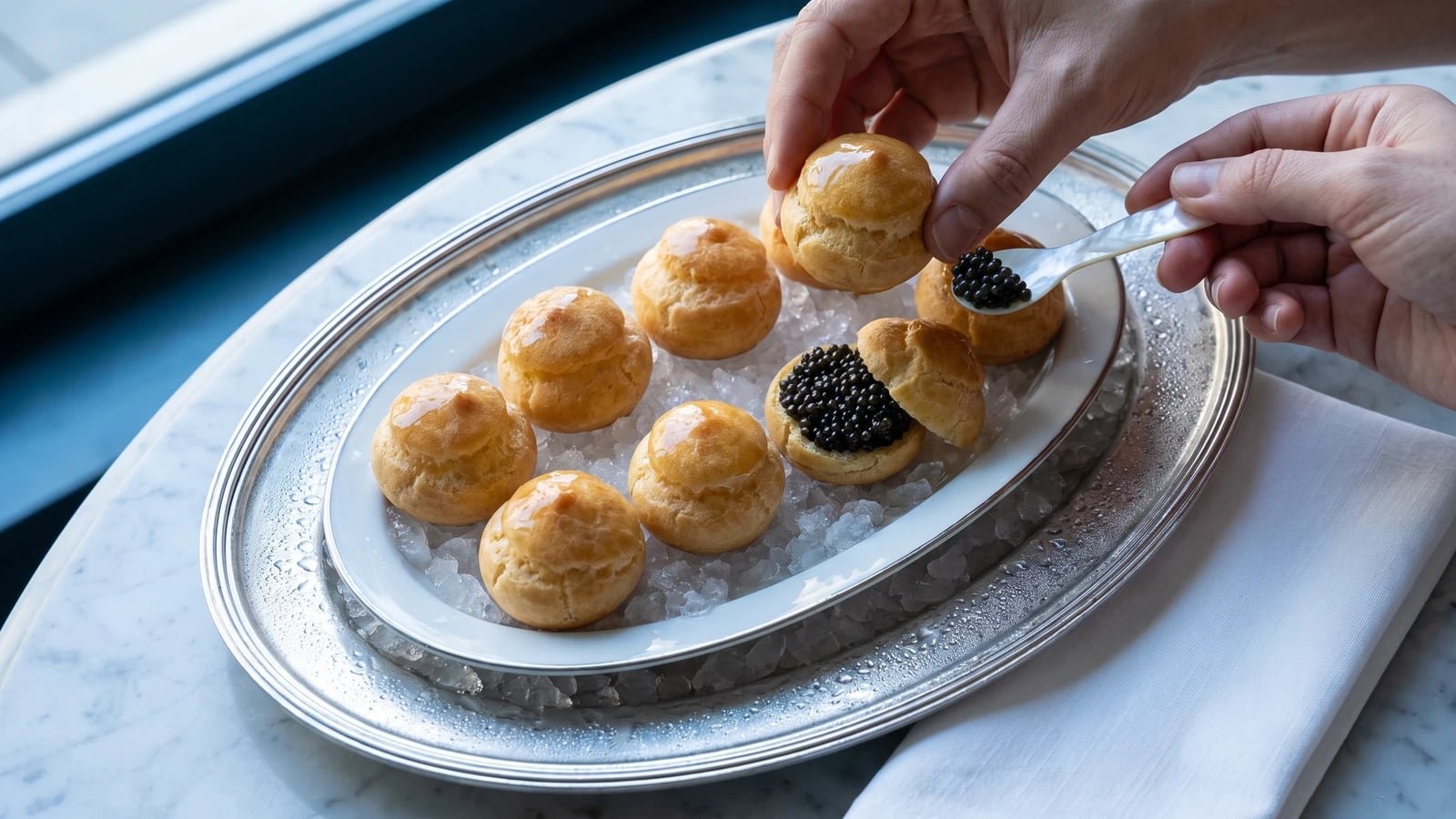
Little savory choux under a clear aspic glaze conceal either briny caviar or soft caviar cream, then travel to the table over ice with their polish and delicacy intact.
Duchesses au Caviar (caviare-filled choux bites) teach that temperature is part of structure. The choux must be thoroughly dry, the caviar cold, and the gelée, a clear savory aspic, just beginning to thicken. Bring those three states together in the right order and each little bite stays neat, glossy, and briny rather than damp.
The source's few words assumed a pâtissier with trays of petits choux, a saucier's clarified stock never off the fire, and a garde-manger working beside an ice chest. At home, make one tray of unsweetened pâte à choux (choux pastry) and strengthen a very clear, delicately seasoned consommé with gelatin. I have changed the labor and the portion, not the intent: the stockpot and brigade batch are scaffolding, so they go; the dry shell, fresh caviar or caviar cream, transparent gelée, and iced service are the dish, so every one stays. One cook, one stove, one evening.
Watch the gelée when the pastry brush comes out. Liquid gelée soaks into the choux; fully set gelée drags and clumps. Use it when it has the loose body of unbeaten egg white, and if it passes that point, warm it gently and begin again. Ça se rattrape.
Although its caviar points toward the Caspian, Duchesses au Caviar belong to the Parisian grand-kitchen repertoire of cold hors d'oeuvre, where savory choux from the pâtissier met the clear aspic work of the garde-manger. The title follows the decorative vocabulary of cuisine classique rather than claiming a regional origin or a connection to pommes duchesse. The preparation traveled readily from staffed dining rooms to reception tables, but its governing idea remained unchanged: caviar enclosed, gelée clear, platter iced.
Quantity
3/4 cup (180 ml / 180 g)
cold and divided
Quantity
1 1/4 teaspoons (6 ml / 4 g)
Quantity
1/2 cup (120 ml / 120 g)
Quantity
1/4 cup (60 ml / 57 g)
cut into pieces
Quantity
1/4 teaspoon (1 ml / 1.5 g)
Quantity
1/2 cup (120 ml / 65 g)
sifted
Quantity
2 large eggs (about 100 g without shells)
beaten
Quantity
1/2 cup (120 ml / 100 g)
well chilled
Quantity
1/4 cup (60 ml / 60 g)
well chilled
Quantity
2 tablespoons (30 ml / 30 g)
well chilled
Quantity
1/4 cup (60 ml / 50 g)
well chilled
Quantity
6 cups (1.4 liters / about 1.1 kg)
for service
| Ingredient | Quantity |
|---|---|
| very clear, delicately seasoned chicken consommécold and divided | 3/4 cup (180 ml / 180 g) |
| unflavored powdered gelatin | 1 1/4 teaspoons (6 ml / 4 g) |
| water | 1/2 cup (120 ml / 120 g) |
| unsalted buttercut into pieces | 1/4 cup (60 ml / 57 g) |
| fine salt | 1/4 teaspoon (1 ml / 1.5 g) |
| all-purpose floursifted | 1/2 cup (120 ml / 65 g) |
| large eggsbeaten | 2 large eggs (about 100 g without shells) |
| fresh black caviar, for the plain caviar filling (optional)well chilled | 1/2 cup (120 ml / 100 g) |
| heavy cream, for the caviar cream alternative (optional)well chilled | 1/4 cup (60 ml / 60 g) |
| crème fraîche, for the caviar cream alternative (optional)well chilled | 2 tablespoons (30 ml / 30 g) |
| fresh black caviar, for the caviar cream alternative (optional)well chilled | 1/4 cup (60 ml / 50 g) |
| crushed icefor service | 6 cups (1.4 liters / about 1.1 kg) |
Put 2 tablespoons (30 ml) of the cold consommé in a small bowl, sprinkle the gelatin evenly over it, and leave it for 5 minutes to bloom. Warm the remaining consommé gently without boiling, then stir in the softened gelatin until completely dissolved. Strain through damp cheesecloth into a wide bowl. This consommé is the foundation of the dish, so the finished gelée must taste clean and savory without bullying the caviar. Refrigerate until it begins to thicken to the loose body of unbeaten egg white, about 25 to 40 minutes.
Heat the oven to 425°F (220°C) with a rack in the middle. Bring the water, butter, and salt to a full boil in a saucepan, making certain the butter has melted before the water reduces appreciably. Add all the flour at once and beat firmly with a wooden spoon. Keep the pan over medium heat for about 2 minutes, turning the panade, the cooked flour paste, until it forms a smooth ball and leaves a fine dry film across the pan.
Take the pan from the heat and beat the panade for 1 minute to release its fiercest heat. Add the beaten eggs gradually, working each addition fully into the paste and holding back the final spoonful until you judge the texture. Stop when the pâte à choux is glossy and falls from the spoon in a heavy V. If it remains stiff and tears rather than falling, add the reserved egg by the teaspoon. A loose paste spreads instead of rising, so control the final egg rather than pouring it in on faith.
Transfer the pâte à choux to a piping bag fitted with a 1/2-inch (12 mm) plain tip. Pipe 24 round mounds, each about 1 1/4 inches (3 cm) wide, onto a parchment-lined sheet pan, leaving space between them. Smooth the points with a damp fingertip. Bake for 10 minutes, lower the heat to 375°F (190°C) without opening the door, and continue for 12 to 15 minutes, until the duchesses are deep butter-gold, firm at the sides, and light in the hand. Pierce each base with a skewer, then return them to the switched-off oven with the door ajar for 5 minutes. Cool completely on a rack.
For the plain filling, keep the 100 g of fresh caviar covered and cold until the shells are ready. For caviar cream, whip the heavy cream only to soft peaks, fold in the crème fraîche, then fold in the 50 g of caviar with a small spatula so the eggs stay whole. Taste before adding anything. Caviar carries its own salt, and the cream should soften its salinity without erasing it. Keep either filling cold.
Cut a neat 1/4-inch (6 mm) plug from the base of every cold choux shell. For the plain version, spoon about 1 teaspoon of caviar into each hollow without pressing the eggs. For caviar cream, transfer the mixture to a piping bag with a wide plain opening and fill each shell just until it feels pleasantly weighted. Replace the plugs. Work with six shells at a time and return each finished group to the refrigerator so the caviar never warms.
Set the filled duchesses upright on a rack over a tray. When the gelée coats a spoon with a thin, transparent film, brush a light coat over every visible surface. Chill for 5 minutes, then apply a second thin coat for an even gloss. If the gelée disappears into the shell, it is too warm; chill it until it gains more body and coat again. If it drags or leaves lumps, warm the bowl briefly over lukewarm water. The glaze should look like clear polish, not a rubber jacket.
Chill the glazed duchesses for at least 30 minutes and no longer than 2 hours. Nest a cold serving platter inside a larger tray of crushed ice, keeping meltwater below the platter's rim, then arrange the duchesses in close rows. Carry them to the table at once. They should remain cold enough for the gelée to stay clear and the caviar firm. À table!
1 serving (3 duchesses, about 60g)
Culinary guides, cultural storytelling, and the editorial depth that makes cooking meaningful.
Discover Culinary ExplorerChef Juliette
Tiny éperlans, lightly floured and fried until their tails stand crisp, arrive in a generous heap on a napkin with fried parsley and grooved lemon, a weeknight lesson in heat and restraint.

Chef Juliette
Brandade de Morue turns salt cod, warm olive oil, and milk into a pale, silky emulsion: keep everything warm and add the oil slowly, then crown the generous dome with butter-fried bread.

Chef Juliette
Salt cod worked warm with cream, one patient spoonful at a time, until the rough flakes become a glossy Nîmes paste, domed generously and ringed with butter-fried croutons for the table.

Chef Juliette
Wine-poached char packed in its earthenware crock beneath butter gold: a make-ahead first course that turns careful cooling, thorough boning, and one unbroken seal into quiet abundance.