
Chef Juliette
Smelt (Éperlans)
Tiny éperlans, lightly floured and fried until their tails stand crisp, arrive in a generous heap on a napkin with fried parsley and grooved lemon, a weeknight lesson in heat and restraint.
A cooking platform built around craft, culture, and the stories behind what we eat.
Created by Chef Juliette
Based on No. 337, Duchesses, from Le Guide Culinaire (1907) by Auguste Escoffier
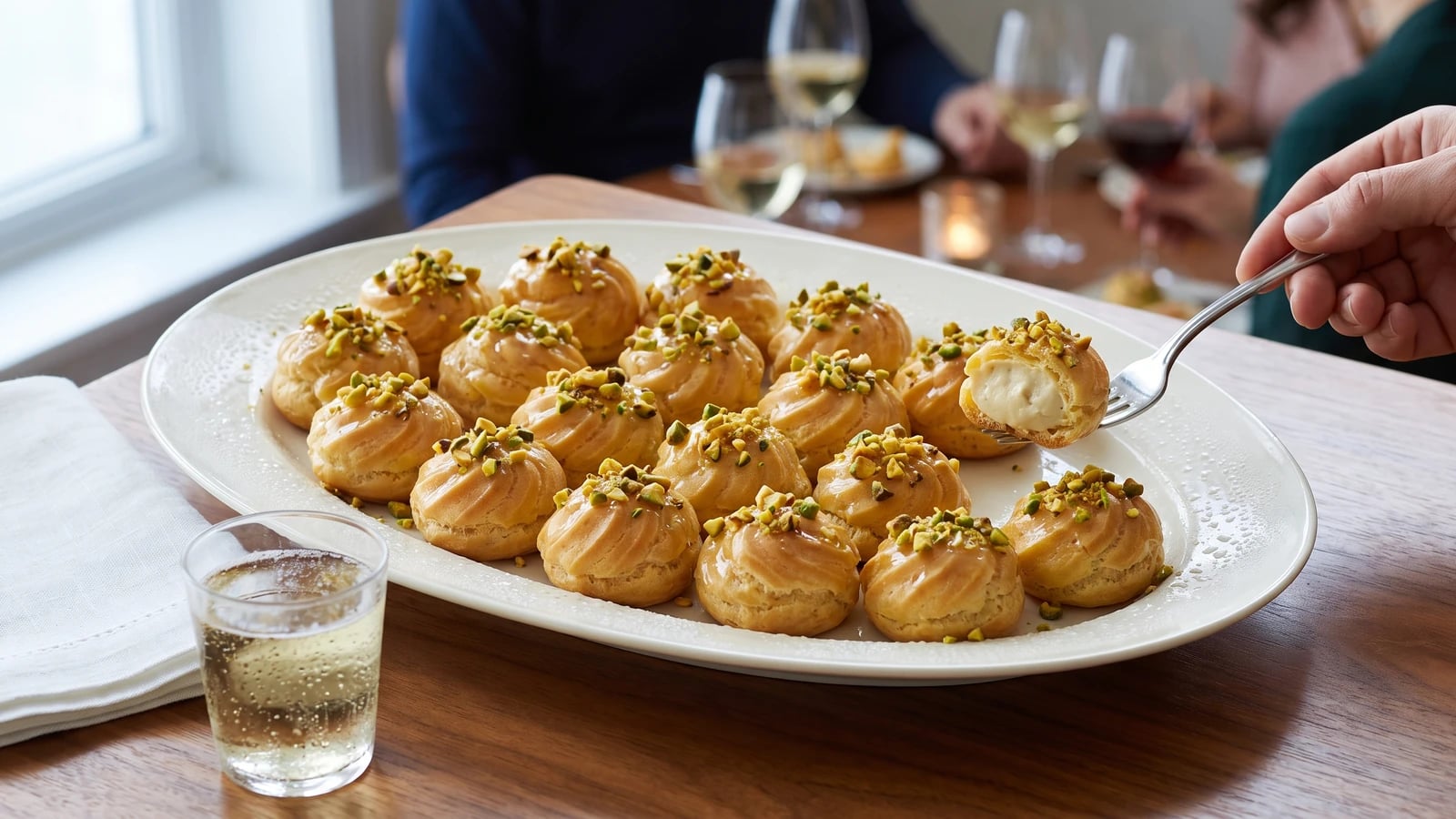
Small in size and exact in method, these savory choux hold a cool chicken purée beneath clear aspic gloss and green pistachio, teaching the quiet discipline of temperature.
Petites Duchesses (little savory choux bites) teach one true thing before you touch a pan: temperature decides the finish. Cold, dry choux accept their filling cleanly, and aspic brushed at the edge of setting clings in a thin, brilliant coat. Warm shells or hot jelly turn the same careful work soft and patchy.
The original assumed a pastry cook piping trays, a cold-kitchen cook with savory jelly always ready, and ornamented dish-papers waiting for service. Your equivalent is one shell batch prepared from Various Carolines (No. 325), a measured chicken aspic, and a chilled porcelain platter. I’ve scaled the hors-d’œuvre to eighteen bites and chosen one of the book’s permitted fillings, purée de volaille (silky fowl purée), instead of maintaining several purées for a brigade. The ornamental paper was service scaffolding and can go. The small round choux, cold filling, clear jelly glaze, and pistachios are the dish, so they stay.
Keep every component cold until glazing, then let the aspic soften only enough to brush. If it races off the shell, stop and chill it briefly. Ça se rattrape. One cook, one stove, one evening.
Duchesses belong to the Paris-centered classical cold hors-d’œuvre repertoire, where tiny filled pastries moved from grand-kitchen service to formal bourgeois entertaining. They follow Various Carolines (No. 325), but exchange the long éclair shape and opaque chaud-froid coating for round, pigeon’s-egg choux under clear savory aspic. The jelly is not a fruit preserve, and these Duchesses have no connection to the piped potato preparation that shares their name.
Quantity
1 batch Various Carolines (No. 325), about 18 shells, each the size of a pigeon’s egg
prepared only through the shell stage and cooled completely
Quantity
1½ cups (360 ml / 225 g)
thoroughly chilled and roughly chopped
Quantity
1 cup (240 ml / 240 g)
divided
Quantity
1¼ teaspoons (6 ml / 3.5 g)
Quantity
1 tablespoon (15 ml / 15 g)
Quantity
3 tablespoons (45 ml / 42 g)
softened but not greasy
Quantity
⅓ cup (80 ml / 80 g)
very cold
Quantity
½ teaspoon (2.5 ml / 3 g), plus more to taste
Quantity
⅛ teaspoon (0.6 ml / 0.3 g)
Quantity
3 tablespoons (45 ml / 25 g)
finely chopped
| Ingredient | Quantity |
|---|---|
| unsweetened round choux shellsprepared only through the shell stage and cooled completely | 1 batch Various Carolines (No. 325), about 18 shells, each the size of a pigeon’s egg |
| cooked chicken breast meatthoroughly chilled and roughly chopped | 1½ cups (360 ml / 225 g) |
| clear, well-flavored chicken stockdivided | 1 cup (240 ml / 240 g) |
| unflavored powdered gelatin | 1¼ teaspoons (6 ml / 3.5 g) |
| cold water | 1 tablespoon (15 ml / 15 g) |
| unsalted buttersoftened but not greasy | 3 tablespoons (45 ml / 42 g) |
| heavy creamvery cold | ⅓ cup (80 ml / 80 g) |
| fine salt | ½ teaspoon (2.5 ml / 3 g), plus more to taste |
| finely ground white pepper | ⅛ teaspoon (0.6 ml / 0.3 g) |
| shelled unsalted pistachiosfinely chopped | 3 tablespoons (45 ml / 25 g) |
Reserve ¼ cup (60 ml / 60 g) of the chicken stock for the filling. Sprinkle the gelatin over the cold water and leave it until fully swollen, about 5 minutes. Warm ¼ cup (60 ml / 60 g) of the remaining stock until hot but not boiling, remove it from the heat, and stir in the gelatin until clear. Mix in the final ½ cup (120 ml / 120 g) stock, pour the aspic into a shallow bowl, and chill until softly set, about 45 minutes. If grains remain, warm the mixture gently and stir again. Do not boil it, which weakens the set and clouds the glaze.
Boil the reserved ¼ cup (60 ml / 60 g) chicken stock in a small pan until reduced by half, then cool it completely. Blend the chilled chicken, reduced stock, butter, cream, salt, and white pepper until the purée de volaille is perfectly smooth and holds a soft peak. Press it through a fine sieve, taste it cold, and correct the seasoning. If it looks grainy, blend in another teaspoon of cold cream and sieve it again. If it is too loose to pipe, chill it for 20 minutes. Ça se rattrape.
Bring the choux shells from Various Carolines (No. 325) to a completely dry, cool state. If they have softened in storage, place them in a 160°C (325°F) oven for 5 minutes, then cool them fully on a rack before proceeding. Make a neat opening in the base of each shell with a small piping tip. Never fill a warm shell: trapped warmth softens the crust and loosens the purée.
Transfer the cold purée de volaille to a piping bag fitted with an 8 mm plain tip. Pipe through the base of each choux until it feels pleasantly heavy but has not begun to split. Wipe away any filling at the opening and set the filled Duchesses on a rack over a tray. Chill them for 20 minutes so the filling firms and the shells are cold enough to take the glaze.
Set the bowl of aspic over barely warm water and stir just until it becomes fluid, then remove it and wait until it thickens to the consistency of light syrup. Brush each Duchesse with one thin coat, chill for 5 minutes, then apply a second thin coat and immediately scatter chopped pistachios over the top. If the jelly runs off, it is too warm; chill it for a few minutes and brush again. If it sets in the bowl, return it briefly to the warm water. Thin and glossy is correct. A heavy rubbery coat is not.
Arrange the Duchesses on a chilled oval platter and refrigerate for at least 45 minutes, until the aspic is clear, firm, and cool beneath the fingers. Serve very cold, preferably within 4 hours of filling, while the choux still retain their lightness. Ornamented dish-papers belonged to brigade service; cold porcelain does the same useful work without the ceremony. À table!
1 serving (about 120g)
Culinary guides, cultural storytelling, and the editorial depth that makes cooking meaningful.
Discover Culinary ExplorerChef Juliette
Tiny éperlans, lightly floured and fried until their tails stand crisp, arrive in a generous heap on a napkin with fried parsley and grooved lemon, a weeknight lesson in heat and restraint.

Chef Juliette
Brandade de Morue turns salt cod, warm olive oil, and milk into a pale, silky emulsion: keep everything warm and add the oil slowly, then crown the generous dome with butter-fried bread.

Chef Juliette
Salt cod worked warm with cream, one patient spoonful at a time, until the rough flakes become a glossy Nîmes paste, domed generously and ringed with butter-fried croutons for the table.

Chef Juliette
Wine-poached char packed in its earthenware crock beneath butter gold: a make-ahead first course that turns careful cooling, thorough boning, and one unbroken seal into quiet abundance.