
Chef Juliette
Smelt (Éperlans)
Tiny éperlans, lightly floured and fried until their tails stand crisp, arrive in a generous heap on a napkin with fried parsley and grooved lemon, a weeknight lesson in heat and restraint.
A cooking platform built around craft, culture, and the stories behind what we eat.
Created by Chef Juliette
Based on No. 336, Shrimps and Prawns, from Le Guide Culinaire (1907) by Auguste Escoffier
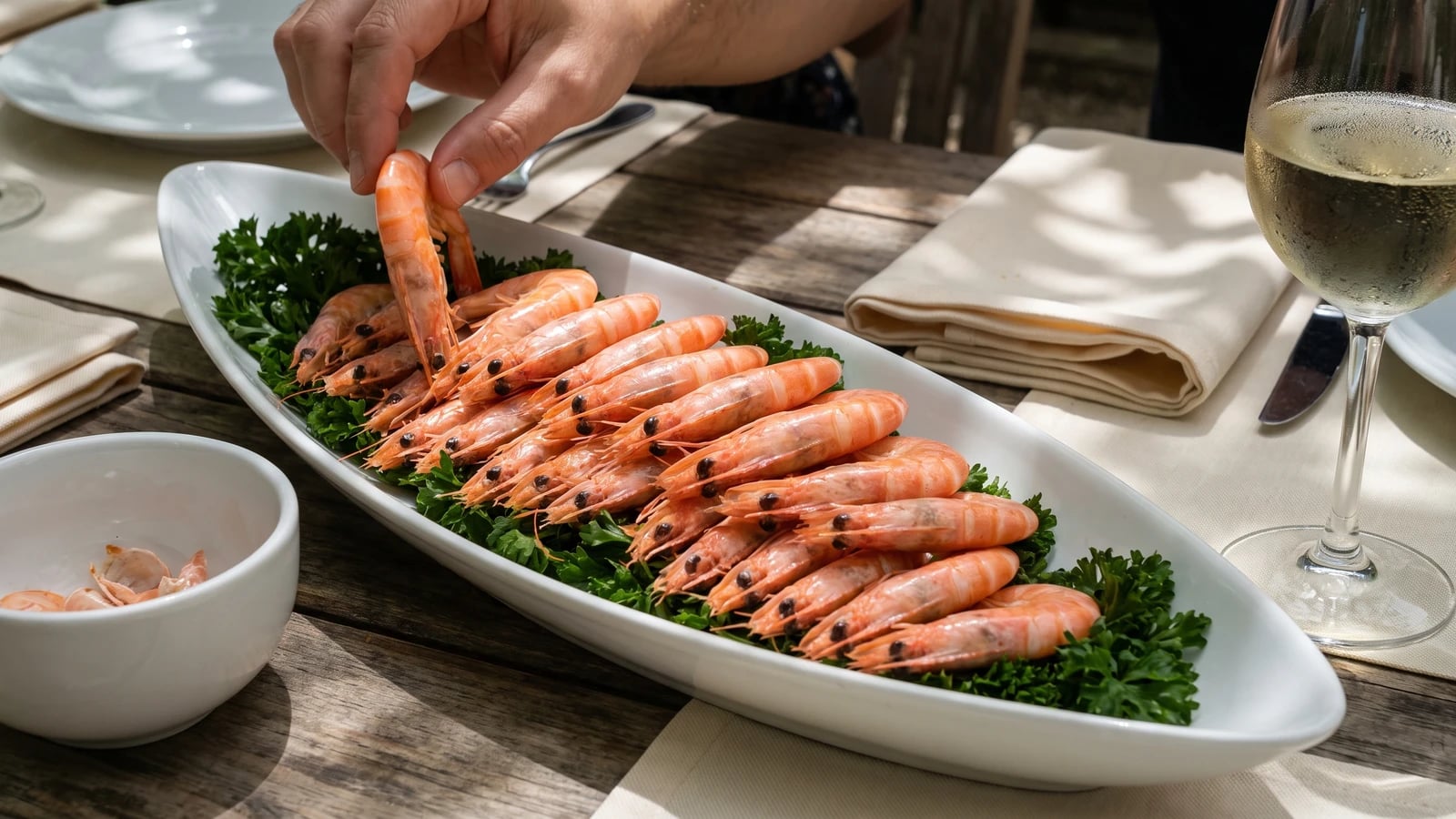
Crevettes et bouquets ask for no sauce and hide behind nothing: two sizes of very fresh shellfish, overlapped on curled parsley, cold, briny, generous, and ready before the first glass is poured.
Crevettes et bouquets (shrimps and prawns) teach the discipline of leaving good food alone. The one true thing to know before touching a platter is that freshness is the preparation: the crustaceans must smell clean and briny, feel firm through the shell, and arrive thoroughly cold. No sauce can rescue tired shellfish, and none belongs here.
The original assumed a fishmonger selling freshly cooked crustaceans in brisk turnover and a cupboard filled with boat-shaped hors-d’œuvre dishes. It needed no saucier, standing stock, or salamander because there is no cooked foundation to build. Here, the brigade quantity becomes twenty-four small shrimps and twelve prawns for four guests, while one long oval platter replaces the specialized dish. The boat shape is service scaffolding and may go; the freshness, whole shells, deliberate overlap, and curled parsley are the dish and must stay. One cook, one stove left cold, one evening.
When it reaches the table, the shells should be pink-coral and faintly glossy against deep green parsley, with every curved body visible and ready to lift by hand. Dry the crustaceans thoroughly before arranging them. That small act decides whether the platter looks abundant and bright or wet and weary.
Crevettes et bouquets belong to the seafood stalls of France’s Atlantic and Channel ports and to the Parisian hors-d’œuvre table, where cooked crustaceans traveled from market to platter with almost no kitchen intervention. Bouquet is French market language for a larger rosy prawn, while crevette names shrimp more broadly; the distinctions vary along the coasts but do not change the service. This is not a dressed shellfish cocktail: whole shells, a cold platter, and curled parsley let freshness and abundance announce themselves before the meal.
Quantity
24 (about 12 ounces / 340 g)
thoroughly chilled
Quantity
12 (about 12 ounces / 340 g)
thoroughly chilled
Quantity
1 large bunch (about 2 ounces / 55 g)
washed and dried completely
| Ingredient | Quantity |
|---|---|
| very fresh cooked shell-on shrimpsthoroughly chilled | 24 (about 12 ounces / 340 g) |
| very fresh cooked shell-on prawnsthoroughly chilled | 12 (about 12 ounces / 340 g) |
| curled-leaf parsleywashed and dried completely | 1 large bunch (about 2 ounces / 55 g) |
Put the serving platter in the refrigerator while you prepare the shellfish. A cold vessel keeps the crustaceans firm and slows condensation once they reach the table. If the platter is too large for the refrigerator, chill it briefly with cold water, then dry it until not a single bead remains.
Wash the curled parsley under very cold running water, spin it dry, and spread it on a clean towel until no moisture remains between the leaves. If it has wilted, let it drink cold water for ten minutes before drying; ça se rattrape. Wet parsley, however, makes a puddle beneath the shellfish, so take the drying seriously.
Check every shrimp and prawn before it reaches the platter. The shells should look bright, the flesh should feel firm, and the aroma should be clean and marine. Discard any specimen that smells sour or of ammonia, or feels soft beneath the shell. Blot the good crustaceans gently with absorbent towels without rinsing away their briny character.
Cover the base of the chilled platter with a generous but shallow bed of curled parsley, turning coarse stems inward and leaving lively green leaves visible around the edges. The parsley supports the curved shells and fills the spaces between them; it should frame the seafood, not bury it.
Arrange the shrimps in close overlapping rows, each curved body resting partly over the one before it. Lay the larger prawns along the centre in the same fashion, heads facing one direction if they are attached. Keep the arrangement generous rather than rigid. If liquid begins to collect, lift everything off, blot the platter and shells, and rebuild the rows; ça se rattrape. Add no lemon, sauce, or stray seasoning. Restraint is the whole preparation.
Return the finished platter to the refrigerator until the guests are ready, ideally no longer than two hours. Bring it out with napkins and a bowl for the shells, and serve while the crustaceans remain properly cold. Do not leave seafood at room temperature for more than two hours, or more than one hour in very warm weather. À table!
1 serving (about 100g)
Culinary guides, cultural storytelling, and the editorial depth that makes cooking meaningful.
Discover Culinary ExplorerChef Juliette
Tiny éperlans, lightly floured and fried until their tails stand crisp, arrive in a generous heap on a napkin with fried parsley and grooved lemon, a weeknight lesson in heat and restraint.

Chef Juliette
Brandade de Morue turns salt cod, warm olive oil, and milk into a pale, silky emulsion: keep everything warm and add the oil slowly, then crown the generous dome with butter-fried bread.

Chef Juliette
Salt cod worked warm with cream, one patient spoonful at a time, until the rough flakes become a glossy Nîmes paste, domed generously and ringed with butter-fried croutons for the table.

Chef Juliette
Wine-poached char packed in its earthenware crock beneath butter gold: a make-ahead first course that turns careful cooling, thorough boning, and one unbroken seal into quiet abundance.