
Chef Juliette
Smelt (Éperlans)
Tiny éperlans, lightly floured and fried until their tails stand crisp, arrive in a generous heap on a napkin with fried parsley and grooved lemon, a weeknight lesson in heat and restraint.
A cooking platform built around craft, culture, and the stories behind what we eat.
Created by Chef Juliette
Based on No. 315, Smoked Hamburg Beef, from Le Guide Culinaire (1907) by Auguste Escoffier
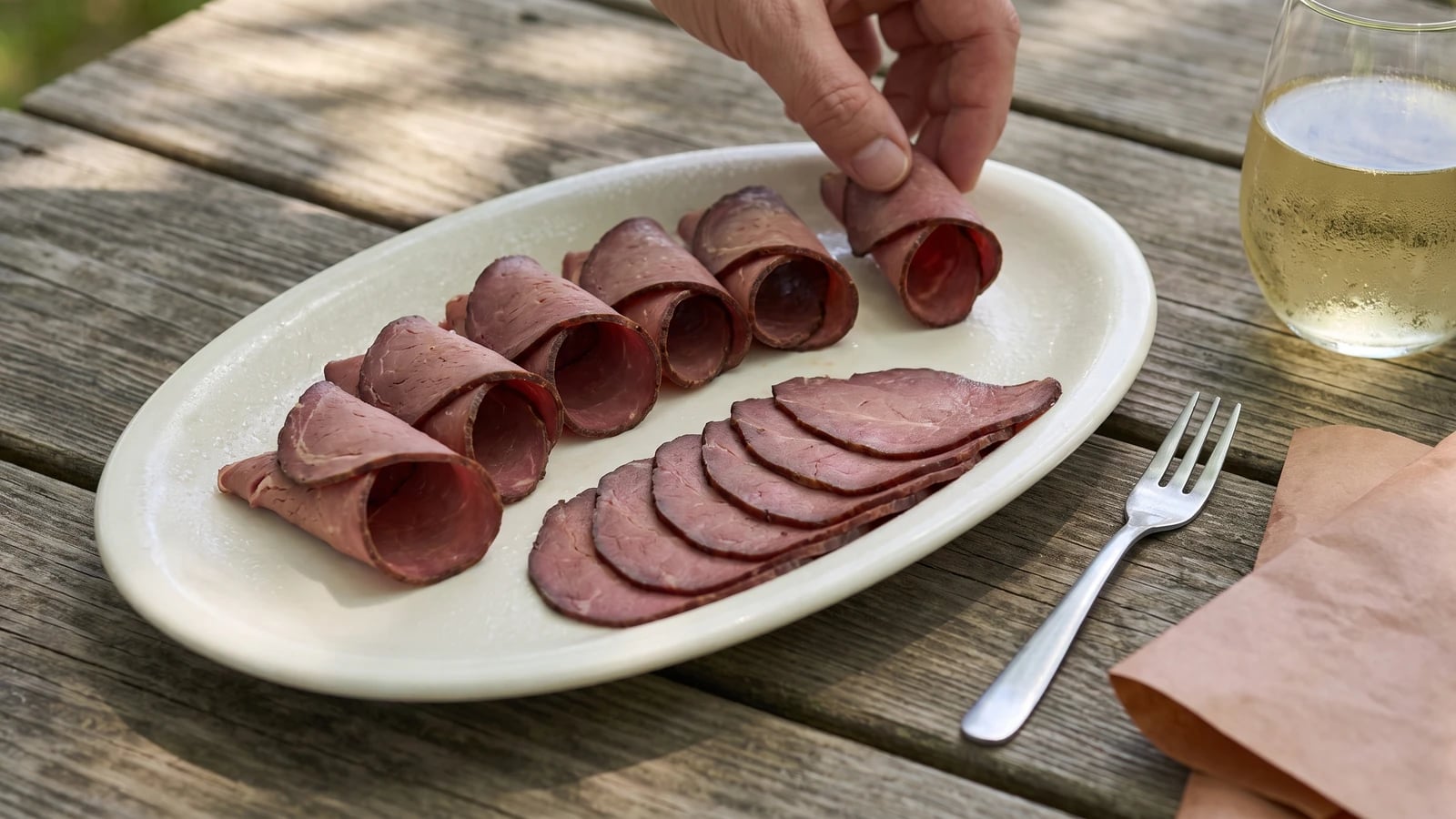
Paper-thin smoked beef, served cold in loose little cones or perfectly flat. This quiet hors-d'œuvre teaches the whole discipline of cold service: slice finely, handle lightly, plate late.
Bœuf fumé de Hambourg (Smoked Hamburg Beef) teaches the discipline of cold service: thinness, temperature, timing. The one true thing to know before touching a pan is that no pan belongs here. Warmth dulls the smoke and makes the fat feel heavy; served very cold and nearly translucent, the beef stays supple and savory.
The original entry assumed a garde-manger, the cold-larder cook, holding a cured joint beside a long slicing knife, with chilled dishes and service waiting. It needed no saucier, stockpot, or salamander. At home, ask the charcuterie counter to slice the finished beef paper-thin, chill one small platter, and make four portions. The dedicated station was brigade scaffolding; very thin slicing and last-moment dishing are the dish itself. One cook, one stove left wisely cold, one evening.
Shape the triangles into loose cones or serve them flat, exactly as the entry allows. This is arrangement in service of texture, not decoration for its own sake. The step that matters most is the last one: keep the platter cold and don't dish the beef until your guests are ready.
Although it sits within the French cold hors-d'œuvre repertoire, bœuf fumé de Hambourg points to Hamburg and the smoke-curing traditions of northern Germany rather than to a French region. French professional kitchens welcomed well-made imported cured meats onto the hors-d'œuvre tray, applying their own discipline of fine slicing, neat shaping, and very cold service. The name describes a finished charcuterie product and its place of association, not a sauce or hot beef preparation; the entry is brief because the curing was already complete.
Quantity
8 oz (225 g)
sliced paper-thin
| Ingredient | Quantity |
|---|---|
| ready-to-eat smoked Hamburg beefsliced paper-thin | 8 oz (225 g) |
Refrigerate the wrapped beef and serving platter for at least 30 minutes. Cold keeps the cured fat firm and the slices easy to handle, but don't freeze prepared slices; frozen edges become brittle and crack when shaped.
If the beef was sliced at the charcuterie counter, separate the pieces gently from their paper and keep them stacked in the cold. If starting with a whole piece, cut across the grain with a long, very sharp knife; each slice should bend freely and allow a little light through it. If the knife drags or the meat tears, stop. Ça se rattrape: chill the piece in the freezer for 10 minutes, wipe and hone the knife, then begin again. Torn slices can be laid flat beneath the whole ones.
Lay one slice at a time on a cold board. Cut each large slice into two or four generous triangles with clean downward strokes, choosing the number according to its size; small pieces need only one diagonal cut. Don't stack and compress the slices, because the pressure makes them cling together and spoils their supple texture.
For cones, curl each triangle loosely so its two side edges overlap and its point forms the tip. Set it seam-side down without pinching or fastening it. The cone should hold by its own gentle overlap; if it springs open, chill the triangles for 5 minutes and try again. For the flat presentation, overlap the triangles lightly in a single layer.
Keep the shaped beef covered and cold only while the table is being called, then uncover and carry it out immediately. Add no sauce or garnish; the source asks for smoked beef, very cold, and nothing to distract from its clean slices. Once the platter is down, let people take it before the meat warms and stiffens at the edges. À table!
1 serving (about 56g)
Culinary guides, cultural storytelling, and the editorial depth that makes cooking meaningful.
Discover Culinary ExplorerChef Juliette
Tiny éperlans, lightly floured and fried until their tails stand crisp, arrive in a generous heap on a napkin with fried parsley and grooved lemon, a weeknight lesson in heat and restraint.

Chef Juliette
Brandade de Morue turns salt cod, warm olive oil, and milk into a pale, silky emulsion: keep everything warm and add the oil slowly, then crown the generous dome with butter-fried bread.

Chef Juliette
Salt cod worked warm with cream, one patient spoonful at a time, until the rough flakes become a glossy Nîmes paste, domed generously and ringed with butter-fried croutons for the table.

Chef Juliette
Wine-poached char packed in its earthenware crock beneath butter gold: a make-ahead first course that turns careful cooling, thorough boning, and one unbroken seal into quiet abundance.