
Chef Juliette
Smelt (Éperlans)
Tiny éperlans, lightly floured and fried until their tails stand crisp, arrive in a generous heap on a napkin with fried parsley and grooved lemon, a weeknight lesson in heat and restraint.
A cooking platform built around craft, culture, and the stories behind what we eat.
Created by Chef Juliette
Based on No. 311, Eel au Vert à la Flamande, from Le Guide Culinaire (1907) by Auguste Escoffier
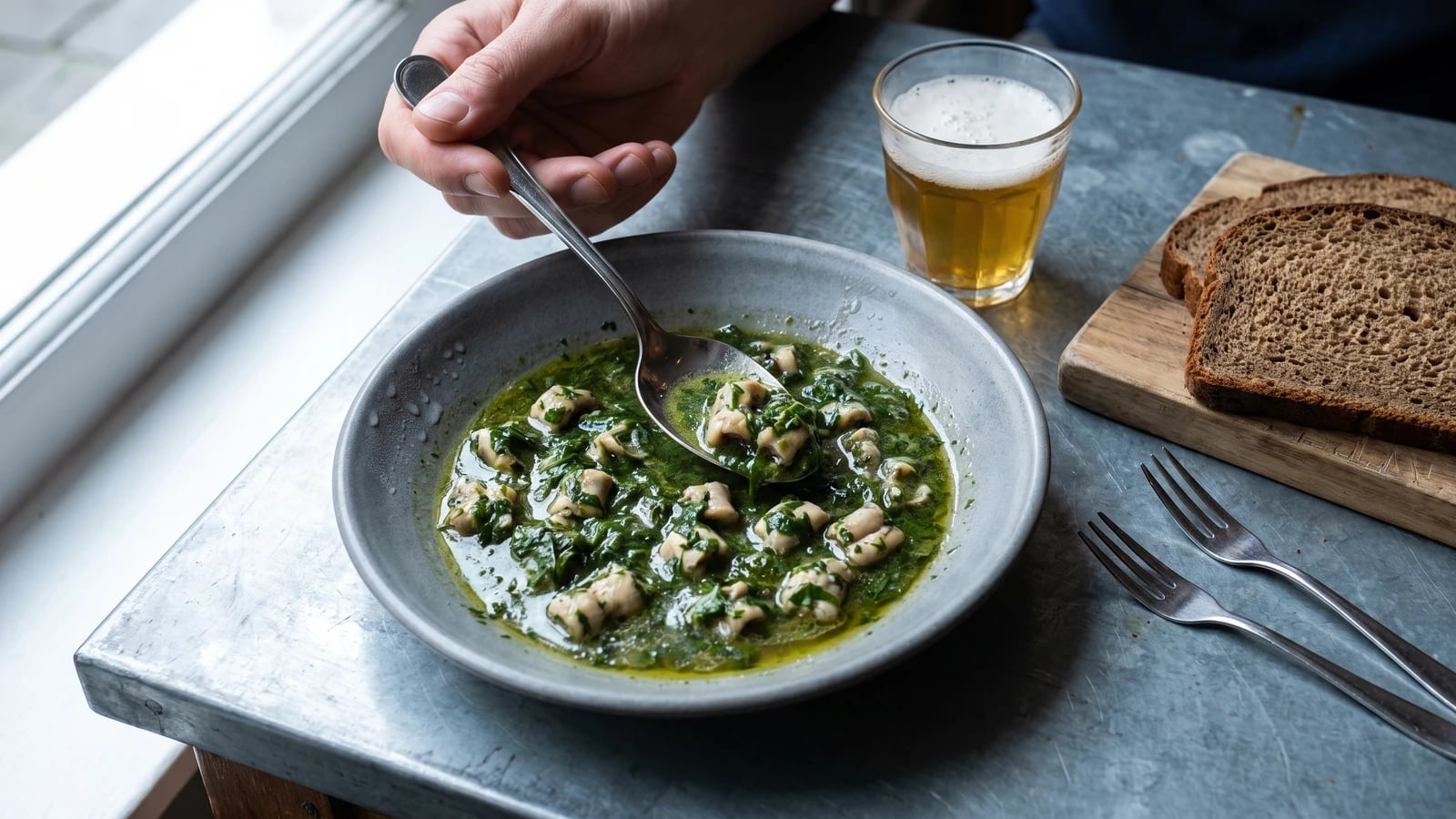
Butter-stiffened eel, dry blond beer, and a great green handful of herbs settle into a cold Flemish bowl, lightly bound with fécule for a generous first course.
Anguille au vert à la flamande (Flemish green eel) teaches restraint in a cold sauce: bind it more lightly than looks finished at the stove, because chilling tightens everything. Beer, butter, and a formidable handful of raw-cut herbs cook around the eel, then the cold draws the sauce together. Overthicken it warm and you will meet paste at dinner.
The book assumes a fish cook who can skin two pounds of small eels and a cold larder waiting nearby, not a saucier, a perpetual stockpot, or a salamander. At home, ask the fishmonger to clean and skin the eel, use one wide pan, and let the refrigerator do the larder's work. I have halved the eel and beer in exact proportion for four first-course servings; the butter and herb quantities are practical home measures because the entry leaves them unstated. One cook, one stove, one evening.
The brigade scaffolding, skinning a heap of live eel at the station, can go. The dish itself must stay: raidir (stiffen) the pieces in real butter without browning, cook them first in beer, add the herbs raw and roughly chopped, use fécule only if the liquor truly needs it, then serve the whole very cold. The one step that matters most is the binding: stop while the warm sauce still seems a shade loose.
Anguille au vert belongs to Flanders and the eel-rich waterways of the Scheldt basin, where the dish is also known in Dutch as paling in 't groen. It traveled from riverside household cooking into the French classical repertoire, carrying its mass of green herbs with it; this Flamande treatment replaces the wine found in neighboring versions with beer, the border talking through the pan. Herb mixtures vary from table to table, but sorrel, parsley, chervil, tarragon, and pimprenelle give this version its tart, grassy backbone.
Quantity
1 lb (454 g)
gutted, skinned, trimmed, and cut crosswise into 2-inch (5 cm) pieces, backbone left in
Quantity
2 tablespoons (30 ml / 28 g)
Quantity
1/2 Imperial pint, about 1 cup plus 3 tablespoons (285 ml / about 285 g)
low in hop bitterness
Quantity
2 packed cups (480 ml / 60 g)
roughly chopped
Quantity
1 loosely packed cup (240 ml / 30 g)
roughly chopped
Quantity
1 loosely packed cup (240 ml / 20 g)
roughly chopped
Quantity
1/4 loosely packed cup (60 ml / 8 g)
roughly chopped
Quantity
1/2 loosely packed cup (120 ml / 15 g)
roughly chopped
Quantity
1 teaspoon (5 ml / 6 g), plus more after chilling if needed
Quantity
1/4 teaspoon (1.25 ml / 0.6 g)
Quantity
2 teaspoons (10 ml / 6 g)
Quantity
1 to 2 tablespoons (15 to 30 ml / 15 to 30 g)
for the fécule and rescue
| Ingredient | Quantity |
|---|---|
| small eelsgutted, skinned, trimmed, and cut crosswise into 2-inch (5 cm) pieces, backbone left in | 1 lb (454 g) |
| unsalted butter | 2 tablespoons (30 ml / 28 g) |
| dry blond beerlow in hop bitterness | 1/2 Imperial pint, about 1 cup plus 3 tablespoons (285 ml / about 285 g) |
| sorrel leavesroughly chopped | 2 packed cups (480 ml / 60 g) |
| flat-leaf parsley leavesroughly chopped | 1 loosely packed cup (240 ml / 30 g) |
| chervil leavesroughly chopped | 1 loosely packed cup (240 ml / 20 g) |
| tarragon leavesroughly chopped | 1/4 loosely packed cup (60 ml / 8 g) |
| pimprenelle (salad burnet) leavesroughly chopped | 1/2 loosely packed cup (120 ml / 15 g) |
| fine sea salt | 1 teaspoon (5 ml / 6 g), plus more after chilling if needed |
| finely ground white pepper | 1/4 teaspoon (1.25 ml / 0.6 g) |
| fécule (potato starch) (optional) | 2 teaspoons (10 ml / 6 g) |
| cold water (optional)for the fécule and rescue | 1 to 2 tablespoons (15 to 30 ml / 15 to 30 g) |
Ask the fishmonger to gut and skin the eels, but leave the backbone in; the source cooks them as cross-cut pieces, and the bone helps the tender flesh hold together. At home, rinse the cavity briefly, inspect for any remaining skin or fin, then dry the eel thoroughly and cut it into 2-inch (5 cm) lengths. Pick, wash, and dry the herbs, but do not chop them until the beer has begun its first cooking period. Wet eel spits in butter and refuses to raidir cleanly.
Melt the butter in a wide nonreactive sauté pan over medium heat. When its foam settles, arrange the eel in one uncrowded layer and turn the pieces gently for 2 to 3 minutes, just until their surfaces become opaque and slightly firm. This is raidir, not browning: you are setting the flesh and coating it in butter so it survives the simmer. If the butter begins to color, lower the heat at once.
Pour in the beer, add the salt and white pepper, and bring the liquor just to a gentle simmer. Partially cover and cook for exactly 10 minutes, turning the eel once with a spoon rather than tongs. Keep the liquid at a quiet tremble; a hard boil breaks the fish and drives the beer toward bitterness. If the pan is reducing aggressively before the 10 minutes are up, add 1 tablespoon (15 ml) water and lower the heat.
Combine the roughly chopped sorrel, parsley, chervil, tarragon, and pimprenelle, then fold them raw into the pan. They should look almost excessive. That abundance is the vert in the dish, and it collapses quickly around the eel. Return the liquid to a gentle simmer and cook for 7 to 8 minutes, uncovered, nudging the pieces rather than stirring vigorously. The herbs will deepen from bright green toward olive, and the sorrel will melt into the liquor. The eel is ready when it yields easily beside the backbone and reaches 145°F (63°C) at its thickest point.
Lift the pan from the heat and examine the liquor before reaching for the fécule. If it already gives the back of a spoon a light, glossy coat, add nothing; cold will finish the thickening. If it runs like beer, stir the fécule with 1 tablespoon (15 ml) cold water until completely smooth, return the pan to the gentlest heat, and fold in half the slurry. Let it tremble for 20 seconds before deciding whether it needs the rest. If the sauce turns gluey, stop. Ça se rattrape: take the pan off the heat and fold in cold water 1 teaspoon at a time until the sauce flows lightly again. Do not boil it hard after binding, because prolonged heat weakens potato starch.
Transfer the eel, herbs, and every drop of sauce to a shallow serving bowl, keeping the pieces intact. Let the bowl stand uncovered only until it stops giving off active heat, no more than 20 minutes, then refrigerate it. Once cold, cover and chill for at least 4 hours, preferably overnight. The sauce should settle around the eel and cling without setting into a firm jelly.
Taste the sauce straight from the cold and correct the salt if needed, because cold softens seasoning. Bring the bowl directly from the refrigerator and serve the eel very cold with small forks, bread for the herb-dark sauce, and a warning that the central bones remain. No extra flourish is needed. Cooking well is not cooking fancy. À table!
1 serving (about 190g)
Culinary guides, cultural storytelling, and the editorial depth that makes cooking meaningful.
Discover Culinary ExplorerChef Juliette
Tiny éperlans, lightly floured and fried until their tails stand crisp, arrive in a generous heap on a napkin with fried parsley and grooved lemon, a weeknight lesson in heat and restraint.

Chef Juliette
Brandade de Morue turns salt cod, warm olive oil, and milk into a pale, silky emulsion: keep everything warm and add the oil slowly, then crown the generous dome with butter-fried bread.

Chef Juliette
Salt cod worked warm with cream, one patient spoonful at a time, until the rough flakes become a glossy Nîmes paste, domed generously and ringed with butter-fried croutons for the table.

Chef Juliette
Wine-poached char packed in its earthenware crock beneath butter gold: a make-ahead first course that turns careful cooling, thorough boning, and one unbroken seal into quiet abundance.