
Chef Juliette
Smelt (Éperlans)
Tiny éperlans, lightly floured and fried until their tails stand crisp, arrive in a generous heap on a napkin with fried parsley and grooved lemon, a weeknight lesson in heat and restraint.
A cooking platform built around craft, culture, and the stories behind what we eat.
Created by Chef Juliette
Based on No. 309, Eel with White Wine and Paprika, from Le Guide Culinaire (1907) by Auguste Escoffier
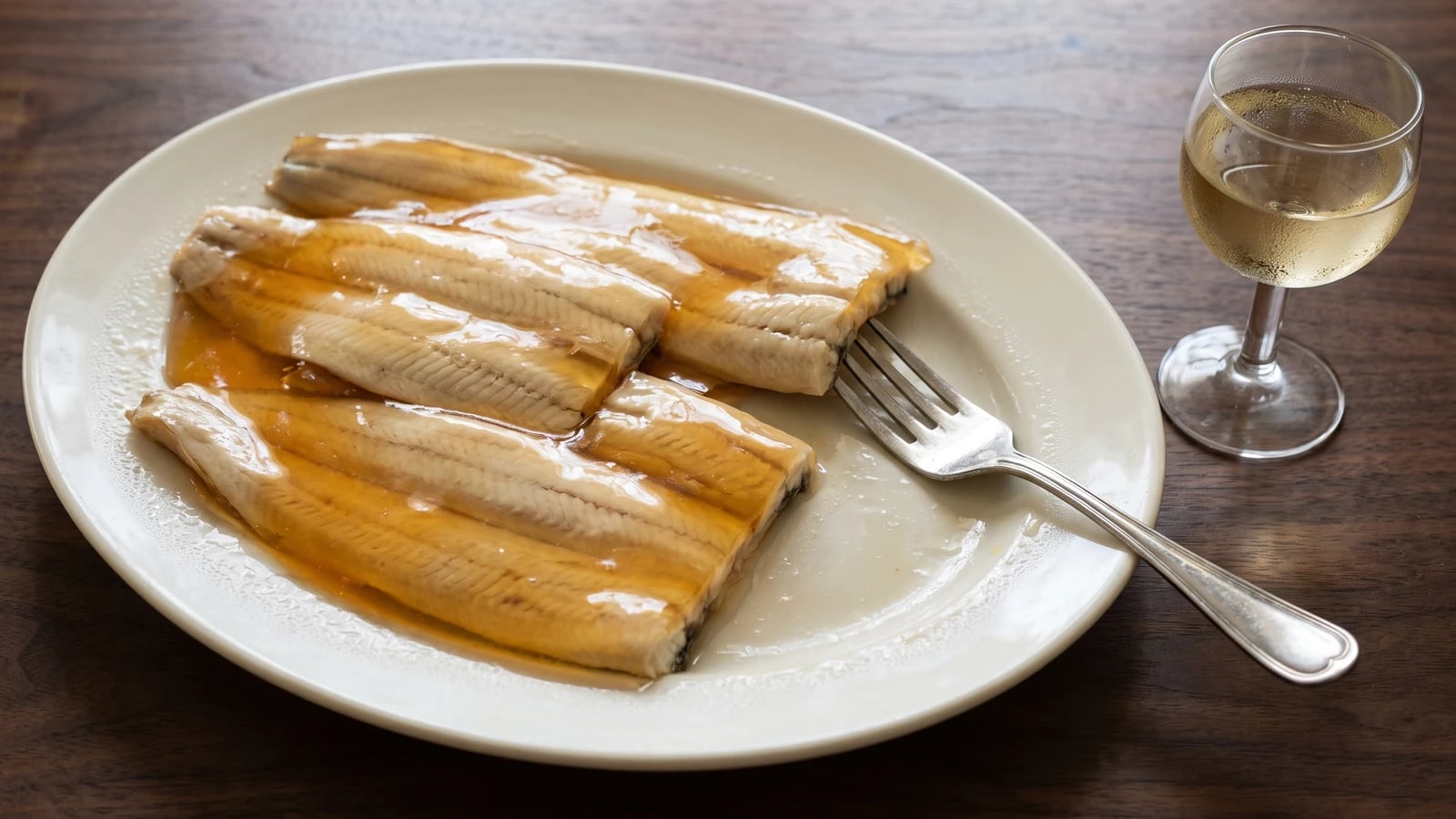
Anguille transformed twice: first by a quiet white-wine and paprika poach, then by its own clarified liquor, which sets around the cold fillets in a clear, trembling veil.
Anguille au vin blanc et au paprika (eel with white wine and paprika) teaches one clean principle: the cooking liquor must become part of the finished dish. The eel is cooked en matelote, the French method of cooking fish in wine with aromatics, then cooled without ever leaving that liquor. Only afterward is it boned and veiled in the same liquid, degreased, clarified, and set. Lift the eel while it's warm and you lose moisture, shape, and much of the flavor meant for the jelly.
The brigade formula assumed a fish kettle, enough eel for its collagen to set the liquor reliably, and a saucier free to skim and clarify it. The home equivalent is a wide sauté pan, a small batch for four, an ice bath, and a set test on a cold saucer. Optional plain gelatin replaces only the lost strength of a large batch, not the flavor or the method. The oversized kettle and extra pair of hands are scaffolding. The white-wine paprika poach, cooling in the liquor, lengthwise filleting, complete degreasing, clarification, and cold masking are the dish. One cook, one stove, one evening's work, then the refrigerator does the rest.
Expect pale, rich eel under a transparent paprika-gold jelly, served very cold so the flesh is firm and the liquor tastes bright rather than greasy. Keep the poach at the barest tremble. A boil tightens the eel and emulsifies its fat into the liquor, and that is the one mistake which makes every later step harder.
Matelote belongs to the river and inn kitchens of the Seine and Loire basins and Burgundy waterways, where eel and other freshwater fish were cooked in the local wine. In Parisian classical kitchens, the method crossed into the garde-manger, the cold kitchen, where the poaching liquor was clarified into aspic and returned to the boned fish. Paprika marks this as a cosmopolitan canon variation rather than a claim on Provence or Alsace; the method remains matelote, even when the wine is white and the finished dish is served cold.
Quantity
1¾ pounds (800 g)
gutted and skinned, cut crosswise into 3½-inch (9 cm) lengths
Quantity
2 cups (480 ml / 480 g)
Quantity
2 cups (480 ml / 480 g)
Quantity
1 small (about 5 ounces / 140 g)
thinly sliced
Quantity
1 small (about 2½ ounces / 70 g)
thinly sliced
Quantity
1 large (about 1½ ounces / 40 g)
thinly sliced
Quantity
1 clove
lightly crushed
Quantity
1 small
3 parsley stems, 1 thyme sprig, and 1 bay leaf
Quantity
2 teaspoons (10 ml / 5 g)
Quantity
1½ teaspoons (7.5 ml / 9 g)
Quantity
½ teaspoon (2.5 ml / 1 g)
lightly crushed
Quantity
2 large (about ¼ cup / 60 ml / 60 g), plus 1 large (about 2 tablespoons / 30 ml / 30 g) if needed
Quantity
2¼ teaspoons (11 ml / 7 g)
| Ingredient | Quantity |
|---|---|
| cleaned eelgutted and skinned, cut crosswise into 3½-inch (9 cm) lengths | 1¾ pounds (800 g) |
| dry white wine | 2 cups (480 ml / 480 g) |
| cold water | 2 cups (480 ml / 480 g) |
| yellow onionthinly sliced | 1 small (about 5 ounces / 140 g) |
| carrotthinly sliced | 1 small (about 2½ ounces / 70 g) |
| shallotthinly sliced | 1 large (about 1½ ounces / 40 g) |
| garliclightly crushed | 1 clove |
| bouquet garni3 parsley stems, 1 thyme sprig, and 1 bay leaf | 1 small |
| sweet paprika | 2 teaspoons (10 ml / 5 g) |
| fine sea salt | 1½ teaspoons (7.5 ml / 9 g) |
| black peppercornslightly crushed | ½ teaspoon (2.5 ml / 1 g) |
| large egg whites | 2 large (about ¼ cup / 60 ml / 60 g), plus 1 large (about 2 tablespoons / 30 ml / 30 g) if needed |
| unflavored powdered gelatin (optional) | 2¼ teaspoons (11 ml / 7 g) |
Begin with eel that a fishmonger has gutted and skinned. Raw eel blood is unsafe to consume, so keep it away from cuts and other food, wipe the cavity clean with damp paper, and wash the board and knife promptly. Pat the eel dry and cut it crosswise into 3½-inch (9 cm) lengths, keeping the backbone in place for the poach.
Combine the wine, water, onion, carrot, shallot, garlic, bouquet garni, paprika, salt, and peppercorns in a wide nonreactive sauté pan. Bring the liquor slowly to a bare simmer and let it cook uncovered for 12 minutes, just long enough for the aromatics and paprika to season the wine. It should taste a little stronger and saltier than a broth for drinking because chilling will soften both.
Lower the eel pieces into the liquor in one layer. The liquid should almost cover them; if it does not, use a narrower pan rather than diluting the wine with more water. Cover the surface with a cartouche, a round of parchment paper, and poach at the barest tremble for 15 to 18 minutes, turning the pieces once, until the flesh is opaque and reaches 145°F (63°C) near the backbone. Never let the pan boil. If it does, take it off the heat at once, skim away the risen foam, and resume gently. Ça se rattrape.
Remove the pan from the heat and leave the eel submerged for 20 minutes. Set the pan into a larger bowl of ice water, keeping the ice outside the pan, and cool until the pan no longer feels warm. Cover and refrigerate the eel in its liquor for at least 3 hours, or overnight. This cooling is not idle time. It keeps the flesh succulent, firms it for clean filleting, and draws the flavor of the eel back into the jelly.
Lift the cold eel pieces carefully from the liquor and keep the liquor. With a small sharp knife, open each piece lengthwise along the backbone, pull away the spine, and remove any remaining bones with fish-bone pliers. Preserve the two sides as broad fillets rather than breaking them into flakes. Arrange them close together on a chilled shallow platter, smooth sides upward, then cover and return them to the refrigerator. If one cracks, fit the pieces neatly together; the final mask will hold and conceal the join.
Spoon every patch of solidified fat from the cold cooking liquor, then strain it through a fine sieve without pressing the vegetables. Measure the liquor. If you have more than 3 cups (720 ml), simmer it gently until reduced to that amount, cool it completely, and skim once more. Whisk 2 egg whites until loose and frothy, stir them into the cold liquor, and heat slowly in a clean saucepan while scraping the bottom gently. When the cooked whites rise into a raft and the liquid begins to tremble, stop stirring, open a small hole in the raft, and hold the gentlest simmer for 10 minutes. Ladle the clear liquor through damp cheesecloth without crushing the raft. It should be transparent paprika-gold, not colorless.
Chill a spoonful of clarified liquor on a cold saucer for 10 minutes. It should set to a tender tremble, soft enough for a fork to pass through. If it does, the eel supplied all the gelatin you need. If it remains liquid, sprinkle the powdered gelatin over 2 tablespoons (30 ml) of cold clarified liquor and let it bloom for 5 minutes. Warm ½ cup (120 ml) of the remaining liquor until hot but not boiling, dissolve the bloomed gelatin in it, then stir this back into the rest. The gelatin is insurance for a small home batch, not a replacement for the eel's own liquor.
Cool the clarified liquor over ice, stirring occasionally, until it becomes slightly syrupy but has not set. Spoon a thin coat over every eel fillet and refrigerate for 8 to 10 minutes, then repeat with two or three more thin coats until the fish wears an even, transparent veil. This is masking, and thin layers give a finer result than one deep pour. If the jelly runs off, it is too warm; chill it a little longer. If it sets in the saucepan, stand the pan briefly in warm water and stir until fluid again. Never pour it hot over cold eel.
Cover the platter only after the final coat has set, then refrigerate for at least 2 hours. Bring it directly from the cold and portion the fillets with a chilled serving fork or narrow spatula. The jelly should tremble, the eel should remain moist beneath it, and no grease should cloud the palate. Cooking well is not cooking fancy. À table!
1 serving (about 205g)
Culinary guides, cultural storytelling, and the editorial depth that makes cooking meaningful.
Discover Culinary ExplorerChef Juliette
Tiny éperlans, lightly floured and fried until their tails stand crisp, arrive in a generous heap on a napkin with fried parsley and grooved lemon, a weeknight lesson in heat and restraint.

Chef Juliette
Brandade de Morue turns salt cod, warm olive oil, and milk into a pale, silky emulsion: keep everything warm and add the oil slowly, then crown the generous dome with butter-fried bread.

Chef Juliette
Salt cod worked warm with cream, one patient spoonful at a time, until the rough flakes become a glossy Nîmes paste, domed generously and ringed with butter-fried croutons for the table.

Chef Juliette
Wine-poached char packed in its earthenware crock beneath butter gold: a make-ahead first course that turns careful cooling, thorough boning, and one unbroken seal into quiet abundance.