
Chef Juliette
Smelt (Éperlans)
Tiny éperlans, lightly floured and fried until their tails stand crisp, arrive in a generous heap on a napkin with fried parsley and grooved lemon, a weeknight lesson in heat and restraint.
A cooking platform built around craft, culture, and the stories behind what we eat.
Created by Chef Juliette
Based on No. 308, Smoked Eel, from Le Guide Culinaire (1907) by Auguste Escoffier
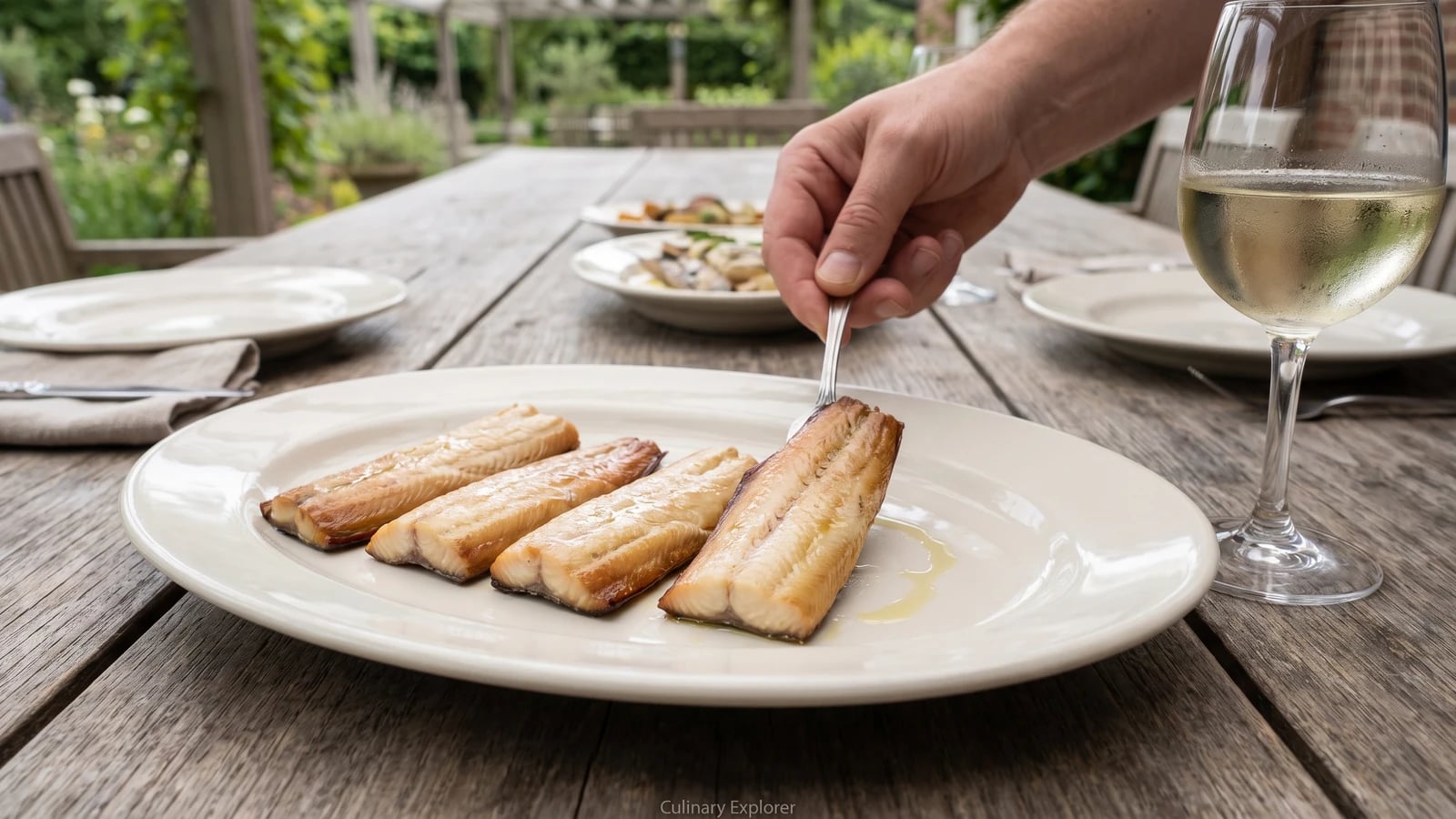
Anguille fumée asks for one piece of discipline: handle the rich, dark flesh gently, free it cleanly from skin and bone, then stop. No sauce, no garnish, no fuss between the smoke and the table.
Anguille fumée teaches the discipline of stopping. The smoking has already cooked and seasoned the fish; your work is not to improve it, but to expose its rich flesh cleanly and leave it alone. Serve it cool rather than numb from the refrigerator, and its fat tastes round, its smoke deep, its texture supple.
The original entry assumes a garde-manger, the cold-larder cook, selecting as many whole smoked eels as service demanded, then says only to serve them plain, cut into fillets. No saucier, stockpot, or salamander hides behind that sentence because none belongs here. For one home table, a single ready-to-eat eel makes four appetizer portions, and a narrow knife with fish tweezers replaces the larder station. The brigade's multiplication of portions is scaffolding and can go. Clean skinning and intact fillets are the dish, and they stay. One cook, one stove left cold, one evening.
The one step that matters is skinning. Work while the eel is cool and firm, loosen the skin gently, and pull toward the tail without dragging the flesh with it. Hurry here and the fillets tear before they reach the dish.
Anguille fumée belongs particularly to the river tables of northern and eastern France, including French Flanders and Alsace, where eel met local smoking traditions rather than the olive oil and herbs of the Mediterranean coast. It passed naturally into classical hors-d'oeuvre service because it arrived from the smoker already seasoned, cooked, and ready for cold service. In the garde-manger it was deliberately served nature, meaning plain, with the cook's craft shown through intact fillets rather than an added sauce.
Quantity
1, about 1 to 1¼ pounds (450 to 570 g)
| Ingredient | Quantity |
|---|---|
| whole ready-to-eat hot-smoked eel | 1, about 1 to 1¼ pounds (450 to 570 g) |
Keep the wrapped eel refrigerated at 40°F (4°C) or colder until you are ready to work, and confirm that the package identifies it as ready to eat. Unwrap it about 10 minutes before cutting and lay it on a clean board. This brief tempering releases its aroma without letting the rich flesh soften. Do not rinse it; water dulls the surface and makes the skin harder to grip.
If the head and tail remain, cut them away neatly. Score the skin shallowly around the head end and along the length of the back, cutting through the skin but not into the flesh. Loosen one edge with the knife, grip it through a clean towel, and pull slowly toward the tail, removing the skin in broad panels. If it grips or begins taking flesh with it, stop pulling. Hold the blade almost flat against the underside of the skin and ease the flesh free in short strokes. Ça se rattrape: if a piece tears, keep it whole and place the broken edge downward on the serving dish.
Open the eel along its existing belly seam. Starting at the head end, slide the knife along one side of the backbone with the blade angled toward the bones, not toward the flesh. Lift away the first long fillet, turn the eel, and repeat on the other side. Run your fingertips gently over both fillets and remove any remaining fine bones with tweezers. Do not scrape the skeleton hard for extra meat; ragged scraps spoil the clean service this simple dish requires.
Cut each long fillet crosswise into two generous portions, trimming only loose fins or obvious ragged edges. Lay the four pieces flesh-side up on a cool serving dish without stacking them. Add nothing: no salt, pepper, oil, lemon, herbs, or sauce. If the eel must wait, press parchment against its surface, cover, and refrigerate, then let it stand for 10 minutes before serving. Rich, dark, and clean. À table!
1 serving (about 90g)
Culinary guides, cultural storytelling, and the editorial depth that makes cooking meaningful.
Discover Culinary ExplorerChef Juliette
Tiny éperlans, lightly floured and fried until their tails stand crisp, arrive in a generous heap on a napkin with fried parsley and grooved lemon, a weeknight lesson in heat and restraint.

Chef Juliette
Brandade de Morue turns salt cod, warm olive oil, and milk into a pale, silky emulsion: keep everything warm and add the oil slowly, then crown the generous dome with butter-fried bread.

Chef Juliette
Salt cod worked warm with cream, one patient spoonful at a time, until the rough flakes become a glossy Nîmes paste, domed generously and ringed with butter-fried croutons for the table.

Chef Juliette
Wine-poached char packed in its earthenware crock beneath butter gold: a make-ahead first course that turns careful cooling, thorough boning, and one unbroken seal into quiet abundance.