
Chef Juliette
Smelt (Éperlans)
Tiny éperlans, lightly floured and fried until their tails stand crisp, arrive in a generous heap on a napkin with fried parsley and grooved lemon, a weeknight lesson in heat and restraint.
A cooking platform built around craft, culture, and the stories behind what we eat.
Created by Chef Juliette
Based on No. 303, Rolled Anchovies, from Le Guide Culinaire (1907) by Auguste Escoffier
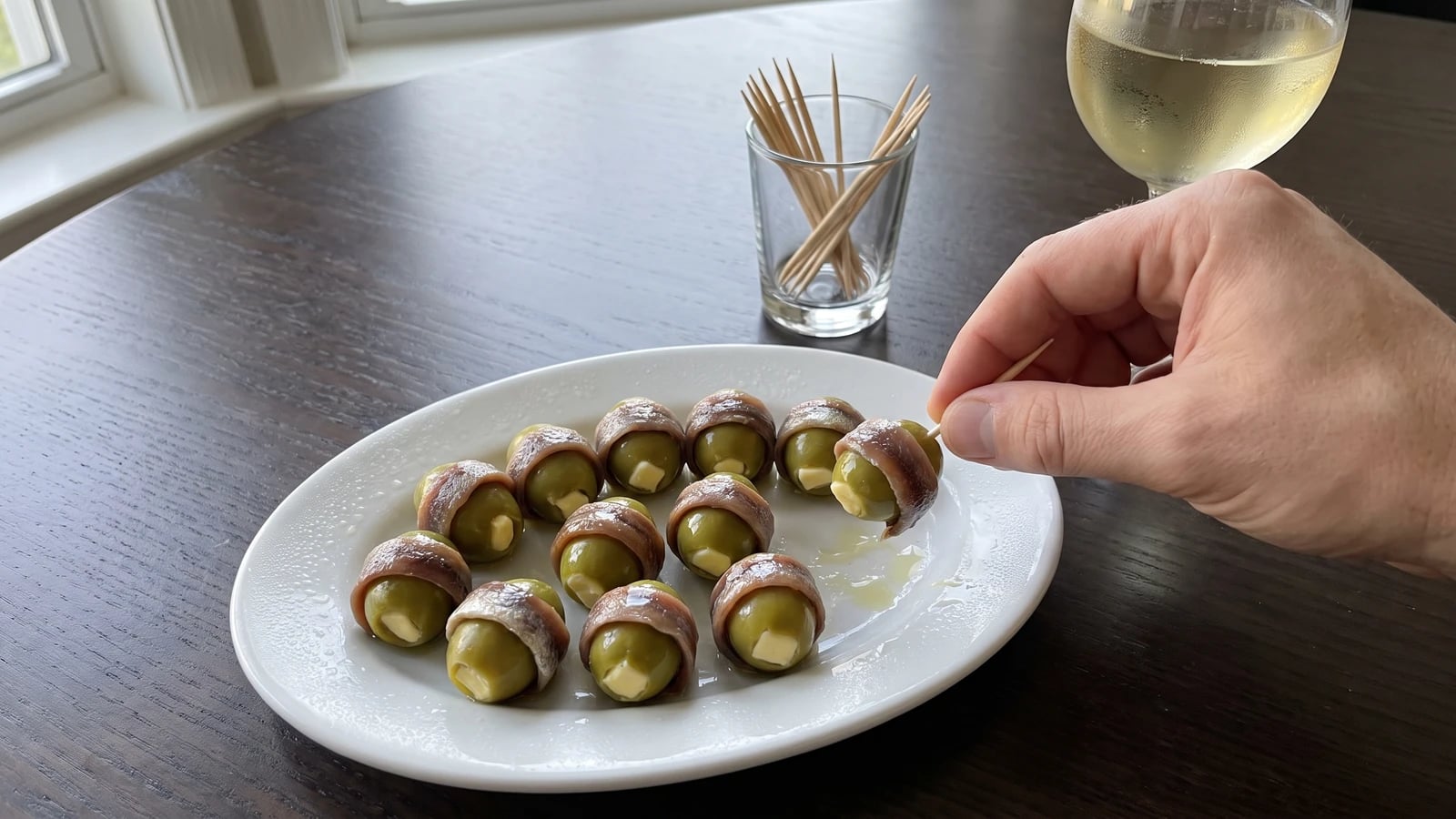
Anchois roulés turn three ingredients into a proper cold hors-d'œuvre: firm green olives packed with beurre d'anchois, each bound by one intact fillet and chilled until the butter holds cleanly.
Anchois roulés (rolled anchovies) teach the discipline of the cold hors-d'œuvre: temperature is structure. The one true thing to know before touching a pan is that no pan belongs here. If the butter warms, the filling smears and the anchovy ring slips; kept cold, three ingredients become a precise, generous two-bite morsel.
The original assumed the cold side of a brigade: a garde-manger who would tourner, cutting each olive from its stone in one continuous spiral, a crock of beurre d'anchois already made, and trays assembled in quantity. No saucier, perpetual stockpot, or salamander is hiding behind this one. At home, firm pitted olives provide the same hollow oval, and a small mortar makes only the butter twelve pieces require. Identical hand-turned olives were service scaffolding, so they go; real butter, a fully packed center, thorough chilling, and one whole fillet around every olive are the dish, so they stay. One cook, one stove, one evening, though the stove gets the night off.
When they are right, the olives are cool and taut, the beurre d'anchois tastes first of the sea and then of sweet butter, and each outer fillet holds like a satin ribbon. Dry every olive and anchovy thoroughly before assembly. Moisture is the enemy of the hold, and that drying is the one step that matters most.
Anchois roulés belong to the Parisian cold hors-d'œuvre repertoire, where olives, salted fish, and compound butters were arranged in small bites to open a formal meal. The preparation traveled from grand-kitchen cold tables to the home apéritif because it requires no cooking, only the garde-manger's habits of neat trimming, thorough chilling, and disciplined seasoning. Its apparent decoration is structural: turning opened the olive for butter, while the intact anchovy fillet kept the rich filling and briny fruit together in one bite.
Quantity
12 (about ¾ cup / 110 g drained)
unstuffed and pitted
Quantity
16 (about ⅓ cup / 50 g drained)
12 kept whole and 4 reserved for the butter
Quantity
3 tablespoons (45 ml / 42 g)
cool and pliable
| Ingredient | Quantity |
|---|---|
| large firm green olivesunstuffed and pitted | 12 (about ¾ cup / 110 g drained) |
| oil-packed anchovy fillets12 kept whole and 4 reserved for the butter | 16 (about ⅓ cup / 50 g drained) |
| unsalted buttercool and pliable | 3 tablespoons (45 ml / 42 g) |
Drain the olives and anchovies separately. Taste an olive; if its brine is fiercely salty, rinse the olives briefly under cold water. Pat their outsides dry, then twist a corner of absorbent paper and dry each cavity as well. Lay the anchovies between clean sheets of absorbent paper without pressing them flat. Choose the 12 longest, broadest, intact fillets for wrapping and keep them cold; reserve the remaining 4 for the beurre d'anchois. If a wrapping fillet tears, move it to the butter group and replace it with an intact one. The outer fillet must remain whole because it is both the ribbon and the fastening.
Mash the 4 reserved anchovy fillets in a small mortar until no distinct pieces remain. Add the butter a teaspoon at a time, working each addition completely into the anchovy paste before adding the next. The finished beurre d'anchois should be smooth, evenly buff-colored, and pliable enough to press without looking oily. If it turns greasy, it has become too warm; chill it for 8 to 10 minutes, then work it briefly until smooth again. Never melt it. Real butter gives this filling its clean set and sweet finish.
Transfer the beurre d'anchois to a small piping bag and cut a narrow opening, or use the tip of a small spoon. Fill every olive from both ends so the butter reaches the center without trapping an air pocket, then wipe the openings level. Set the olives on a cold plate and chill for 20 minutes, until the filling is firm to a light touch. If the butter pulls out or refuses to stay put, the olive is damp or the filling is warm. Blot the cavity, chill both for 10 minutes, and pack it again. Ça se rattrape.
Lay one whole anchovy fillet against the broad middle of an olive and bring it around in a complete ring, keeping the silvery outer surface visible. Overlap the narrow ends slightly and place the olive seam-side down. Do not stretch the fillet, which makes it tear and spring away as it chills. Repeat with the remaining olives, returning the platter to the cold if the butter begins to soften.
Arrange the anchois roulés in a single layer on a small chilled platter. Cover without pressing on the fillets and refrigerate for at least 30 minutes, until the butter holds firmly and the anchovy rings cling to the olives. Set them out about 5 minutes before serving so the butter yields under the teeth rather than tasting waxy. Serve three per person, with cocktail picks if you like. À table!
1 serving (about 51g)
Culinary guides, cultural storytelling, and the editorial depth that makes cooking meaningful.
Discover Culinary ExplorerChef Juliette
Tiny éperlans, lightly floured and fried until their tails stand crisp, arrive in a generous heap on a napkin with fried parsley and grooved lemon, a weeknight lesson in heat and restraint.

Chef Juliette
Brandade de Morue turns salt cod, warm olive oil, and milk into a pale, silky emulsion: keep everything warm and add the oil slowly, then crown the generous dome with butter-fried bread.

Chef Juliette
Salt cod worked warm with cream, one patient spoonful at a time, until the rough flakes become a glossy Nîmes paste, domed generously and ringed with butter-fried croutons for the table.

Chef Juliette
Wine-poached char packed in its earthenware crock beneath butter gold: a make-ahead first course that turns careful cooling, thorough boning, and one unbroken seal into quiet abundance.