Chef Juliette
Ordinary or White Consommé
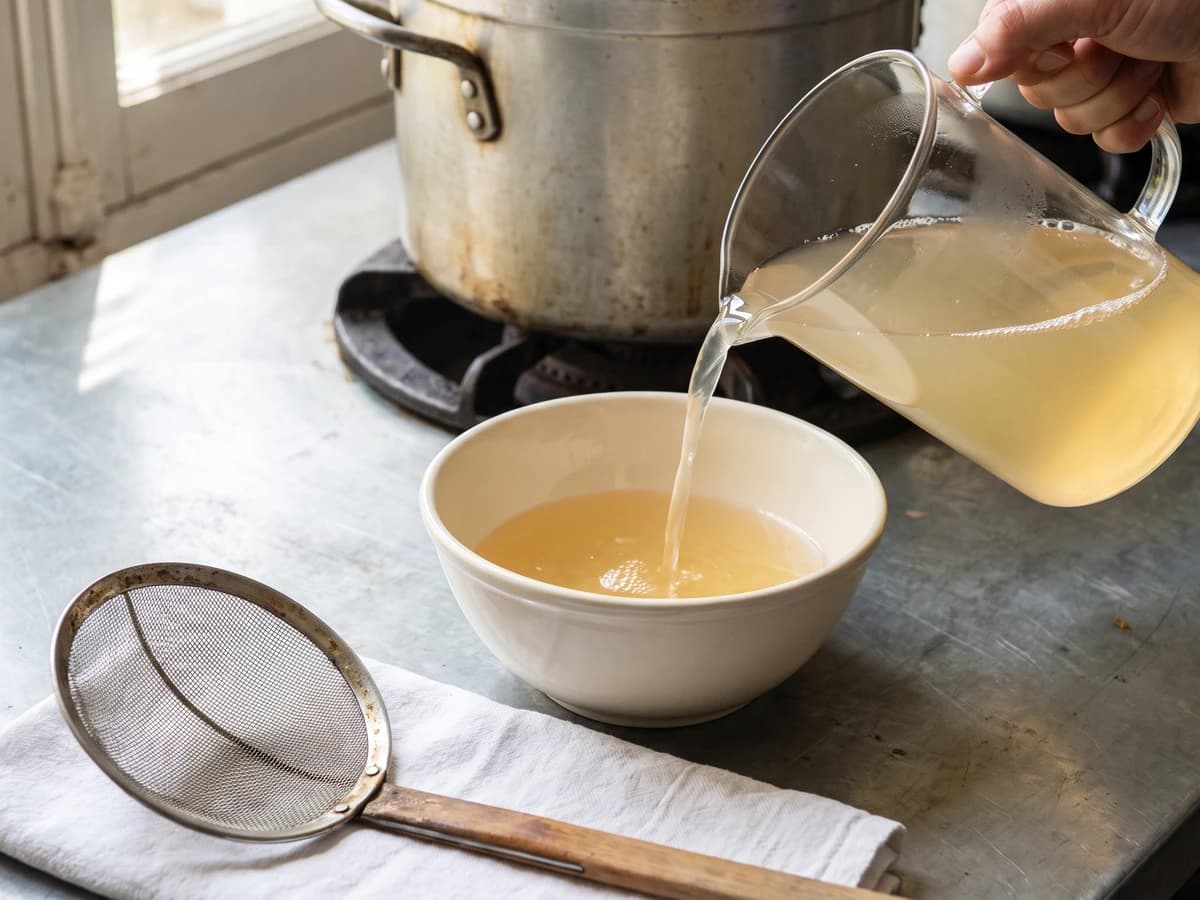
Beef shin, lean beef, and fowl begin in cold water and rise slowly toward a tremble. Skim before the boil, and you learn the quiet discipline that gives every clear French broth its backbone.
A cooking platform built around craft, culture, and the stories behind what we eat.
Created by Chef Juliette
Based on No. 299a, Mustard Sauce with Cream, from Le Guide Culinaire (1907) by Auguste Escoffier
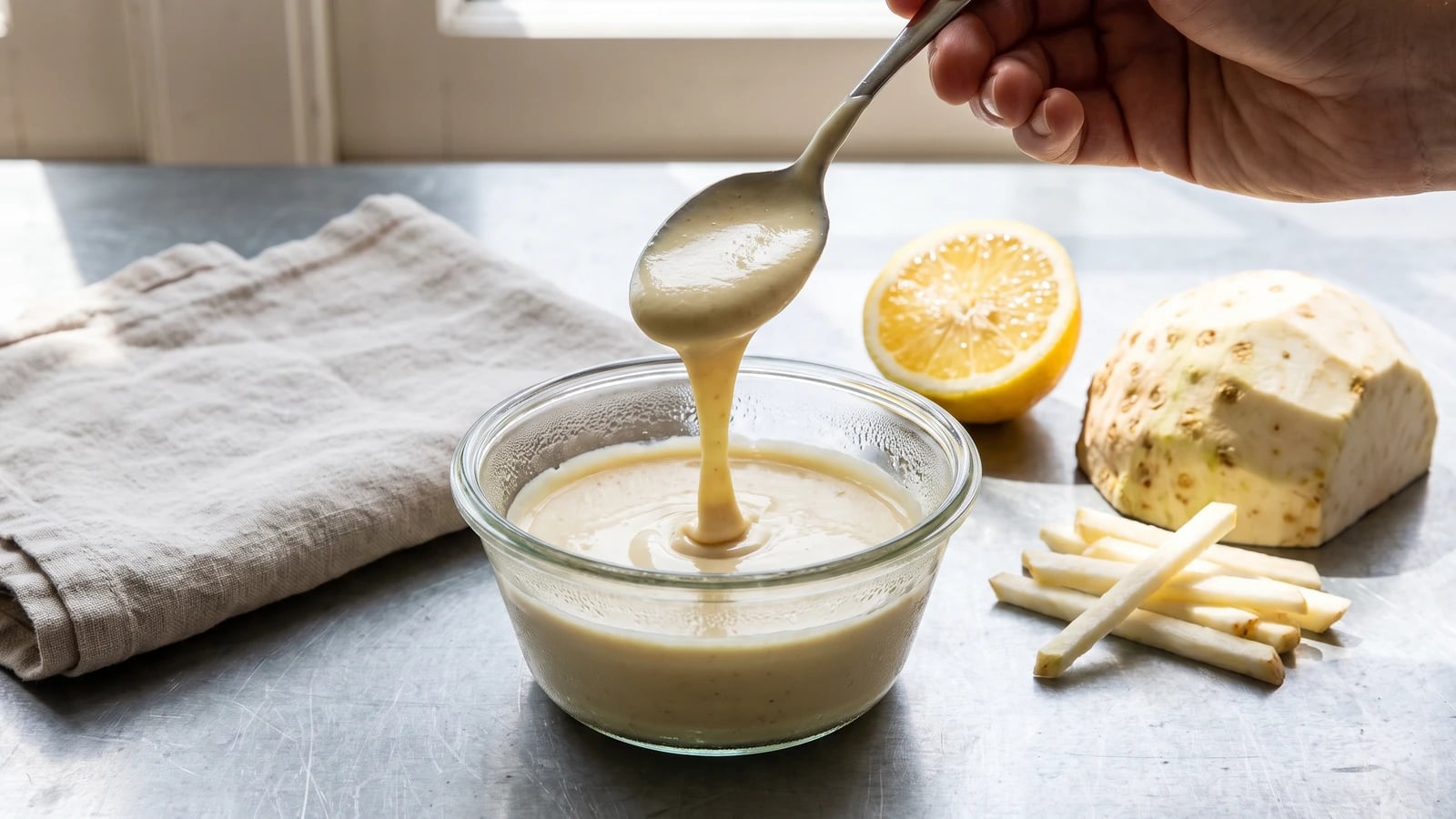
Sauce Moutarde à la Crème teaches the cleanest cold emulsion: season Dijon mustard first, then loosen it little by little with fresh cream until it falls from the spoon in a pale, glossy ribbon.
Sauce Moutarde à la Crème (mustard sauce with cream) teaches a small but essential law of cold sauces: season the concentrated base before you dilute it. Salt, pepper, and lemon disappear into the smooth mustard; once the cream enters, you are controlling body. The finished sauce should be pale ivory with an ochre cast, gently sharp, and loose enough to cloak celery without running away.
The original formula is a service instruction: three spoonfuls of mustard, then the “necessary quantity” of cream, because a garde-manger (cold-table cook) mixed by sight for several plates. It required neither a stockpot kept on the fire nor a salamander, and its only brigade scaffolding was quantity. For one cook, I have divided the mustard by three and given the cream as a narrow range, enough for four generous portions. One cook, one stove, one evening.
Adding the cream little by little is not scaffolding. It is the dish. Start with very fresh cold cream and stop when the sauce falls from the spoon in a broad ribbon; that gradual loosening is the one step that matters.
Sauce Moutarde à la Crème belongs to the French cold table overseen by the garde-manger, rather than to one regional household dish. It brings Dijon mustard, rooted in Burgundy’s condiment tradition, into the cream-softened dressings served with céleri, céleri-rave, and cervelle (brains), where sharpness was wanted without an oil-based sauce. Unlike warm mustard sauces for meat, this formula uses no stock, roux, or pan reduction; its character comes entirely from seasoning the mustard and loosening it cold.
Quantity
1 tablespoon (15 ml / 15 g)
Quantity
⅛ teaspoon (0.6 ml / 0.75 g)
Quantity
1 small pinch (about 0.15 g)
Quantity
5 drops (about 0.25 ml / 0.25 g)
Quantity
¼ cup plus up to 1 tablespoon (60 to 75 ml / 60 to 75 g)
well chilled
| Ingredient | Quantity |
|---|---|
| smooth Dijon mustard | 1 tablespoon (15 ml / 15 g) |
| fine sea salt | ⅛ teaspoon (0.6 ml / 0.75 g) |
| finely ground white pepper | 1 small pinch (about 0.15 g) |
| fresh lemon juice | 5 drops (about 0.25 ml / 0.25 g) |
| very fresh heavy cream, at least 35% fatwell chilled | ¼ cup plus up to 1 tablespoon (60 to 75 ml / 60 to 75 g) |
Put the Dijon mustard in a small nonreactive bowl. Add the salt, white pepper, and lemon juice, then stir until perfectly smooth and slightly loosened. Seasoning the mustard now distributes everything evenly; wait until after the cream and you will chase pockets of salt through a finished sauce.
Add the cream one teaspoon at a time for the first tablespoon, stirring each addition completely into the mustard before adding the next. This first liaison, the joining of the concentrated mustard and cream, establishes a smooth base. Use a small whisk or wooden spoon, but do not beat in air.
Continue adding the cream in a thin thread until ¼ cup has been incorporated. Stop when the sauce coats the spoon, then falls from it in a broad, unbroken ribbon. If it turns grainy or separates, stop stirring. Ça se rattrape: put a teaspoon of fresh cold cream in a clean bowl, stir it smooth, then work the grainy sauce into it one teaspoon at a time. If the cream smells sour or appears curdled before mixing, discard it and begin with fresh cream.
Chill the sauce for 10 minutes, then stir it once and taste. Add some or all of the remaining cream by the teaspoon if the mustard is too forceful or the sauce sits too stiffly. If it has become too loose, mix ½ teaspoon of fresh mustard with a teaspoon of the sauce in a clean bowl, then gradually stir that mixture back into the rest.
Spoon the Sauce Moutarde à la Crème over cooled blanched celery, finely cut raw celeriac, or cold poached brains just before serving. Turn the food through the sauce only until lightly cloaked; this is a dressing, not a bath. Serve cold. À table!
1 serving (about 21g)
Culinary guides, cultural storytelling, and the editorial depth that makes cooking meaningful.
Discover Culinary ExplorerChef Juliette
Beef shin, lean beef, and fowl begin in cold water and rise slowly toward a tremble. Skim before the boil, and you learn the quiet discipline that gives every clear French broth its backbone.
Chef Juliette
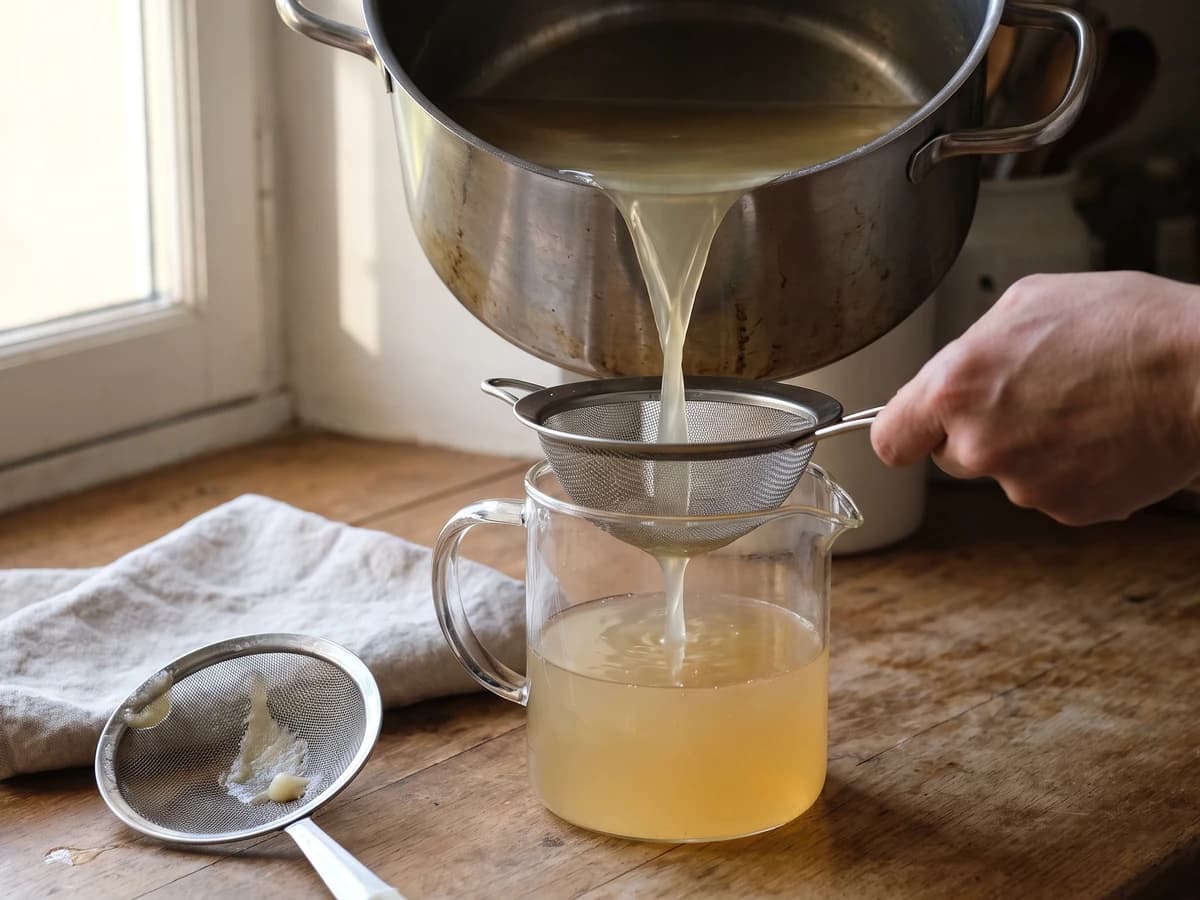
Break the veal bones small, then give them eight hours at a bare tremble. This pale, gelatinous fond becomes the quiet foundation beneath velouté, blanquette, and every sauce that must stay light.
Chef Juliette
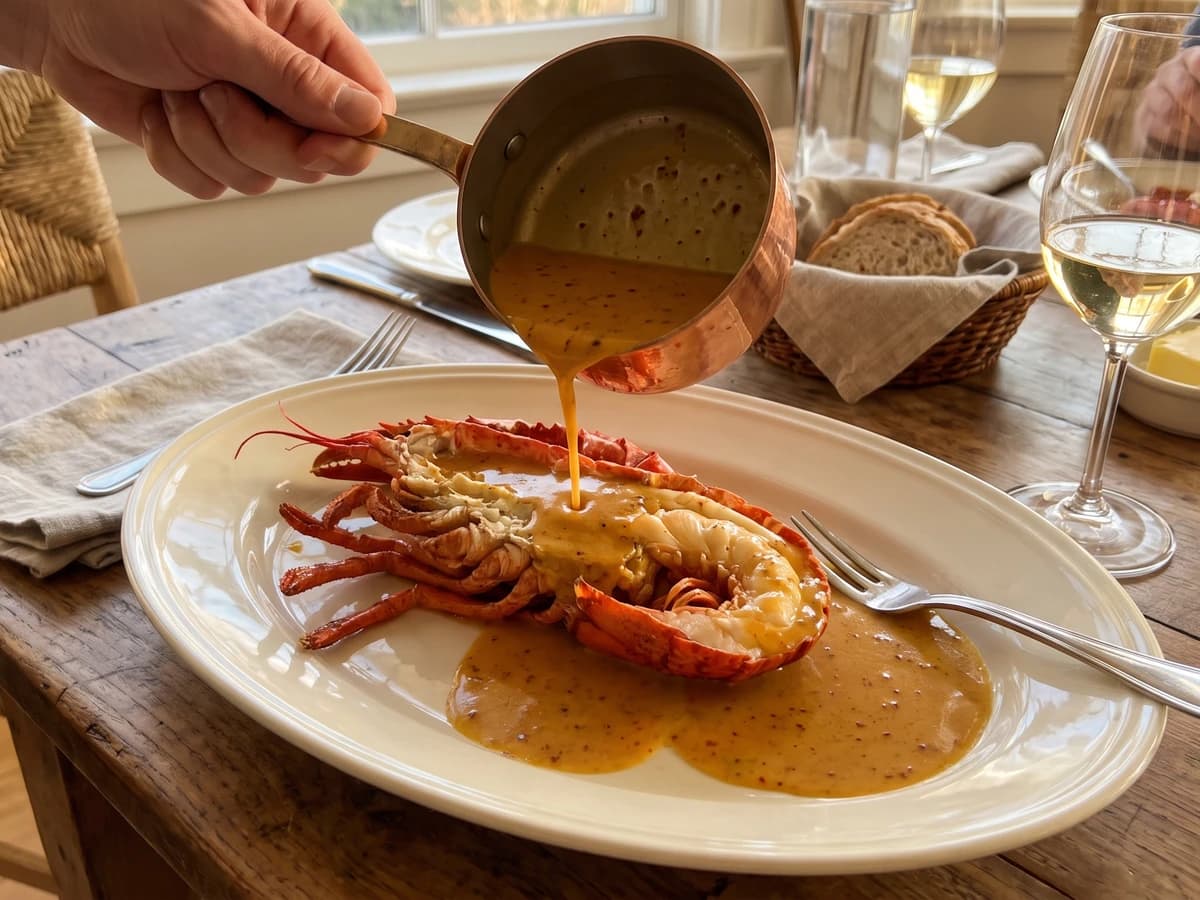
Sauce Orientale concentrates lobster-rich American Sauce with curry, then folds in cream away from the fire: a glossy, gently spiced derivative made for lobster, crayfish, and firm fish.
Chef Juliette
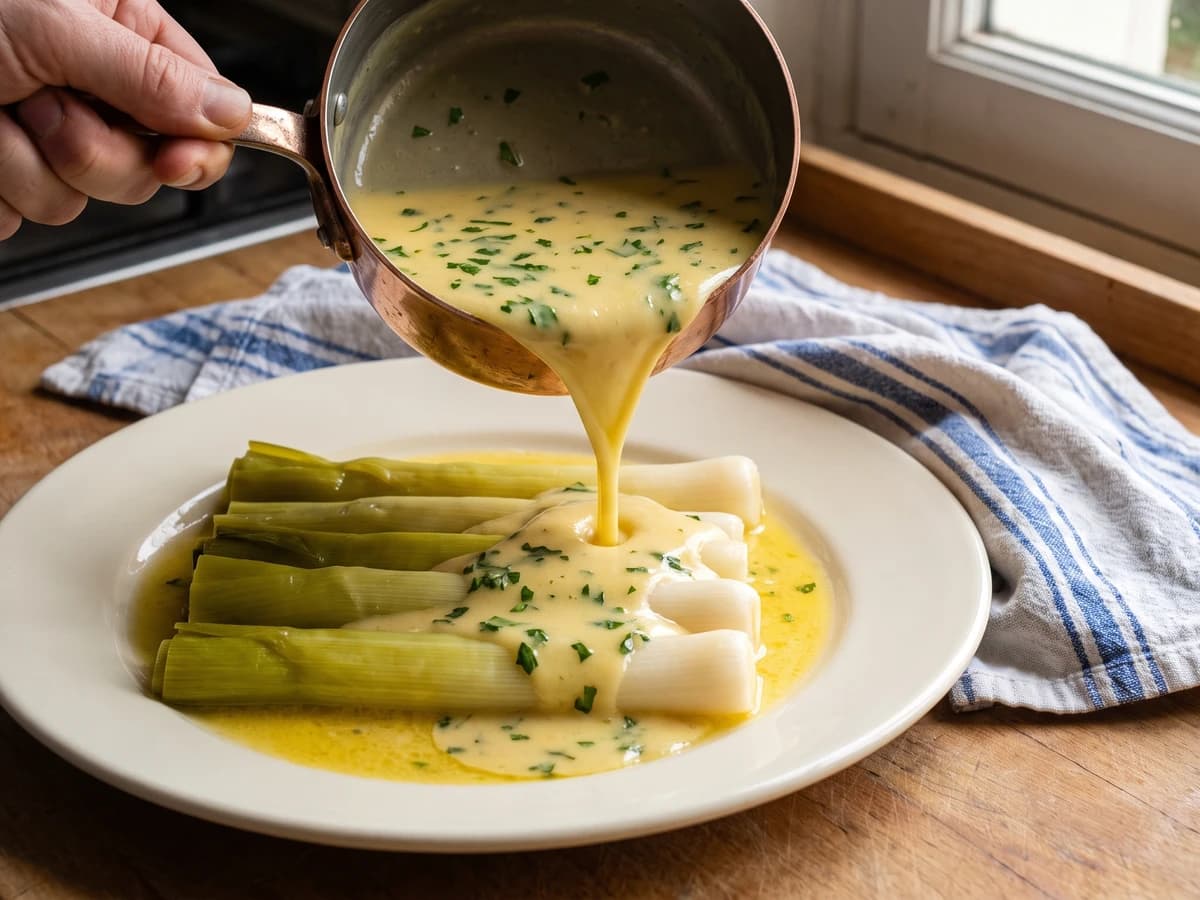
An old lesson in sauce families: Sauce Allemande takes mushroom liquor, then butter, lemon, and parsley, becoming a glossy Poulette for sheep's trotters, leeks, cauliflower, and anything needing gentle richness with a bright edge.