Culinary Explorer

A cooking platform built around craft, culture, and the stories behind what we eat.
Discover Culinary Explorer
White-currant Jelly

White-currant Jelly

Created by Chef Juliette

Based on No. 2968, White-currant Jelly, from Le Guide Culinaire (1907) by Auguste Escoffier

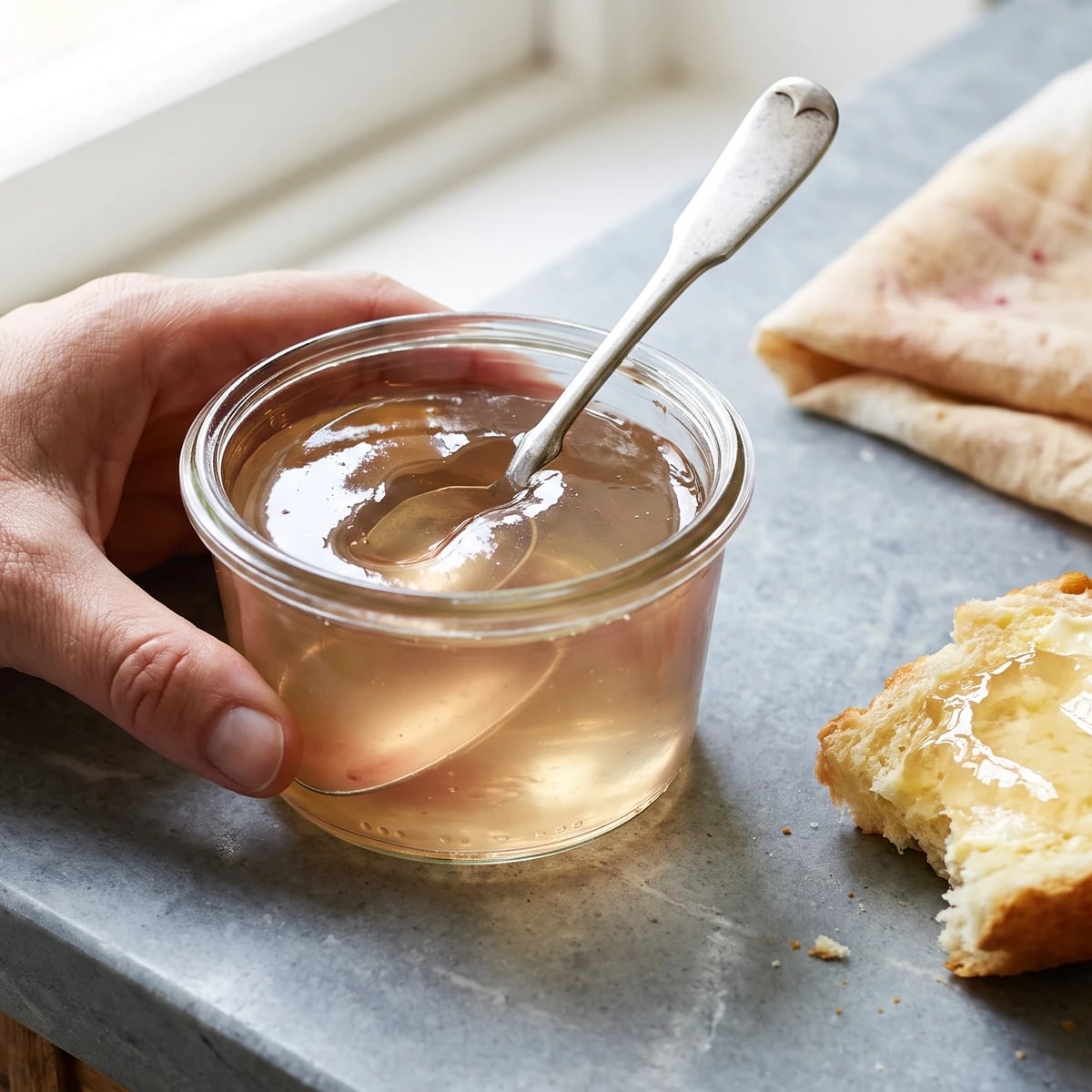
Gelée de groseilles blanches, clear and pale with just enough raspberry for perfume, made by the sugar-first Method C that preserves the fruit's delicate colour and gives the finest set.

Sauces & Condiments
French
Make Ahead
Batch Cooking
35 min
Active Time
55 min cook16 hr total
Yield8 half-pint jars, about 2 quarts (1.9 L)

Gelée de groseilles blanches (white-currant jelly) teaches the quiet discipline behind every clear fruit jelly: gravity clarifies, while pressure clouds. The currants provide acidity and pectin, the raspberries contribute perfume in the source ratio of two ounces for every pound of currants, and Method C cooks the sugar first so the juice spends less time boiling. The reward is a trembling, translucent gel, pale gold with a faint blush.

The source entry gives its ratio and points back to three preserving methods, assuming a cook already equipped with a preserving pan, a draining stand, hot jars, and another pair of hands nearby. Here, a wide stainless-steel pan replaces the traditional preserving pan, a damp jelly bag over a deep bowl replaces the dedicated straining rig, and a thermometer gives one home cook the judgment a preserving room once supplied. I have changed the batch size, not the proportions, and selected Method C because the source itself names it as the clearest. The elaborate equipment is scaffolding. The raspberry ratio, untouched dripping, and sugar-first cooking are the dish.

The one step that matters most comes before the syrup ever boils: let the cooked fruit drip through the bag without squeezing it. Press for one more spoonful and you trade brilliance for cloudiness. Leave it alone, and the gelée will nearly glow in the jar.

Gelée de groseilles blanches belongs to the preserving cupboards of northern and eastern France, where currant bushes flourish and clear jellies travel easily from breakfast bread to pastry glazing and the game table. Bar-le-Duc in Lorraine is famous for a different white-currant preserve, made from berries individually seeded and kept whole, so its confiture should not be confused with this strained gelée. At the source ratio, raspberry perfumes the preserve without stealing the pale colour or the clean currant character.

The technique, the tradition, and the story behind every dish.

Discover Culinary Explorer

Ingredients

fresh, very ripe white currants

Quantity

About 13 cups (4 lb / 1.8 kg)

leaves and damaged fruit removed; stems may remain

fresh raspberries

Quantity

About 1¾ cups (8 oz / 225 g)

water for extracting the fruit

Quantity

½ cup (120 ml / 120 g)

granulated sugar

Quantity

6¾ to 7½ cups (1.6 to 1.8 L / usually 1.35 to 1.5 kg), weighed to equal the strained juice exactly

water for cooking the syrup

Quantity

1½ cups (360 ml / 360 g), or one-quarter the sugar's weight

Equipment Needed

  • Large digital kitchen scale
  • 8-quart (7.5 L) wide stainless-steel preserving pan
  • Medium saucepan for warming the juice
  • Jelly bag and stand, or a large muslin-lined colander
  • Deep bowl for collecting juice
  • Sugar or instant-read thermometer
  • Potato masher
  • Jar funnel and ladle
  • Boiling-water canner with rack
  • 8 half-pint (240 ml) canning jars with new lids

Instructions

  1. 1

    Prepare jars and tests

    Wash eight half-pint jars, lids, and bands. Keep the jars hot in the water-bath canner while you make the gelée, and place two small plates in the freezer for testing the set. Fill the canner deeply enough that the filled jars will be covered by at least 1 inch (2.5 cm) of water.

  2. 2

    Release the fruit juice

    Put the white currants, raspberries, and extraction water into a wide, non-reactive pan. Bring them slowly to a simmer, crushing the fruit lightly with a potato masher as the skins split. Cook for 12 to 15 minutes, stirring along the floor of the pan, until every currant has collapsed and the mixture is loose and brilliantly juicy. Gentle heat releases the juice and pectin; a fierce boil cooks away the perfume before the jelly has begun.

  3. 3

    Drip without pressing

    Scald the jelly bag or muslin with boiling water, wring it out carefully, and suspend it over a deep bowl. Ladle in the hot fruit and leave it to drip undisturbed for 2 to 3 hours. Do not squeeze, twist, or scrape the bag. If it is accidentally pressed and the juice turns cloudy, ça se rattrape: let the juice stand for 15 minutes, then pour the clear upper portion through a fresh layer of damp muslin, leaving the sediment behind.

    The stems may remain during cooking because everything is strained away. Removing leaves and damaged fruit matters; picking every berry from its stem does not.
  4. 4

    Measure juice and sugar

    Weigh the strained juice, then weigh exactly the same amount of granulated sugar. Expect roughly 1.35 to 1.5 kg of each, but let your actual juice decide. Measure water equal to one-quarter of the sugar's weight for the syrup. Warm the juice in a separate saucepan until it is very hot but not boiling, about 185°F (85°C); warm juice joins the syrup with less violent bubbling and reaches its setting point quickly.

  5. 5

    Cook the sugar first

    Combine the measured sugar and syrup water in the clean preserving pan. Heat gently, stirring only until every grain dissolves, then bring it to a boil and stop stirring. Cook to petit boulé, the soft-ball stage, 237°F (114°C). If crystals gather around the rim, cover the pan for one minute so condensation washes them down, or brush them away with a wet pastry brush. Ça se rattrape. If the syrup turns amber, however, its flavour has changed and it must be started again.

  6. 6

    Add juice and set

    Take the syrup off the heat. Wearing oven gloves and using a long spoon, add the hot currant juice gradually; the mixture will surge, so keep your face and hands back. Return it to high heat and boil briskly, skimming away the pale foam, until it reaches 220°F (104 to 105°C), or about 8°F (4°C) above the boiling point of water in your kitchen. Begin testing after 5 minutes: drop a teaspoonful onto a frozen plate, wait 30 seconds, then push it with a fingertip. The gelée is ready when the surface wrinkles lightly and the path stays open.

  7. 7

    Correct the consistency

    If the chilled test still runs, boil for one minute more and test again rather than cooking by the clock. If it wrinkles thickly or turns rubbery before jarring, whisk in boiling water 1 tablespoon (15 ml / 15 g) at a time and repeat the plate test. A jelly caught slightly too firm can be loosened; one boiled far past its setting point loses its fresh currant character.

  8. 8

    Fill and process jars

    Remove the pan from the heat and skim once more. Ladle the hot gelée into the hot jars, leaving ¼ inch (6 mm) headspace. Wipe the rims, apply the lids and bands fingertip-tight, then process the jars in a boiling-water bath for 10 minutes, adjusting the processing time for your elevation. Lift them out upright and leave them untouched for 12 to 24 hours. Refrigerate any jar that fails to seal; do not re-tighten or invert hot jars.

  9. 9

    Check the final set

    Check the seals, remove the bands, label the jars, and hold one to the light. The gelée should be translucent, delicately blushed, and tender enough to tremble on a spoon. If it remains syrupy after 24 hours, empty it into a clean pan, return it briefly to the setting point, and process it again in clean hot jars. Serve with brioche, buttered bread, roast duck, or pâté. À table!

Chef Tips

  • Keep the source ratio exactly: 2 ounces of raspberries for every 1 pound of white currants, which is 225 g raspberries for 1.8 kg currants in this batch. More raspberry makes a pleasant jelly, but it stops being this pale, currant-led gelée.
  • This preserve genuinely needs the season. Fresh currants give the cleanest juice and strongest natural set; frozen fruit releases more fine pulp and usually produces a cloudier jar.
  • Weigh the juice and sugar. Cups are supplied for orientation, but equal weight is the governing ratio, and reducing the sugar changes both the set and the preserve's keeping qualities.
  • Store sealed jars in a cool, dark cupboard for up to one year. Once opened, keep the gelée refrigerated and use it within one month.
  • Brush a warmed spoonful over a fruit tart for a clear glaze, or loosen it with a little roasting juice beside duck or game. C'est la même grammaire: a well-made preserve is also a finished condiment.

Advance Preparation

  • The fruit may be cooked and left to drip several hours before the sugar is started. Refrigerate the strained juice if the pause will be longer than two hours.
  • Wash the jars and assemble the canning equipment earlier in the day, but heat the jars shortly before filling so hot gelée never meets cold glass.
  • Make the gelée at least one day before serving. The jars need 12 to 24 hours without disturbance for the seal and final set to establish.
  • Properly sealed jars are made for keeping, which makes this an excellent batch preparation for the pantry or for gifts.

Frequently Asked Questions

Nutrition Information

1 serving (about 310g)

Calories
790 calories
Total Fat
0 g
Saturated Fat
0 g
Trans Fat
0 g
Unsaturated Fat
0 g
Cholesterol
0 mg
Sodium
5 mg
Total Carbohydrates
196 g
Dietary Fiber
2 g
Sugars
194 g
Protein
1 g

Note: Chef personas and recipes are created with AI assistance. Cook with care: follow safe food-handling practices, check doneness with a thermometer when needed, and adapt for allergies and your kitchen.

Where cooking meets culture.

Culinary guides, cultural storytelling, and the editorial depth that makes cooking meaningful.

Discover Culinary Explorer

More from Fruit-stews and Jams

Browse the full collection