Chef Juliette
Ordinary or White Consommé
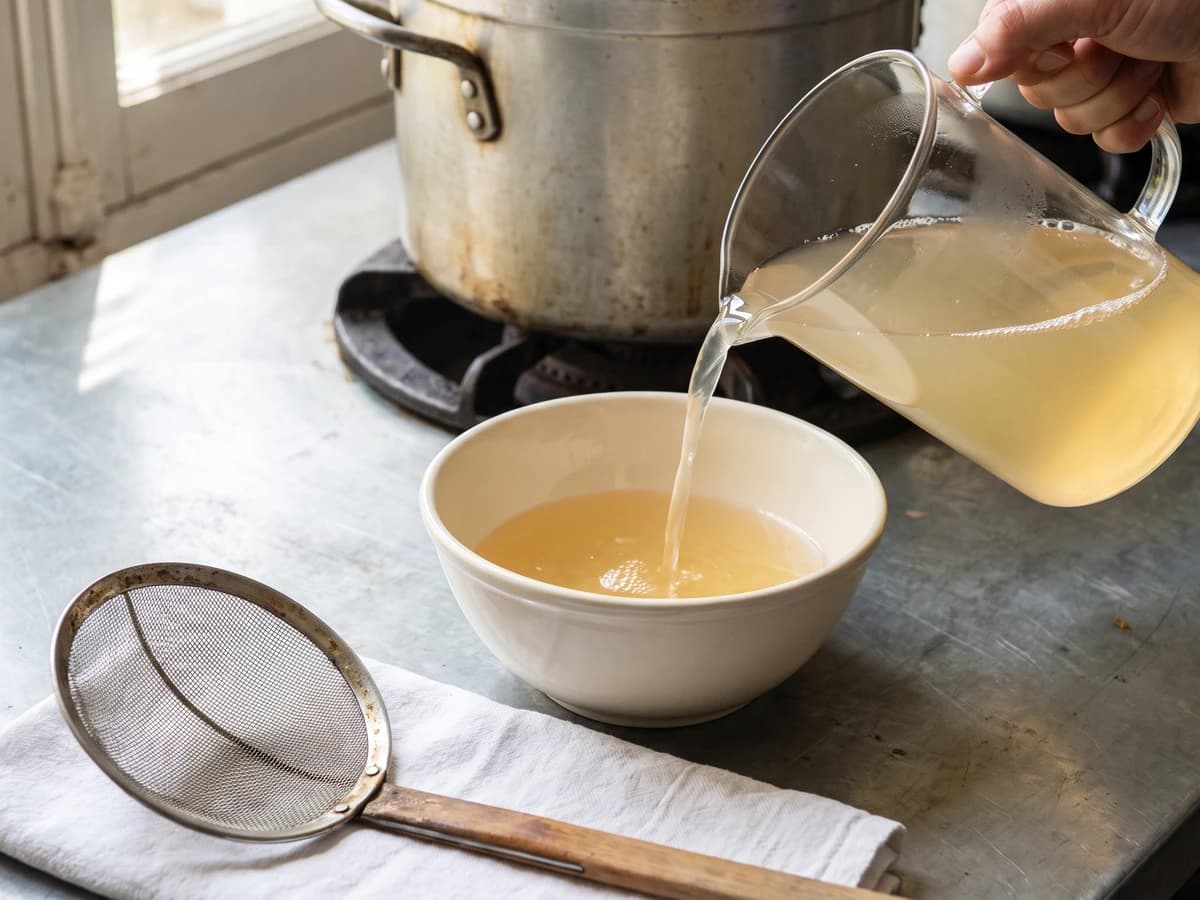
Beef shin, lean beef, and fowl begin in cold water and rise slowly toward a tremble. Skim before the boil, and you learn the quiet discipline that gives every clear French broth its backbone.
A cooking platform built around craft, culture, and the stories behind what we eat.

Created by Chef Juliette
Based on No. 2954, Jams, from Le Guide Culinaire (1907) by Auguste Escoffier
Confiture turns fruit and sugar into a clear, spoonable preserve by one governing rule: match tart fruit nearly pound for pound, then boil fast enough to keep its flavour alive.
Confiture de fruits acidulés (tart-fruit jam) teaches one governing rule: measure the sugar against the fruit's own tartness. For gooseberries, blackcurrants, and tart plums, that means equal weights, or very nearly so. More sugar smothers the fruit and encourages crystals; less forces you to boil away the freshness before the preserve will set.
The old preparation assumed a preserving kitchen with broad copper bassines, generous quantities, and a cook who judged the boil by sight. Your honest equivalent is a wide stainless-steel pan, a digital thermometer, two cold saucers, and eight small jars. This formula chooses the book's first family, fruit cooked directly with sugar; its second family, gelée made from strained juice, needs fruit-specific extraction and deserves its own method. The copper and the brigade batch are scaffolding. The fruit-to-sugar balance and the short, decisive boil are the dish.
Dissolve every grain before the hard boil begins, then judge the set promptly. That is the step that matters most. Stop too early and the preserve remains loose and vulnerable to fermentation; push too far and its colour darkens, its flavour flattens, and the syrup can crystallise. One cook, one stove, one evening, and enough confiture to brighten many breakfasts.
Confiture belongs to the household larder throughout France, following the local harvest: mirabelles in Lorraine, quetsches in Alsace, blackcurrants in Burgundy, and apricots or figs in Provence. Grand kitchens codified these preserves into two distinct families, fruit cooked directly with sugar and gelée set from strained, naturally gelatinous juice. The common mistake is to treat the words as interchangeable, but confiture keeps the substance of the fruit while gelée keeps only its clarified juice.
Quantity
9 to 12 cups (3 lb 1 oz / 1.4 kg)
washed, trimmed, and cut or lightly crushed as appropriate; weighed after trimming
Quantity
7 cups (3 lb 1 oz / 1.4 kg)
Quantity
up to 2 tablespoons (30 ml / 30 g)
only if needed to correct an over-tight set
| Ingredient | Quantity |
|---|---|
| prepared tart, naturally high-pectin fruit, such as gooseberries, blackcurrants, or tart plumswashed, trimmed, and cut or lightly crushed as appropriate; weighed after trimming | 9 to 12 cups (3 lb 1 oz / 1.4 kg) |
| granulated sugar | 7 cups (3 lb 1 oz / 1.4 kg) |
| boiling water (optional)only if needed to correct an over-tight set | up to 2 tablespoons (30 ml / 30 g) |
Use one kind of fruit for each batch so its pectin, acidity, and cooking time remain predictable. Trim it before weighing: top and tail gooseberries, strip blackcurrants from their stems, or pit tart plums and cut them into small even pieces. Lightly crush thick-skinned berries to release a little juice, but leave enough fruit intact to give the confiture character. Weigh the prepared fruit accurately, then measure an equal weight of sugar. The scale governs this recipe; the cup measure is only a convenience.
Wash eight half-pint or 240 ml canning jars, lids, and bands. Keep the jars hot in barely simmering water while you cook, and prepare the lids as their maker directs. Set two small saucers in the freezer for testing the set, then bring a deep canning pot fitted with a rack to a covered simmer. This arrangement replaces the preserving room and its extra hands: everything is ready before the fruit reaches its narrow finishing window.
Combine the fruit and sugar in a wide, heavy stainless-steel pan with at least an 8-quart or 7.5-litre capacity. Leave them together for 30 minutes, until the sugar looks damp and the fruit begins giving up its juice. Warm over low heat, stirring gently, until the syrup is completely clear and no grit remains beneath the spoon. Do not begin the hard boil while crystals remain. If sugar collects on the pan wall, brush it down with a clean damp pastry brush; neglected crystals can seed the whole batch later.
Raise the heat and bring the confiture to a broad, rolling boil that does not disappear when stirred. Cook briskly, stirring across the pan floor often enough to prevent catching but without beating air into the fruit. Begin testing after 10 minutes. The thermometer will usually read 219 to 221°F (104 to 105°C) near sea level, but the cold-saucer test has the final word: place a teaspoon on a frozen saucer, wait 30 seconds, then push it with one finger. It is ready when the surface wrinkles softly and the track does not immediately flood closed. If it runs, boil for 2 minutes and test again. If it has become stiff or ropes from the spoon, take the pan off the heat and stir in boiling water 1 tablespoon (15 ml / 15 g) at a time, then return it briefly to a full boil and test again. Ça se rattrape.
Remove the pan from the heat as soon as the set is right. Let the confiture stand for 2 minutes so the boil subsides and the fruit distributes itself through the syrup, then skim away any persistent foam with a shallow spoon. Do not keep cooking merely to chase every bubble; the extra evaporation costs more flavour than a little harmless foam ever could. If the pan has caught on the bottom, do not scrape it. Ladle the unburnt confiture into a clean pan and taste it before continuing.
Lift one hot jar at a time from the water and fill it through a wide funnel, leaving 1/4 inch (6 mm) headspace. Slide a clean non-metallic utensil around the inside to release trapped bubbles, adjust the level if necessary, and wipe the rim scrupulously clean. Centre the lid and tighten the band only to fingertip firmness. Work steadily while the confiture remains fluid, but keep the other jars hot until their turn.
Lower the filled jars upright onto the rack in the boiling-water canner, making certain the water covers them by at least 1 inch (2.5 cm). Cover, return the water to a full boil, and process for 10 minutes, adjusting the time according to locally approved guidance if you are above 1,000 feet (305 metres). Lift the jars out without tilting and leave them untouched for 12 to 24 hours. Check every seal before removing the bands; refrigerate any jar that failed to seal. The confiture finishes settling as it rests, so give it a full day before judging its final texture.
1 serving (about 295g)
Culinary guides, cultural storytelling, and the editorial depth that makes cooking meaningful.
Discover Culinary ExplorerChef Juliette
Beef shin, lean beef, and fowl begin in cold water and rise slowly toward a tremble. Skim before the boil, and you learn the quiet discipline that gives every clear French broth its backbone.
Chef Juliette
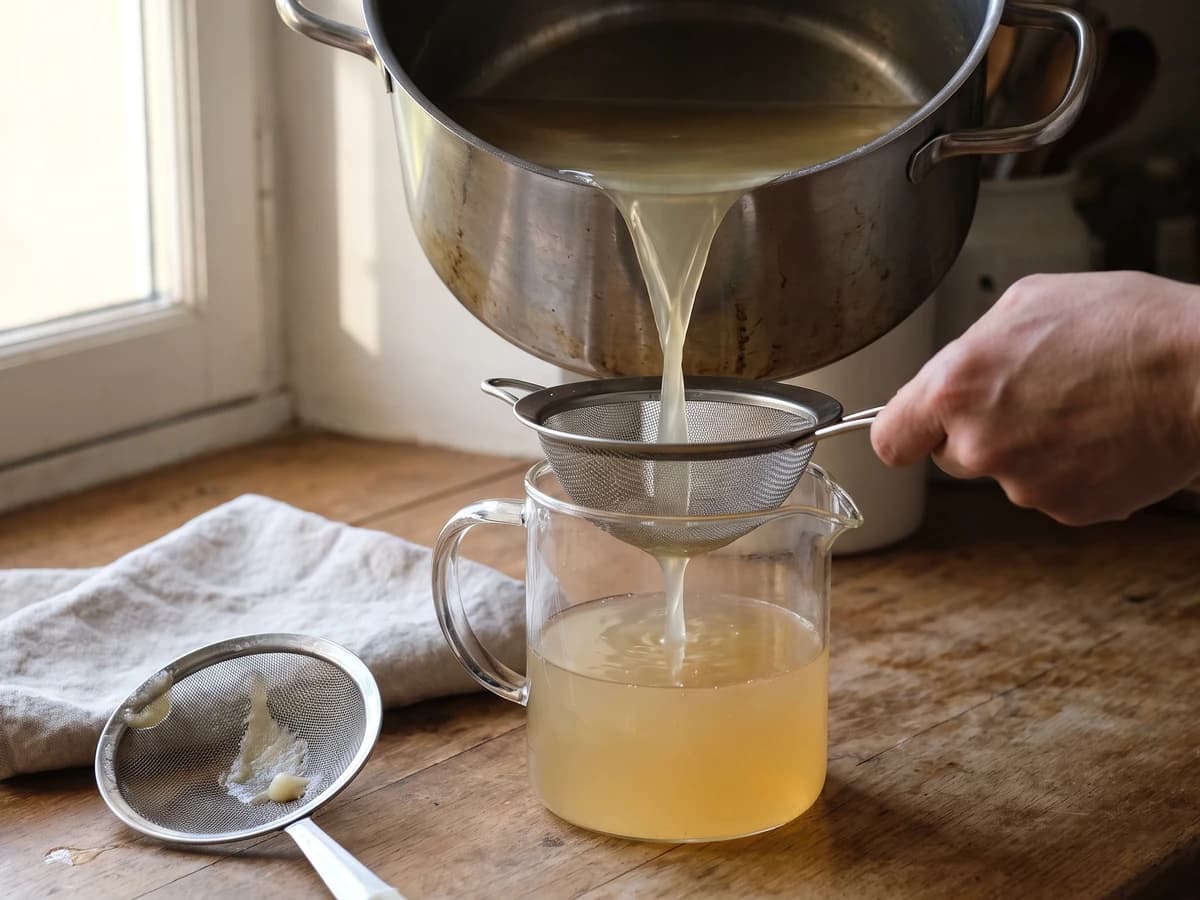
Break the veal bones small, then give them eight hours at a bare tremble. This pale, gelatinous fond becomes the quiet foundation beneath velouté, blanquette, and every sauce that must stay light.
Chef Juliette
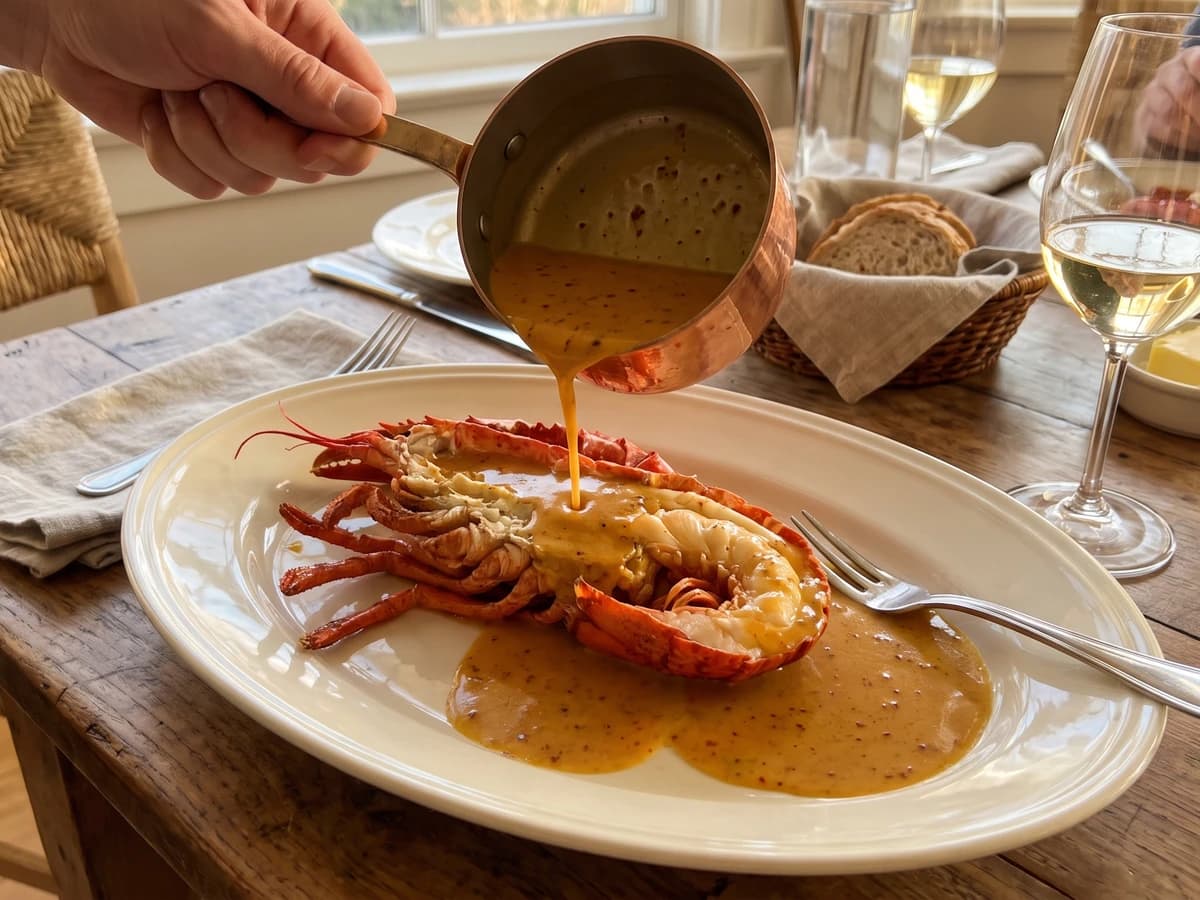
Sauce Orientale concentrates lobster-rich American Sauce with curry, then folds in cream away from the fire: a glossy, gently spiced derivative made for lobster, crayfish, and firm fish.
Chef Juliette
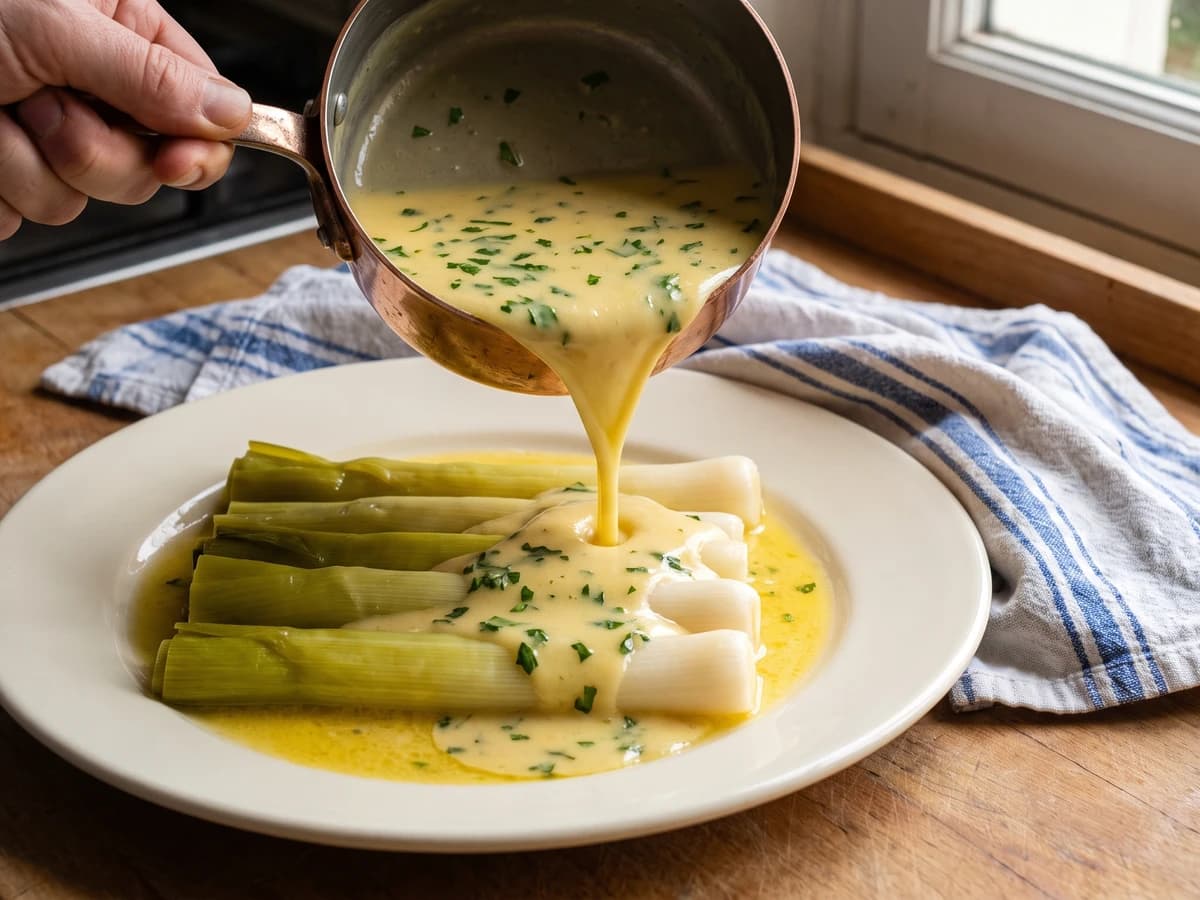
An old lesson in sauce families: Sauce Allemande takes mushroom liquor, then butter, lemon, and parsley, becoming a glossy Poulette for sheep's trotters, leeks, cauliflower, and anything needing gentle richness with a bright edge.