
Chef Juliette
Bavaroise
Bavaroise turns the ribbon stage into a drink: yolks and sugar, boiling tea and milk, and Kirsch whisked into a light crown of foam. Keep the whisk moving, and the café comes home.
A cooking platform built around craft, culture, and the stories behind what we eat.
Created by Chef Juliette
Based on No. 2951, Claret Cup, from Le Guide Culinaire (1907) by Auguste Escoffier
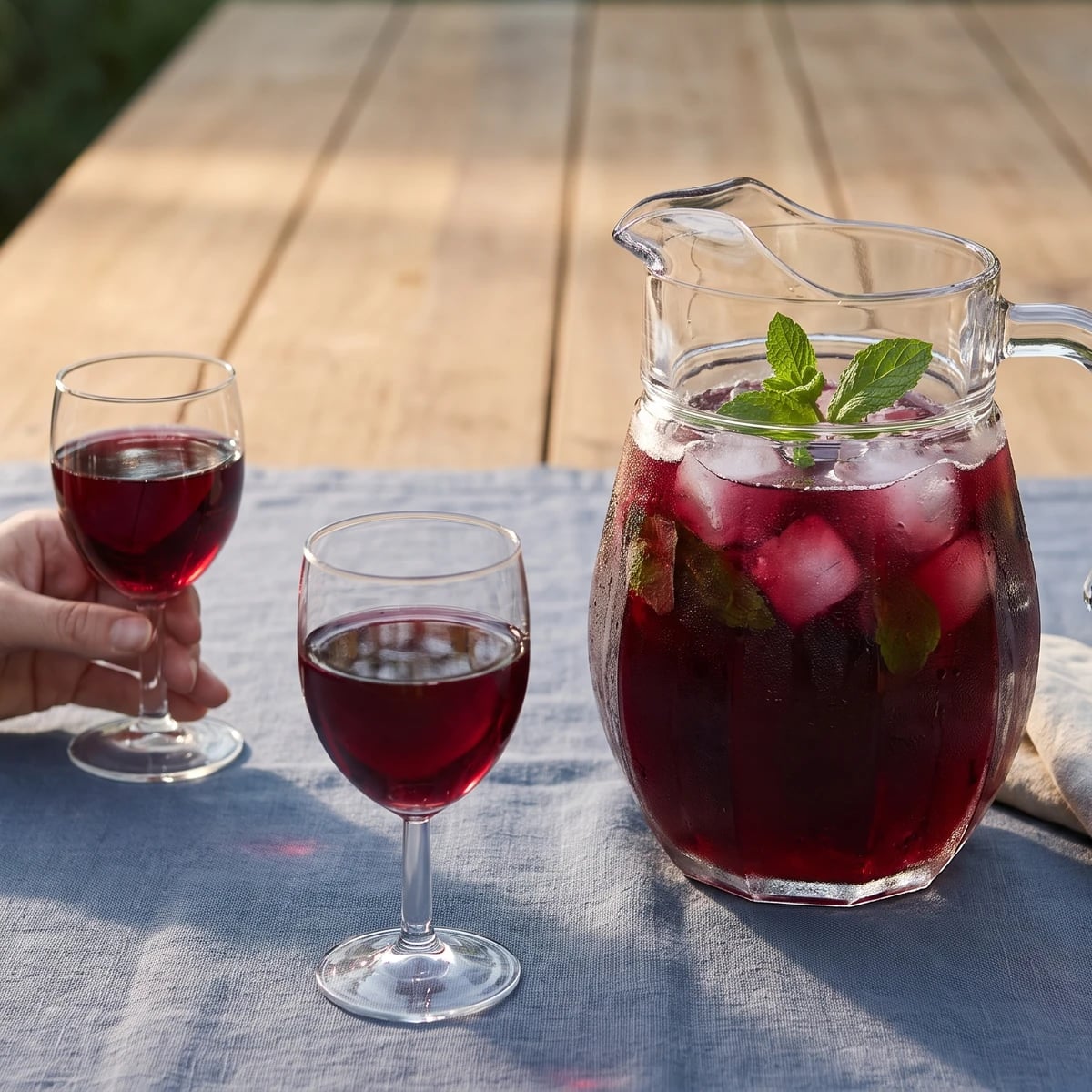
Coupe au Claret turns Bordeaux wine, citrus, cucumber, bitters, and three measured spirits into a cool garnet cup. Infuse it covered, then strain before the ice so every glass stays vivid.
Coupe au Claret (Claret Cup) teaches the discipline of cold infusion: draw fragrance from citrus and cucumber, then stop before freshness turns bitter. The one true thing to know before you touch the pitcher is simple. Strain before the ice, because melting water passing through all that peel robs the cup of its wine-dark spine.
This recipe assumed none of the usual brigade supports, no saucier on staff, perpetual stock, or salamander. It assumed instead a crystal bowl, one-ounce liqueur glasses, a full soda bottle, and enough claret for a crowded table. A covered two-quart pitcher and a jigger are the honest home equivalents. I have scaled the formula to two thirds, from one and a half wine bottles to one, with every flavoring and the soda reduced in proportion. Each liqueur glass becomes 20 ml, the soda bottle becomes 500 ml, and superfine sugar replaces obsolete loaf sugar because it dissolves cleanly in cold liquid. The crystal and banquet quantity were scaffolding; the covered infusion, its sequence, and the straining must stay.
What arrives at the table is garnet and cold, fragrant first with citrus oil, then cucumber, cherry, orange, and the dry spice of Angostura. One cook, one pitcher, one evening. Give it two quiet hours under cover, but remember the step that decides everything: strain it before a single cube of ice enters.
Claret Cup belongs to the British cup and punch-bowl table, where wine was lengthened with soda and scented for outdoor lunches and evening gatherings; it is not a regional French drink. Its French connection is the cellar: claret is the British name for red Bordeaux, while the supporting spirits reflect the cosmopolitan repertoire carried through grand dining rooms. French classical collections kept such international beverages beside native preparations, which is how the cup entered the canon without becoming a Bordelais tradition.
Quantity
1½ tablespoons (22 ml / 19 g)
the home equivalent of crushed loaf sugar
Quantity
1 (about 100 g)
remove ⅔ of the yellow peel in wide strips and cut 2 thin rounds
Quantity
1 (about 130 g)
remove ⅔ of the orange peel in wide strips and cut 2 thin rounds
Quantity
1 narrow strip, about 3 inches by ½ inch (8 by 1 cm)
remove without attached flesh
Quantity
2 teaspoons (10 ml / about 10 g)
Quantity
1 tablespoon plus 1 teaspoon (20 ml / about 19 g)
Quantity
1 tablespoon plus 1 teaspoon (20 ml / about 21 g)
Quantity
1 tablespoon plus 1 teaspoon (20 ml / about 19 g)
Quantity
1 bottle (about 3¼ cups / 750 ml / about 745 g)
well chilled
Quantity
2 cups plus 2 tablespoons (500 ml / 500 g)
well chilled
Quantity
8 (about 280 g)
Quantity
10 leaves (about 2 g)
| Ingredient | Quantity |
|---|---|
| superfine white sugarthe home equivalent of crushed loaf sugar | 1½ tablespoons (22 ml / 19 g) |
| small unwaxed lemonremove ⅔ of the yellow peel in wide strips and cut 2 thin rounds | 1 (about 100 g) |
| small unwaxed orangeremove ⅔ of the orange peel in wide strips and cut 2 thin rounds | 1 (about 130 g) |
| cucumber peelremove without attached flesh | 1 narrow strip, about 3 inches by ½ inch (8 by 1 cm) |
| Angostura bitters | 2 teaspoons (10 ml / about 10 g) |
| brandy | 1 tablespoon plus 1 teaspoon (20 ml / about 19 g) |
| Maraschino liqueur | 1 tablespoon plus 1 teaspoon (20 ml / about 21 g) |
| white Curaçao | 1 tablespoon plus 1 teaspoon (20 ml / about 19 g) |
| dry red Bordeaux or Bordeaux-style winewell chilled | 1 bottle (about 3¼ cups / 750 ml / about 745 g) |
| plain soda waterwell chilled | 2 cups plus 2 tablespoons (500 ml / 500 g) |
| large clean ice cubes | 8 (about 280 g) |
| fresh mint leaves | 10 leaves (about 2 g) |
Put the sugar into a clean two-quart glass pitcher or bowl. Add the lemon peel and rounds, orange peel and rounds, cucumber peel, Angostura, brandy, Maraschino, and white Curaçao. Stir only enough to wet the sugar. Don't crush the citrus or cucumber; bruising the white pith extracts bitterness, not useful fragrance.
Pour in the chilled red wine, then the chilled soda water, preserving the source's sequence. Turn everything gently with a long spoon until the sugar disappears, cover tightly, and refrigerate for 2 hours. Taste after the first hour. If the cucumber or peel has begun to bite, strain at once; ça se rattrape, and stopping the extraction early is the rescue. The carbonation will soften while covered because the soda infuses with the wine. That is the intended cup, not a mistake to correct.
Set a fine-mesh sieve over a second chilled pitcher and strain the cup before a single cube of ice enters it. Let the liquid drain without pressing the fruit, since squeezing extracts the bitter edge you worked to avoid. If ice went in by mistake, lift it out immediately, strain, then restore the cup's body with additional chilled wine and soda mixed three parts to two. Ça se rattrape.
Add the large clean ice cubes and whole mint leaves to the strained cup. Give it one gentle turn with the spoon so the mint travels through the garnet liquid. Don't muddle the leaves; their perfume should remain fresh and cool, not turn vegetal.
Pour or ladle the Coupe au Claret into eight chilled small wineglasses or tumblers, distributing a few mint leaves among them but none of the exhausted citrus or cucumber. Serve immediately, while the drink is properly cold and the ice has barely begun its work. À table!
1 serving (about 200g)
Culinary guides, cultural storytelling, and the editorial depth that makes cooking meaningful.
Discover Culinary Explorer
Chef Juliette
Bavaroise turns the ribbon stage into a drink: yolks and sugar, boiling tea and milk, and Kirsch whisked into a light crown of foam. Keep the whisk moving, and the café comes home.

Chef Juliette
Bischoff turns Champagne, tilleul, citrus, and brandy into pale-gold granité, coarse enough to sparkle under the spoon. The scraping makes the texture, and the timer becomes your smallest member of the brigade.

Chef Juliette
Café glacé is coffee taught by texture: dark, sweet, vanilla-softened, and churned only until it moves like loose snow. Stop before ice cream, pour into cold cups, and take it outside.

Chef Juliette
Zest brings perfume, juice brings acid, and three cool hours join them: a clear, lively French limonade finished with seltzer for the picnic table in the shade.